
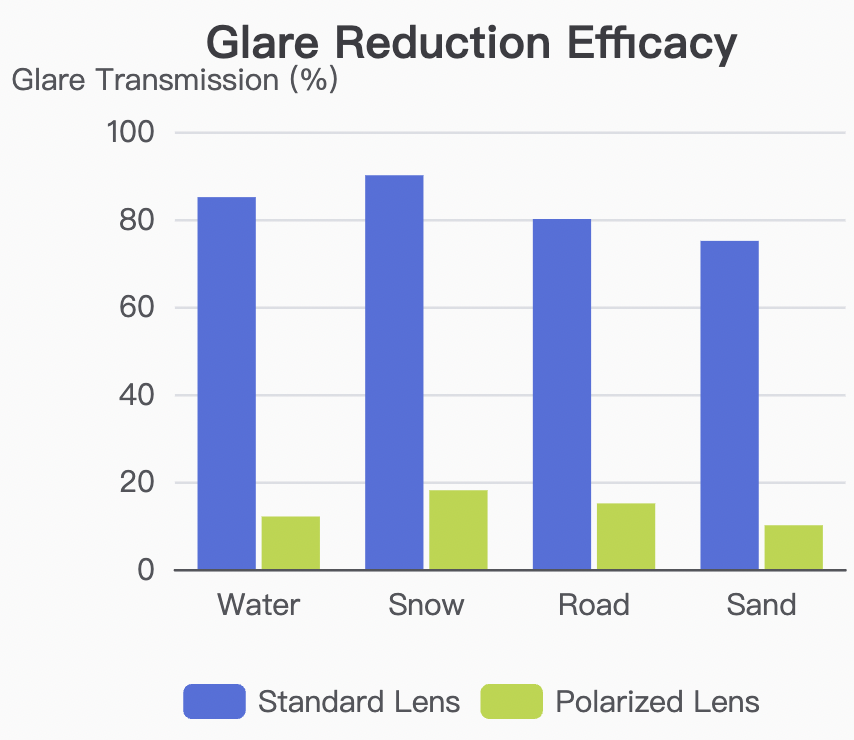
Polarized sunglasses are specialized eyewear designed to reduce glare from surfaces like water, snow, and glass. Staring at harsh reflections strains your eyes, causing fatigue, headaches, and reduced visibility. Severe glare impairs your vision entirely, creating dangerous situations while driving or operating machinery. A specialized chemical film applied to the lenses of polarized sunglasses acts as a microscopic blind, filtering out horizontal light waves.

How Glare Impacts Vision
Here is the key point: horizontal light waves cause intense reflections that standard tinted lenses simply darken without eliminating. This chemical coating dramatically improves visual clarity and safety. Partnering with a reliable custom sunglasses manufacturer provides access to advanced lens technologies that effectively combat these optical challenges.
What exactly are polarized sunglasses?
Polarized sunglasses are optical accessories featuring lenses laminated with a specialized chemical compound that blocks horizontal light transmission. Standard eyewear simply reduces overall light transmission equally across all angles. Polarized options specifically target scattered light bouncing off flat surfaces. Integrating polarized sunglasses into your product lineup requires understanding this distinct optical filtering mechanism.

The Anatomy of the Lens
This is where it gets interesting: the construction dictates the performance. Precision manufacturing applies a polyvinyl alcohol (PVA) film to the core material.
- PVA film layer
- Triacetate cellulose (TAC) or Polycarbonate core
- Anti-scratch coating
- UV400 protective layer
How do polarized sunglasses work to block glare?
They block glare by acting as a vertical microscopic lattice that absorbs horizontally polarized light waves. When sunlight bounces off a flat surface, the light waves align horizontally, creating intense glare. The chemical film applied during manufacturing contains molecules aligned vertically. Searching for[what are polarized sunglasses] reveals the physics behind this targeted filtration.
The Vertical Alignment Principle
What matters most: vertical alignment stops the horizontal waves. This mechanism prevents the intense reflections from reaching the eye.
- Light travels in vertical and horizontal waves.
- Flat surfaces reflect horizontal waves.
- The lens filter absorbs horizontal waves.
- Only vertical light passes through.
Selecting high-grade polarized lens technology guarantees the vertical alignment remains consistent across the entire lens surface.
| Component | Function | Light Impact | |
|---|---|---|---|
| Polycarbonate Base | Impact resistance | Reduces overall transmission | |
| PVA Film | Glare reduction | Blocks horizontal waves | |
| Anti-Reflective Coating | Back-glare reduction | Stops rear reflections |
The precise lamination of the PVA film dictates the overall efficacy of the glare reduction.
What are the benefits of polarized sunglasses?
The primary benefits of polarized sunglasses include enhanced visual clarity, reduced eye strain, and improved contrast in bright conditions. Standard lenses merely dim the environment, leaving blinding reflections intact. By filtering horizontal light, these lenses reveal details hidden beneath water surfaces or obscured by road glare. Knowing polarized sunglasses provide these advantages helps set accurate product specifications.

Real-World Applications
Ready for the good part? Enhanced contrast directly translates to safety and comfort. High-performance eyewear drastically improves visual acuity.
- Sharper contrast outdoors.
- Reduced squinting and eye fatigue.
- Accurate color perception.
- Elimination of blinding reflections.
Strategic Insight: Implementing stringent quality control standards during the PVA film lamination process directly impacts the optical clarity and longevity of the final product. Variances in alignment cause visual distortion, highlighting the need for precision machinery.
Are polarized sunglasses better than regular lenses?
Polarized sunglasses perform better than regular lenses in environments with high glare, though they serve different specific purposes. Regular lenses uniformly decrease light intensity, making them suitable for basic brightness reduction. Polarized options actively filter specific light orientations to restore contrast and clarity. Buyers researching polarized sunglasses often compare these two distinct functional approaches.
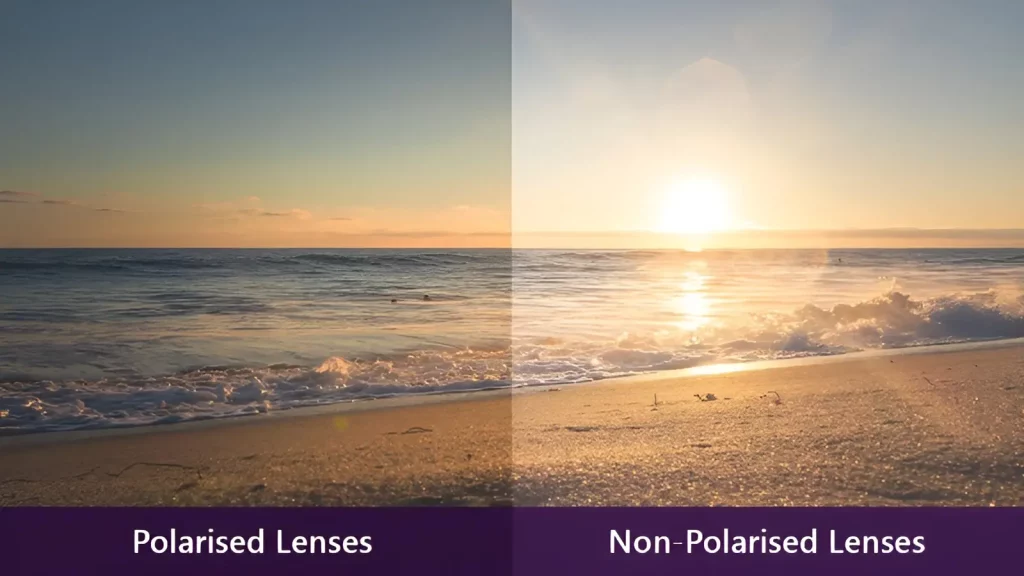
Assessing the Differences
Here is the key point: the environment determines the superiority. High-glare environments demand specialized filtration.
- Regular lenses darken the view.
- Polarized lenses clarify the view.
- Regular lenses suit indoor use better.
- Polarized lenses dominate outdoor activities.
Sourcing products through dedicated wholesale eyewear solutions allows you to offer both variations tailored to specific consumer environments.
| Lens Type | Glare Reduction | Contrast Enhancement | |
|---|---|---|---|
| Standard Tint | Low | Minimal | |
| Polarized | Very High | Excellent | |
| Photochromic | Moderate | Moderate |
Evaluating specific environmental demands guides the selection between standard and specialized optical filters.
What are the disadvantages of polarized sunglasses?
The main disadvantage of polarized sunglasses involves difficulty reading liquid crystal displays (LCDs) and potential issues in icy conditions. The vertical filter can clash with the orientation of light emitted by digital screens, causing them to appear black or severely distorted. When investigating polarized sunglasses, acknowledging these limitations prevents misapplication in specific professional fields.
Understanding the Limitations
This is where it gets practical: recognizing these flaws prevents accidents. Pilots and operators of heavy machinery often avoid them.
- LCD screen blackout.
- Hidden ice patches on roads.
- Distorted views through tempered glass.
- Higher production costs.
When should you wear polarized sunglasses?

You should wear [what are polarized sunglasses] during outdoor activities involving water, snow, or extensive driving. These environments produce severe horizontal glare that standard tints cannot manage. Fishing, boating, and skiing heavily depend on the contrast enhancement these lenses provide. Understanding the optimal usage of [what are polarized sunglasses] directs proper product positioning.
Optimal Use Cases
What is the real story? Matching the lens to the activity maximizes performance. Strategic usage prevents eye fatigue.
- Deep-sea fishing.
- Long-distance driving.
- Snowboarding in bright sunlight.
- Golfing near water hazards.
Integrating durable acetate frame production with polarized lenses creates robust eyewear suited for these demanding environments.
| Activity | Glare Intensity | Polarization Need | |
|---|---|---|---|
| Boating | Extreme | Mandatory | |
| Driving | High | Highly Recommended | |
| Reading Outdoors | Low | Optional |
Aligning optical features with specific environmental hazards ensures maximum utility and user satisfaction.
How can you test if your sunglasses are polarized?
You can test if your sunglasses are polarized by holding them against an LCD screen and rotating them ninety degrees. If the lenses are polarized, the screen will appear to darken or turn completely black at a specific angle. This simple verification confirms the presence of the vertical filter. Checking [what are polarized sunglasses] using this method requires no specialized optical equipment.
The Rotation Method
Here is the key point: the physical rotation reveals the filter alignment. This practical test validates the manufacturing claims.
- Find a computer monitor or phone screen.
- Hold the glasses horizontally.
- Rotate the frames 90 degrees.
- Observe the color shift.
Strategic Insight: Retailers and optical professionals should maintain a polarized testing card on display. This interactive tool provides immediate, physical proof of the lens technology, validating the product’s performance instantly.
How are polarized sunglasses made?
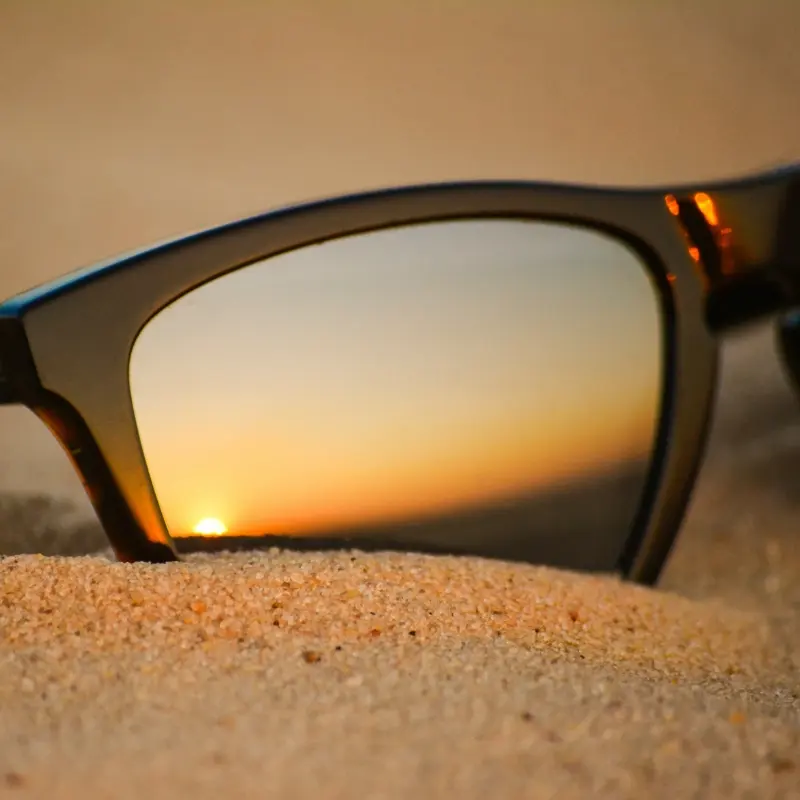
Polarized sunglasses are made by sandwiching a stretched polyvinyl alcohol film between layers of structural lens material like polycarbonate or TAC. The stretching process aligns the film’s molecules in parallel lines to create the polarizing filter. High-precision manufacturing ensures the film remains perfectly aligned during the injection molding or lamination phase. Analyzing their construction reveals a complex, multi-stage production sequence.
The Manufacturing Process
This is where it gets interesting: the structural integrity relies on precision bonding. CNC machining crafts the frames to hold these complex lenses securely.
- PVA film stretching.
- Chemical bonding and lamination.
- Lens cutting and shaping.
- Frame insertion and calibration.
Collaborating with an OEM eyewear supplier guarantees access to the CNC precision required for flawless lens and frame integration.
| Production Stage | Material | Critical Quality Metric | |
|---|---|---|---|
| Film Lamination | PVA / TAC | Perfect vertical alignment | |
| Lens Shaping | Polycarbonate | Zero stress fractures | |
| Frame Assembly | Acetate / TR90 | Secure structural fit |
Maintaining strict tolerances during the lamination phase prevents optical distortion in the finished product.
Do polarized sunglasses offer UV protection?
Polarized sunglasses do not inherently offer UV protection simply by being polarized; the UV-blocking capability requires a separate chemical treatment. Polarization targets horizontal visible light, while UV protection targets invisible ultraviolet radiation. Reputable manufacturers combine both technologies into a single lens package. Determining whether polarized sunglasses have UV filters involves checking the specific product specifications.
Combining Optical Technologies
Ready for the good part? Premium lenses merge multiple protective barriers. Safety requires both glare reduction and radiation shielding.
- Polarization blocks visible glare.
- UV400 blocks UVA and UVB rays.
- Both treatments operate independently.
- High-quality lenses always feature both.
Are polarized sunglasses worth the extra cost? They are worth the extra cost for individuals who frequently operate in high-glare environments.

Value Evaluation
What matters most: long-term eye health and immediate safety outweigh the initial expenditure. Quality materials yield durable performance.
- Prevents cumulative eye fatigue.
- Enhances driving reaction times.
- Provides superior outdoor vision.
- Requires complex manufacturing techniques.
Selecting high-quality eyewear craftsmanship ensures the investment yields long-lasting performance and structural durability.
| Cost Factor | Standard Sunglasses | Polarized Sunglasses | |
|---|---|---|---|
| Material Complexity | Low | High | |
| Production Time | Short | Extended | |
| Optical Value | Basic | Premium |
The specialized production requirements directly translate into superior optical performance and a higher retail value.
Strategic Insight:Offering clearly differentiated product tiers allows businesses to address varying consumer needs. Positioning polarized options as premium, safety-enhancing tools justifies the higher margin and educates the buyer on the tangible benefits.
Conclusion
We have detailed how vertical filtration mechanisms block intense horizontal light waves to improve visual clarity. By analyzing the complex lamination processes and specific material properties, professionals can better evaluate optical products. Understanding these technical elements ensures you select eyewear that provides genuine performance rather than mere aesthetic appeal.
To integrate premium optical products into your inventory, contact us today to discuss custom manufacturing solutions. We engineer advanced visual tools designed to meet rigorous industry standards and specific environmental demands.
FAQ
Q1: Can I wear polarized sunglasses while driving?
Yes, they significantly reduce blinding glare from wet roads and other vehicles. They improve contrast and reaction times during bright daytime driving.
Q2: What is the best material for polarized lenses?
Polycarbonate provides the best balance of impact resistance and optical clarity. TAC lenses offer a lighter, more cost-effective alternative with excellent polarization efficiency.
Q3: How do I know if my polarized sunglasses have UV protection?
Check the manufacturer specifications for a UV400 rating. Polarization and UV filtering are separate treatments, though high-quality lenses usually feature both.
Q4: Can I view my smartphone screen with polarized sunglasses?
Sometimes, but you may experience screen darkening or rainbow distortions. Rotating the phone 90 degrees usually restores screen visibility.
Q5: Are polarized sunglasses better for eye health?
Yes, they prevent squinting and reduce cumulative eye strain caused by harsh reflections. Combined with UV protection, they offer comprehensive defense against environmental damage.