Floating Sunglasses for Swimming and Water Sports: What Actually Makes Them Work
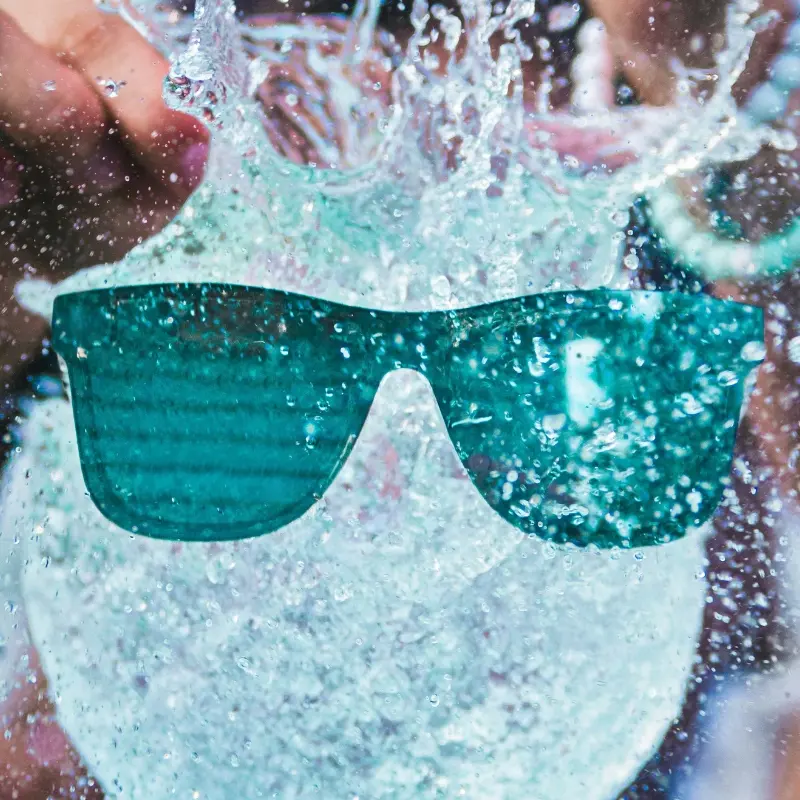
Drop a regular pair of sunglasses in a lake, a pool, or the ocean, and they’re gone. That’s the exact problem floating sunglasses were built to solve — and it’s why they’ve become a standard category for swimmers, anglers, paddlers, and anyone who spends serious time on or in the water.
But “floating” isn’t a gimmick bolted onto an existing frame. It’s a design decision that touches material selection, lens choice, hardware, and fit — all at once. Here’s what actually goes into a pair of sunglasses that performs on the water, not just near it.
What Are Floating Sunglasses?
Floating sunglasses are sunglasses engineered to stay on the water’s surface if they fall off, get knocked loose, or are set down near the water. Unlike standard sunglasses — which sink the moment they hit water, especially metal or acetate frames — floating sunglasses use low-density frame materials and construction methods that keep the whole unit buoyant, lens included.
They’re not the same product as swim goggles. Swim goggles are sealed, watertight eyewear worn underwater. Floating sunglasses are worn above the waterline — swimming, kayaking, paddleboarding, sailing, fishing, jet skiing — anywhere sun glare off water is a problem and losing your eyewear to the current is a real risk.

How Do Floating Sunglasses Actually Float?
Buoyancy comes down to average density relative to water, so every component has to be accounted for — frame, lens, hinges, and screws.
Frame material does most of the work. TR90 and certain grades of polycarbonate or nylon have a density low enough to float on their own, which is why they dominate this category. Standard cellulose acetate and metal frames, by contrast, are denser than water and will sink regardless of how the rest of the glasses are built — which is why floating sunglasses are almost never made in those materials.
Lens material matters just as much as the frame. A polycarbonate or nylon-based lens keeps overall weight down; a glass or heavier composite lens can be enough to tip a borderline-buoyant frame under the waterline.
Hardware is the detail brands often overlook. Standard stainless steel screws and metal hinge pins add localized weight that can pull one corner of the frame down, even if the bulk of the frame floats. Manufacturers building serious floating eyewear typically switch to lightweight alloy or reinforced plastic hardware at the hinge points specifically to avoid this.
Key Features That Matter for Swimming and Water Sports

Polarized Lenses for Glare-Free Vision
Water reflects light horizontally, which is exactly the glare polarized lenses are designed to cut. For swimmers and paddlers, this is less about comfort and more about safety — reduced surface glare means better visibility of obstacles, other swimmers, boat traffic, and changes in water depth or current.
UV400 Protection
Open water reflects a significant share of UV radiation back up at the face and eyes, in addition to direct overhead exposure. Full UV400 protection (blocking both UVA and UVB) is a baseline requirement for any sunglasses marketed for extended water exposure, not an upgrade feature.
Corrosion-Resistant Hardware
Saltwater and chlorine both accelerate corrosion on standard metal components. Screws, hinges, and spring-loaded temples exposed repeatedly to saltwater or pool chemicals need corrosion-resistant coatings or alloys, or the hardware will degrade well before the frame or lens does.
Secure, Non-Slip Fit
Buoyancy only matters if the glasses come off in the first place — but for swimming and active water sports, a secure fit that resists slipping is just as important. Rubberized nose pads and temple tips, along with a wraparound profile, keep the frame in place during strokes, dives, and sudden movement.
Retention Straps and Leashes
Many floating sunglasses ship with an attachable strap or leash as a second line of defense — buoyancy gets the glasses back if they come off, but a strap keeps them from coming off in the first place. This is a small accessory addition that meaningfully increases perceived product value for water sports buyers.
Best Use Cases for Floating Sunglasses
- Swimming and open-water training — glare reduction and secure fit matter more than in casual wear
- Fishing and boating — polarization cuts water-surface glare to help spot fish and read water conditions
- Kayaking, paddleboarding, and sailing — constant water exposure and movement make loss risk high
- Jet skiing and watersports — high-impact conditions where a standard frame is unlikely to survive anyway
Floating Sunglasses vs. Standard Polarized Sunglasses

Standard polarized sunglasses already address glare — that part of the performance is shared. The difference is in the frame engineering underneath. A standard polarized frame in acetate or metal delivers the optical benefit but offers no protection against loss on the water; a floating frame trades some material and design flexibility (heavier, more premium-feeling materials generally don’t float) for that functional guarantee. For brands building a dedicated water sports line, floating construction is the feature that separates a general outdoor sunglasses collection from one purpose-built for the water.
Choosing the Right Frame Material for Water Sports Sunglasses
Not every lightweight material performs the same way in buoyancy testing. In sampling and development, the material choice for floating eyewear usually comes down to a short list:
- TR90 — the most common choice for floating frames; naturally low density, flexible, and impact-resistant, which also helps it survive drops and knocks on boats or rocks
- Foamed or low-density polycarbonate — used when a brand wants a specific weight target or a softer-touch finish while keeping buoyancy
- Nylon composites — common in performance and fishing-specific lines for their combination of flexibility and durability under repeated flexing
Getting this right isn’t just picking a “floats” material off a spec sheet — it’s testing the finished, assembled frame (with lenses and hardware installed) to confirm the whole unit floats as intended, not just the raw frame material in isolation. That distinction is where a lot of first-run water sports sunglasses fail their initial buoyancy testing and need a hardware or lens adjustment before a second sample round.

Frequently Asked Questions
Do floating sunglasses work for prescription lenses? Yes, but the added weight of a prescription lens — especially at higher powers — can affect buoyancy. Frame and lens material need to be selected together, and buoyancy should be re-tested with the actual prescription lens installed rather than a standard demo lens.
Are floating sunglasses as durable as regular sports sunglasses? Generally yes. The materials used for buoyancy — TR90 and similar polymers — are also valued in sports eyewear for impact resistance and flexibility, so durability isn’t usually a trade-off.
Can floating sunglasses be polarized and mirrored at the same time? Yes. Polarization and mirror coatings are independent features and are commonly combined in water sports sunglasses for both glare reduction and additional light filtering.
Do floating sunglasses need a retention strap to work? No — buoyancy and a retention strap solve different problems. A strap prevents the glasses from coming off; buoyancy recovers them if they do. Many water sports buyers want both.
What’s the minimum order quantity for a custom floating sunglasses line? This varies by frame material, lens configuration, and hardware customization, and is best confirmed directly during a project discussion, since buoyancy testing and material sourcing can affect early sample timelines.
Getting buoyancy, lens performance, and hardware durability right at the same time takes more than swapping in a lighter frame material — it’s a detail worth working through on the production side before locking in a first order for a water sports collection.
Let's get started!
Get in touch with a custom eyewear specialist now for a free consultation and instant price quote.
WHATSAPP ME GO!
📱 Scan with your phone to start chatting