Kids' Eyewear MOQ, Packaging, and Multi-Age SKU Planning for Retail Buyers
A common miscalculation in a first children’s eyewear order isn’t about material or design — it’s about math. A brand planning a collection across three age brackets, each in two or three colorways, isn’t placing one order at “the MOQ.” They’re placing what amounts to six to nine separate mini-orders, each carrying its own minimum, and the total commitment adds up faster than a single-style MOQ figure suggests.
This guide walks through how MOQ actually scales across a multi-age children’s line, what packaging choices make sense for this category specifically, and one compliance detail in the youngest size tier that’s easy to miss until a shipment gets held up.
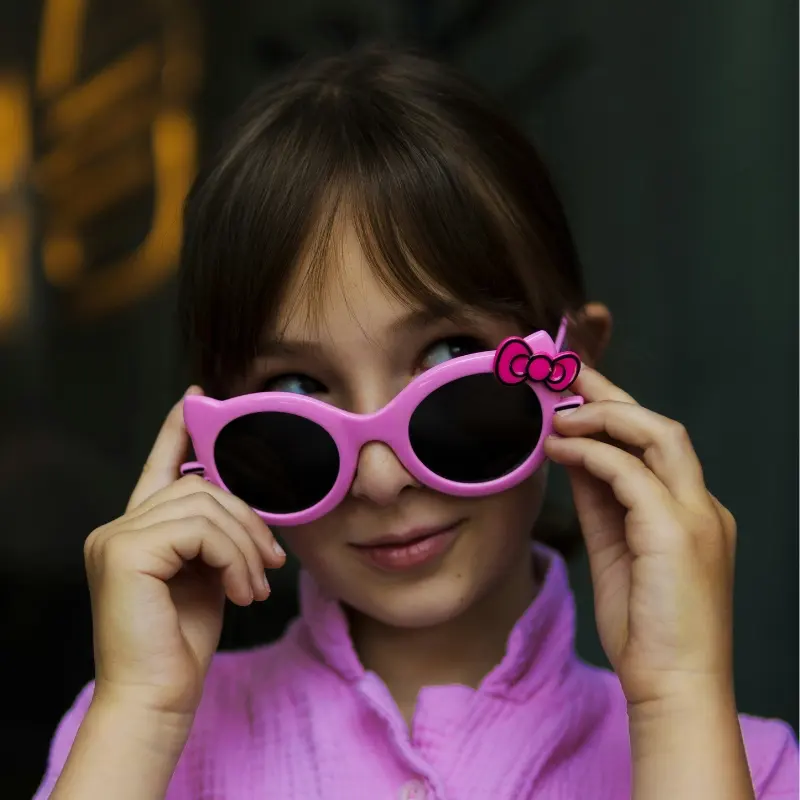
Why MOQ Isn’t One Number for a Multi-Age Collection
Ready-stock styles with a logo added can start as low as 50–100 pieces per style. Custom private-label development with your own colors typically starts around 300–500 pieces per style, and a fully custom OEM style with new tooling generally starts higher, often in the 600–1,200 piece range depending on complexity. These figures are usually quoted per style, per colorway — which is the detail that gets lost when a brand is planning across multiple age brackets at once.
If a collection spans an infant tier, a school-age tier, and a pre-teen tier — the same three brackets covered in our kids’ eyewear sizing guide — and each tier carries two or three colorways, the real commitment is the MOQ multiplied across every size-and-color combination, not a single number. As a reference point, our own production structure runs acetate styles from 300 pieces per style and 100 pieces per colorway, while TR90 and other injection-molded styles typically start from 1,200 pieces per style — numbers worth mapping against your planned SKU count before finalizing how many size tiers and colorways a first collection should carry.
A Practical Way to Plan the SKU Math
Rather than deciding on size tiers and colorways separately, it’s worth working out the full grid before placing a first order:
- Start narrow on colorways per size tier. A first collection often does better launching with one or two strong colorways per age bracket rather than three or four, since each additional colorway adds to the total MOQ commitment without necessarily adding proportional sales.
- Prioritize the size tier with the strongest sell-through data first, if you have any — whether from a pilot batch, a related product category, or retail partner feedback — and expand into additional tiers in a second order once that data exists.
- Ask your manufacturer for MOQ by material, not just by style, since acetate, TR90, and other injection-molded materials typically carry different MOQ structures, which affects how a mixed-material collection’s total order size adds up.
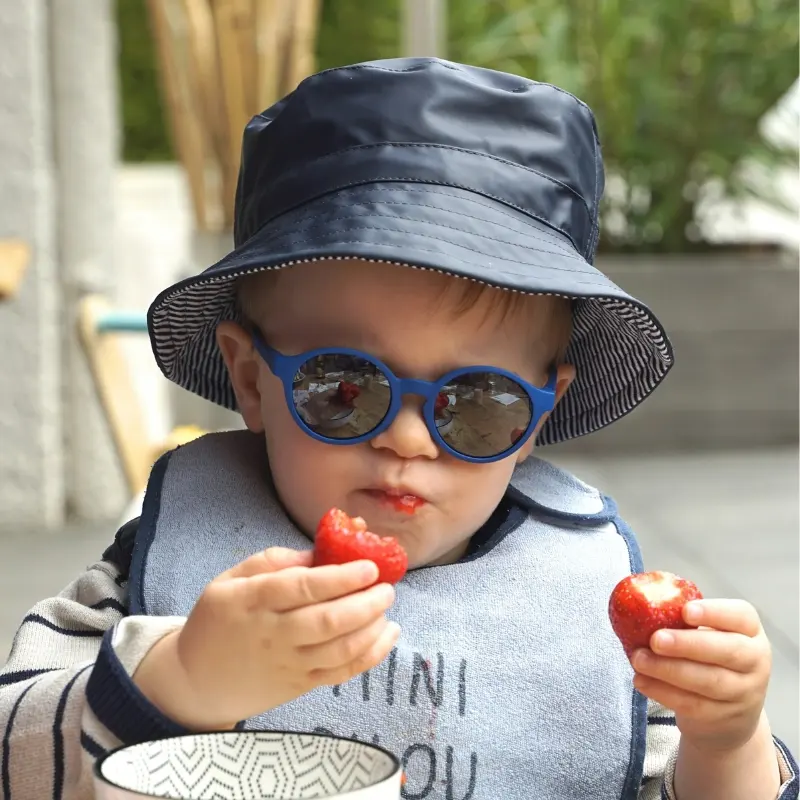
Packaging: Why Kids’ Eyewear Doesn’t Follow Adult Sunglasses Conventions
Standard adult sunglasses packaging tends toward understated presentation — a semi-hard or soft case, a cleaning cloth, a paper box, sometimes a warranty card. Children’s product packaging generally works differently, and for a specific reason tied to how the purchase decision actually happens.
As covered in our guide to designing kids’ sunglasses that sell, a children’s eyewear purchase typically involves two decision-makers with different priorities — the parent screening for durability and value, the child screening for visual appeal. Packaging is one more place this dynamic plays out. Window-box and blister-card style packaging, widely used across children’s toys and products, lets the color and pattern of the frame be seen directly on the shelf — appealing to the child’s filter — while the packaging’s front panel can carry the material, safety, and sizing information the parent is screening for.
This is a meaningful difference from how adult eyewear is typically packaged, where the product is usually kept concealed in a case until purchase. A retail-facing kids’ line generally benefits from packaging that shows the product, not just protects it.
Common Packaging Components for a Kids’ Eyewear Line
- Window box or blister card — shelf-facing packaging that displays the frame’s color and design directly
- Protective case — semi-hard or soft, sized appropriately for smaller frames
- Cleaning cloth, often printed with brand or care instructions
- Care/sizing insert — a simple card noting recommended age range, material, and basic care instructions, which also gives a parent the information they’re screening for at the point of purchase
A Compliance Detail Worth Checking for the Youngest Size Tier
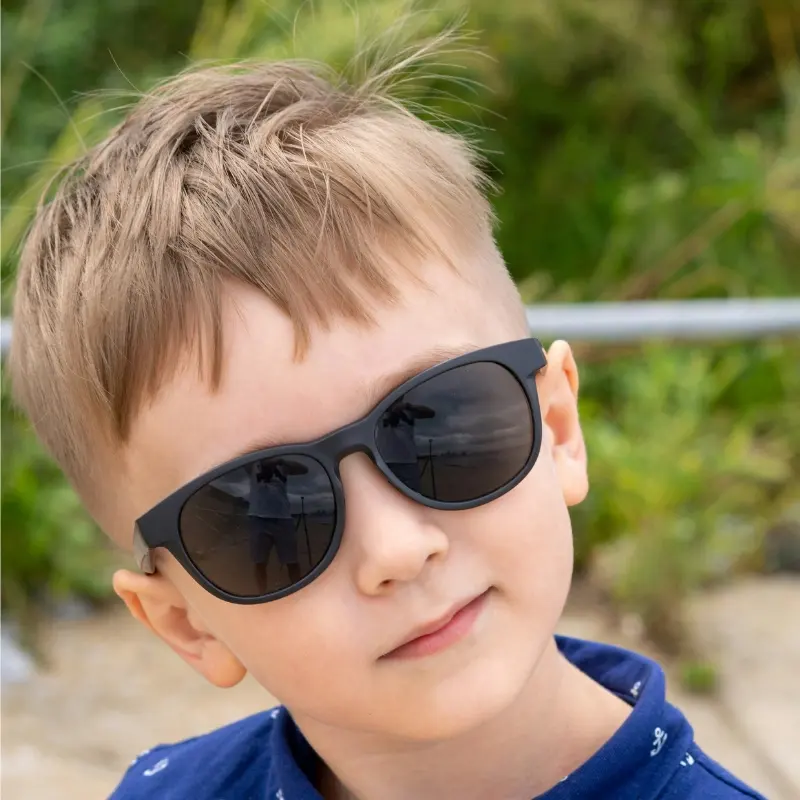
For any style in the infant or toddler size tier — generally products intended for children under 3 — it’s worth confirming whether any component of the frame or its packaging could be considered a detachable small part. In the U.S., products intended for children under 3 that present a choking hazard due to small, detachable pieces fall under the federal small parts ban, which can require specific choking-hazard labeling on the packaging.
This is most relevant for styles with add-on decorative elements, snap-on nose pads, or detachable accessories rather than a standard one-piece frame. It’s a narrow, checkable risk rather than a reason to avoid decorative detail altogether, but it’s worth confirming with your manufacturer at the sampling stage for this specific size tier — a consideration that connects directly to the broader compliance questions covered in our children’s eyewear safety standards guide.
Planning Matrix: Size Tier, Packaging, and MOQ Considerations
| Size Tier | Typical Packaging Approach | MOQ Consideration | Compliance Note |
|---|---|---|---|
| Infant/Toddler (0–3 yrs) | Window box or blister card; simplified, tamper-visible packaging | Often the smallest per-colorway order in a first collection | Check for detachable small parts on this tier specifically |
| School-Age (3–8 yrs) | Window box or clamshell showing color/pattern | Strong candidate for the widest colorway range, given design flexibility | Standard labeling requirements apply |
| Pre-Teen (8+ yrs) | Closer to adult-style packaging — case, cloth, minimal box | Often lower colorway count, higher per-unit price point | Standard labeling requirements apply |
Frequently Asked Questions
Does MOQ apply per style or per colorway?
Typically both — a quoted MOQ is usually per style, per colorway, meaning each additional color variant within the same style carries its own minimum. This is the detail that causes total order size to be underestimated when planning a multi-colorway collection.
How does planning across multiple age brackets affect total order size?
Each size tier functions like a separate mini-collection with its own MOQ and colorway range. A collection spanning three age brackets with two colorways each is effectively six separate minimum orders, not one, which is worth mapping out before finalizing a first order.
Why does kids’ eyewear packaging usually show the product, while adult sunglasses packaging typically doesn’t?
Children’s purchasing decisions typically involve both a parent and a child with different priorities. Window-box or blister-card packaging lets the frame’s color and design be seen directly, appealing to the child, while the packaging’s printed information addresses the parent’s decision criteria — a dynamic less relevant to adult eyewear packaging.
Do all children’s sunglasses need choking-hazard labeling?
No — this generally applies to products intended for children under 3 that include a detachable component small enough to be considered a choking hazard under U.S. federal regulations. A standard one-piece frame without add-on parts typically isn’t affected, but it’s worth confirming with your manufacturer for any infant-tier style with decorative attachments.
Is it better to launch a children’s collection with more size tiers or fewer at first?
Most brands get better results starting with fewer size tiers and colorways, then expanding based on actual sell-through data, rather than launching the full age range and color spread at once. This keeps first-order MOQ commitments manageable while still testing which segment of a children’s eyewear line performs best before scaling further.
Let's get started!
Get in touch with a custom eyewear specialist now for a free consultation and instant price quote.
WHATSAPP ME GO!
📱 Scan with your phone to start chatting