Sun Lens Material Guide: A Technical Overview
A Sun Lens Material Guide categorizes the physical substrates used for optical frames, detailing their specific properties. Buyers often struggle picking the exact components for highly specific market demands. Making the wrong choice leads directly to frustrated customers, higher return rates, and damaged brand reputation. Referencing a reliable Sun Lens Material Guide provides the exact technical parameters needed to select superior optical products. Partnering with a reliable custom sunglasses manufacturer requires knowing these exact specifications.
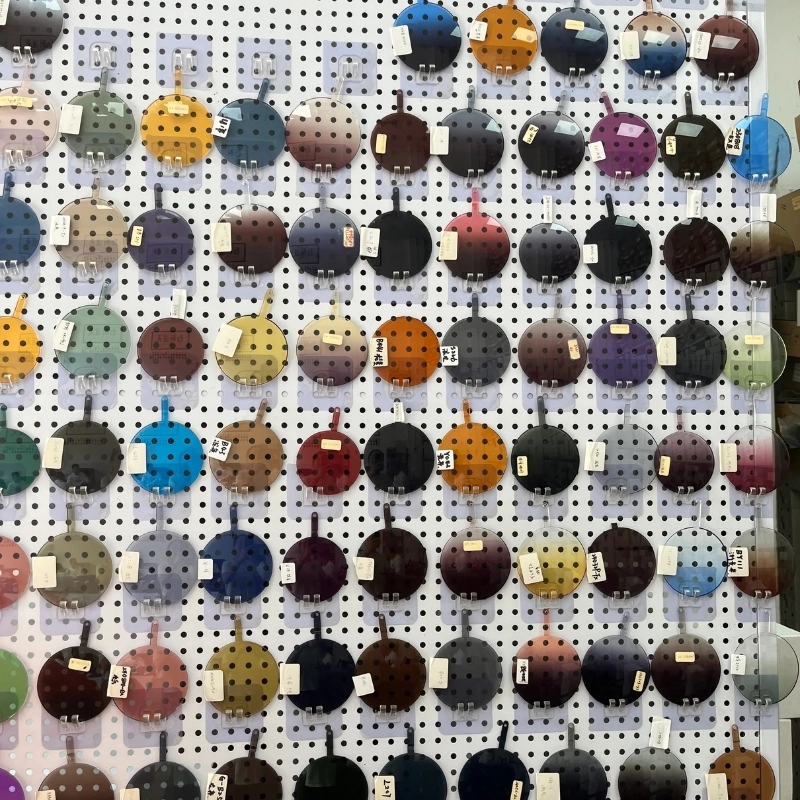
1 What Are Sun Lens Materials and Their Main Differences?
A Sun Lens Material Guide classifies these components as engineered optical polymers or mineral glass formulated for light filtration. Understanding these substrates requires evaluating their specific gravity, refractive index, and scratch resistance metrics. Every comprehensive Sun Lens Material Guide highlights how distinct molecular structures dictate final product performance. You need accurate data to match specific consumer demands with correct manufacturing processes.
The primary differences lie in weight, impact resistance, and absolute optical clarity. Manufacturers balance these physical traits to produce eyewear suited for distinct environmental conditions. A detailed Sun Lens Material Guide prevents costly mismatched applications in wholesale production.
● CR-39 offers excellent clarity with moderate physical weight.
● Polycarbonate delivers extreme impact resistance for active users.
● Mineral glass provides unmatched scratch resistance over time.
● Trivex blends high clarity with superior tensile strength.
Polymer vs Mineral Composition
Here’s the key point… polymers dominate the global market due to their versatility and lighter specific gravity. Mineral options remain relevant for specialized luxury segments demanding absolute scratch immunity. You must weigh the raw manufacturing costs against the intended retail price point. A detailed Sun Lens Material Guide helps streamline this exact financial decision process.
Mineral glass requires completely different grinding wheels and polishing compounds than standard plastics. Factories must dedicate specific production lines to handle these dense substrates without causing micro-fractures. Reviewing your Sun Lens Material Guide dictates which factory setup matches your product line.
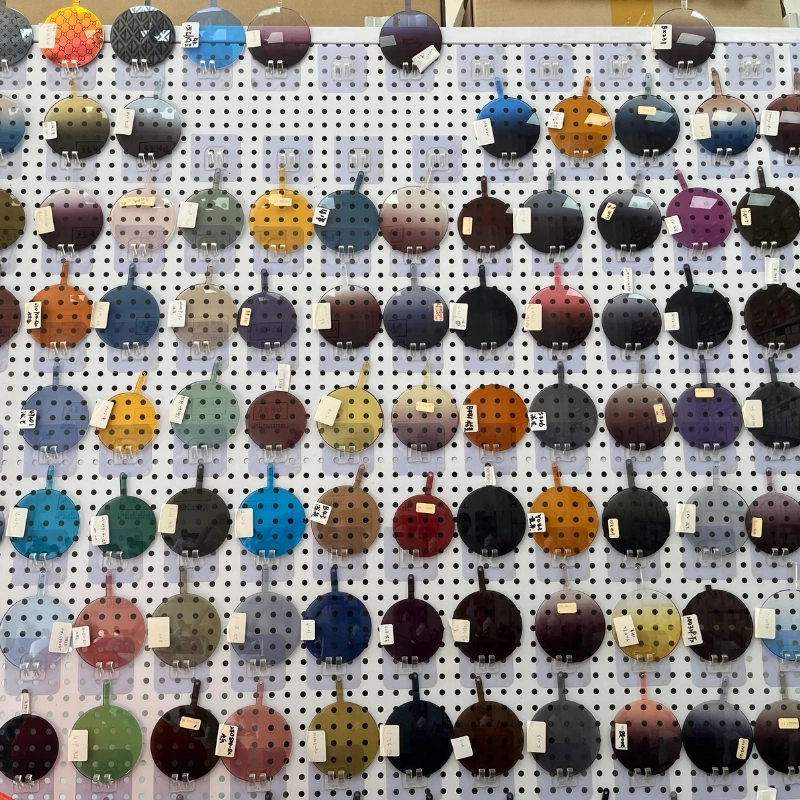
2 How Do Different Sun Lens Materials Work to Protect Eyes?
These substrates protect eyes by absorbing or reflecting harmful ultraviolet radiation through specific chemical additives. A reliable Sun Lens Material Guide details how ultraviolet absorbers integrate directly into the polymer matrix. Some components require external coatings, while others offer inherent structural protection against ultraviolet rays. Consulting a Sun Lens Material Guide clarifies which physical barriers work best for specific environmental hazards.
Ultraviolet filtration prevents severe photokeratitis and long-term macular degradation. The base material dictates whether this protection requires secondary chemical dipping or exists inherently.
● Chemical absorbers block ultraviolet wavelengths below 400 nanometers.
● Mirror coatings reflect intense visible light away from the wearer.
● Anti-reflective back coatings stop light bouncing into the eye.
● Polarizing films eliminate horizontal glare from flat surfaces.
The Role of Optical Filters
This is where it gets interesting… specialized films align microscopically to filter scattered light waves efficiently. If you integrate advanced polarized lens technology , the visual comfort increases dramatically. This process requires precise alignment during the injection molding or lamination phase. Following a trusted Sun Lens Material Guide prevents costly manufacturing alignment errors.
Polarizing axes must sit perfectly horizontally to block reflected glare from roads or water. A fractional degree of misalignment ruins the optical performance entirely.
Secondary Coating Applications
What’s the real story? Bare substrates rarely provide the complete optical package demanded by modern consumers. Factories apply hard coatings and hydrophobic layers in vacuum chambers to finalize the product.
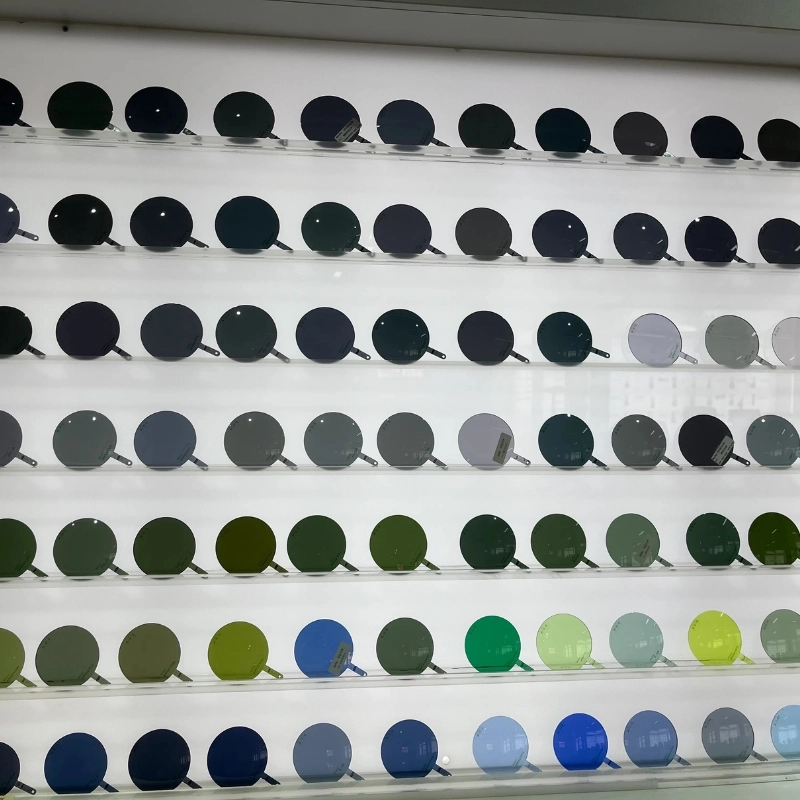
3 Which Sun Lens Material Offers the Best Optical Clarity?
Mineral glass consistently delivers the highest optical clarity among all available commercial options. Any professional Sun Lens Material Guide will reference its exceptionally high Abbe value and low dispersion. CR-39 follows closely behind glass, offering a highly transparent polymer alternative for fashion eyewear. Reviewing a Sun Lens Material Guide shows why luxury brands often prefer these two specific options.
High Abbe values translate directly to sharper vision with minimal color fringing at the periphery. Optical clarity reduces eye fatigue significantly during extended outdoor activities.
| Material | Abbe Value | Clarity Rating | Primary Use | |
|---|---|---|---|---|
| Mineral Glass | 59 | Superior | Luxury Eyewear | |
| CR-39 | 58 | Excellent | Fashion Frames | |
| Trivex | 45 | Very Good | Premium Sport | |
| Polycarbonate | 30 | Fair | Safety Glasses |
Mineral glass retains the highest Abbe value, minimizing chromatic aberration significantly across the visual field.
● High Abbe values indicate drastically less light dispersion.
● Low dispersion reduces distracting color fringing at the periphery.
● Clearer vision reduces eye strain during prolonged daily use.
● Uncompromised clarity defines the premium optical retail sector.
Understanding Chromatic Aberration
Here’s the key point… low Abbe values cause light waves to separate, creating a rainbow effect around objects. This dispersion degrades the visual experience, especially in high-prescription curvature designs. Your Sun Lens Material Guide warns against using low-Abbe substrates for precision tasks like flying or driving.
4 Are Glass Sun Lenses Worth the Extra Weight?
Glass remains valuable for specific markets needing absolute optical perfection and severe scratch resistance. A thorough Sun Lens Material Guide balances this supreme clarity against the heavier physical weight. While heavier, the material rarely degrades, making it perfect for heirloom or luxury optical pieces. Your Sun Lens Material Guide should note that glass requires specialized frame mounting techniques.
Heavier components shift the center of gravity forward on the wearer’s face. Frame designers must widen the nose bridge to distribute this mass comfortably.
● Scratch resistance outperforms all known polymer alternatives easily.
● Optical purity remains perfectly stable over decades of use.
● Chemical resistance prevents degradation from harsh solvents or salt.
● Added weight requires robust acetate frame production techniques.
| Substrate | Scratch Resistance | Weight Profile | Frame Compatibility | |
|---|---|---|---|---|
| Mineral Glass | Supreme | Heavy | Rigid Acetate / Metal | |
| CR-39 | Moderate | Light | Most Frames | |
| Polycarbonate | Low | Very Light | Sport / Wrap | |
| Trivex | Moderate | Ultra-Light | Rimless / Drill Mount |
Glass demands highly rigid frame structures to support its substantial physical mass without bending.
Market Positioning for Glass
What’s the real story? Luxury consumers willingly accept heavier eyewear if the optical experience feels distinctly premium. You target niche demographics prioritizing longevity and visual perfection over athletic functionality. A proper Sun Lens Material Guide maps these specific consumer profiles to the correct substrate choices.
Strategic Insight: Always specify heavier, reinforced hinges when requesting glass components from your manufacturing partner to prevent frame warping over time.
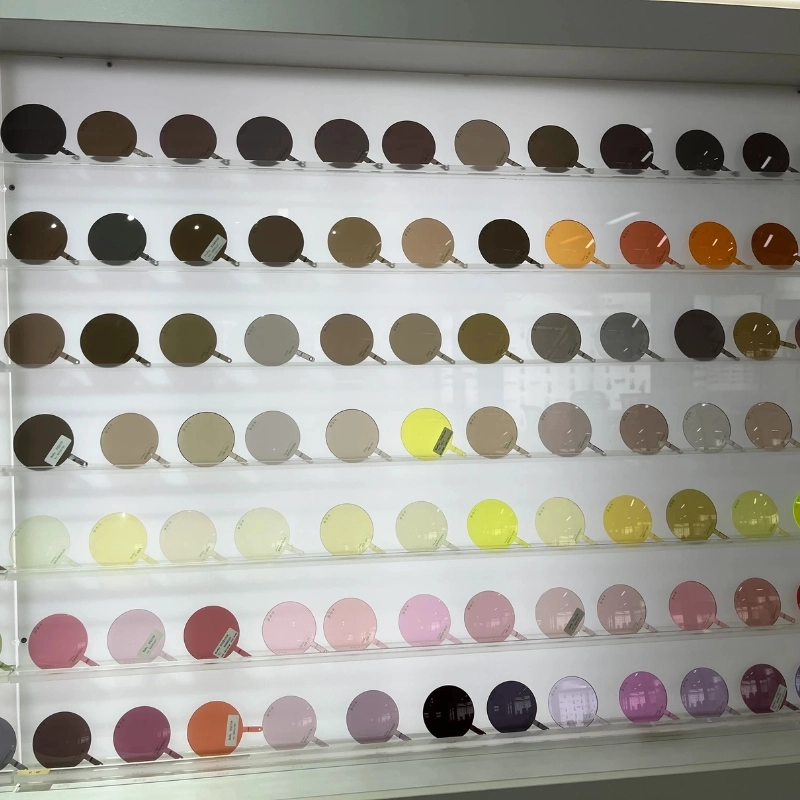
5 What Makes Polycarbonate the Standard for Impact Resistance?
Polycarbonate features a highly flexible molecular structure that absorbs kinetic energy without shattering. Every practical Sun Lens Material Guide emphasizes its mandatory use for children and sports eyewear. The injection molding process aligns the polymer chains to withstand severe blunt force trauma. A Sun Lens Material Guide confirms this substrate passes stringent international safety drop tests.
The aerospace industry originally developed this polymer for helmet visors and canopy windows. Optical manufacturers adapted the technology to protect eyes from high-velocity projectiles and impacts.
● Energy absorption prevents dangerous fragmentation upon heavy physical impact.
● Inherent ultraviolet blocking simplifies the overall secondary coating process.
● Lightweight profile increases wearer comfort during intense athletic activities.
● Injection molding allows for complex wrap-around aerodynamic frame designs.
The Physics of Impact Absorption
This is where it gets practical… rather than resisting force rigidly like glass, polycarbonate flexes microscopically. This rapid deformation dissipates the energy across the entire surface area safely.
Production Considerations
Ready for the good part? Factories mold polycarbonate extremely quickly, lowering mass production costs significantly. However, the soft surface mandates an immediate anti-scratch hard coating application.
6 How Does Trivex Compare to Polycarbonate for Sunglasses?
Trivex provides similar impact resistance but delivers a noticeably higher Abbe value for sharper vision. A modern Sun Lens Material Guide highlights Trivex as a premium hybrid optical solution. It weighs slightly less than polycarbonate while offering superior chemical resistance against common solvents. Your Sun Lens Material Guide will show Trivex requires different edging equipment during final assembly.
Polyurethane chemistry gives Trivex its unique combination of strength and optical clarity. It bridges the gap between high-impact safety and premium visual performance effortlessly.
| Metric | Trivex | Polycarbonate | Impact Level | |
|---|---|---|---|---|
| Specific Gravity | 1.11 g/cm3 | 1.20 g/cm3 | High | |
| Abbe Value | 45 | 30 | High | |
| Chemical Immunity | Superior | Poor | High | |
| Machinability | Excellent | Poor | High |
Trivex boasts a remarkably low specific gravity, making it the lightest optical substrate commercially available.
● Sharper peripheral vision due to significantly lower chromatic dispersion.
● Lighter specific gravity makes frames feel nearly weightless during wear.
● Chemical immunity prevents severe stress cracking near drill holes.
● Superior tensile strength supports minimalist architectural frame designs.
The Chemical Advantages
What matters most… Trivex resists damage from acetone and rubbing alcohol effortlessly, unlike traditional polycarbonate substrates. This durability extends the lifespan of the eyewear in demanding professional or industrial environments. A precise Sun Lens Material Guide dictates using Trivex for high-end drill-mount rimless frames.
Strategic Insight: Select Trivex when designing high-end rimless eyewear, as its superior tensile strength drastically reduces the return rate caused by drill-hole fractures.
7 What Are CR-39 Lenses and Why Are They Popular?
CR-39 is a thermosetting plastic offering near-glass optical clarity at half the actual weight. A fundamental Sun Lens Material Guide recognizes this polymer as the industry standard for fashion frames. It accepts tinting dyes exceptionally well, allowing designers to create endless custom color variations. Reviewing a Sun Lens Material Guide explains why optical laboratories prefer its predictable machining characteristics.
The liquid casting process cures the monomer slowly, resulting in low internal stress. This structural stability prevents warping under extreme ambient temperature fluctuations.
● Outstanding optical clarity rivals traditional heavy mineral glass options.
● Superior dye absorption allows for vibrant, consistent custom tinting.
● High resistance to pitting from hot sparks or industrial welding.
● Excellent machinability speeds up the final factory assembly line.
Manufacturing Adaptability
Here’s the key point… factories love CR-39 because it cuts cleanly without melting during high-speed edging. This stability supports wholesale eyewear solutions by keeping defect rates incredibly low. For technical specifications on this polymer, authoritative resources like Wikipedia outline its exact chemical history.
The Dyeing Process
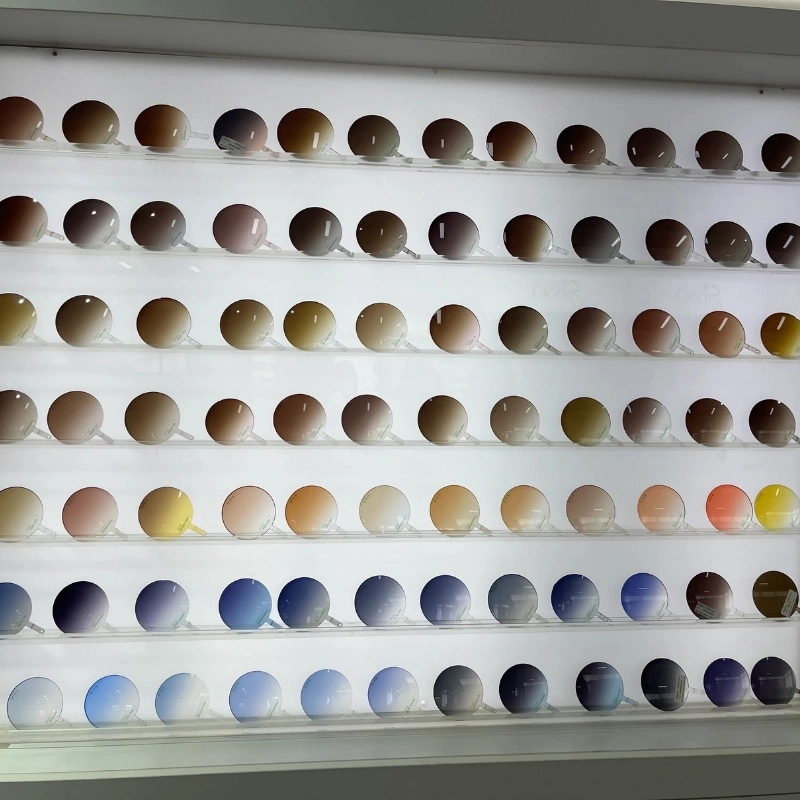
This is where it gets interesting… technicians submerge the cured plastic into heated dye baths to achieve precise gradient fades. The porous molecular structure absorbs the pigment evenly across the entire surface.
8 How Do Nylon Lenses Perform in High-End Sport Eyewear?
Nylon substrates offer unmatched flexibility and chemical memory, making them ideal for aggressive wrap-around athletic frames. Any specialized Sun Lens Material Guide notes their resistance to stress cracking under extreme tension. Manufacturers heat and bend nylon easily, holding complex curvatures without optical distortion. A Sun Lens Material Guide details how nylon prevents catastrophic failure during high-stress sporting activities.
Polyamide formulations resist severe temperature drops, preventing the plastic from becoming brittle in freezing conditions. High-altitude mountaineering eyewear relies heavily on this specific thermal stability.
| Property | Nylon Polyamide | Standard CR-39 | Base Curve Limit | |
|---|---|---|---|---|
| Flexibility | Very High | Rigid | 10-Base | |
| Thermal Stability | Outstanding | Good | 6-Base | |
| Chemical Memory | Excellent | None | 10-Base | |
| Application Focus | Extreme Sports | Casual Fashion | 8-Base |
Nylon supports higher base curves effortlessly, fitting snugly against the wearer’s face to block wind.
● Incredible flexibility allows for sharp curvature in aerodynamic sport designs.
● Memory retention keeps the optical center perfectly aligned during movement.
● Resistance to temperature fluctuations maintains structural integrity in harsh climates.
● Ultralight density prevents the frames from slipping down the nose.
Achieving Complex Geometries
Ready for the good part? Designers push boundaries with nylon because it handles drill holes and deep grooves simultaneously. The material flexes upon impact and instantly snaps back to its original optical shape.
9 What Are TAC Lenses and Are They Good for Sunglasses?
TAC components consist of multiple laminated cellulose acetate layers surrounding a central polarizing film. A commercial Sun Lens Material Guide categorizes TAC as an extremely cost-effective polarizing solution. They offer excellent glare reduction but lack the severe impact resistance of polycarbonate substrates. A Sun Lens Material Guide recommends TAC primarily for budget-friendly lifestyle and promotional eyewear.
Tri-Acetate Cellulose undergoes a pressing process to bond the protective layers together permanently. The final sheet gets stamped into individual shapes for mass assembly.
● Ultra-thin profile keeps the overall retail frame weight minimal.
● Cost-effective production supports much lower retail price points.
● Excellent polarization efficiency reduces environmental horizontal glare effectively.
● Flexible sheets adapt easily to standard optical frame grooves.
The Lamination Process
What matters most… the binding adhesives must withstand high humidity to prevent permanent layer delamination. According to The Vision Council , maintaining strict quality control during lamination is non-negotiable. A dedicated Sun Lens Material Guide warns against using TAC in rimless frame designs entirely.
| Material | Cost Profile | Delamination Risk | Primary Market | |
|---|---|---|---|---|
| TAC Laminate | Very Low | Moderate | Mass Promotional | |
| Cast CR-39 | Medium | Zero | Mid-Tier Fashion | |
| Injected Poly | Low-Medium | Zero | Entry Sport | |
| Nylon | High | Zero | Premium Sport |
TAC provides the most economical entry point for polarized optical products worldwide.
10 How Should You Choose the Right Sun Lens Material?
Selecting the correct substrate demands balancing optical clarity, target demographic safety, and manufacturing costs. A comprehensive Sun Lens Material Guide acts as your primary roadmap for these critical financial decisions. You must align the physical material properties with the specific lifestyle of your target consumer. Using a Sun Lens Material Guide guarantees you meet both safety regulations and fashion expectations perfectly.
Brands fail when they specify cheap substrates for high-stress athletic applications. Aligning the physical properties with the correct market segment builds lasting consumer trust.
● Evaluate impact requirements based strictly on athletic or casual end-use.
● Assess budget constraints regarding raw material and factory manufacturing expenses.
● Determine the necessary optical clarity for the specific user demographic needs.
● Match the substrate flex characteristics with the chosen frame architecture.
Finalizing Your Production Strategy
Here’s the key point… matching the right frame architecture to the right lens substrate determines final product success. You need a trusted supply chain to execute the strict technical requirements flawlessly. A precise Sun Lens Material Guide makes your communication with overseas factories clear and highly effective.
Strategic Insight: Always request physical prototypes featuring different substrates in the identical frame design to evaluate weight balance before authorizing mass production.
Industry Vision and Final Thoughts
A thorough Sun Lens Material Guide categorizes the complex physical properties of modern optical substrates. We evaluated the specific technical differences separating dense mineral glass, flexible polycarbonate, stable CR-39, and advanced nylon polymers. You now possess the factual data required to source and evaluate wholesale eyewear components accurately. The global optical industry continues demanding higher precision, and mastering these specific technical specifications defines future market leadership.
FAQ Section
Q1: Can I use CR-39 lenses for rimless sunglasses?
CR-39 lenses can be used in some cases, but they are generally not recommended for rimless sunglasses. Due to their relatively lower tensile strength, they are more prone to cracking around drill holes over time, especially with frequent use.
For better durability and long-term performance, materials such as Trivex or polycarbonate are preferred, as they offer higher impact resistance and can better withstand the stress of drill-mounted rimless frames.
Q2: What is the best sun lens material for impact resistance?
Polycarbonate and Trivex offer the highest impact resistance available. These substrates absorb severe kinetic energy without shattering, making them mandatory for sports applications.
Q3: How do I know if glass lenses are right for my product line?
Glass fits best if your target market prioritizes extreme scratch resistance and pure optical clarity. You must accept a heavier product and utilize reinforced frame designs.
Q4: Are TAC lenses durable enough for high-end eyewear?
No, TAC lenses scratch easily and can delaminate under high heat or severe humidity. They serve best in budget-friendly, mass-market promotional sunglass lines.
Q5: Does a higher Abbe value mean better vision?
Yes, a higher Abbe value indicates significantly lower chromatic dispersion. This translates to sharper peripheral vision and noticeably reduced eye strain for the wearer.
Let's get started!
Get in touch with a custom eyewear specialist now for a free consultation and instant price quote.
WHATSAPP ME GO!
📱 Scan with your phone to start chatting