Why Quality Sunglasses Matter for Your Brand: A Manufacturer's Perspective
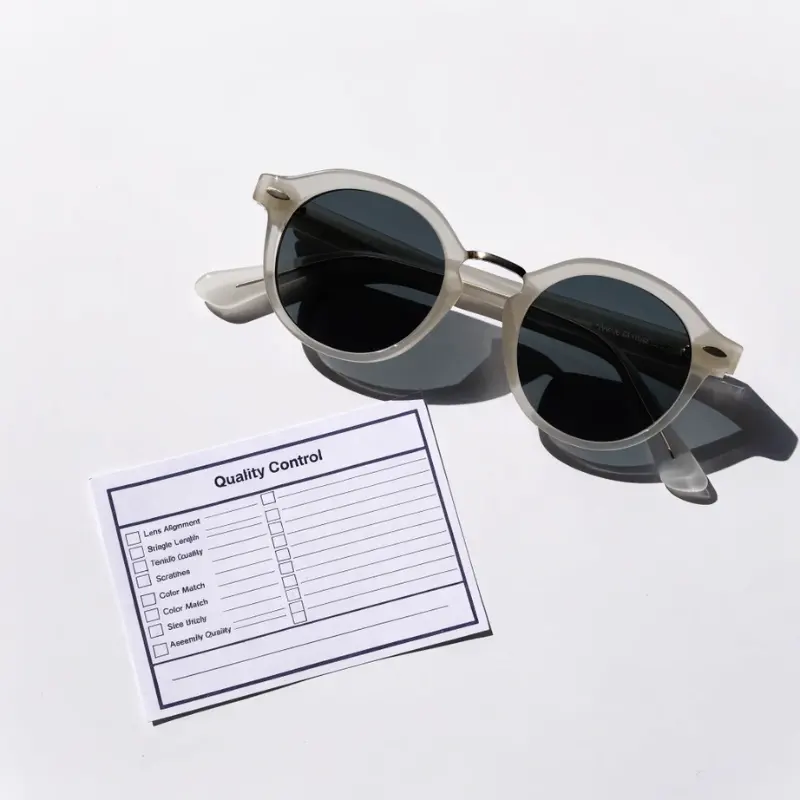
“Quality” is one of those words that gets used so often in eyewear that it’s started to lose meaning. Every factory claims it. Every brand promises it. Every product listing mentions it.
But when a brand owner asks us — after receiving a bulk order that didn’t meet expectations — why their sunglasses feel different from the samples, the answer almost always comes down to decisions made earlier in the process. Decisions about materials, construction, and QC standards that seemed like minor details at the time.
This is what quality actually looks like from the manufacturing side — and why it matters more for your brand than you might expect.
Quality Isn’t a Single Decision — It’s a Sequence of Them
Most brand owners think about quality at the end of the process: when they receive their order and hold the product in their hands. But by then, every meaningful quality decision has already been made.
The material was chosen at the brief stage. The hinge supplier was set when the sample was approved. The polishing standard was defined — or left undefined — when the factory received the order. The lens spec was confirmed, or assumed, when payment was made.
This is why two products that look similar in a photo can feel completely different in hand. One was built from a sequence of deliberate decisions. The other was built from defaults.
Understanding where those decisions happen — and what they mean — is the first step to building a product line your customers will actually come back for.
Where Quality Differences Actually Show Up
Frame Material: More Than Aesthetics
The material choice sets the ceiling for everything that follows. It determines what finishes are possible, how the frame ages, how it feels on the face, and what it communicates about your brand before anyone reads a single word of your marketing.
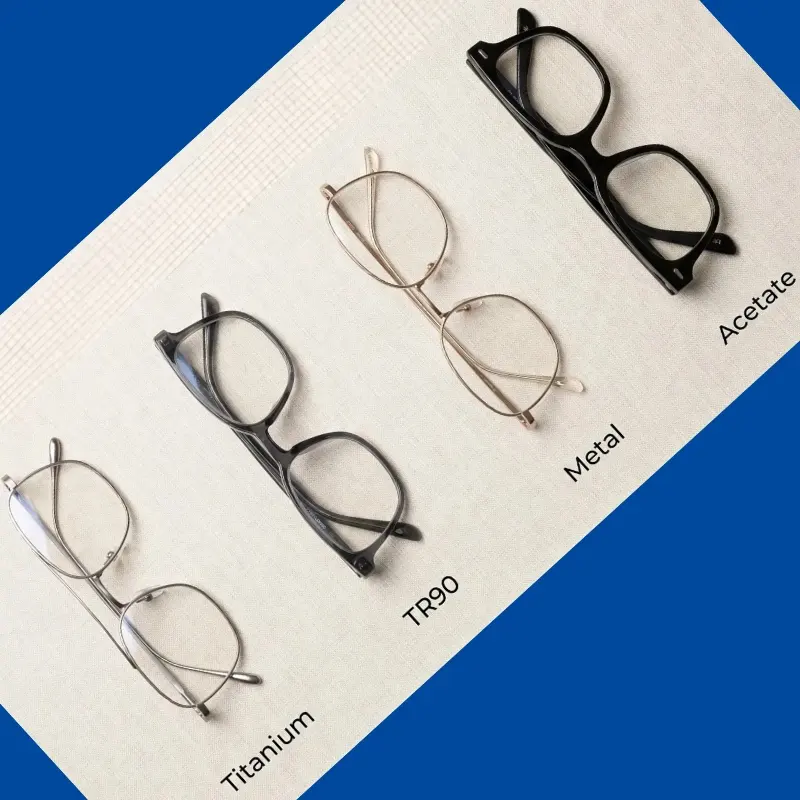
Acetate is the material most associated with quality in fashion eyewear — for good reason. A well-made acetate frame has visual depth that injection-molded plastic simply cannot replicate. The color is in the material itself, not painted on. It polishes differently at different thicknesses, producing a range of finishes from high-gloss to matte that hold up over years of wear. Mazzucchelli acetate — sourced from Italy — is the benchmark that most premium brand buyers are referencing when they say they want “that quality feel.”
TR90 and injection-molded frames are not lower quality by definition — they’re a different product for a different use case. Ultra-lightweight, flexible, and excellent for sport and active lifestyle categories. The quality question here is about execution: consistency of molding, uniformity of color, precision of hinge integration.
Metal frames live or die on their plating. A stainless steel frame with well-applied PVD coating will outlast most acetate frames. The same frame with a rushed electroplating job will start showing base metal within months. The difference in cost at the factory level is small. The difference in customer experience is significant.
Material quality is not about spending more. It’s about matching the right material and spec to your product category — and then executing it consistently.
Hinge Construction: The Detail That Defines Daily Wear
Ask any experienced eyewear buyer what separates a $25 pair of sunglasses from a $150 pair, and most will point to the hinge before they mention anything else.
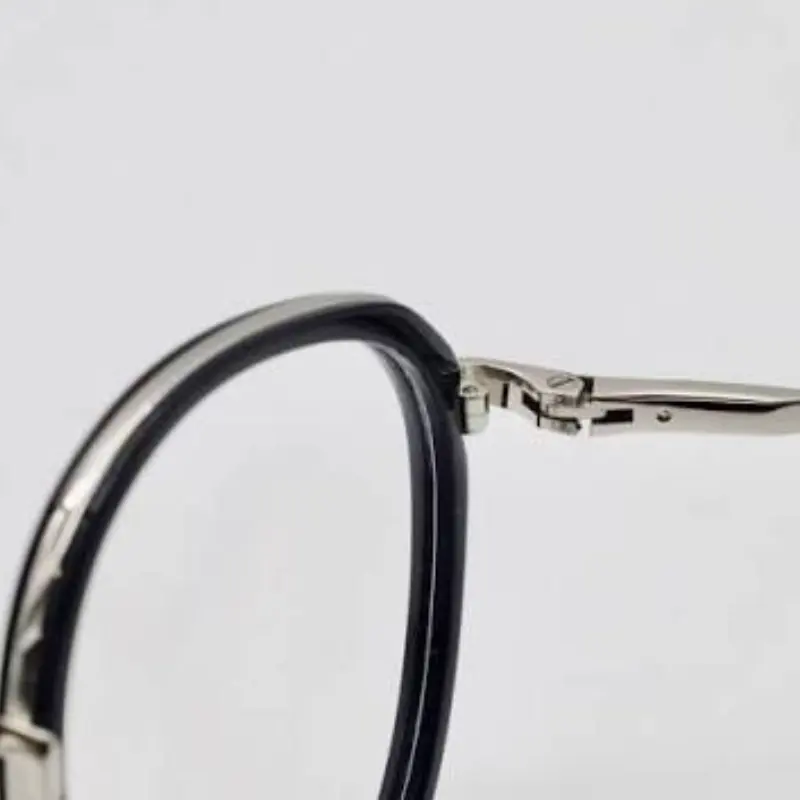
A barrel hinge with tight tolerances opens smoothly, closes without wobble, and maintains its action after thousands of cycles. The same hinge made with looser tolerances feels fine on day one — and starts to feel loose within weeks of regular wear.
Spring hinges add flexibility and reduce the stress that causes fractures at the hinge point. They’re more expensive to produce and to assemble, but they extend the usable life of the frame significantly — which is a direct customer satisfaction variable.
The hinge is also where brand longevity lives. A customer whose frames hold up after two years becomes a repeat buyer. One whose frames loosen after two months does not.
Lens Quality: The Functional Core
The frame is what a customer picks up. The lens is what they experience every day they wear the product.
A low-cost TAC polarized lens does the job — but the difference between a 95% efficiency lens and a 99.9% efficiency lens is visible. The 99.9% lens produces cleaner contrast, truer color rendering, and less visual fatigue over extended wear. It’s also verifiable: polarization efficiency appears on lab reports, and the difference is real, not marketing language.
Beyond polarization, lens clarity is a function of material and manufacturing precision. Optical distortion — that slight warping you notice when you move your eyes to the edge of the lens — is a lens quality issue. It’s more noticeable in larger frame shapes and wraparound styles. It’s also one of the most common sources of consumer complaints in the $30–$80 retail tier.
The lens is also where compliance lives. UV400 confirmation, CE marking requirements, ANSI Z80.3 compliance for the US market, AS/NZS 1067 for Australia — these are documented and verifiable. A quality manufacturer provides test reports. A factory that can’t produce them is a liability for any brand selling in regulated markets.
Surface Finish: What the Customer Feels
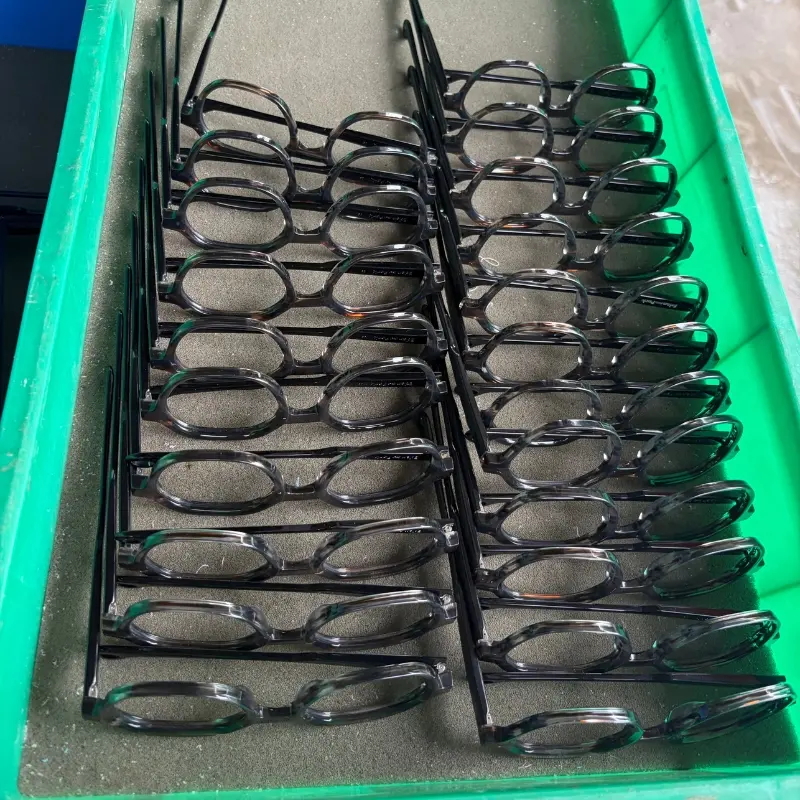
Polishing is one of the most labor-intensive stages in acetate frame production, and one of the most variable. A properly polished frame goes through multiple stages — rough cut, tumbling, hand finishing — that collectively take over a hundred hours per batch. The result is a surface that catches light cleanly, feels smooth without feeling slick, and holds its finish over time.
A frame that’s been under-polished has micro-scratches visible in certain light. One that’s been over-treated feels artificially glossy and shows wear patterns faster. The difference is craft and time — two things that have a cost.
Logo application follows the same logic. A laser-engraved temple logo has depth and permanence. Pad printing can be excellent or prone to chipping depending on the ink adhesion process and the number of coats applied. These details don’t show up in a product photo, but they show up in every interaction your customer has with the product.
What Quality Means for Your Brand Specifically
Return Rates and Customer Lifetime Value
Product quality is a retention variable. In most eyewear categories, first-time purchases are driven by design and price. Repeat purchases are driven by experience with the product.
A customer whose sunglasses hold up through a summer of real use — beach days, car trips, being sat on occasionally — is a customer who comes back. One whose hinge loosens, whose lens coating bubbles, or whose frame starts to discolor after a few months is unlikely to reorder — and likely to leave a review that costs you the next ten customers.
The margin math on quality is usually favorable: the cost difference between a well-made pair and a poorly made pair at the factory level is often small. The revenue difference, measured in repeat purchase rate and return costs, is usually much larger.
Wholesale and Retail Credibility
If you’re selling B2B — placing product with boutiques, surf shops, outdoor retailers, or department stores — quality isn’t just a consumer issue. It’s a buyer credibility issue.
A retailer who returns to your line season after season does so because the product performs and customers don’t bring it back. A retailer who takes one buy and doesn’t repeat almost always has a product experience story behind it.
Quality documentation matters here too. Buyers at larger retailers will ask for test reports. CE marking for EU distribution. UV400 certification for claims on packaging. A brand that can produce this documentation on request is a brand that can open more doors.
Price Point Integrity
Quality and pricing are connected — but not in the way most people assume.
A well-made product at a fair price is defensible in any market. A poorly made product at a high price is one bad review away from a problem. The brands that sustain premium price points over time are the ones where the product earns it — where a customer holds the frame, opens and closes the temples, looks through the lens, and concludes that the price makes sense.
That conclusion happens at the product level. It’s built in the brief, confirmed in the sample, and delivered in the bulk. No amount of marketing can substitute for a product that doesn’t hold up to scrutiny.
The Practical Takeaway
Quality in sunglasses manufacturing is not about paying the highest price or choosing the most prestigious material. It’s about making deliberate decisions at each stage of the development process — material selection, component specification, surface finishing, lens sourcing, QC standards — and having a manufacturing partner who executes those decisions consistently.
The brands we see build lasting customer loyalty are almost always the ones who engaged seriously at the brief and sample stage: who asked questions about hinge suppliers, requested lens test reports, approved surface finish standards, and checked packaging execution before bulk. The ones who treat quality as a checkpoint at the end of the process — rather than a standard set at the beginning — are the ones who come to us with problem orders.
If you’re building a product line and want to understand how each quality decision affects your end product and your brand positioning, start a conversation with our team. We’re happy to walk through the specific decisions that matter most for your category.
Frequently Asked Questions
How do I assess whether a factory’s quality claims are genuine? The most direct way is to look at what documentation they can provide: lens test reports (UV400, polarization efficiency), CE or ANSI compliance certificates, and whether their sampling process is structured. Beyond that, the sample itself tells you a great deal — hinge action, surface finish, logo execution. A factory that answers your questions about materials and construction in specific, technical terms is almost always one that’s actually managing quality, not just claiming it.
Does more expensive material always mean better quality? No. Quality is a combination of material and execution. Mazzucchelli acetate with poor finishing is not better than domestic acetate with careful polishing. Titanium with low-grade hinge components will still develop problems. Choosing the right material is step one — consistent execution is what determines the actual quality of the finished product.
What quality indicators should I prioritize during sample review? Focus on four things first: hinge action and stability (open and close it many times), lens optical clarity (look for distortion at the edges), surface finish consistency (check in both natural light and direct light), and logo depth and adhesion. These four areas are where bulk production most commonly diverges from sample quality, and where customer complaints concentrate.
Where do quality problems most commonly occur in production? From our experience, the highest-frequency issues cluster in three areas: surface finishing (insufficient polishing time), hinge components (substitution with lower-tolerance parts), and lens batch consistency (color or polarization efficiency variation between batches). These are also the three areas hardest to verify remotely through photos or video — which is why sample sign-off and pre-shipment QC both matter.
What is the actual cost impact of quality investment on my pricing? At the factory level, upgrading key components — better hinges, higher-efficiency polarized lenses, additional polishing time — typically adds $1–$3 per pair. The retail price differential those upgrades support is usually $20–$50. More importantly, they affect repeat purchase rate and return rate — two metrics that matter more to long-term brand economics than per-unit margin.
Related Reading
Let's get started!
Get in touch with a custom eyewear specialist now for a free consultation and instant price quote.
WHATSAPP ME GO!
📱 Scan with your phone to start chatting