Acetate Frame Thickness: A Buyer's Guide to Getting the Spec Right
When a brand tells us “we want an 8mm frame,” our first question back is almost always: do you mean 8mm sheet, or 8mm at a specific point on the finished front? It sounds like a small distinction. In practice, it’s the single most common source of “this isn’t what we ordered” conversations we have with new clients during first sampling.
Acetate thickness gets talked about a lot in terms of style — chunky versus slim, retro versus minimal. That part matters, but it’s not where most sampling disputes actually happen. They happen in the gap between what a buyer pictures when they say a number in millimeters, and what a factory actually measures. This guide covers both: what the common thickness ranges mean for design, and — more importantly — how to write thickness into a spec sheet so the first sample matches what you had in mind.
Sheet Thickness vs. Finished Thickness: Two Different Numbers
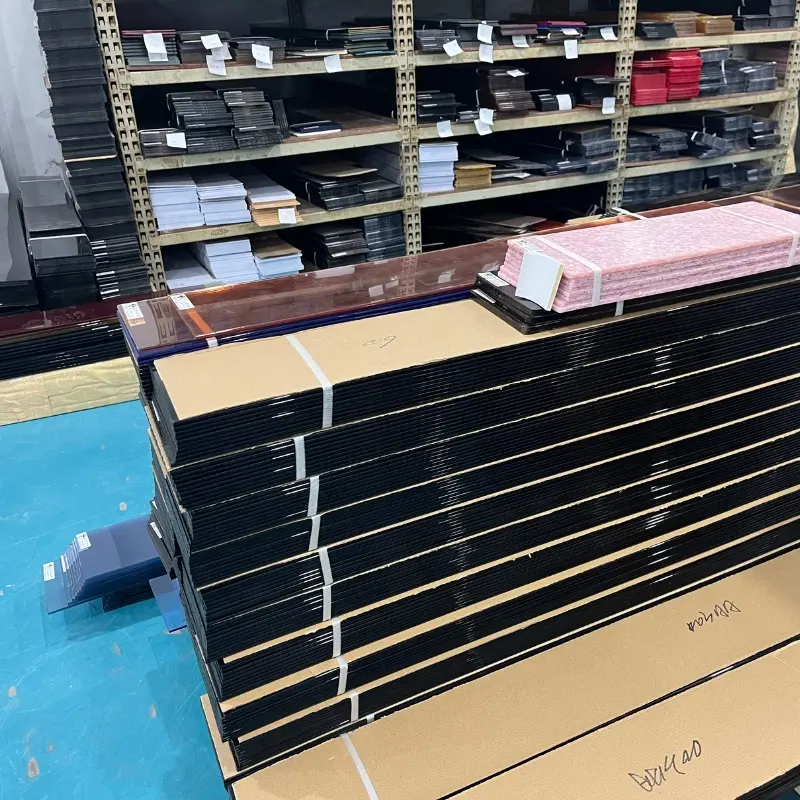
Acetate frames start life as a flat sheet — cellulose acetate pressed and laminated into blocks, then sliced into sheets of a set thickness, commonly sold in standard sizes around 170mm x 1400mm. That sheet thickness is the raw material spec: what a supplier like Mazzucchelli, Jinyu, or Eleung quotes when they talk about “6mm acetate” or “4mm acetate.”
The finished thickness — what a wearer actually feels at the rim, the bridge, or the temple — is almost always less than the sheet thickness. Once the front is CNC-cut, the edges are beveled, and the whole piece goes through tumbling and hand polishing, material is removed at every stage. A front cut from 6mm sheet might read closer to 5mm to 5.5mm at the rim once it’s finished, and thinner still at the beveled edge.
This is exactly where the confusion starts. A buyer who says “I want a 6mm frame” is usually picturing the finished feel in their hand, not the raw sheet spec. If that number goes into a tech pack without saying which one it refers to, the factory has to guess — and a guess that turns out wrong means a re-cut, a delay, and a frustrated first impression with a new supplier.
How Thickness Moves Through the Production Line

It helps to see where the material actually goes, so “why is it thinner than I expected” has a concrete answer instead of a vague one.
- Sheet selection. The front and the temples are usually cut from different sheet thicknesses. In our workshop, a common combination is 6mm sheet for the front and 3.5–4mm sheet for the temples, since temples don’t need to carry as much bulk and the thinner stock keeps the overall frame from feeling front-heavy.
- CNC cutting. The rough shape is cut from the sheet on a CNC mill. At this stage the piece is still close to its original sheet thickness.
- Beveling and edge shaping. The rim edges, lens groove, and bridge are shaped and beveled, which is where a meaningful amount of thickness gets removed — particularly around the eye-wire, where the groove for the lens has to be cut in.
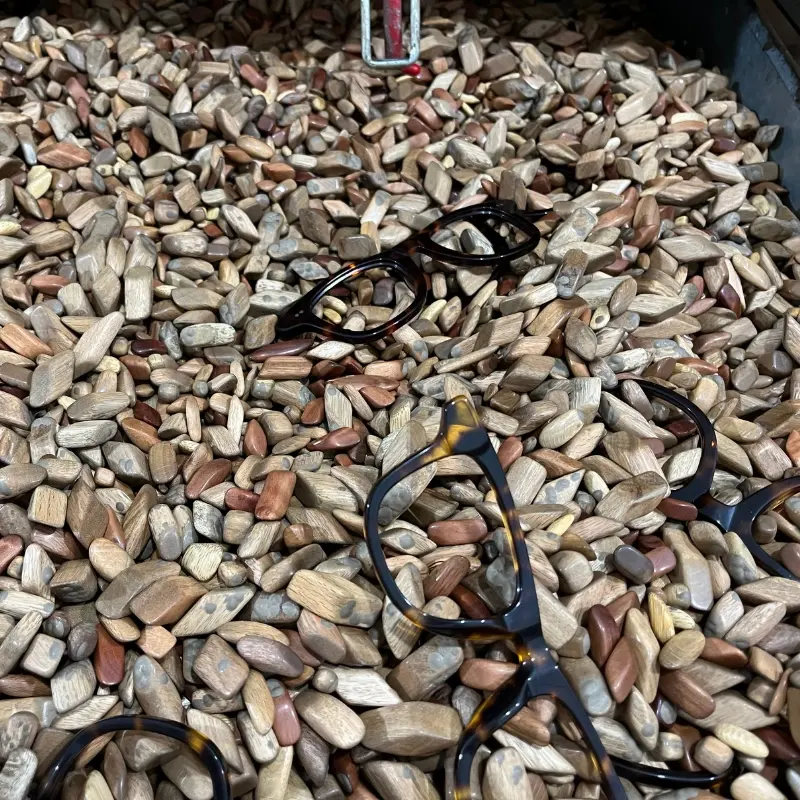
- Tumbling. The piece goes through a tumbling process that softens sharp edges and smooths the surface, taking off a small additional layer.
- Hand polishing. Final polishing brings out the color depth and shine acetate is known for, and refines the surface once more.
By the time a frame reaches final QC, it can be noticeably thinner at the rim than the sheet it started from — which is normal, not a defect, as long as it was specified correctly from the start.
Common Thickness Ranges and What They’re Usually Used For
At a broad level, most acetate frames fall into one of three thickness bands. This is worth knowing, but it’s a starting point for a design conversation, not a substitute for a measured spec.
- Thin / high-density range (roughly 1.5–3mm sheet): Used for lightweight, minimal styles aimed at long daily wear — everyday opticals and slim sunglasses designs where comfort over hours matters more than visual bulk.
- Mid range (roughly 4–6mm sheet): Where most standard sunglasses collections sit. Enough material to hold color depth and structure without adding much weight.
- Thick / statement range (roughly 7–10mm and above): Used for retro-inspired, oversized, or luxury-positioned frames where visual presence is part of the design brief.
These bands describe design intent, not a guarantee of finished feel — which is exactly why the next section matters more for anyone about to place a first order.
Writing Thickness Into Your Spec Sheet Correctly
This is the part that actually prevents disputes, and it’s a short list:
- State whether the number is sheet thickness or finished thickness, and if it’s finished thickness, say at which point. “8mm” alone is not a spec — “8mm sheet, front” or “5mm finished at rim center” is.
- Give thickness at more than one point where it matters for the design: rim edge, bridge, and temple are the three that most affect how a frame looks and feels in hand.
- Set a tolerance, not just a target number. A common working tolerance for acetate thickness is around ±0.2mm to ±0.3mm depending on the measurement point — tighter than that gets difficult to hold consistently across a production run given the hand-finishing steps involved.
- Reference a physical sample or drawing wherever possible. A measured reference sample removes almost all ambiguity that a written number alone can leave.
None of this needs to be complicated — it’s a few extra lines in a tech pack — but it’s the difference between a first sample that matches expectations and one that needs a second round before it does.
What Else Thickness Affects
Thickness isn’t only a look-and-feel decision — it has two practical knock-on effects worth flagging early in development:
- Weight. Thicker fronts add measurable weight to a pair of sunglasses, which matters for all-day comfort. We’ve broken down how frame material and thickness affect total weight in more detail in how much sunglasses frames and lenses weigh.
- Lens fitting. Thicker rims give more room to seat polarized or gradient lenses securely, while very thin profiles limit how much lens edge the frame can hold — something to flag if your lens choice is already decided before the frame thickness is finalized.

Frequently Asked Questions
Is acetate sheet thickness the same as finished frame thickness?
No. Sheet thickness is the raw material spec before cutting and polishing. Finished thickness — what you feel on the actual glasses — is usually less, since CNC cutting, beveling, tumbling, and polishing all remove material along the way.
What’s a standard acetate sunglasses frame thickness?
Most standard sunglasses fronts are cut from acetate sheet in the 4–6mm range, with temples typically thinner, around 3.5–4mm. Statement or retro-style frames often go up to 7–10mm sheet or more.
Does a thicker acetate frame mean better quality?
Not directly. Thickness is a design and durability choice, not a quality grade on its own. A well-finished 4mm frame with clean beveling and solid hinge assembly can outlast a poorly finished 8mm one. Thickness should match the intended style and use case, not be treated as a proxy for craftsmanship.
What tolerance should I set for acetate frame thickness?
A working tolerance of around ±0.2mm to ±0.3mm is typical for most points on an acetate frame, tightened or loosened depending on how visually critical that measurement point is to the design.
Why did my sample come back thinner than I specified?
This is almost always the sheet-vs-finished-thickness gap. If the tech pack listed a single number without specifying sheet or finished measurement and the exact point it applies to, the factory may have measured differently than you pictured. Adding a reference sample or drawing with labeled measurement points at the quoting stage prevents this.
Getting the number right on paper is a small step, but it’s the one that saves the most back-and-forth once a design moves from sketch to sample — and it’s worth working through on the acetate sunglasses side of development before locking in a first order.
Let's get started!
Get in touch with a custom eyewear specialist now for a free consultation and instant price quote.
WHATSAPP ME GO!
📱 Scan with your phone to start chatting