Custom Sports Sunglasses for Cycling Brands: What to Specify
A cycling brand briefing a factory on sports sunglasses needs to cover more ground than a general “sports sunglasses” spec sheet. Helmet fit, ventilation behavior at speed, and lens flexibility across a ride all matter in ways that don’t come up the same way for running or golf. This guide walks through what’s actually worth specifying for a cycling sunglasses project, and where the decisions differ from a generic sports eyewear brief.
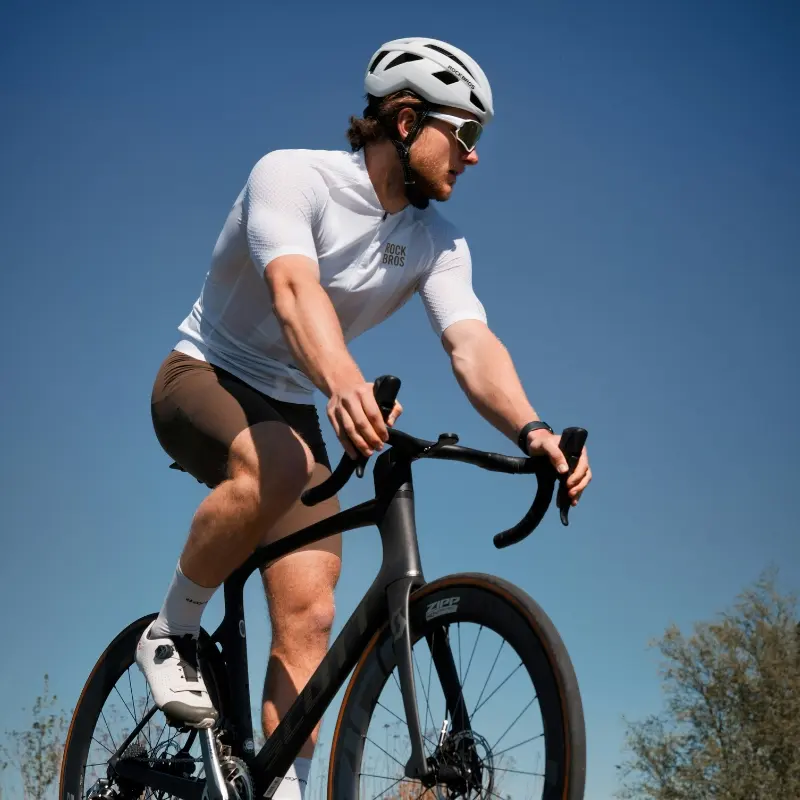
Why Cycling Sunglasses Need Their Own Spec Sheet
Most sports sunglasses categories share a common baseline: UV protection, a secure fit, and a lens suited to the light conditions. Cycling adds a layer most other sports don’t have to deal with — the product has to physically coexist with a helmet, at speed, for hours at a time, often across a wide temperature and humidity range in a single ride.
That’s the reason a cycling-specific brief usually needs a few extra lines that a general sports sunglasses inquiry wouldn’t: helmet compatibility, ventilation behavior, and a lens plan built for changing light rather than one fixed condition.
Helmet Compatibility: The Detail Unique to Cycling
This is the one spec that genuinely sets cycling sunglasses apart from other sports categories, and it’s worth getting right before a mold is finalized.
Temple arm position and length matter more than they seem. Many cycling-specific frames position the temple arms so they exit from the lower part of the frame rather than the top, keeping them clear of helmet strap cradles and retention systems. Temple length and thickness also need to sit comfortably alongside a helmet strap without creating pressure points over a multi-hour ride.
There’s a safety logic behind how temples sit relative to helmet straps, too. The common convention is for the sunglasses’ arms to sit outside the helmet straps rather than underneath them — so that in a fall, the eyewear can separate from the face more easily rather than being pinned in place by the strap.
If your brand is developing alongside a specific helmet line, or targeting a customer base concentrated around a few popular helmet brands, it’s worth flagging that early. Compatibility can vary even between models from the same helmet brand, so a factory that knows the target helmet profile can account for it during frame development rather than discovering a conflict after samples are made.
Ventilation and Anti-Fog: Where “More Coverage” Can Backfire
It’s a common assumption that a more fully wrapped, tightly sealed frame gives better protection. For cycling specifically, that assumption can work against the product.
Fogging typically happens when warm, humid air from sweat and breath meets a cooler lens surface — most noticeably when a rider slows down or stops after sustained effort. A frame that seals too tightly against the face traps that warm air with nowhere to go, which is often the opposite of what a “maximum protection” frame is trying to achieve.
What actually helps:
- Vent channels positioned along the brow or upper frame to let airflow pass across the inside of the lens
- A small standoff gap between the lens and the face, rather than a fully flush fit
- An anti-fog treatment on the lens itself, which is a coating decision separate from the ventilation design
Worth specifying to your factory: how much standoff and venting the frame should have relative to how wraparound the design is. A full-coverage shield shape and strong ventilation aren’t mutually exclusive, but they do need to be balanced deliberately rather than assumed to come together automatically.

Lens Program: Built for a Ride, Not a Single Moment
Cycling conditions change more within a single session than most other sports — a morning ride can start in low light and finish in full sun, or move between open road and shaded tree cover.
We’ve covered the technical side of lens selection in detail elsewhere — how contrast-enhancing and photochromic lenses actually work, and a sport-by-sport breakdown in Polarized vs Photochromic vs Contrast-Enhancing Lenses: Which Is Right for Which Sport. For a cycling-specific brief, the practical takeaway is: decide early whether the product needs to handle one lighting condition well, or a full range of conditions within a single ride — that decision shapes whether photochromic, a fixed contrast tint, or a multi-lens kit is the right starting point.
Multiple lens options — typically a clear lens, a low-light tint, and a polarized or mirrored option — are a common expectation in the cycling category rather than a premium add-on, particularly for brands targeting road or gravel riders who train across a range of conditions.
Fit and Nose Pad Adjustability
Cycling puts sustained pressure and sweat exposure on the nose bridge and temples over long rides, which makes fit adjustability more relevant here than in shorter-duration sports.
Adjustable nose pads let the same frame accommodate a wider range of face shapes and fine-tune the distance between lens and eye — which also affects ventilation, as covered above. Hydrophilic rubber is a common material choice for nose pads and temple tips in cycling sunglasses specifically because it becomes grippier as it absorbs sweat, rather than becoming slicker — worth specifying by name if your factory’s default nose pad material isn’t already hydrophilic-treated. We’ve covered how these grip components work alongside frame materials in Sports Sunglasses Materials: TR90, Nylon, and Rubber Components Compared.
Frame Shape for Cycling
Frame shape decisions for cycling generally lean toward full wrap or shield styles, which maximize wind and peripheral protection at speed. We’ve broken down the structural differences between frame types in How to Choose Frames for Sports Sunglasses: Wrap vs Shield vs Half-Frame — for a cycling brief, the main additional factor is making sure the chosen frame shape doesn’t conflict with the helmet and ventilation requirements covered above.
Prescription Structure, If It’s Part of the Plan
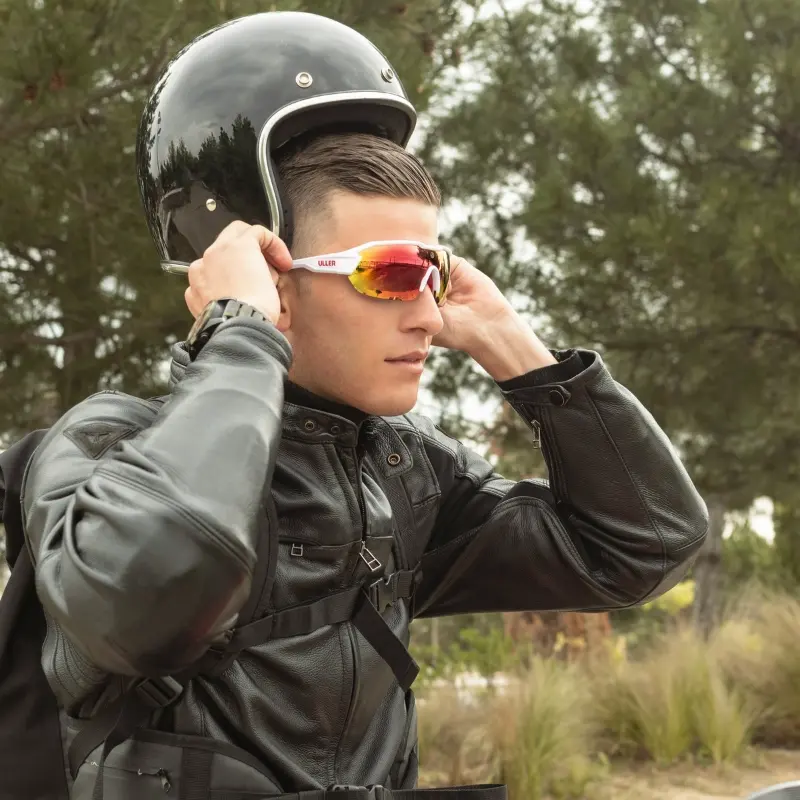
Some cycling brands want to support prescription-wearing customers without redesigning the entire product line. The common approach for cycling specifically is an RX insert — a smaller removable lens holding the prescription, mounted behind the main wraparound shield — rather than grinding the prescription directly into the curved outer lens, since strong wrap curves can distort higher prescriptions at the lens edge. If this is part of your product roadmap, it’s worth raising during initial development rather than after the frame shape is locked, since not every frame curve accommodates an RX insert equally well.
What to Bring to Your First Cycling Sunglasses Inquiry
A factory can work with a rough direction, but a cycling-specific brief moves faster with a few extra details beyond a general sports sunglasses inquiry:
- Target riding discipline (road, gravel, mountain biking, commuting)
- Helmet compatibility requirements, including specific helmet brands if relevant
- Lens plan: single fixed tint, photochromic, or a multi-lens interchangeable kit
- Ventilation priority relative to full-wrap coverage
- Nose pad and temple grip material preference
- Whether prescription support (RX insert) is part of the roadmap
- Target weight range and frame material (TR90 is the standard starting point for most cycling collections)
- Estimated first order quantity
Timeline Expectations
For TR90/injection-molded cycling sunglasses, standard MOQ starts around 1,200 pieces per style. Once a new mold is finalized and the sample is approved, bulk production typically runs 45–60 days — that timeline begins after mold development and sample sign-off, not from the initial inquiry, so it’s worth planning development and sampling time separately from the bulk production window when setting a launch date.
Frequently Asked Questions
Do all cycling sunglasses need to be helmet-compatible?
Not by regulation, but it’s a practical expectation for the category. Since most cycling sunglasses are worn with a helmet, temple design that conflicts with common helmet straps or cradles is one of the most common fit complaints in the category.
Is ventilation really necessary if the lens has an anti-fog coating?
Anti-fog coatings help, but they don’t fully replace airflow design. A tightly sealed frame with no venting can still fog under heavy sweat and temperature changes, even with a treated lens.
Should a first cycling sunglasses order include multiple interchangeable lenses?
It depends on the target rider. Brands serving road or gravel cyclists who ride across varied light conditions often find a multi-lens kit expected rather than optional. A brand targeting more casual or commuter cycling can often start with a single well-matched lens.
How early should helmet compatibility be discussed with a factory?
Before the frame mold is finalized. Adjusting temple position or length after tooling is complete is far more costly than accounting for it during initial frame development.
Specifying a cycling sunglasses project well mostly comes down to naming the helmet, ventilation, and lens requirements up front — details worth locking in alongside the broader frame and material decisions that shape the rest of the collection.
Let's get started!
Get in touch with a custom eyewear specialist now for a free consultation and instant price quote.
WHATSAPP ME GO!
📱 Scan with your phone to start chatting