Sports Sunglasses Materials: TR90, Nylon, and Rubber Components Compared
Material choice in sports sunglasses isn’t really about which plastic sounds most premium — it’s about whether the frame survives sweat, impact, and repeated flexing without losing its shape. This guide breaks down the three material categories that actually matter for sports sunglasses: TR90, nylon (in both its frame and lens contexts), and the rubber/TPU components most buyers overlook until fit problems show up in the field.
If you’re deciding on frame shape rather than material, that’s covered separately in our wrap vs shield vs half-frame guide — this article focuses on what the frame is actually made of.

TR90: The Standard Workhorse Material
TR90 (often sold under the brand name Grilamid TR90) is a thermoplastic polyamide developed in Switzerland, and it’s the default frame material across most mid-range sports sunglasses for a few concrete reasons.
Weight and flexibility. TR90 has a density of roughly 1.14–1.15 g/cm³ — around 15% lighter than standard nylon and about 30% lighter than acetate. It also has “memory”: the frame flexes under pressure and returns to its original shape rather than staying bent or snapping, which is a real durability advantage for anything that gets sat on, stepped on, or twisted during active use.
Impact resistance. TR90 absorbs impact roughly twice as well as standard nylon, largely due to that same flexibility rather than pure hardness — it bends around an impact instead of resisting it rigidly.
Heat and chemical stability. TR90 can tolerate brief exposure to temperatures around 200°C (roughly 400°F) without deforming, and it holds up well against sweat, sunscreen, and everyday chemical exposure — relevant for a product that’s frequently worn in hot, sweaty conditions.
One production limitation worth knowing. TR90 doesn’t bond well with surface paint or coating — sprayed color tends to peel or wear unevenly over time. The practical fix is to specify pre-colored injection material, dual-color (two-shot) molding, or a matte/textured finish built into the mold itself, rather than a painted surface layer. This is worth raising early with your factory if a specific finish or color effect is part of the brand’s design direction.
Cost and production speed. TR90 tooling costs are generally lower than nylon, and the material is easier to mold consistently across production runs — which is part of why it’s the practical default for brands testing multiple styles or moving fast on a seasonal collection, rather than the material to reach for on a single hero SKU.
Nylon: A Step Up, in Two Different Contexts
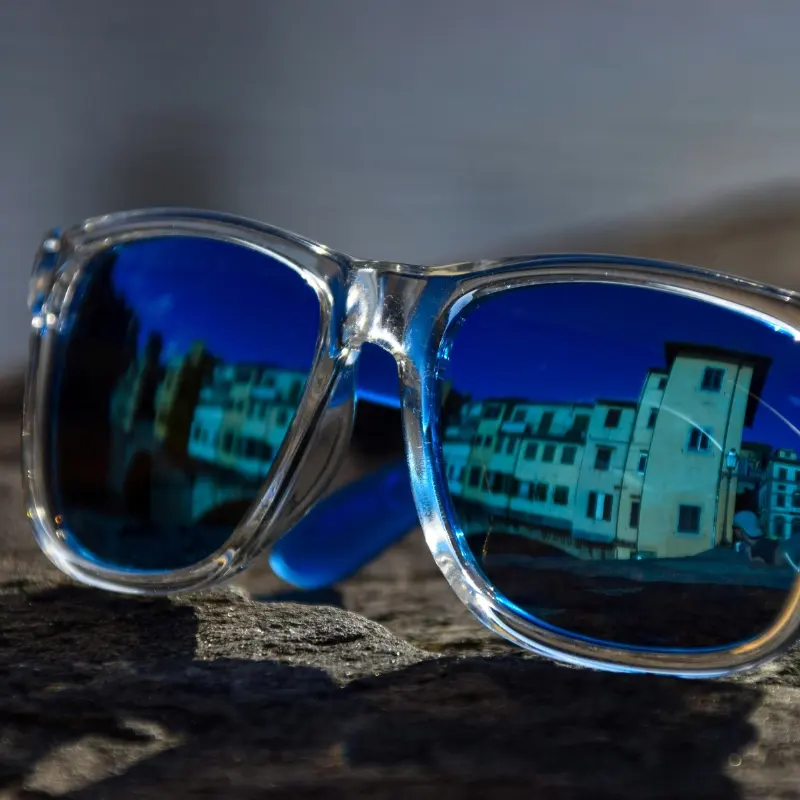
“Nylon” comes up in sports sunglasses conversations in two separate ways, and it’s worth being clear on which one applies to a given product decision.
Nylon as a Frame Material
Nylon frames have a long history in performance eyewear — ski goggles and military-spec tactical eyewear have used nylon for decades because of how well it holds up under extreme temperature swings and repeated stress. Compared to TR90, nylon frames tend to:
- Feel more rigid and “premium” in hand
- Perform more consistently at temperature extremes (very cold or very hot conditions)
- Require more advanced injection tooling and molding experience
- Cost more to tool and produce, with longer lead times
Nylon isn’t the material to default to for a first sports sunglasses collection. It’s worth specifying when the brand is targeting serious cyclists, tactical/outdoor markets, or a premium positioning where the extra cost and complexity are justified by the product story.
Nylon as a Lens Material
Separately, nylon-based materials also show up as a premium lens option, positioned above standard polycarbonate (PC) lenses. We’ve covered lens material trade-offs in more detail in our lens technology guide — the short version is that nylon lenses tend to offer a more refined optical feel than PC, at a higher cost and with more complex processing, which is why PC remains the practical default for most cycling and running categories.
Rubber and TPU: The Components That Decide Whether a Frame Actually Stays On
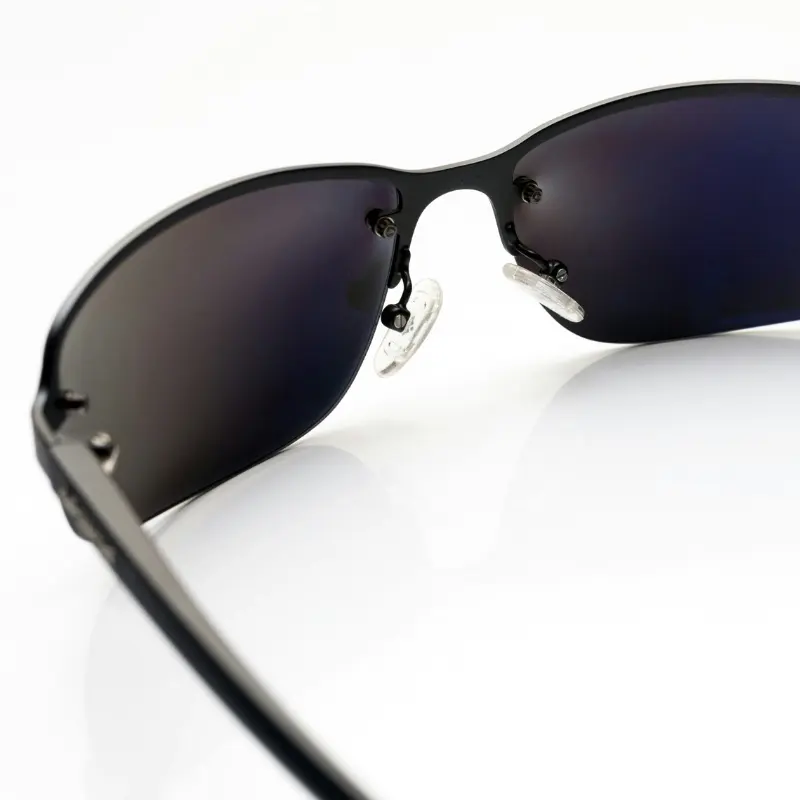
Frame material gets most of the attention, but the small rubber and TPU (thermoplastic polyurethane) components — nose pads, temple tips, sometimes full temple sleeves — are often what decides whether a pair of sports sunglasses actually stays in place during real use.
Why these components exist separately from the main frame. TR90 and nylon are both relatively rigid materials. On their own, neither grips well against skin once sweat is involved. Rubber and TPU/TPEE components are softer and higher-friction, and they’re typically co-molded onto the harder frame material — a process that bonds a soft-touch material directly onto specific contact points during production rather than adding it as a separate glued-on piece.
Where it matters most. Anti-slip nose pads and temple grips are most critical in cycling, running, and other high-sweat sports where a frame that shifts mid-activity is a real usability complaint, not just a comfort preference. Basketball and other fast-direction-change sports have similar requirements.
The trade-off to understand. Rubber and TPU components alone are too soft to hold a frame’s structure — they’re a comfort and grip layer, not a structural one. That’s why they’re almost always paired with a rigid frame material (TR90 or nylon) rather than used as a frame material by themselves.
How the Materials Come Together in a Finished Product
A finished pair of sports sunglasses is rarely a single material end to end. A common real-world construction looks like: a TR90 or nylon main frame, PC or nylon lenses, and TPU/rubber nose pads and temple tips at the contact points — each material doing the specific job it’s best suited for rather than one material trying to do everything.
For reference, a bare TR90 frame front typically weighs around 8–10 grams, while a complete assembled pair — frame, lenses, nose pads, and temple tips together — commonly lands in the 18–25 gram range depending on lens type and frame size. That gap is a useful way to think about where the weight in a finished product actually comes from, and why lens choice affects overall product weight almost as much as frame material does.
A Simple Material Tier for Planning a Collection
Most sports sunglasses collections end up following a similar “good / better / best” material logic, which is a useful starting framework when planning a product ladder rather than a single SKU:
- Entry tier: PC frame with basic coatings — cost-efficient for price-sensitive or promotional-style products.
- Mid tier (where most sports sunglasses brands sit): TR90 frame with PC or Trivex lenses, plus rubber/TPU grip components — the balance point of cost, comfort, and durability for most cycling, running, and general active-use collections.
- Premium tier: Nylon or titanium frame with nylon or Trivex lenses — reserved for brands targeting serious athletes or a technical/tactical positioning where the added cost supports the product story.
Frequently Asked Questions
Is TR90 the same thing as nylon?
Not exactly, though they’re related. TR90 is a type of polyamide — the same broad material family as nylon — but it’s engineered to be lighter and more flexible than standard nylon, which is why the two are treated as distinct options in sports sunglasses rather than interchangeable terms.
Why do some sports sunglasses use rubber nose pads instead of a solid frame?
Because rigid frame materials like TR90 and nylon don’t grip well against sweat-covered skin on their own. Rubber and TPU components add friction and cushioning at the contact points, while the rigid material handles the overall structure.
Is nylon always a better choice than TR90 for sports sunglasses?
Not for every brand. Nylon offers real advantages in extreme conditions and premium positioning, but it costs more to tool and produce, with longer lead times. TR90 is the more practical choice for most mid-range sports sunglasses collections, especially for a first order or a brand still validating demand.
Does frame material affect how a pair of sports sunglasses can be branded?
Yes. TR90, for example, doesn’t hold painted color well, so branding and finish decisions usually work better with pre-colored material, laser engraving, or pad printing rather than a sprayed color layer — worth confirming with your factory before finalizing a color and logo plan.
Getting frame material right is really about matching the plastic to how hard the product will actually be used, which is worth locking down early alongside the frame shape and lens choices that round out a sports sunglasses collection.
Let's get started!
Get in touch with a custom eyewear specialist now for a free consultation and instant price quote.
WHATSAPP ME GO!
📱 Scan with your phone to start chatting