How to Choose Frames for Sports Sunglasses: Wrap vs Shield vs Half-Frame
Frame shape in sports sunglasses isn’t really a style decision — it’s a function decision. Whether a frame gives you full peripheral coverage or an open upward view, whether it stays put during a sprint or feels bulky on the face, comes down to a small number of structural choices. This guide breaks down the three main frame families used in sports sunglasses — wrap, shield, and half-frame — and which one actually fits a given sport.
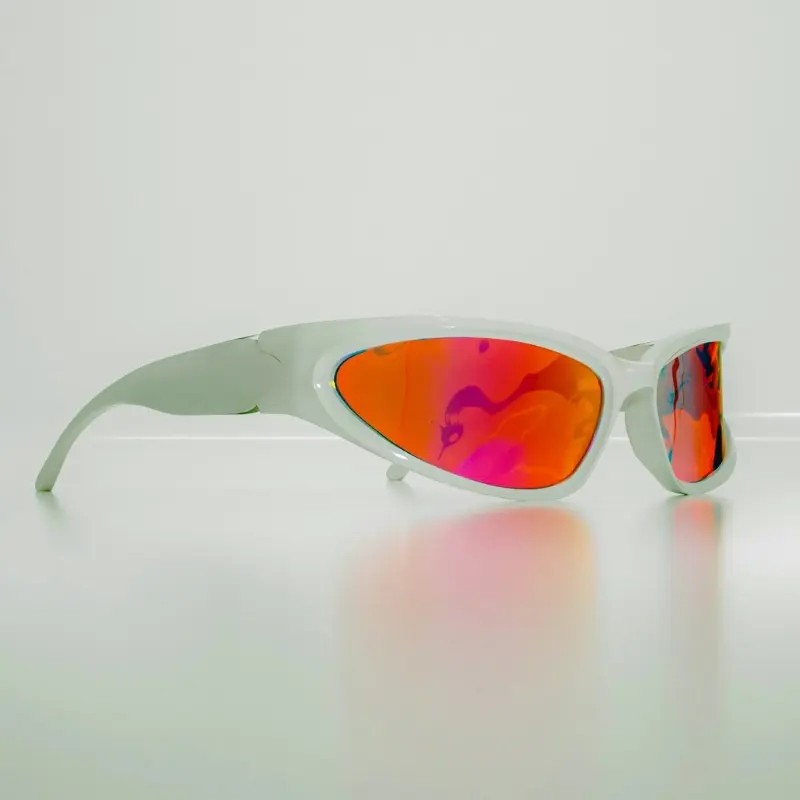
The One Concept That Explains All Three: Base Curve
Before comparing frame types, it helps to understand base curve — a practical measurement of how aggressively a lens and frame curve around the face.
- Flat / minimal curve — closer to what you’d see in a standard fashion frame, with little wraparound effect.
- Moderate curve — enough to reduce side glare and wind without looking like dedicated athletic gear.
- Full sport curve — an aggressive wraparound shape that maximizes peripheral coverage and stays secure during high-speed movement, at the cost of a more overtly “sporty” look.
This single spec explains why two frames both marketed as “sport sunglasses” can look and perform very differently. It’s also the first thing worth specifying clearly when briefing a factory, since base curve affects lens sourcing, mold design, and — if the product will support prescription lenses — how much correction the frame can accommodate before edge distortion becomes a problem.
Wrap Frames: The Standard Sports Sunglasses Shape
A wrap frame uses two separate lenses set into a curved frame, with the curve typically falling in the moderate-to-full range. This is the most common structure across sports sunglasses categories because it balances real performance benefits with a shape that still reads as “sunglasses” rather than protective eyewear.
What wrap frames do well:
- Block wind, dust, and stray light from the sides — useful for any sport performed at speed or outdoors for extended periods
- Stay secure during repetitive motion, especially when paired with rubberized nose pads and temple grips
- Support a wide range of lens technologies (polarized, photochromic, contrast-enhancing) without major structural changes
Best suited for: cycling, trail running, hiking, general outdoor and multi-sport use — activities where wind, dust, and peripheral glare are ongoing factors rather than occasional ones.
Shield Frames: Maximum Coverage, One Continuous Lens
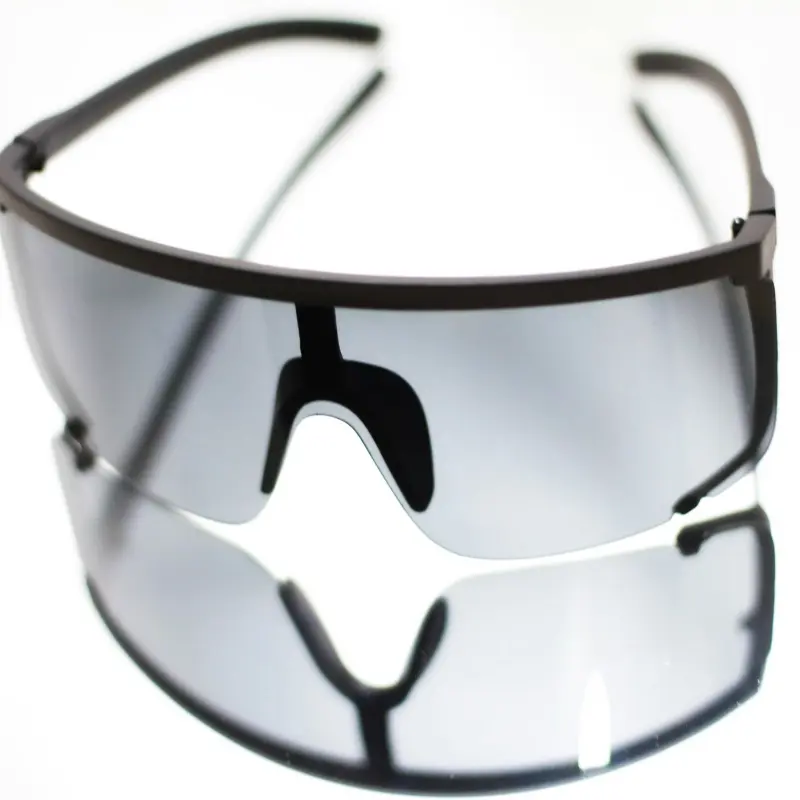
A shield frame replaces the two-lens wrap structure with a single, continuous lens spanning the entire visual field — conceptually closer to a ski goggle than to traditional sunglasses. This gives the widest possible field of vision and the most dramatic visual coverage of the three frame types.
What shield frames do well:
- Eliminate the center bridge area that can interrupt the visual field in a wrap frame
- Provide the largest continuous lens surface for lens technology (a single large tint or coating rather than two matched lenses)
- Create a strong, distinct product silhouette — useful for brands building a visually recognizable performance line
Trade-offs to know: shield frames tend to run larger and more visually bold, which some customers outside of core performance sports find too aggressive for everyday wear. They’re also less common in golf and tennis, where a lower-profile frame is often preferred.
Best suited for: road and gravel cycling, mountain biking, alpine and snow sports, and any performance category where maximum coverage and a strong brand silhouette matter more than a subtle look.
Half-Frame: Built for Upward Visibility
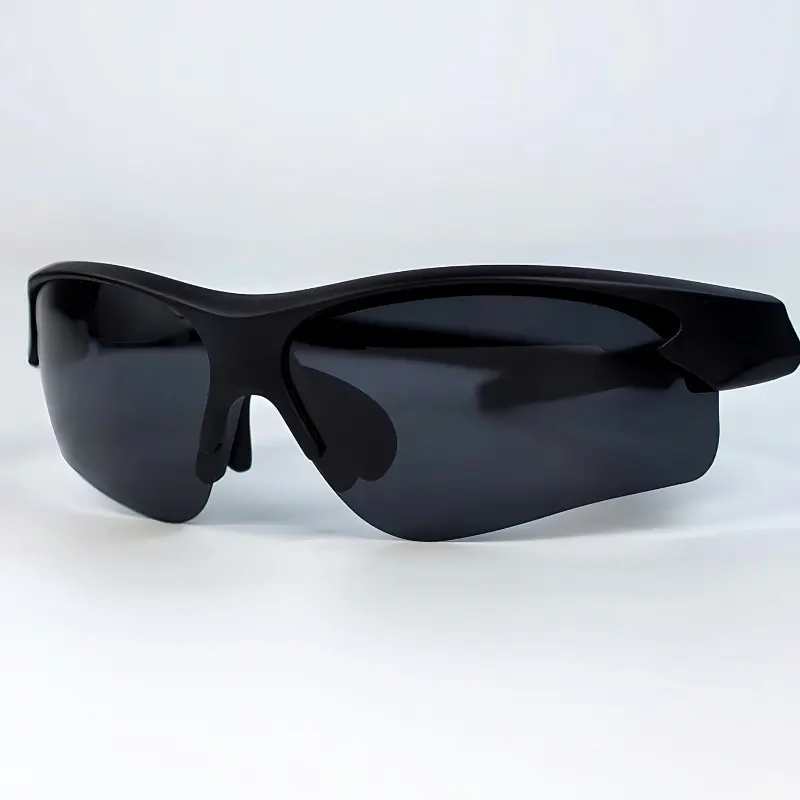
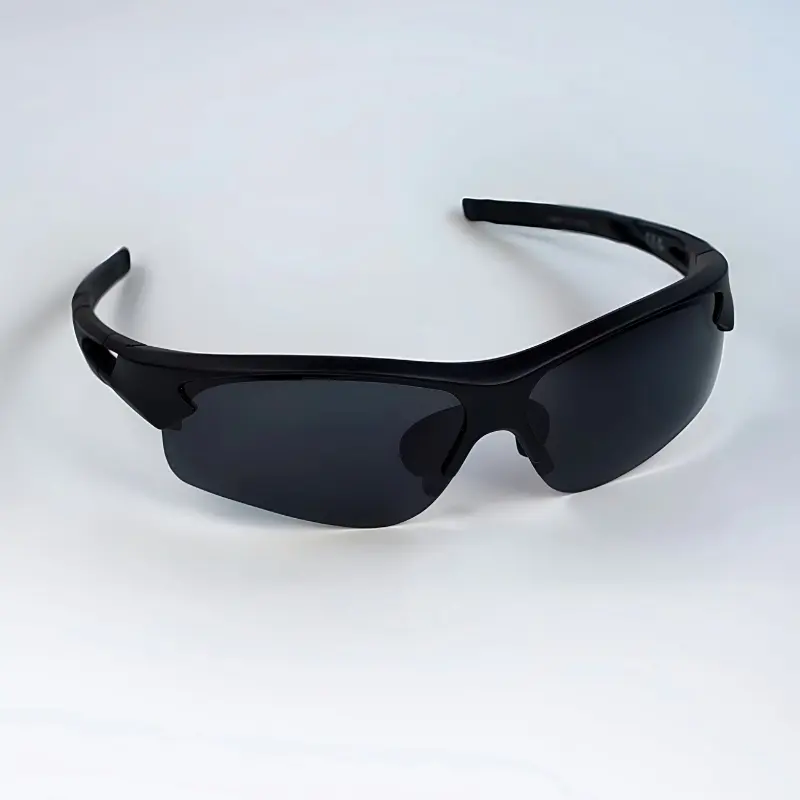
A half-frame (or semi-rimless) design frames only the lower half of the lens, leaving the upper portion rimless. Unlike wrap and shield frames — which are primarily optimized for peripheral and wind protection — the half-frame’s main functional advantage is something different: an unobstructed upward field of view.
This matters specifically for sports where the eyes track an object moving upward or overhead:
- Golf — following a ball’s flight path against open sky
- Tennis — tracking a high lob or overhead serve
- General active wear — where a lighter, lower-profile look is preferred over an overtly athletic silhouette
What half-frame designs do well:
- Reduce frame weight since less material is used overall
- Improve upward sightlines by removing the upper rim entirely
- Read as more “refined athletic” than “extreme sport,” which fits the aesthetic golf and tennis brands typically want
Trade-offs to know: with less frame material holding the lens in place, half-frame construction is generally less structurally rigid than a full-rim wrap or shield. It’s a reasonable trade for lower-impact sports like golf and tennis, but it’s not the frame family to specify for high-impact categories like mountain biking or trail running, where full-rim support matters more.
Choosing by Sport: A Quick Reference
| Sport | Best-fit frame type | Why |
|---|---|---|
| Road cycling / mountain biking | Wrap or shield (full curve) | Wind, dust, and peripheral glare protection at speed |
| Trail running | Wrap (full curve) | Secure fit plus peripheral coverage on uneven terrain |
| Golf | Half-frame | Unobstructed upward view for tracking ball flight |
| Tennis | Half-frame or light wrap | Upward visibility for lobs and serves, lighter feel |
| Fishing / water sports | Wrap | Peripheral glare control paired with polarized lenses |
| Hiking / general outdoor | Wrap (moderate curve) | Balanced coverage without an overly technical look |
| Skiing / snow sports | Shield | Maximum coverage in high-glare, high-speed conditions |
This is a starting framework, not a fixed rule — brand positioning matters too. A golf brand targeting a younger, more performance-driven customer might still choose a wrap frame for a bolder look, while a cycling brand building a lifestyle-crossover line might soften toward a moderate-curve wrap instead of a full shield.
A Few Practical Notes Before Specifying a Frame
Material follows frame type. TR90 is the standard choice across all three frame families for sports sunglasses, largely because it holds shape under repeated flexing without deforming — a property that matters more in wrap and shield frames, where the frame itself is doing more structural work holding the lens in a curved position.
Prescription compatibility gets harder as curve increases. The more aggressive the base curve, the more likely a higher-power prescription lens will show peripheral distortion. If a brand plans to offer prescription-compatible sports sunglasses, this is worth flagging early in development rather than after a frame shape is already locked.
Half-frame needs more attention to hinge and lens-mounting durability. Since less frame material is holding the lens in place, the hinge and lower rim mounting points carry more of the structural load. It’s worth confirming with your factory how these areas are reinforced, especially for a golf or tennis collection that will see daily outdoor use over a full season.
Frequently Asked Questions
Is a shield frame just a more extreme version of a wrap frame?
Not exactly. A wrap frame uses two separate lenses in a curved frame, while a shield frame uses one continuous lens across the whole visual field. They’re related in purpose — both maximize coverage — but structurally distinct.
Why do golf sunglasses use half-frames instead of full wrap frames?
The main reason is upward visibility. Golfers need a clear, unobstructed sightline when tracking a ball in flight, and removing the upper rim achieves that more effectively than a curved wrap frame designed primarily for peripheral coverage.
Are half-frame sunglasses durable enough for daily sports use?
For lower-impact sports like golf and tennis, yes — half-frame construction holds up well under normal use. For higher-impact activities like mountain biking or trail running, a full-rim wrap or shield frame is generally the more durable choice.
Can the same frame type work for multiple sports in one collection?
Sometimes, but it depends on how different the sports’ visual demands are. A brand covering both cycling and golf, for example, usually needs two different frame structures rather than one shape trying to serve both.
Frame structure is one of the earliest decisions in a sports sunglasses project, since it shapes what’s possible on the lens and material side later in development.
Let's get started!
Get in touch with a custom eyewear specialist now for a free consultation and instant price quote.
WHATSAPP ME GO!
📱 Scan with your phone to start chatting