Polarized vs Photochromic vs Contrast-Enhancing Lenses: Which Is Right for Which Sport
Most lens comparisons online stop at two options: polarized or photochromic. That’s an incomplete picture for sports sunglasses, because contrast-enhancing tints solve a different problem than either of those two — and for several sports, it’s actually the better starting point. This guide breaks the decision down by sport rather than by lens type, since that’s usually the more useful way to brief a factory or choose a lens program for a private label collection.
If you want the technical explanation of how contrast-enhancing and photochromic lenses actually work — the chemistry, the manufacturing methods, the temperature sensitivity — we’ve covered that in detail in our lens technology guide. This article focuses on the decision itself: given a specific sport, which lens technology (or combination) actually fits.

The Three Technologies, in One Sentence Each
- Polarized lenses filter horizontally reflected glare from flat, reflective surfaces — water, wet pavement, snow.
- Photochromic lenses automatically adjust tint depth based on UV exposure, darkening in bright light and clearing in low light.
- Contrast-enhancing lenses filter specific light wavelengths to sharpen edges, depth, and color separation — without necessarily changing overall brightness.
They solve three different visual problems: glare, changing brightness, and low-contrast terrain. A sport rarely has just one of these problems, which is why the “right” answer is usually about which problem matters most for a given activity — not which lens is objectively “best.”
Cycling and Mountain Biking
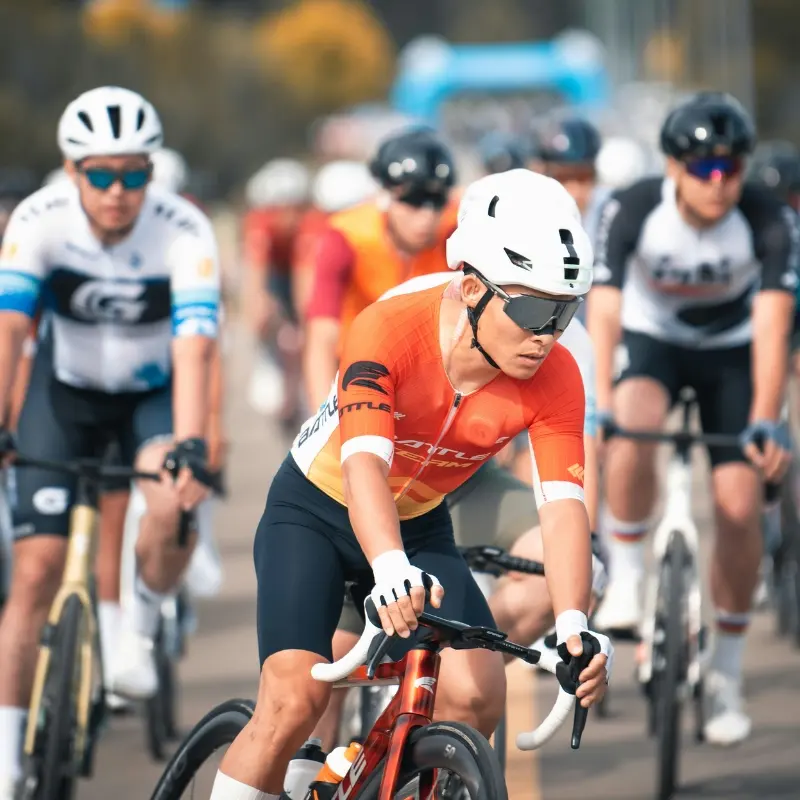
Cyclists deal with a mix of problems depending on the ride: road glare in bright conditions, sudden shifts between open road and tree cover, and the need to spot surface changes quickly.
- If most rides happen at consistent times of day with stable light (an afternoon road loop, for example), a fixed contrast-enhancing tint is a practical, lower-cost choice — no adaptation needed, and the lens is tuned specifically for spotting road surface changes.
- If rides regularly cross from early morning light into full sun, photochromic lenses — ideally with a contrast-enhancing base tint rather than a plain gray — tend to perform better, since the lens keeps working through the whole light range of the ride.
- Polarized lenses help most on wet roads or bright open highway riding, but some road cyclists prefer to avoid full polarization because it can make it slightly harder to read reflections off wet pavement that actually signal a hazard, and can interfere with reading LCD bike computer screens.
Common pick for cycling brands: photochromic with an amber or rose contrast-enhancing base tint for road and gravel; polarized for brands specifically targeting long-distance touring or bright, flat-road riding.

Running
Running sunglasses face a narrower but still real version of the cycling problem: many runners train at dawn or dusk and finish in full daylight, or vice versa.
- Early morning and dusk runners benefit most from photochromic lenses with a yellow or amber contrast-enhancing base — filtering the blue-light haze that makes terrain edges hard to distinguish in low light, then darkening as the sun comes up.
- Midday or consistent-light runners don’t need the adaptability of photochromic and can do well with a fixed contrast-enhancing tint at a lower cost.
- Polarized lenses are less commonly prioritized for running compared to cycling or fishing, since runners deal with less reflective glare and more with terrain visibility and steady comfort over a fixed-tint lens.
Common pick for running brands: photochromic with contrast-enhancing base tint, especially for brands marketing to early-morning or trail runners.
Golf and Tennis
These sports share a specific visual challenge: tracking a small, fast-moving object against a bright, often green or sky-colored background.
- Contrast-enhancing lenses are usually the priority here, not polarization. A tint tuned to make a ball pop against turf or sky does more for performance than glare reduction, since golf and tennis courts aren’t typically highly reflective surfaces.
- Photochromic is a secondary consideration — useful for golfers playing across a full day with changing cloud cover, but not the primary decision driver.
- Polarized lenses are sometimes avoided in golf specifically because some players find that polarization can make it harder to read subtle color differences in green contours (a similar concern to cyclists reading LCD screens).
Common pick for golf and tennis brands: a dedicated contrast-enhancing tint (rose, amber, or a proprietary color-boost formulation) as the core lens offering.
Fishing and Water Sports
This is the category where polarized lenses are the clear priority, not a secondary option.
- Glare off water is the dominant visual problem, and polarization is specifically built to cut it — allowing anglers to see beneath the surface instead of a wall of reflected light.
- Copper and amber polarized tints are common choices for this category because they penetrate water surface reflection while still boosting contrast against the water.
- Photochromic adds less value here since water-based activities tend to happen in consistently bright conditions rather than shifting light.
Common pick for fishing and water sport brands: polarized as the default lens, with copper or amber tint options.
Hiking and General Outdoor Use
General outdoor and hiking products face the widest range of light conditions of any sports category — shaded trail, open ridgeline, changing weather.
- Photochromic lenses are usually the strongest fit for this category precisely because the use case is unpredictable. A hiker moving between forest cover and open exposure benefits from a lens that adjusts without requiring a lens swap.
- Contrast-enhancing base tints add value for terrain visibility on technical trails.
- Polarized matters more for hikers near water or snow than for general trail use.
Common pick for hiking/outdoor brands: photochromic, often combined with a contrast-enhancing base tint, positioned as an all-condition lens.
Skiing and Snow Sports
Snow sports combine two of the three problems at once: extreme glare off snow and the need for strong terrain/contour definition.
- Polarized lenses cut snow and ice glare significantly, improving comfort and safety.
- Contrast-enhancing tints help distinguish subtle slope contours and snow texture changes — a real safety factor at speed.
- Many snow sport brands combine both into a single lens rather than choosing one, since glare and low-contrast whiteout conditions can both occur in the same session.
Common pick for snow sport brands: polarized combined with a strong contrast-enhancing tint, rather than either alone.
Quick Reference: Lens Priority by Sport
| Sport | First priority | Second priority |
|---|---|---|
| Cycling / mountain biking | Photochromic (with contrast base) | Polarized for touring/flat road |
| Running | Photochromic (with contrast base) | Fixed contrast tint for consistent light |
| Golf / tennis | Contrast-enhancing | Photochromic for all-day play |
| Fishing / water sports | Polarized | Contrast-enhancing base tint |
| Hiking / general outdoor | Photochromic | Contrast-enhancing base tint |
| Skiing / snow sports | Polarized + contrast-enhancing combined | — |
This table is a starting point, not a rulebook — brand positioning, price tier, and target climate all shift the right answer. A budget-focused cycling brand may reasonably choose a fixed tint over photochromic to control cost; a premium fishing brand might add a photochromic-polarized combination lens for versatility.
Why “Which Is Best” Is the Wrong Question
None of these three technologies is universally superior — they solve different problems, and a lens that’s ideal for one sport can be a poor fit for another. A fixed contrast-enhancing tint that works well for a golf brand would frustrate a cyclist riding through variable morning light. A polarized lens that’s essential for a fishing brand can be actively unhelpful for a runner who needs to read the trail rather than cut water glare.
The more useful question for a private label brand is: what visual problem does our target customer actually face during the activity, in the conditions they most often use the product? That answer points to the lens technology — or combination — worth specifying first.
Frequently Asked Questions
Can polarized and photochromic be combined in one lens?
Yes. Polarized-photochromic combination lenses exist and are common in cycling and fishing categories where both glare reduction and adaptive light response add value. They typically cost more than a single-technology lens.
Is contrast-enhancing the same as a colored tint?
Not exactly. Any tint has some contrast effect, but a lens specifically engineered for contrast enhancement filters targeted wavelengths for depth and edge perception, rather than just applying a color for aesthetics or general glare reduction.
What’s the safest default lens choice for a new sports sunglasses brand testing the market?
For most active sports outside of water sports, a fixed contrast-enhancing tint is often the lowest-cost, lowest-complexity starting point, with photochromic as a next-tier upgrade once a style has validated demand.
Do I need different lenses for different sports within the same collection?
Often, yes. A brand covering both cycling and golf, for example, typically needs two different lens programs rather than one lens trying to serve both use cases well.
Matching lens technology to the sport is one of the earlier decisions worth locking down, since it shapes the rest of the frame and material choices that follow in development.
Let's get started!
Get in touch with a custom eyewear specialist now for a free consultation and instant price quote.
WHATSAPP ME GO!
📱 Scan with your phone to start chatting