Interchangeable Lens Systems in Sports Sunglasses: Is It Worth the Investment?
An interchangeable lens system sounds like an obvious upgrade — more flexibility, more perceived value, a stronger product story. But it also adds real cost and production complexity, and it isn’t the right investment for every sports sunglasses category. This guide breaks down what an interchangeable lens system actually costs to build well, and when it’s worth specifying versus when a simpler lens strategy serves the product better.
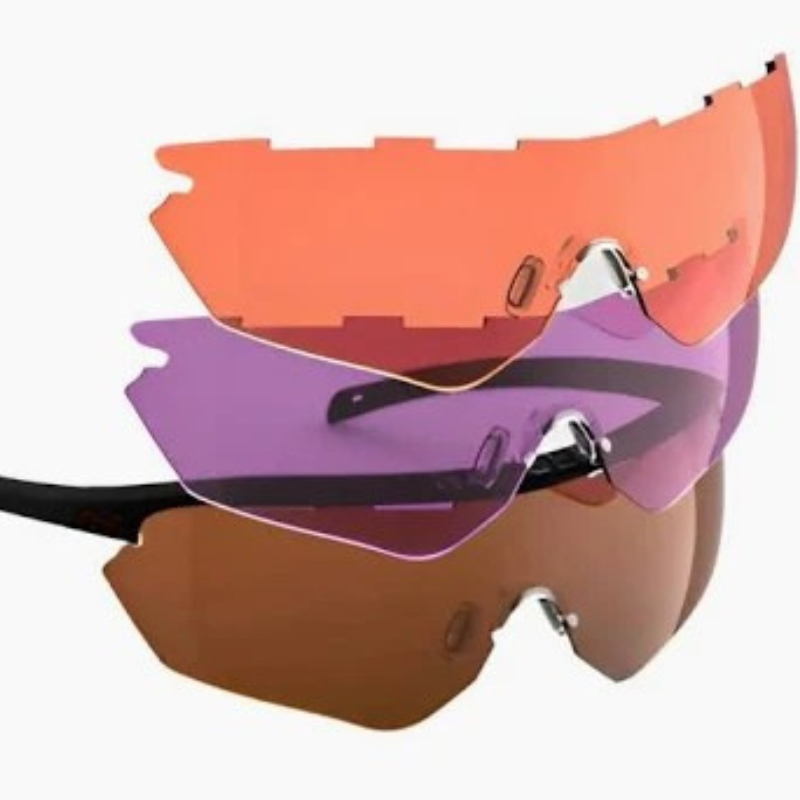
How Interchangeable Lens Systems Actually Work
There are two mechanisms that show up consistently across the category, each with different cost and durability trade-offs.
Clip-in / friction-fit systems use a specially shaped lens edge that snaps into a matching slot on the frame or temple hinge. This is the most common structure in cycling sunglasses specifically, where multi-lens kits (typically a clear lens, a low-light tint, and a polarized or mirrored option) are close to a standard expectation rather than a premium feature.
Magnetic systems use embedded metal or magnetic contact points built into the frame, with the lens attaching via magnetic pull rather than a mechanical snap. This tends to feel faster and reduces the risk of scratching the lens during a swap, but it only works with frames specifically engineered for it — a magnetic system can’t be retrofitted onto a frame that wasn’t designed around it, and the magnetic attachment points can weaken over repeated use, which is worth flagging as a QC consideration for a factory rather than assuming it holds up indefinitely.
Whichever mechanism is chosen, the locking structure is where most real-world quality complaints originate. A retention mechanism that isn’t engineered and tested properly tends to loosen with repeated swapping — which is a bigger risk during active use than during a showroom test.
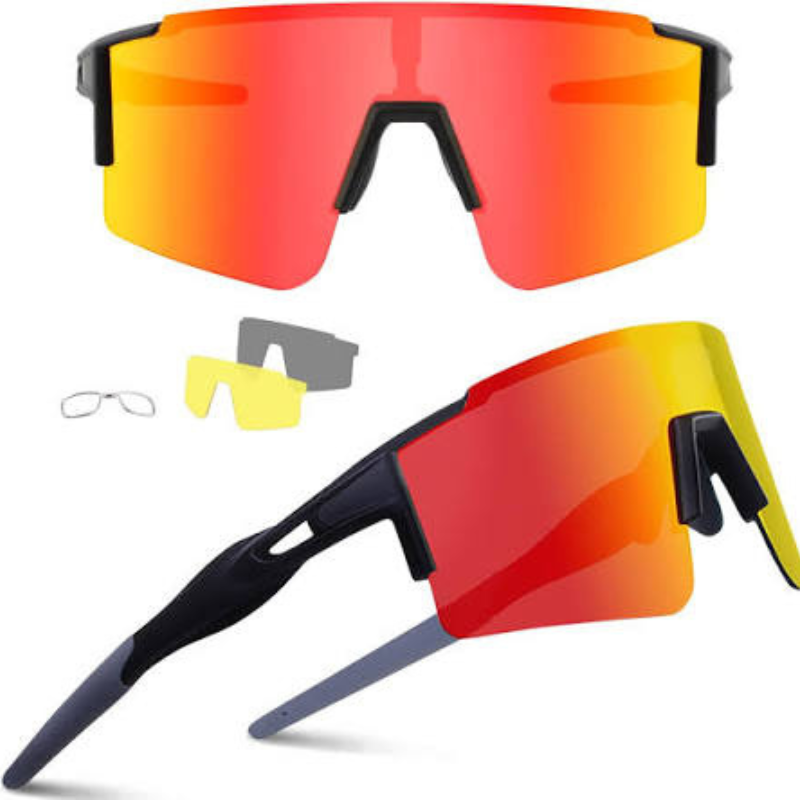
What It Actually Costs to Add
An interchangeable lens system adds cost in two places, and both are worth planning for rather than discovering after development starts.
Tooling cost. Beyond the frame mold itself, each lens variant in the kit needs its own tooling or processing spec — a clear lens, a low-light tint, and a polarized or mirrored option are effectively three separate lens components rather than one. This tends to push overall development cost toward the higher end of a typical mold cost range, rather than the entry level.
Retail price impact. On the consumer side, multi-lens kits typically carry a real price premium over a single-lens version of the same frame — commonly in the range of a meaningful percentage increase for a three-lens kit versus one lens. That premium needs to be something your target customer is actually willing to pay for, not just a feature added because competitors have it.
The Real Alternative: Interchangeable Lenses vs. Photochromic
This is the core decision most brands are actually weighing, even if they don’t frame it this way at first: an interchangeable lens system and a photochromic lens solve the same underlying problem — changing light conditions — through two very different approaches.
We’ve covered how photochromic lens technology works in detail in our lens technology guide, and how it compares to other lens options sport by sport in Polarized vs Photochromic vs Contrast-Enhancing Lenses: Which Is Right for Which Sport. The short version relevant here:
- An interchangeable lens system requires the user to actively swap lenses, but each lens can be precisely optimized for one specific condition — a dedicated low-light tint, a dedicated bright-sun tint, and so on, each performing at its best for that scenario.
- A photochromic lens requires no user action at all, adjusting automatically as light changes, but as a single lens it’s making a trade-off across the full light range rather than being perfectly tuned to any one moment.
Neither is universally better. The real question is whether your target customer values peak performance in each specific condition enough to carry and swap physical lenses, or values zero-effort adaptability enough to accept a single lens that performs well rather than perfectly across conditions.
Which Sports Justify the Investment
Based on how each sport’s light conditions and user behavior actually play out, interchangeable lens systems aren’t equally valuable across categories:
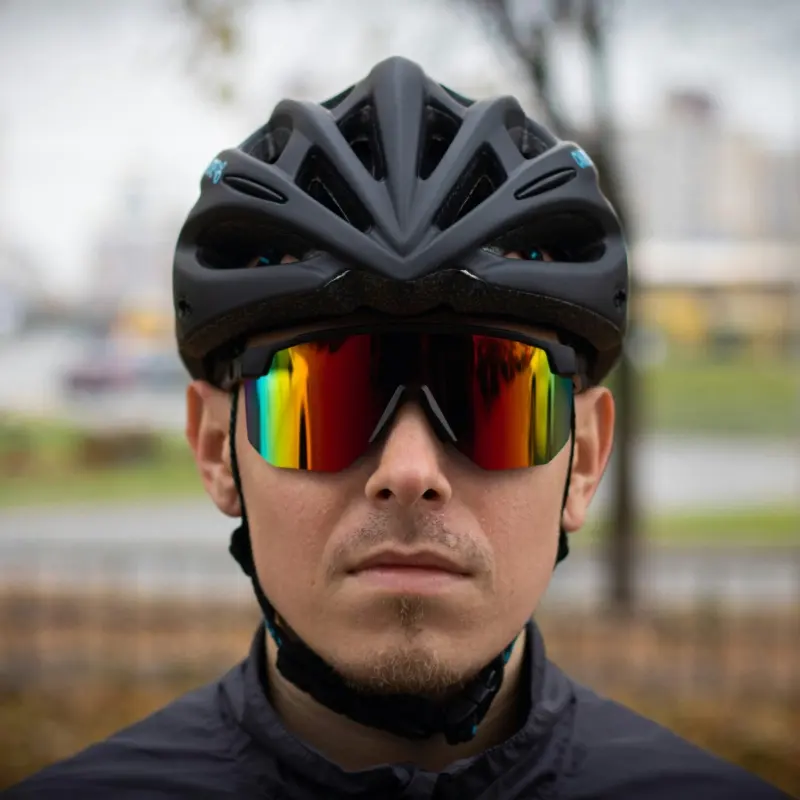
Cycling — generally worth it. A single ride can cross a wide light range, and cyclists already have a habit of carrying and swapping gear (jersey pockets, saddle bags), which makes physically swapping a lens a low-friction addition rather than a burden. We’ve covered cycling-specific lens and fit considerations in Custom Sports Sunglasses for Cycling Brands: What to Specify.
Skiing and snow sports — generally worth it. Light conditions can shift dramatically between bright sun and flat, snowy overcast within the same session, and swapping lenses is already a familiar behavior for this customer base from goggle culture.
Running — generally not a priority. As covered in our running sunglasses guide, runners prioritize lightweight, zero-maintenance gear. Carrying and swapping a spare lens mid-run isn’t a realistic use pattern, which makes photochromic a better fit for light-range coverage in this category.
Golf and tennis — generally not a priority. As covered in our golf and tennis lens guide, these sports benefit more from a precisely tuned single tint than from multiple lens options, since the visual task (tracking a ball against a relatively consistent background) doesn’t change as dramatically within a session as it does across a long bike ride or ski day.
A Cost Most Brands Don’t Plan For: Aftermarket Lens Support
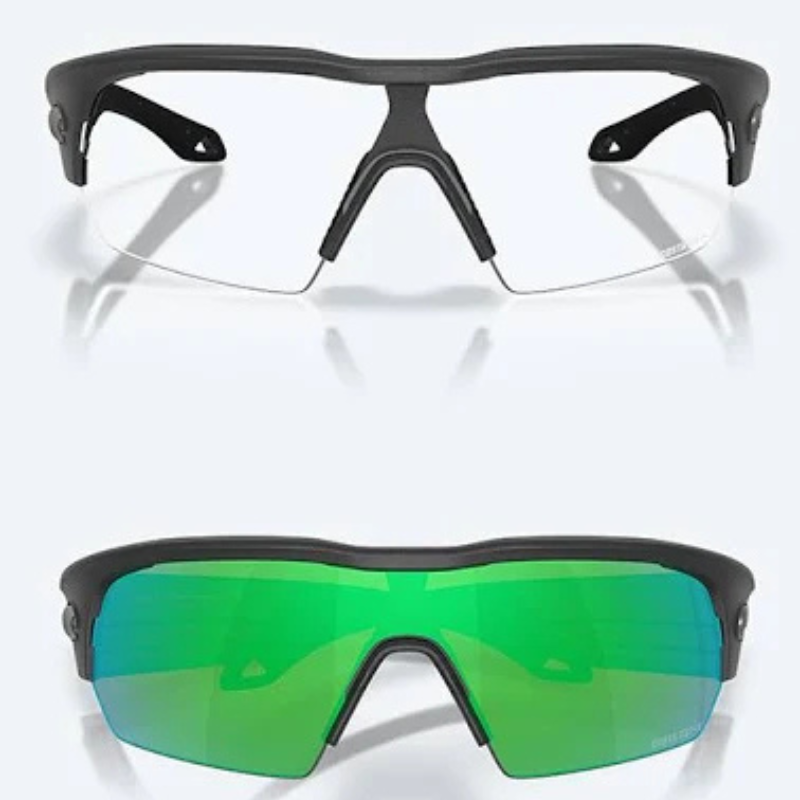
Beyond initial production, an interchangeable lens system creates an ongoing customer service consideration that a fixed-lens product doesn’t: individual lenses get lost or scratched, and customers will expect to be able to buy replacement lenses separately rather than a whole new pair of sunglasses.
This means planning inventory and a sales channel for standalone replacement lenses, not just the complete multi-lens kit — a detail that’s easy to overlook during initial development but shows up as a real support need once a product is in the market.
What to Decide Before Specifying an Interchangeable System
- Whether your target sport and customer behavior actually support carrying and swapping physical lenses (cycling and snow sports generally do; running, golf, and tennis generally don’t)
- How many lens variants the kit needs — more variants mean more tooling cost, not just more retail value
- Clip-in versus magnetic mechanism, based on target price point and how much retention durability testing your factory can support
- Whether photochromic is a simpler, lower-cost alternative that solves the same light-range problem for your specific sport
- Whether standalone replacement lenses need to be planned as their own SKU and sales channel
Frequently Asked Questions
Do interchangeable lens systems increase MOQ requirements?
Not typically in terms of the base frame MOQ, but each additional lens variant adds its own tooling and production planning, which increases overall development cost and complexity even if the frame MOQ itself stays the same.
Is a magnetic lens system better than a clip-in system?
Not universally — magnetic systems tend to be faster to use and less prone to scratching during swaps, but they require a frame specifically engineered for it and can lose some magnetic strength over time. Clip-in systems are more common in cycling and generally more straightforward to manufacture consistently.
Is an interchangeable lens system or a photochromic lens the better investment?
It depends on the sport and customer behavior. Interchangeable systems suit sports with wide light-range sessions and a customer base already used to carrying gear, like cycling and skiing. Photochromic tends to be the better fit for sports where the customer prioritizes zero-maintenance simplicity, like running.
What’s the most overlooked cost in interchangeable lens systems?
Aftermarket replacement lens support. Brands often plan the initial multi-lens kit but overlook that customers will eventually need to buy individual replacement lenses, which requires its own inventory and sales channel plan.
Deciding whether an interchangeable lens system is worth it really comes down to matching it against your sport, your customer’s habits, and the frame and lens choices already shaping the rest of the collection.
Let's get started!
Get in touch with a custom eyewear specialist now for a free consultation and instant price quote.
WHATSAPP ME GO!
📱 Scan with your phone to start chatting