Sports Sunglasses Fit Testing: How to Validate Stability Before Bulk Production
A sports sunglasses sample can feel great in a two-minute try-on and still fail on a real ride, run, or round of golf. Fit stability isn’t something a quick showroom test can validate — it needs both structured lab testing and real-world wear testing before a design is approved for bulk. This guide covers what’s actually worth checking, and why “it looked fine in the sample photos” isn’t a reliable standard for sign-off.
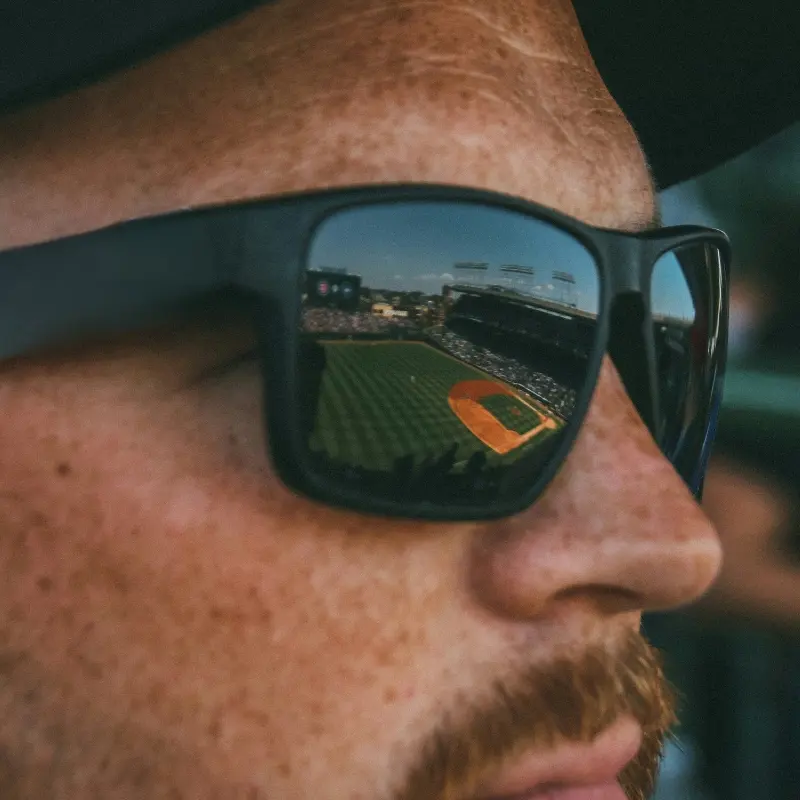
Why a Quick Try-On Isn’t Enough
With regular sunglasses, slight movement is mostly an annoyance. With sports sunglasses, movement affects the actual usability of the product — a frame that shifts mid-ride changes the field of view, a nose pad that slips changes lens position relative to the eyes, and repeated adjustment during activity is exactly the kind of complaint that shows up in returns and reviews after launch rather than during sample approval.
The practical implication: a sample that feels fine in the first two minutes of wear needs to be tested again after sustained use — a long ride, a full run, or an extended round — because that’s when fit problems that don’t show up immediately tend to surface.
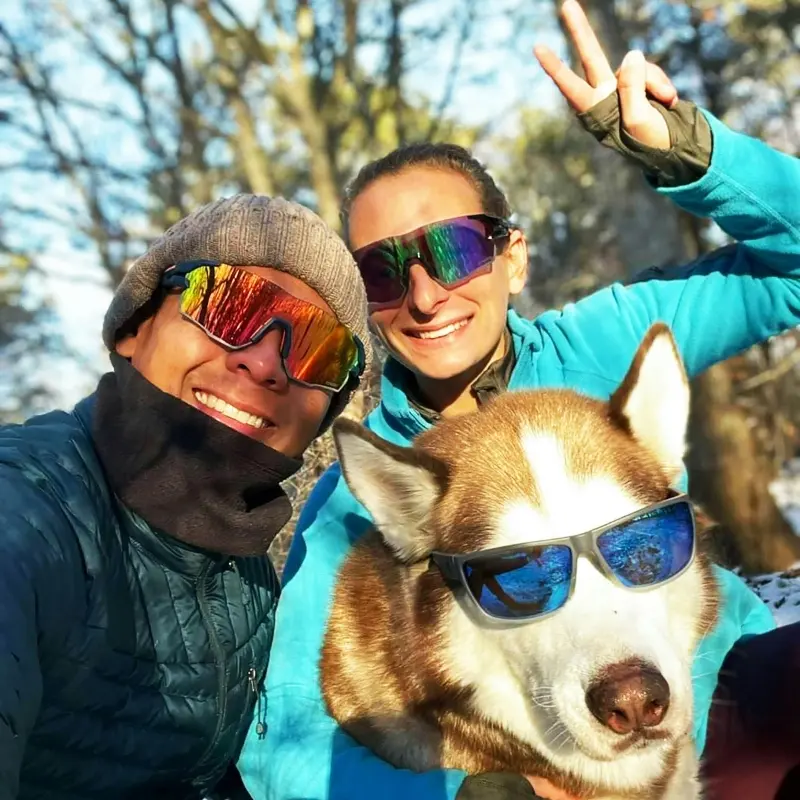
Lab-Based Mechanical Testing
Before real-world wear testing even starts, a set of structured mechanical tests establishes whether the frame holds up to repeated stress in a controlled, measurable way.
Hinge endurance test. The hinge is opened and closed tens of thousands of times (commonly 30,000+ cycles) to confirm it doesn’t loosen with repeated use — directly relevant to how consistently the temples hold their angle over months of regular wear.
Nose pad pressure test. A fixed pressure is applied to both sides of the nose pad for roughly 15–20 seconds, with deformation typically expected to stay within about 2mm. This is a direct proxy for how the nose pad will hold up against sustained pressure during long sessions.
Frame flex test. The frame is bent inward and outward roughly 30 degrees, and twisted clockwise and counterclockwise by a similar margin, then checked for cracking or failure to return to its original shape. This simulates the kind of stress a frame takes from being sat on, packed in a bag, or twisted during active use.
Drop and impact test. The frame is dropped from a set height onto a hard surface (commonly around 1.5 meters) to confirm it doesn’t crack or deform on impact — a baseline durability check relevant to any product that’s likely to get dropped during outdoor use.
Artificial sweat resistance test. Metal components and coatings are exposed to simulated sweat conditions to check for corrosion — a test that matters more for sports sunglasses than for general fashion eyewear, given how much direct sweat exposure the product will see over its lifespan.
Salt spray test. Particularly relevant for fishing and water sport categories, this checks corrosion resistance under saltwater exposure conditions.
Coating adhesion test. Logo printing, plating, and surface coatings are tested with adhesive tape to confirm they don’t lift or peel under normal handling.
Dimensional tolerances worth specifying. Common reference tolerances include frame curvature within about ±1°, temple opening angle within about ±2mm, and frame height within about ±0.3mm — small numbers, but ones that compound into a noticeably different fit if a production run drifts from spec.
Real-World Wear Testing
Mechanical testing confirms the frame can survive stress in controlled conditions. Wear testing confirms it actually performs the way it’s supposed to on a real head, during real activity.
Head shake test. With the frame worn, the head is moved quickly from side to side and up and down to check for slide or bounce — a direct simulation of what happens during running or fast direction changes in other sports.
Sweat accumulation test. The frame is worn through a session long enough to build up real sweat, then checked for whether nose pad and temple grip hold position or start to slip as moisture builds — this is where the hydrophilic rubber grip behavior we’ve covered for running sunglasses either proves out or doesn’t.
Helmet compatibility test. For cycling-specific products, the frame is worn together with a target helmet to confirm the temples sit flat under the strap without pressure points or lift — a check we’ve covered in more detail in Custom Sports Sunglasses for Cycling Brands: What to Specify.
Extended wear duration. Testing shouldn’t stop at the first few minutes of wear. A long ride, a full training run, or an extended round of golf reveals pressure points, fogging, and slippage that a brief try-on won’t surface — the same logic applies whether the sport in question is cycling, running, or golf and tennis.
Keeping Bulk Production Consistent With the Approved Sample
One of the more common quality issues isn’t a design flaw — it’s bulk production drifting from the sample that was actually approved. Judging a production run by whether photos look similar to the approved sample isn’t a reliable check; the approved physical sample needs to be kept as the reference standard and compared directly against production units.
This matters most for the details that affect fit stability specifically: nose pad position, lens groove dimensions, and frame curve consistency. A small shift in any of these — even one that wouldn’t be obvious in a product photo — can be enough to change how the finished product actually sits and stays in place, particularly on a curved sports frame where small tolerance drift compounds more than it would on a flatter fashion frame.
A Fit Validation Checklist Before Approving Bulk Production
- Hinge endurance confirmed to standard cycle count without loosening
- Nose pad pressure and deformation within spec
- Frame flex and twist test passed without cracking
- Drop/impact test passed at target height
- Artificial sweat and (if relevant) salt spray resistance confirmed
- Coating and logo adhesion confirmed
- Head shake test shows no slide or bounce
- Extended wear test completed (not just a short try-on)
- Helmet compatibility confirmed, if applicable to the product
- Production sample compared directly against the approved reference sample — not just against photos
Frequently Asked Questions
How long should a real-world wear test last before approving a sports sunglasses sample?
Long enough to reflect actual use — a full ride, run, or round rather than a few minutes. Fit problems like slipping, pressure points, and fogging often don’t show up until sustained wear, especially once sweat builds up.
What’s the most commonly overlooked fit testing step?
Comparing bulk production directly against the physical approved sample, rather than judging consistency from photos. Small drifts in nose pad position or frame curve are easy to miss in images but can noticeably affect fit stability.
Do all sports sunglasses need helmet compatibility testing?
Only cycling-specific products, or any category where the eyewear is regularly worn alongside a helmet. It’s not a relevant test for running, golf, or tennis sunglasses.
Is lab testing enough on its own, without real-world wear testing?
No. Lab tests confirm the frame survives mechanical stress in controlled conditions, but they don’t fully replicate how a frame performs on a moving head during sustained activity — both types of testing are needed before bulk approval.
Validating fit stability properly is really about testing under the same conditions the product will actually face, not just a quick try-on — a step worth building into the same development process as the frame and lens decisions that shape the rest of a sports sunglasses collection.
Let's get started!
Get in touch with a custom eyewear specialist now for a free consultation and instant price quote.
WHATSAPP ME GO!
📱 Scan with your phone to start chatting