Prescription-Ready Sports Sunglasses: RX Insert vs RX-Ready Frame vs Direct Rx Lens
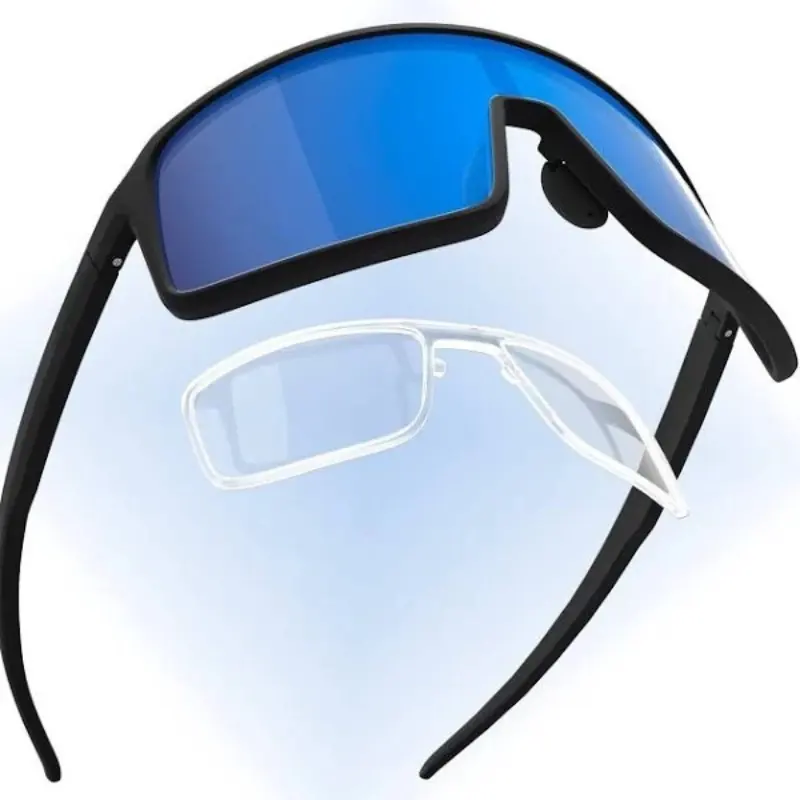
For brands that want to support prescription-wearing customers, the question usually isn’t whether to offer prescription-compatible sports sunglasses — it’s which structure actually fits the product. RX insert, RX-ready frame, and direct Rx lens solve the same underlying need in three structurally different ways, and the right choice depends on frame shape, target prescription range, and how much of the optical work your factory versus a local optician is expected to handle.
Why This Decision Comes Before Frame Finalization
Prescription integration isn’t something to bolt onto a finished sports sunglasses design — it needs to be part of the frame decision from the start. A frame’s base curve, lens shape, and whether it uses a continuous single lens or two separate lenses all determine which prescription structures are even possible. We’ve covered frame curve trade-offs in more detail in How to Choose Frames for Sports Sunglasses: Wrap vs Shield vs Half-Frame — the short version relevant here is that the more aggressive a frame’s wraparound curve, the more constrained the prescription options become.
RX Insert: A Small Corrective Lens Behind the Main Shield
An RX insert is a smaller, flatter corrective lens that clips or mounts behind the main sports lens, sitting closer to the eye. The outer lens stays non-prescription — it handles UV protection, tint, and impact resistance — while the insert does the vision correction.
What this structure does well:
- Accommodates a wider prescription range. Because the insert lens is smaller and flatter than the curved outer shield, it avoids the edge distortion that limits direct glazing. Some insert systems support prescriptions well beyond what direct glazing can handle.
- Keeps the outer lens swappable. A rider can change tint for different light conditions — clear, smoke, copper — without touching the prescription component, since the insert stays fixed while outer lenses are exchanged.
- Works with high-wrap and shield frames. This is the structure that makes prescription support possible on frames with an aggressive curve, where a direct-glazed lens would distort at the edges.
- Simplifies inventory for the factory. Frames and inserts can be manufactured and stocked separately, which keeps SKU management more manageable than producing a fully custom prescription lens for every frame variant.
Trade-offs worth knowing: the insert adds some weight and sits closer to the eye, which can occasionally cause eyelashes to brush against the inner lens surface during activity — a minor but real comfort complaint some wearers report. Not every frame is designed to accept an insert, so compatibility needs to be built into the frame from the development stage rather than added afterward.
Direct Rx Lens: Prescription Ground Directly Into the Lens
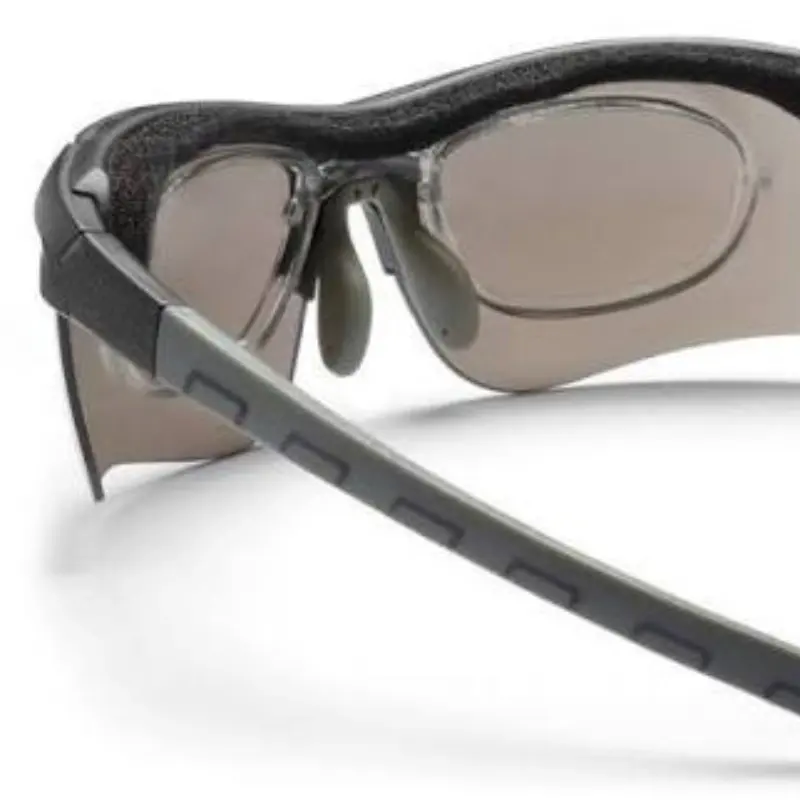
Direct glazing (sometimes labeled “direct-in” prescription mounting) means the corrective power is ground straight into the sports sunglasses lens itself — no separate insert component.
What this structure does well:
- Better optical clarity, since there’s no additional lens surface between the eye and the world.
- Lighter overall, without the added weight of a second lens component.
- Less prone to fogging, since there’s no extra internal lens surface where moisture can collect.
- A more secure, integrated feel, since the prescription lens is the frame’s actual lens rather than a separate piece that could shift.
Trade-offs worth knowing: direct glazing has a real ceiling on prescription range — strong prescriptions often can’t be accommodated without visible distortion, particularly on curved frames. It’s also frame-specific and non-transferable, generally costs more per unit due to the CNC surfacing required for curved lenses, and comes with one hard limit worth flagging clearly to brands: a true single-piece shield lens cannot support prescription lenses at all, since a continuous one-piece lens can’t be ground to different thickness and curvature for the left and right eye the way two separate lenses can. If a brand wants both a shield-style frame and prescription support, an RX insert is the only structure that makes that combination possible.
RX-Ready Frame: A Different Kind of Decision Entirely
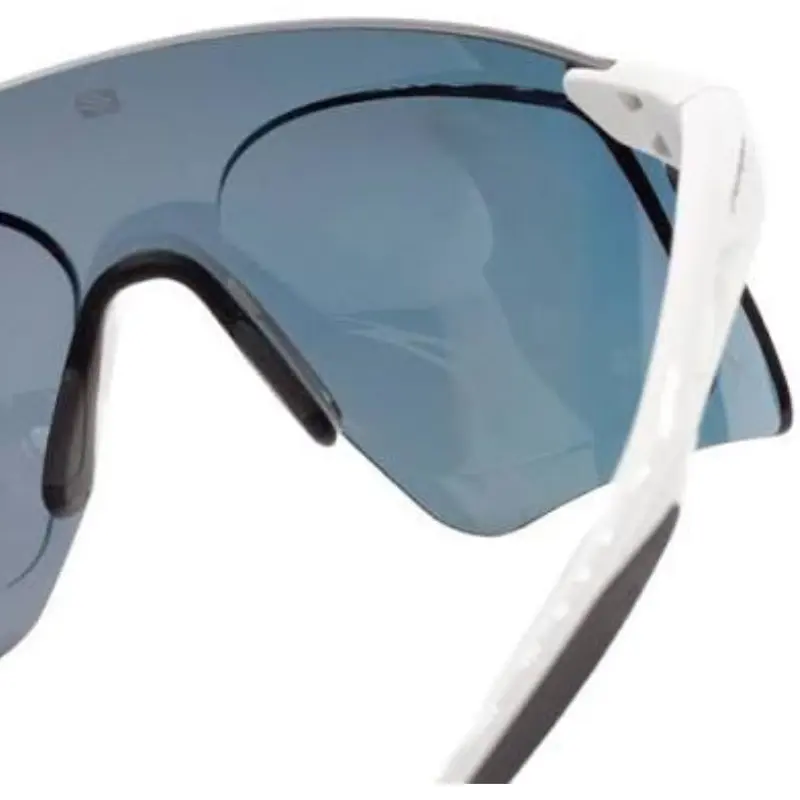
RX-ready frame is a different category from the two above — it’s not a lens technology, it’s a frame design decision about who finishes the prescription work.
An RX-ready frame is built with the groove dimensions, base curve, and optical positioning needed to accept a standard prescription lens, but the actual lens grinding and fitting happens later, typically by an optical retailer or optician working with the end customer. The factory’s job is to make sure the frame structure can reasonably support a normal prescription range — not to produce the finished prescription lens itself.
This structure fits a specific business model: brands or retailers who want to sell a sports frame that customers or opticians can fit locally, rather than delivering a complete prescription solution out of the factory. It’s a common choice for optical retailers building out a sports eyewear category, since it keeps prescription fitting within their existing local service model.
Matching the Structure to Your Business Model
A few patterns show up consistently in how brands choose between these three structures:
- A cycling or high-wrap sports brand that wants to keep a large shield-style lens usually needs an RX insert — it’s the only structure compatible with that frame geometry.
- An optical retailer adding sports eyewear to their catalog often prefers RX-ready frames, since it keeps the prescription fitting inside their existing local optical service rather than requiring a factory-glazed solution.
- A sports eyewear brand wanting a clean, fully finished retail product — with no separate lens-fitting step for the customer — is more likely to reach for direct glazing, provided the frame’s curve and target prescription range make that feasible.
There’s no single correct structure across all three — the right one depends on the frame shape already chosen, the prescription range the brand needs to serve, and how much of the optical process the brand wants to own versus hand off to a local optical channel.
Lens Material Considerations for RX Inserts
For brands going the RX insert route, lens material is worth specifying alongside the structure itself:
- CR-39 offers solid optical clarity at a lower cost, though it’s less suited to high-impact sports categories.
- Polycarbonate is lighter and more impact-resistant, making it the common choice for cycling, running, and other higher-impact sports insert lenses.
- High-index materials reduce lens thickness and weight for stronger prescriptions, which matters more as the corrected power increases.
What to Specify Before Development Starts
- Target frame shape and base curve (this determines which structures are even possible)
- Target prescription range your customer base needs — standard range or higher-power corrections
- Whether the outer lens needs to support multiple interchangeable tints
- Who is expected to finish the prescription: the factory (RX insert or direct glaze) or a local optical channel (RX-ready frame)
- Lens material preference for the corrective component, if going the insert route
- Whether the sport in question (cycling, running, golf) has its own fit or ventilation requirements worth reviewing alongside the RX structure — covered separately in our sport-specific guides for cycling and running

Frequently Asked Questions
Can a shield-style sports sunglasses frame support a prescription lens?
Not through direct glazing — a true single-piece shield lens can’t be ground to different specifications for each eye. An RX insert is the structure that makes prescription support possible on a shield or high-wrap frame.
Which structure supports the widest prescription range?
RX insert systems generally accommodate a wider range than direct glazing, since the smaller, flatter insert lens avoids the edge distortion that limits how strong a curved direct-glazed lens can go.
What’s the difference between an RX-ready frame and an RX insert?
An RX-ready frame is a structural design decision — the frame is built to accept a standard prescription lens fitted later by an optician. An RX insert is a specific lens component built into the product itself, with the factory supplying the corrective element directly.
Is direct glazing always more expensive than an RX insert?
Typically, yes. Direct glazing requires more advanced CNC lens surfacing to compensate for the frame’s curve, which generally costs more per unit than producing a separate flat insert lens.
Choosing the right prescription structure comes down to matching it against the frame shape and prescription range your brand actually needs to serve — a decision worth locking in alongside the broader frame and lens choices that shape the rest of a sports sunglasses collection.
Let's get started!
Get in touch with a custom eyewear specialist now for a free consultation and instant price quote.
WHATSAPP ME GO!
📱 Scan with your phone to start chatting