Reading Glasses MOQ and Packaging: What First-Time Brands Get Wrong
“MOQ 300 pieces per style” sounds like a simple number until it’s time to actually place a first order. Most of the trouble first-time brands run into isn’t the MOQ itself — it’s the assumptions built on top of it. Spreading it across too many styles, forgetting that packaging has its own separate minimum, or underestimating what a shipment actually needs to arrive intac
None of these are complicated problems once you see them coming. They’re just easy to miss the first time.
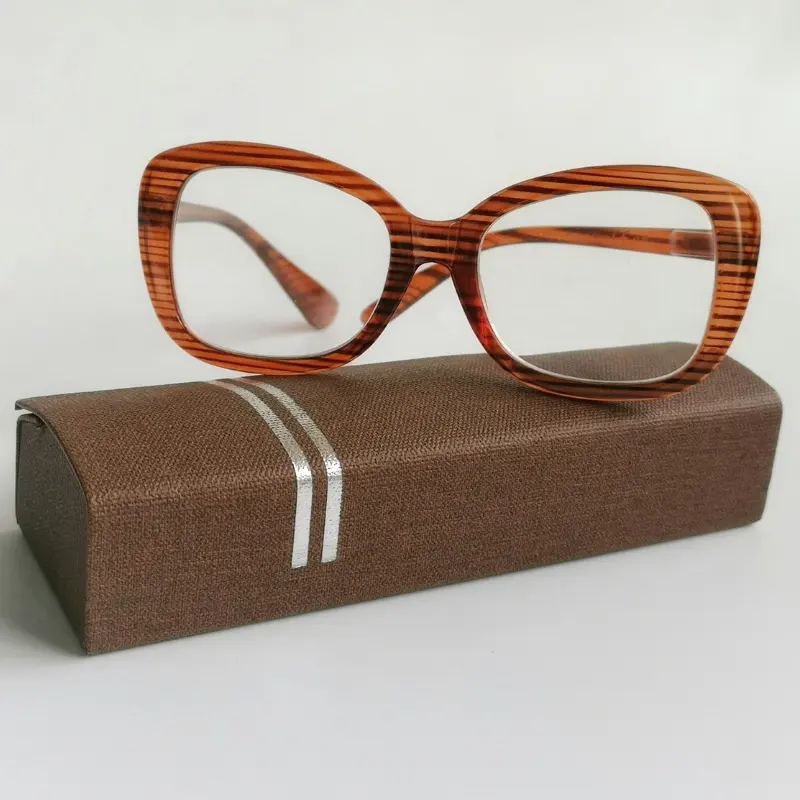
MOQ Isn’t One Number — It’s Three
Reading glasses MOQ is usually described as a single figure, but in practice it works on three levels:
- Model MOQ — the minimum quantity for one frame style. For reading glasses, this typically starts around 300 pieces per style for acetate and closer to 1,200 pieces per style for TR90/injection frames, reflecting the higher tooling investment in injection molding.
- Color MOQ — the minimum per colorway within that style. A common structure is 100 pieces per color for acetate, meaning a 300-piece style order might split across three colorways.
- Total Order MOQ — the overall order size a factory needs to justify running production at all, which becomes relevant once you’re ordering across multiple styles.
Knowing which layer you’re negotiating against matters. A buyer who only understands “300 pieces” often assumes that number covers whatever mix of styles and colors they want — it doesn’t.
Mistake #1: Spreading the Budget Across Too Many Styles
The most common first-order mistake isn’t ordering too much — it’s ordering too wide. A brand wanting five distinct frame shapes, each with its own MOQ, ends up committing to five times the tooling and inventory of a brand that launches with one or two shapes across several colors.
The more efficient path: pick one or two frame shapes you’re confident in, and put your volume into color variety and diopter range within those shapes rather than into more shapes. This keeps the collection feeling complete without multiplying your minimum spend.
This is especially relevant for reading glasses, since — as covered in our frame materials guide — TR90 tends to be the volume play and acetate the fashion-forward option. Mixing both into a first order usually means carrying two separate MOQ structures at once, which is worth planning for rather than discovering mid-negotiation.

Mistake #2: Forgetting That Packaging Has Its Own MOQ
This is the one first-time brands miss most often. Frame MOQ and packaging MOQ are usually two separate conversations, sometimes with two separate suppliers — and packaging minimums can be higher than the frame order itself, particularly for custom boxes, printed cases, or branded pouches.
A brand that carefully calculates a 900-piece frame order (three colorways at 300 pieces each) can still get stuck if the packaging supplier’s minimum for a custom-printed case sits at 1,500 units. Either the packaging order becomes the more expensive line item, or the brand has to fall back on simpler packaging than planned. Neither is a problem if it’s planned for — both are a problem if it’s discovered two weeks before a launch date.
Before finalizing frame quantities, it’s worth confirming:
- Does the packaging MOQ match, exceed, or fall short of the frame order?
- Can packaging be shared across colorways, or does each color need its own printed run?
- Is there a simpler packaging tier (unprinted pouch, standard case) that fits a smaller first order, with custom packaging introduced at reorder?
Mistake #3: Underestimating What a Shipment Needs to Survive Transit
Reading glasses are small, which makes it easy to underestimate how much they need protecting in a shipping carton. Two recurring issues:
- Mixed SKUs packed loosely in the same box. Without dividers or trays separating styles, colors, and diopter strengths, cartons that look fine on paper arrive as a sorting problem — or with scratched lenses and bent temples from frames shifting in transit.
- Carton sizing that doesn’t match the actual volume. Oversized cartons leave room for movement and damage; undersized ones create pressure points. Matching carton size to the real product volume, with adequate but not excessive padding, is a small detail that prevents a disproportionate amount of damage-related returns.
Coated lenses and metal hardware are particularly sensitive to humidity and temperature swings during longer sea freight routes, which is worth flagging with your factory if your reading glasses line includes blue light coatings or metal accents.
A Simple Pre-Order Checklist
Before placing a first reading glasses order, it’s worth confirming with your factory:
- What’s the Model MOQ and Color MOQ for the specific material (acetate vs. TR90) you’re using?
- Does the diopter range you want to offer require separate lens ordering, or can strengths be combined within the same style MOQ?
- What’s the packaging MOQ, and does it match your frame order size?
- Can packaging be introduced in stages — simple for the first order, custom once volume justifies it?
- How is the shipment packed internally — are SKUs, colors, and diopters separated with dividers or trays?

Frequently Asked Questions
What’s a typical MOQ for private label reading glasses?
It varies by material — acetate styles commonly start around 300 pieces per style with a 100-piece minimum per colorway, while TR90/injection styles typically require closer to 1,200 pieces per style due to higher mold costs.
Is packaging MOQ the same as frame MOQ?
No. Packaging suppliers often set their own separate minimums, which can be higher than the frame order — especially for custom-printed boxes or cases. This is worth confirming before finalizing frame quantities, not after.
How many frame styles should a first-time brand launch with?
One or two styles across multiple colorways is generally a safer first order than several styles at their individual minimums — it keeps total spend and inventory risk lower while still giving the line variety.
Do diopter strengths affect MOQ?
Diopter lenses are sourced as standard stock by power, so they don’t typically require a separate mold-driven MOQ the way frame styles do — but confirming how strengths are split within a style’s color MOQ avoids surprises at order time.
Getting the MOQ math and the packaging plan right before the first PO is what keeps a launch on budget — both are worth mapping out on the production side before quantities get locked in.
Let's get started!
Get in touch with a custom eyewear specialist now for a free consultation and instant price quote.
WHATSAPP ME GO!
📱 Scan with your phone to start chatting