Reading Glasses Frame Materials: Acetate, TR90, or Metal for Your Line
Frame material decides more about a reading glasses line than most brands expect going in — not just how it looks and feels, but what it costs, what MOQ you’re working against, and which channel it’s realistically suited for. Acetate, TR90, and metal aren’t interchangeable options with the same trade-offs at different price points; they’re three different production and positioning paths.

The Short Answer: TR90 Leads, Acetate Is the Fashion Layer, Metal Is an Accent
Across the reading glasses category specifically — as opposed to eyewear in general — the material split isn’t even. TR90/injection frames dominate the volume side of the market: they’re cost-efficient at scale, durable enough for daily impulse-purchase use, and well suited to multi-pack or drugstore-style retail. Acetate carries real weight in the category too, but mostly as a fashion-forward, higher-margin segment rather than the volume default (see our guide on fashion-forward reading glasses for where that positioning pays off). Metal, in reading glasses specifically, tends to work best as an accent — hardware details, temple inlays — rather than a full-frame material for a core line.
That’s a different balance than sunglasses or full optical frames, where acetate often leads. It’s worth keeping that category distinction in mind rather than applying general eyewear material advice directly to a reading glasses line.

TR90: The Volume and Comfort Material
TR90 is a lightweight, nearly unbreakable thermoplastic, and it’s the material most reading glasses brands should default to for a core, walk-before-you-run line.
- Strengths: Lightweight enough for all-day wear, highly impact-resistant, holds up well to the drop-and-bend handling typical of impulse-purchase readers, and scales efficiently across large production runs.
- Trade-offs: Fewer options for deep color layering or textured finishes compared to acetate — it reads as clean and functional rather than richly detailed.
- MOQ reality: TR90/injection styles typically require around 1,200 pieces per style, reflecting the tooling investment in injection molding. This makes TR90 the better fit once you’re confident in a shape and ready to commit to volume, rather than for a first small test batch.
- Best fit: Pharmacy, supermarket, and multi-pack retail channels; office and daily-wear positioning; any line prioritizing cost efficiency over standout design.
Acetate: The Fashion and Margin Material
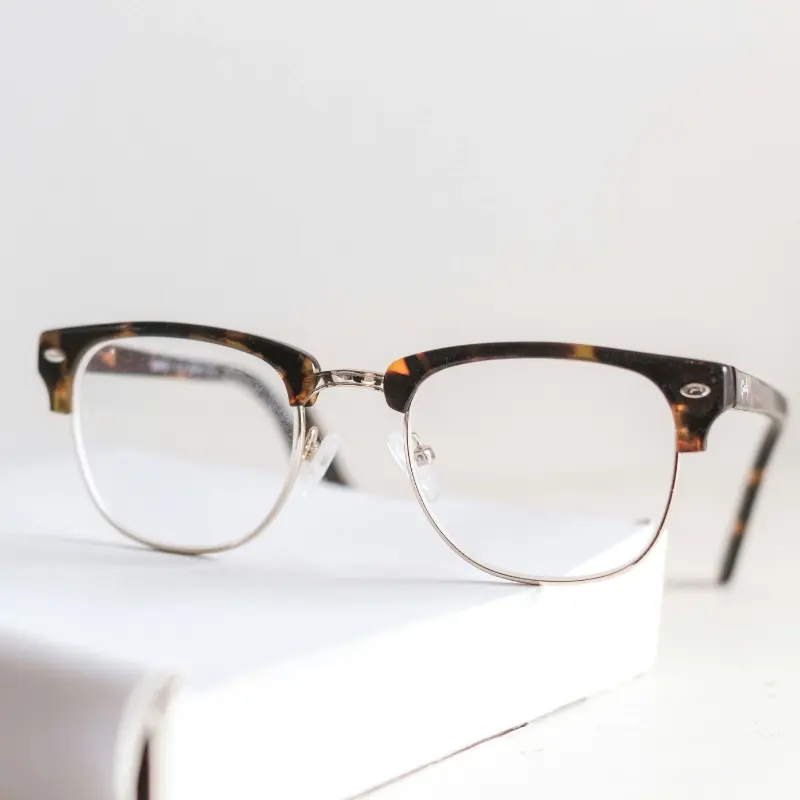
Acetate is where a reading glasses line earns a “designed,” rather than “generic,” look. Layered color, tortoise patterns, and gradient effects are achievable in acetate in a way basic plastics can’t replicate.
- Strengths: Strongest color and texture depth in the category, reads as premium immediately, and lets a reading glasses line visually match an existing acetate sunglasses or optical collection.
- Trade-offs: Heavier than TR90, which matters for all-day wearers; costs more per unit; and is more sensitive to handling and finish quality than injection plastic.
- MOQ reality: Acetate styles commonly start around 300 pieces per style, with a 100-piece minimum per colorway — a lower volume commitment per style than TR90, but spread across more colorways if you want a full-looking collection.
- Best fit: DTC and boutique channels, fashion-forward brand extensions, and any line where retail price supports a design-led positioning rather than a price-led one.
Metal: The Accent, Not the Core
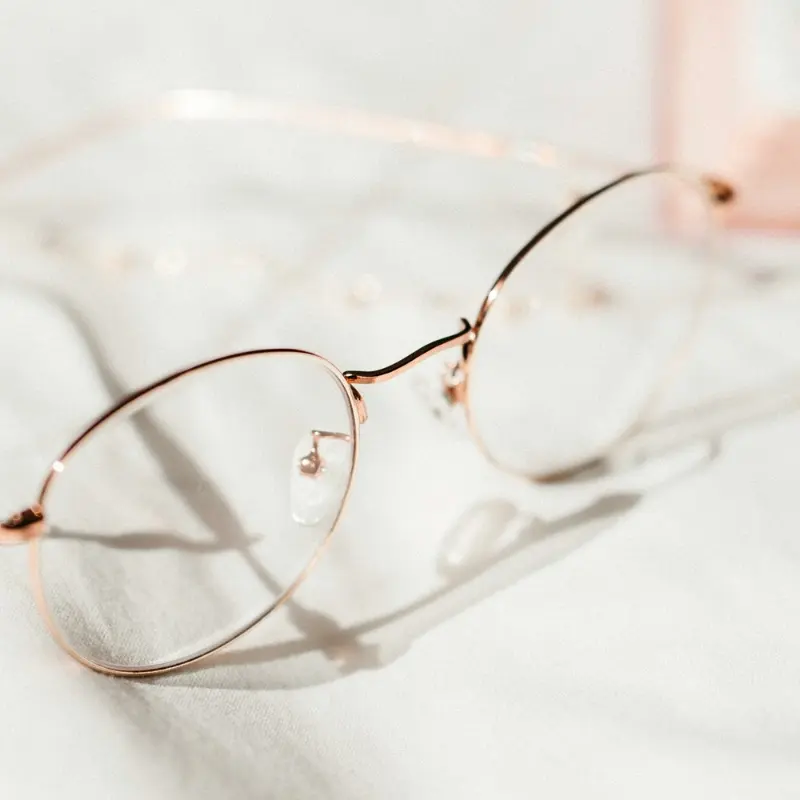
Metal shows up in reading glasses more often as a detail than as a full frame material — temple hardware, rivets, hinge accents — because full-metal reading glasses carry a business/professional connotation that fits a narrower slice of the category than TR90 or acetate.
- Strengths: Clean, minimal, business-appropriate look; durable hardware; works well layered onto an acetate or TR90 base rather than standing alone.
- Trade-offs: Adds cost and production complexity (plating, welding, screw assembly) without necessarily adding to the core value proposition of a mass-market reader.
- Best fit: A smaller, higher-price-point capsule within a broader line, or specific hardware details on an otherwise acetate or TR90 frame — not typically the lead material for a first collection.
Matching Material to Channel and Positioning
| Channel / Positioning | Recommended Material | Typical MOQ Starting Point |
|---|---|---|
| Pharmacy / supermarket / multi-pack | TR90 | ~1,200 pcs/style |
| Office / daily-wear, comfort-first | TR90 | ~1,200 pcs/style |
| DTC / boutique / fashion-forward | Acetate | ~300 pcs/style, 100 pcs/colorway |
| Business / professional accent line | Metal (hardware) on acetate or TR90 base | Varies by design |
Why Mixing Materials Changes Your MOQ Math
A reading glasses line built entirely on TR90 or entirely on acetate has one MOQ structure to plan against. A line that mixes both — a volume TR90 core plus a smaller acetate capsule — means carrying two separate MOQ commitments at once, as covered in more detail in our MOQ and packaging guide. That’s not a reason to avoid mixing materials; it’s a reason to plan the volume split deliberately rather than discovering the total commitment after quoting both.
Frequently Asked Questions
What’s the most common frame material for reading glasses?
TR90 is the most common choice for core, volume-driven reading glasses lines, due to its lower cost at scale and durability for everyday impulse-purchase use. Acetate is common as a secondary, fashion-focused material rather than the default.
Is acetate worth the higher cost for a reading glasses line?
It depends on channel and positioning. Acetate’s color depth and premium feel support a higher retail price in DTC and boutique channels, but the cost premium is harder to justify in price-sensitive pharmacy or supermarket channels.
Can reading glasses be made entirely in metal?
It’s possible but uncommon as a core material — full-metal readers work best as a smaller, higher-price capsule rather than a volume line, since the category generally rewards lighter, more casual materials.
Does mixing TR90 and acetate in one line complicate production?
It means managing two separate MOQ structures rather than one, but it’s a common approach for brands that want a volume core plus a fashion-forward capsule — it just needs to be planned for at the quoting stage.
Which material fits a specific line usually comes down to channel and price point more than personal preference — worth mapping out on the production side before committing to a first mold.
Let's get started!
Get in touch with a custom eyewear specialist now for a free consultation and instant price quote.
WHATSAPP ME GO!
📱 Scan with your phone to start chatting