Sun Lens Material Guide: CR-39, Polycarbonate, Trivex, Glass, Nylon, and TAC Compared
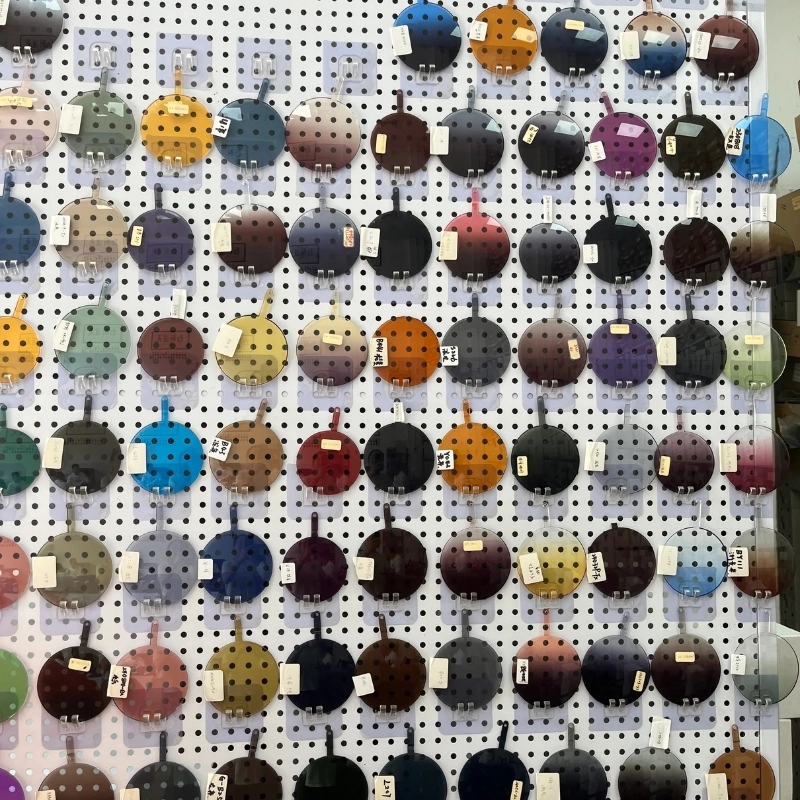
Lens material decisions get less attention than frame material in most product briefs we receive — and that’s a mistake. The lens is what the customer looks through every time they wear the product, and the wrong material choice shows up as returns, complaints, or a product that simply doesn’t hold up the way the brand expected.
This guide breaks down the six lens materials we work with most: what each one actually does well, where it falls short, and which production and quality-control details matter once you move from spec sheet to bulk order. The goal isn’t to tell you there’s one “best” material — there isn’t. It’s to give you the technical grounding to match material to use case correctly the first time.
Why Lens Material Selection Gets Mismatched
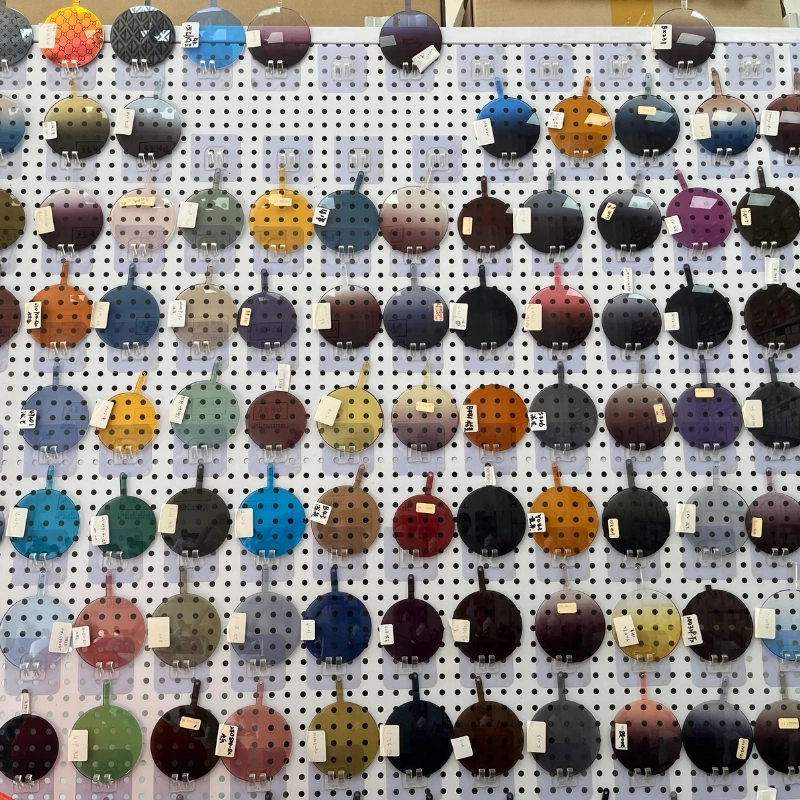
The most common mistake we see from brand buyers is specifying a lens material based on cost alone, without checking whether it fits the frame construction or end use. A few recurring patterns:
- CR-39 specified for a rimless or drill-mount frame — CR-39 is relatively brittle at the drill points, and frames built this way come back with cracked lens edges within months of regular wear
- Polycarbonate chosen for a fashion-forward, low-volume premium line — durable, but its lower optical clarity becomes noticeable at retail price points where customers expect glass-like sharpness
- Glass specified without adjusting frame design — glass is roughly double the weight of CR-39, and a frame designed for plastic lenses will feel unbalanced or develop hinge stress with glass installed
None of these are material failures — they’re specification mismatches. Getting this right starts with understanding what each material is actually built for.
How These Materials Compare on the Numbers
| Material | Specific Gravity | Abbe Value | Impact Resistance | Relative Cost |
|---|---|---|---|---|
| CR-39 | 1.32 g/cm³ | ~58 | Low–Moderate | Low |
| Polycarbonate | 1.20 g/cm³ | ~30 | Very High | Low–Moderate |
| Trivex | 1.11 g/cm³ | ~43–45 | Very High | Moderate–High |
| Mineral Glass | ~2.5 g/cm³ | ~58–60 | Low | High |
| Nylon (Polyamide) | Varies by grade | Varies | High | High |
| TAC Laminate | Thin-film, frame-dependent | N/A (polarizing film) | Low–Moderate | Very Low |
A few things worth reading carefully in this table: Abbe value measures how much a material disperses light into its component colors — higher means less chromatic distortion (color fringing) at the lens edge. CR-39 and glass sit at the top of this scale; polycarbonate sits at the bottom, which is its main optical tradeoff for impact resistance. Specific gravity is weight relative to water — this is what your customer actually feels on their face, independent of frame material.
CR-39: The Clarity-First Standard
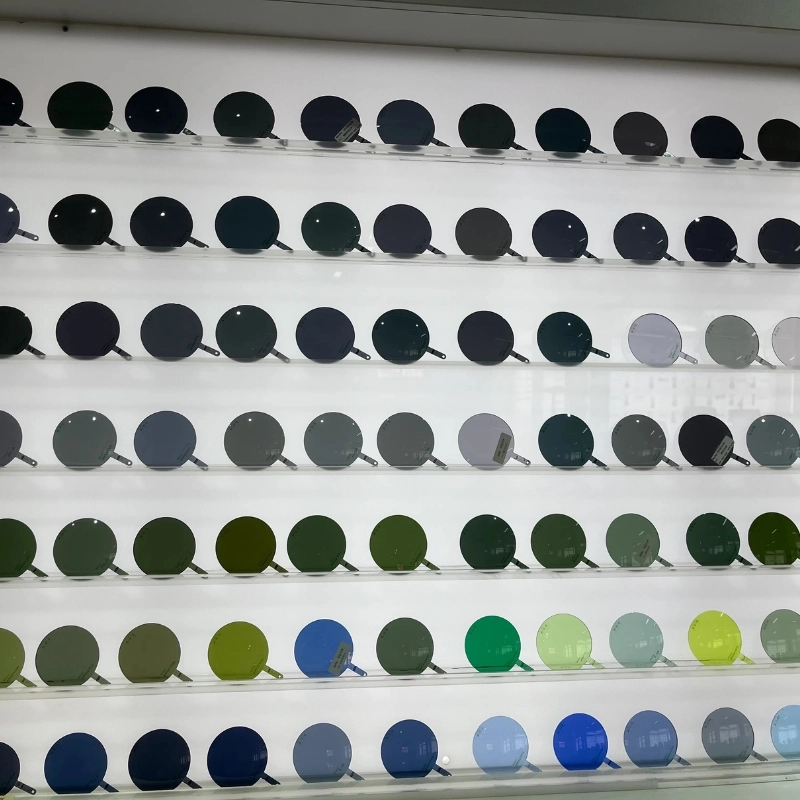
CR-39 (allyl diglycol carbonate) is a thermoset plastic — it cures into a fixed molecular structure during a slow casting process, which is exactly why it delivers such consistent optical clarity. It’s roughly half the weight of glass, takes tint dye exceptionally well, and remains the default choice across most fashion and lifestyle sunglasses lines.
The tradeoff is impact resistance. CR-39 doesn’t flex the way polycarbonate does, and it’s notably more prone to cracking at drill points — this is the single most common spec mismatch we see, and it’s avoidable by confirming frame construction before locking in lens material.
Best for: fashion and lifestyle frames, full-rim construction, brands prioritizing optical clarity and tint consistency over impact resistance.
Polycarbonate: The Impact-Resistance Standard
Polycarbonate is a thermoplastic, originally developed for aerospace and safety applications, and it remains the standard wherever impact resistance is the non-negotiable requirement — kids’ eyewear, sport frames, safety-rated products. It absorbs impact energy by flexing rather than fracturing, blocks UV inherently without a separate coating, and molds efficiently at volume, which keeps production costs down.
The optical tradeoff is real: polycarbonate’s Abbe value of around 30 means more chromatic distortion at the lens periphery than CR-39 or glass, particularly noticeable in larger or more curved frame shapes. Its surface is also soft and scratches easily without a hard coat — budget for this as a standard add-on, not an optional upgrade.
Best for: sport, kids’, and safety-rated eyewear; high-volume programs where durability matters more than peripheral optical precision.
Trivex: The Middle Ground
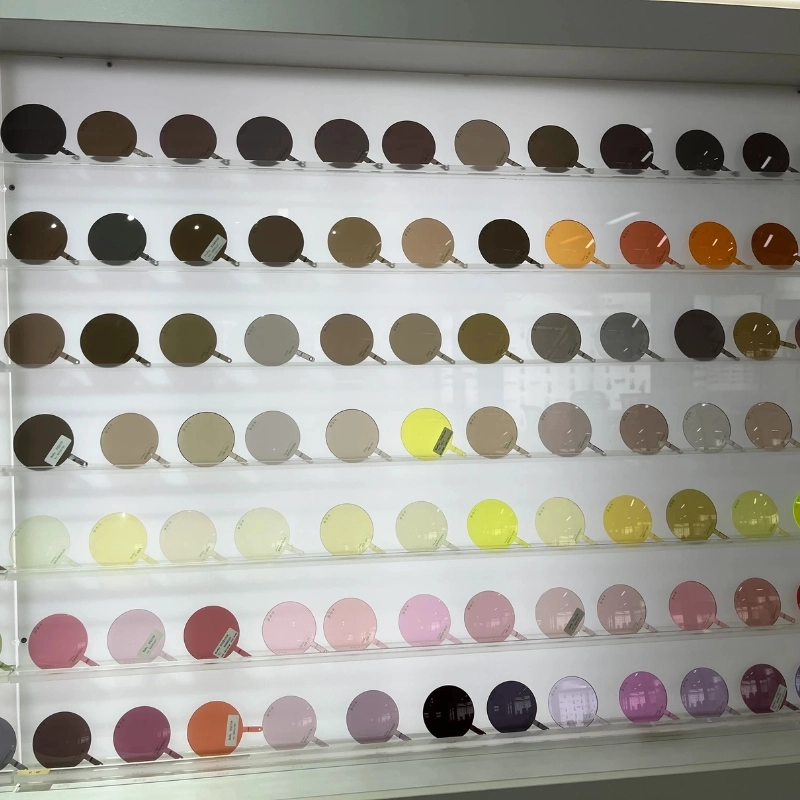
Trivex is a urethane-based material — developed by PPG, originally for military windshield applications — that splits the difference between CR-39’s clarity and polycarbonate’s impact resistance. At 1.11 g/cm³ it’s the lightest material on this list, and its Abbe value of roughly 43–45 gives noticeably better peripheral clarity than polycarbonate while still meeting high-impact safety standards.
The catch is cost and machinability — Trivex requires different edging equipment than CR-39 or polycarbonate, and it typically runs more expensive due to slower, smaller-batch production. It’s a strong choice for rimless and drill-mount construction specifically because of its superior resistance to stress cracking around drill holes — the opposite of CR-39’s weak point.
Best for: premium drill-mount or rimless frames, sport-premium hybrid lines, brands willing to pay more for the clarity-plus-durability combination.
Mineral Glass: Clarity at a Weight Cost
Glass delivers the highest optical clarity and scratch resistance of any material on this list, and unlike plastics, it doesn’t degrade optically over years of wear. That’s the case for it in heritage or luxury positioning.
The honest tradeoff: glass is roughly double the weight of CR-39, which changes how a frame needs to be engineered. Nose pads, hinge strength, and bridge width all need adjustment for glass lenses — installing glass into a frame designed for plastic is a common cause of warping and customer complaints. Glass also shatters rather than flexing on impact, which rules it out for sport or safety applications regardless of positioning.
Best for: heritage and luxury collections where weight is an accepted tradeoff for optical permanence and scratch resistance.
Nylon: Built for Sport Curvature
Nylon (polyamide) lenses are valued for their flexibility and resistance to stress cracking under tension, which makes them well suited to aggressive wrap-around sport frame shapes that other rigid materials can’t accommodate without distortion. They handle temperature extremes well, which matters for outdoor and high-altitude sport eyewear, and they hold complex curvature without optical distortion.
Nylon is a smaller, more specialized segment of the lens market than CR-39 or polycarbonate — it costs more and is typically reserved for performance sport lines rather than general fashion eyewear, where the curvature and durability benefits don’t justify the added cost.
Best for: high-curvature sport and performance eyewear — cycling, running, mountaineering — where frame wraparound exceeds what CR-39 or standard polycarbonate can support without distortion.
TAC Laminate: The Budget Polarized Option
TAC (tri-acetate cellulose) isn’t a standalone lens material in the way the others are — it’s a thin laminate construction, typically built around a polarizing film sandwiched between TAC layers, used specifically to deliver cost-effective polarization. It’s thin, lightweight, and offers strong glare reduction at the lowest price point of any polarized lens option.
The tradeoff is durability: TAC lacks polycarbonate’s impact resistance, and the lamination itself carries a real delamination risk under sustained heat or humidity exposure if the bonding process isn’t tightly controlled. This is a genuine quality-control variable, not a theoretical one — we check lamination integrity specifically during incoming material inspection, because adhesive quality varies meaningfully between suppliers.
Best for: budget-friendly polarized lifestyle and promotional eyewear where cost-per-unit matters more than long-term scratch or heat resistance.
| Material | Best For | Avoid For |
|---|---|---|
| CR-39 | Fashion, full-rim, tint-heavy lines | Rimless / drill-mount construction |
| Polycarbonate | Sport, kids’, safety-rated | Premium fashion needing sharp peripheral clarity |
| Trivex | Premium rimless, sport-premium hybrid | Cost-sensitive, high-volume promotional lines |
| Glass | Heritage / luxury collections | Sport, safety, lightweight-frame positioning |
| Nylon | High-curvature performance sport | General fashion eyewear (cost doesn’t justify it) |
| TAC | Budget polarized lifestyle lines | Long-term heat/humidity exposure without QC |
What This Means for Your Production Brief
Lens material should be one of the first decisions locked in your brief — not an afterthought finalized after frame design is approved. A few practical steps that prevent the most common mismatches:
- Confirm frame construction before specifying CR-39. Full-rim is generally safe; rimless or drill-mount needs Trivex or polycarbonate instead.
- Ask for the lamination QC process if you’re sourcing TAC. Request information on adhesive type and humidity testing — this is where quality varies most between suppliers.
- Request physical samples in your actual frame design before bulk commitment if you’re comparing two materials for the same style — weight balance and optical feel are hard to evaluate from a spec sheet alone.
- Specify reinforced hinges and wider nose bridges if using glass — this needs to be built into the frame engineering, not added after the fact.
If you’re sourcing both polarized lenses and standard tinted options across a single collection, material selection often needs to flex by style within the same product line — a rimless premium style and a full-rim promotional style in the same collection may reasonably use two different lens materials.
Frequently Asked Questions
Can CR-39 lenses be used for rimless sunglasses?
It’s generally not recommended. CR-39’s relatively lower tensile strength makes it prone to cracking around drill points over time, especially with regular handling. Trivex or polycarbonate are the standard choices for rimless and drill-mount construction because of their superior resistance to stress cracking at these points.
What’s the best lens material for impact resistance?
Polycarbonate and Trivex are the two standards for impact resistance, both commonly meeting high-velocity impact safety thresholds. Polycarbonate is more common and lower cost; Trivex offers meaningfully better optical clarity (Abbe ~43–45 vs. ~30) at a higher price point.
Is glass worth the extra weight for a sunglasses line?
It depends on positioning. Glass offers the best scratch resistance and long-term optical stability of any material on this list, which fits heritage or luxury collections where customers expect that tactile weight as a quality signal. For sport, everyday, or lightweight-positioned lines, the added weight is a liability rather than a feature.
Are TAC lenses durable enough for a premium product line?
TAC is best suited to budget-friendly and promotional polarized eyewear rather than premium positioning. It lacks the impact resistance of polycarbonate, and the laminate construction carries real delamination risk under sustained heat or humidity if adhesive quality isn’t tightly controlled during manufacturing.
Does a higher Abbe value actually matter to the end customer?
Yes, though the effect is most visible at the lens periphery and in larger or more curved frame shapes. A material with an Abbe value below roughly 38–40 will show some visible color fringing at higher curvatures, which is part of why polycarbonate (Abbe ~30) is a reasonable tradeoff for impact-focused categories but a weaker choice for premium fashion lines where customers handle and inspect the product closely before buying.
Let's get started!
Get in touch with a custom eyewear specialist now for a free consultation and instant price quote.
WHATSAPP ME GO!
📱 Scan with your phone to start chatting