Full-Rim vs Rimless vs Semi-Rimless Titanium Frames: Pros and Cons

Most content comparing these three frame structures is written for someone choosing a single pair of glasses — face shape, prescription strength, how it looks with an outfit. That’s not the decision a brand sourcing a titanium collection actually needs to make. The real question is structural: each of these three constructions places different demands on lens material, hardware design, and assembly precision, and those demands show up in your spec sheet and your cost long before they show up in how the frame looks on someone’s face.
This guide covers what full-rim, rimless, and semi-rimless construction actually require from a manufacturing standpoint, where each one is genuinely more failure-prone than the others, and how to match structure to the product you’re actually building.
The Core Difference: How Much Work the Frame Is Doing
The three structures sit on a spectrum of how much the metal frame itself is responsible for holding the lens in place, versus how much that job falls to the lens itself or a thin connecting element.
Full-rim frames wrap completely around the lens. The frame carries essentially all of the structural load, and the lens sits inside a protected channel rather than bearing stress directly.
Semi-rimless frames (also called half-rim) frame the upper portion of the lens with metal, while the lower edge is held by a thin nylon cord or wire running through a groove cut into the lens edge. The frame still carries most of the structural load, but the lens itself contributes to holding its own shape along the unframed edge.
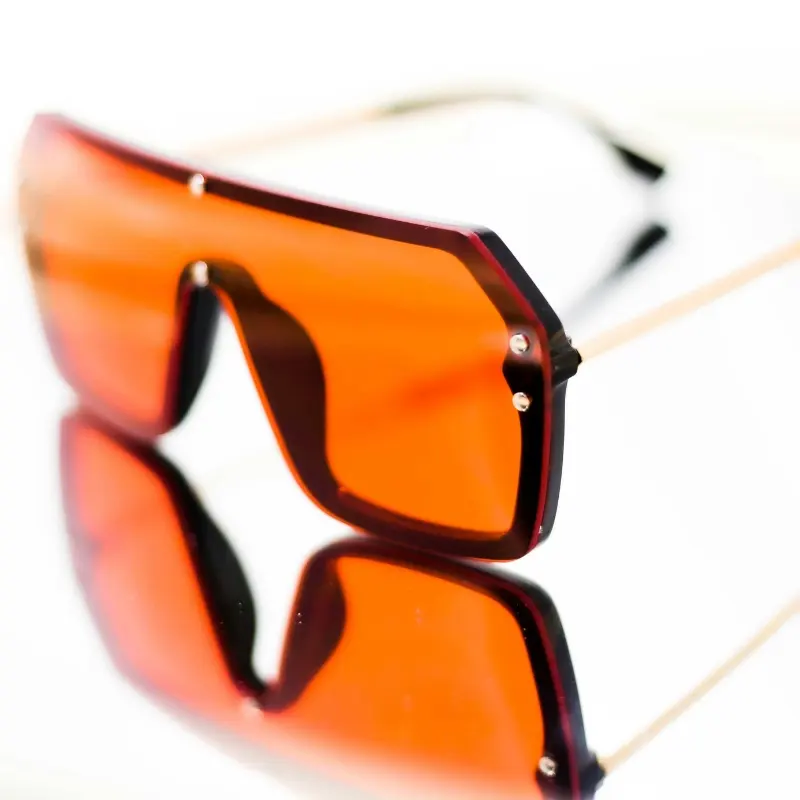
Rimless frames eliminate the surrounding frame almost entirely. Small metal hardware pieces — typically at the top corners and sometimes the bridge — attach directly to the lens through drilled holes, and the lens becomes a genuine structural component rather than something the frame protects.
This spectrum is the reason the three structures don’t perform the same way under stress, and why lens material decisions matter more for some structures than others.
Full-Rim: The Forgiving Default
Full-rim construction is the most structurally tolerant of the three, and for straightforward reasons. Because the lens sits inside a continuous frame channel rather than bearing direct mechanical stress, full-rim titanium frames accommodate a wider range of lens materials and thicknesses without the lens itself needing to be load-bearing.
This makes full-rim the more forgiving choice for thicker lenses — high-index prescription lenses or certain polarized constructions — since the frame, not the lens edge, is doing the structural work. It’s also the more impact-resistant of the three structures in daily use, since the frame itself acts as a protective boundary around the lens rather than leaving any edge exposed.
The tradeoff is weight and visual presence. A full-rim titanium frame uses more material than the other two structures by definition, which works against one of titanium’s core selling points — even though titanium’s low density means a full-rim titanium frame still ends up considerably lighter than a full-rim frame in heavier metals.
Manufacturing implication: full-rim is generally the most straightforward structure to produce consistently, since lens-edge precision matters less when the lens sits inside a frame channel rather than being drilled or grooved to exact tolerances.
Rimless: The Demanding Minimalist
Rimless construction removes nearly all visible frame material, and that minimalism comes with real engineering requirements that don’t show up in how the finished product looks.
Because the lens itself becomes a structural element, lens material and thickness matter significantly more for rimless than for full-rim. Small holes are drilled through the lens at the points where metal hardware attaches — typically near the top corners and sometimes at the bridge — and the lens has to be rigid and stable enough to hold those drill points without cracking or enlarging over time. This follows the same underlying principle as any drilled or grooved connection point: stress concentrates in a small area, and the material at that point needs to be specified with that stress in mind rather than chosen purely for optical performance.
This has a direct lens-sourcing implication: not every lens material handles drilling equally well. Materials prone to stress cracking at drill points are a poor match for rimless construction regardless of their optical properties, which is part of why rimless titanium programs need lens material and frame structure decided together rather than independently.
Rimless frames are also, honestly, more exposed to impact and edge damage than full-rim construction, since there’s no surrounding frame to absorb a knock before it reaches the lens edge. This doesn’t make rimless an unreasonable choice — the minimalist look is exactly why brands specify it — but it’s worth setting accurate expectations with retail partners and customers about handling care, rather than positioning rimless titanium as equally rugged to a full-rim equivalent.
Manufacturing implication: rimless construction requires significantly tighter drilling and hardware-fitting tolerances than full-rim. This is a structure where sampling and quality control around the drill points deserve real attention, not just the frame’s visible finish.
Semi-Rimless: The Middle Ground, With One Often-Overlooked Part
Semi-rimless construction splits the difference structurally, and it’s worth understanding the specific component that makes this possible: the nylon cord (sometimes a thin wire) running through a groove cut into the lower edge of the lens, connecting the bottom corners back to the frame.
This cord does real mechanical work — it’s under tension, holding the lower lens edge in place — and it’s also the component in this structure most likely to need replacement over the product’s lifespan. A stretched or worn cord is a normal wear pattern, not a defect, and it’s a detail worth including in customer-facing care guidance for any semi-rimless collection. Most semi-rimless designs allow the cord to be replaced without replacing the whole frame, which is a meaningful after-sales consideration worth confirming with your manufacturer at the brief stage.
Semi-rimless sits between full-rim and rimless on most of the dimensions that matter: lighter than full-rim since less metal is used, somewhat more structurally tolerant than full-rim’s lighter weight comes from less material overall rather than a fundamentally different stress profile, but with the lower lens edge still less protected. It’s a reasonable middle position when a brand wants the visual lightness rimless offers without taking on rimless’s full drilling and durability tradeoffs.
| Structure | Frame Material Used | Lens Stress Points | Repair Complexity | Visual Weight |
|---|---|---|---|---|
| Full-rim | Most | None — lens sits in channel | Standard hinge/frame repair | Most substantial |
| Semi-rimless | Moderate | Lower edge groove, cord tension | Cord is typically replaceable | Lighter, balanced |
| Rimless | Least | Drill points at hardware attachment | Specialized — lens may need replacement if drill point fails | Most minimal |
What This Means for Lens Sourcing

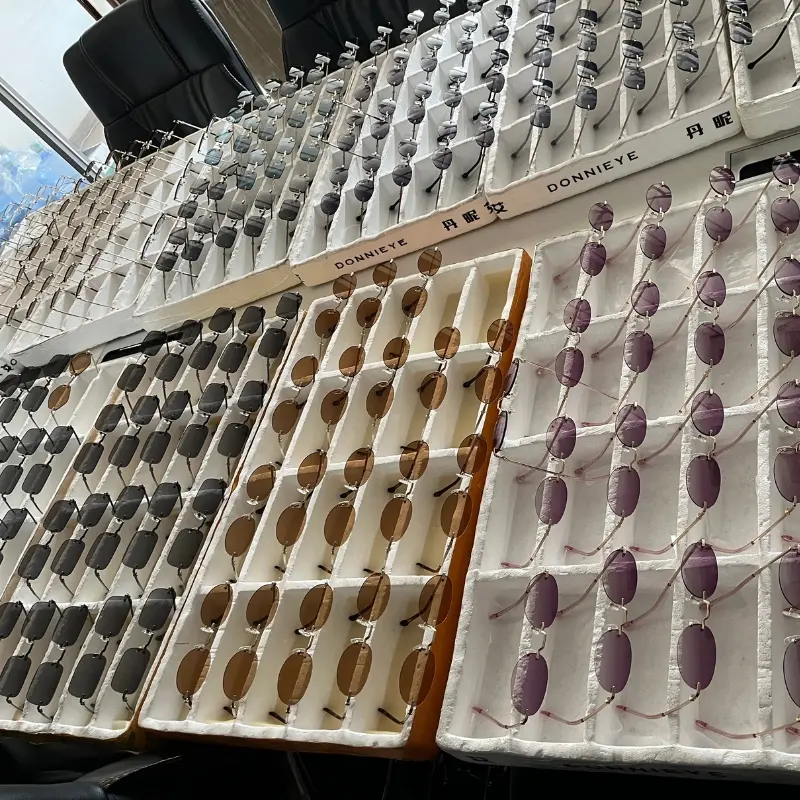
Frame structure and lens material aren’t independent decisions, and this is where a lot of first-time briefs run into avoidable sampling rounds. A rimless or semi-rimless structure narrows your realistic lens material options to those that hold up well at a drilled or grooved stress point, while full-rim construction gives you more flexibility to prioritize optical properties over drill-point durability. If you’re still working through lens material selection more broadly, our sun lens material guide covers which materials handle stress points well and which are better matched to full-rim construction specifically.
Matching Frame Structure to Your Product Position

A few practical starting points for choosing between the three:
Daily-wear, durability-first positioning — full-rim. The lens is protected, the structure tolerates a wider range of lens materials and thicknesses, and the frame is the most forgiving of the three for customers who aren’t especially careful with their eyewear.
Minimalist, fashion-forward flagship pieces — rimless, paired with a lens material genuinely suited to drilling, and customer-facing messaging that’s honest about handling care rather than overselling ruggedness.
A lighter alternative to full-rim without rimless’s full tradeoffs — semi-rimless, with the nylon cord explicitly covered in your care materials so a worn cord doesn’t get misread as a manufacturing defect.
High-prescription or thick-lens programs — full-rim is generally the more practical choice, since the frame channel accommodates lens thickness more gracefully than a rimless or semi-rimless edge profile.
None of these are universal rules — a brand can reasonably run full-rim and rimless styles within the same collection, positioned differently. The structural tradeoffs above are what should inform the conversation with your manufacturer, not just which silhouette looks best in a reference image.
The Practical Takeaway
Full-rim, semi-rimless, and rimless titanium sunglasses aren’t simply three points on a style spectrum — they place genuinely different demands on lens material, hardware precision, and after-sales expectations. Full-rim is the most forgiving and durable default. Rimless delivers the most minimal look but requires lens material and drilling tolerances to be specified deliberately rather than assumed. Semi-rimless sits in between, with a specific wear component — the nylon cord — worth covering explicitly in customer care guidance. Getting the structure right starts with matching these real engineering tradeoffs to what the product actually needs to deliver, not just which silhouette looks best in a reference image.
Frequently Asked Questions
Are rimless titanium glasses less durable than full-rim?
In the specific sense of edge and impact resistance, yes — the lens is more exposed without a surrounding frame to absorb knocks, and the drilled attachment points concentrate stress in a small area. This doesn’t make rimless unreasonably fragile when lens material and drilling tolerances are specified correctly, but it does mean rimless construction deserves more careful handling than full-rim.
What is the nylon cord on semi-rimless glasses, and does it need replacing?
It’s a thin cord (sometimes wire) running through a groove in the lower lens edge, holding that edge in place under tension. It’s a normal wear component that can stretch or wear over the product’s lifespan, and most semi-rimless designs allow it to be replaced without replacing the whole frame — worth covering in customer care materials so it isn’t mistaken for a defect.
Can any lens material be used in rimless titanium frames?
No. Rimless construction requires drilling through the lens, which concentrates stress at those points — materials prone to stress cracking at drill points are a poor match regardless of their optical properties. Lens material and frame structure need to be decided together for rimless and semi-rimless programs specifically.
Which structure is lightest: full-rim, semi-rimless, or rimless?
Rimless is generally the lightest, since it uses the least frame material, with semi-rimless next and full-rim using the most material by definition. In titanium specifically, the weight gap between the three is smaller than in heavier metals, since titanium’s low density already reduces full-rim’s weight disadvantage substantially.
Is full-rim better for high prescriptions or thick lenses?
Generally yes. A full-rim frame channel accommodates lens thickness more gracefully than a rimless or semi-rimless edge profile, where a thick lens edge is more visually and structurally awkward to work with. This is a practical consideration worth raising with your manufacturer if your collection serves a higher-prescription customer base.
Does frame structure affect manufacturing lead time or cost?
Yes. Rimless construction requires tighter drilling and hardware-fitting tolerances than full-rim, which generally means more careful sampling and quality control around the drill points specifically. Full-rim is typically the more straightforward structure to produce consistently at scale, since lens-edge precision matters less when the lens sits inside a protective channel.
Let's get started!
Get in touch with a custom eyewear specialist now for a free consultation and instant price quote.
WHATSAPP ME GO!
📱 Scan with your phone to start chatting