Titanium Sunglasses Care and Maintenance: What Brands Need to Tell Customers
Most of the support tickets we hear about on titanium collections come down to one pattern: a customer treats titanium like it’s indestructible, and then it isn’t. Titanium genuinely is more resistant to heat, corrosion, and daily wear than most frame materials — but “more resistant” isn’t “immune,” and the gap between those two ideas is where a lot of preventable damage and frustrated customers come from.
This guide isn’t a generic sunglasses cleaning checklist — there’s plenty of that online already, written for consumers who’ve already bought a pair. This is about what you, as a brand, should be telling customers about titanium specifically, and how getting this right protects both your return rate and your customer’s actual experience of a product they paid a premium for.
Why Titanium Care Instructions Are Different From Acetate
If you’ve worked through customer guidance for an acetate collection, it’s worth knowing upfront that titanium’s care profile is almost the inverse. Acetate’s biggest vulnerability is heat — it softens and can warp in a hot car or under direct sun. Titanium doesn’t have that problem; it’s dimensionally stable across the temperature ranges sunglasses actually encounter, and it resists corrosion well enough that humidity and sweat exposure, two things that gradually wear down acetate and lesser metals, aren’t a meaningful concern for titanium specifically.
That resilience is exactly why titanium customers tend to under-care for the product rather than over-care for it. A customer who’s been told titanium is virtually indestructible has no reason to handle it carefully — until a hinge loosens, a frame gets bent out of shape, or a finish starts showing wear, and the resulting complaint reads as a quality failure even when it’s a predictable outcome of how the product was actually treated.
What’s Actually True About Titanium’s Durability
Setting accurate expectations starts with being precise about what titanium resists well and what it doesn’t.
What titanium handles well: corrosion from sweat, humidity, and most everyday environmental exposure; dimensional stability across normal temperature ranges, meaning it won’t warp the way acetate can; and long-term structural integrity under normal daily wear, which is part of why titanium frames commonly outlast frames in less durable materials.
What titanium doesn’t handle well: being bent back into shape by hand, hard impacts at stress points like hinges or drilled lens attachments, and the surface finish itself — brushed, polished, or coated — which is genuinely vulnerable to scratching and wear regardless of how durable the underlying metal is.
This distinction matters because a customer who understands titanium is dimensionally stable but not infinitely flexible makes better decisions in the moment a frame feels slightly off, rather than trying to fix it themselves and making the problem worse.
The Five Things Every Brand Should Tell Customers
This is the core information worth putting in front of a customer — on a care card, in a confirmation email, or as part of your packaging insert.
1. Never Bend a Titanium Frame Back Into Shape Yourself
This is the single most common cause of titanium frame damage we hear about secondhand from brand clients. A frame that feels misaligned or sits unevenly should go to a professional, not get hand-adjusted by the customer. Titanium has genuine flexibility within its engineered range, but forcing it beyond that range — especially repeatedly — causes metal fatigue at stress points that isn’t always visible immediately and tends to show up later as a crack or break that looks like a defect.
2. Loose Hinges or Missing Screws Need Prompt Attention
A hinge that’s developed play, or a screw that’s gone missing, is a small problem that becomes a bigger one if ignored — continued wear with a loose hinge accelerates damage to the surrounding frame structure. Customers should know this is a quick, inexpensive fix at most optical shops rather than something to keep wearing through, since a frame worn with a compromised hinge for months is a harder repair than the original loose-screw fix would have been.
3. Clean With a Soft, Non-Abrasive Cloth and Mild Soap Only
Titanium frames respond well to a damp microfiber cloth with a small amount of mild soap, rinsed and dried thoroughly. Harsh chemicals, ammonia-based cleaners, and abrasive materials can damage the surface finish — this matters more for polished or PVD-coated frames specifically, which show surface wear more readily than a brushed finish does, a distinction covered in more detail in our guide to titanium sunglasses finishing options.
4. Store in a Case, Away From Other Hard Objects
Loose titanium frames tossed into a bag pick up surface scratches from keys, coins, and other contents — and titanium’s lightness, the same property that makes it comfortable to wear, also means a frame can be more easily bent if it’s crushed under heavier items in a bag. A hard case is worth the marginal packaging cost, particularly for finishes where surface scratching is most visible.
5. Frames With Drilled or Grooved Lens Connections Need Extra Care
Rimless and semi-rimless titanium styles have specific wear points worth knowing about — drilled attachment holes on rimless frames, or the nylon cord that holds the lower lens edge on semi-rimless styles. Neither is fragile when built correctly, but both deserve more careful handling than a full-rim frame, and a stretched or worn nylon cord is normal wear rather than a defect. We cover this in more detail in our comparison of full-rim, rimless, and semi-rimless titanium frame structures, including which structures need this guidance most.
| Care Topic | What to Tell Customers | What Happens If Skipped |
|---|---|---|
| Frame adjustment | Never self-adjust a bent frame — see a professional | Metal fatigue, cracks at stress points |
| Hinge condition | Address looseness or missing screws promptly | Accelerated structural damage |
| Cleaning method | Soft cloth + mild soap only | Surface finish scratching or dulling |
| Storage | Use the case, away from hard objects | Scratches, frame bending under pressure |
| Rimless/semi-rimless points | Handle drill points and cords with extra care | Cracked lens, worn cord mistaken for defect |
Common Titanium Issues and Whether They’re a Defect or a Care Problem
Being able to tell the difference quickly helps you respond accurately to customers and flag real manufacturing issues to your supplier instead of treating every complaint the same way.
Bent or misaligned frame: Usually a handling issue — pressure, an accidental sit-on, or a customer’s own adjustment attempt — rather than a defect, unless misalignment shows up very early with no identifiable cause. A frame that bends easily right out of the box is worth investigating with your manufacturer.
Loose hinge: Gradual loosening over many months of normal use is expected mechanical wear on any hinge mechanism. Looseness within the first few weeks of light use is a legitimate quality concern worth raising.
Surface scratching or dulling: Light surface wear from cleaning habits or loose storage is the customer’s to manage going forward. Visible scratching or an uneven finish present at first wear points to a quality control gap before the product shipped.
Discoloration on PVD or anodized finishes: Genuine color change on a properly applied finish is rare under normal wear, unlike acetate, which can show gradual color shift from UV exposure over years. Noticeable discoloration shortly after purchase is more likely a coating or process issue worth flagging to your supplier.
Having this distinction documented for your own customer service team speeds up response time and helps separate genuine manufacturing concerns from normal product wear.
Where This Information Should Actually Live
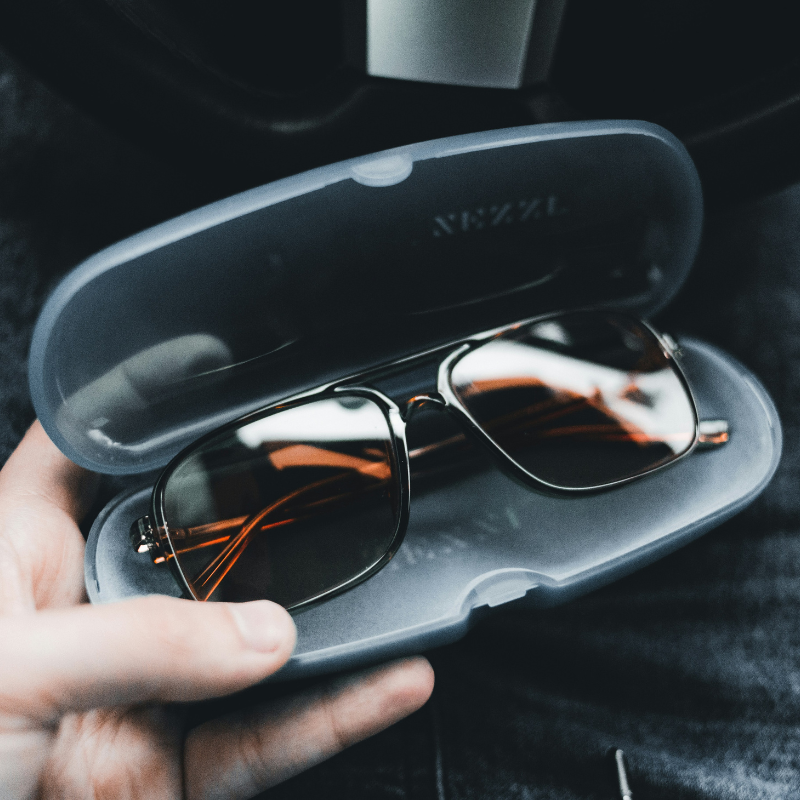
The same principle that applies to any premium eyewear material applies here: information customers never see doesn’t change their behavior. A care guide buried in a website FAQ gets read by almost nobody.
A printed care card inside the case, reviewed at the unboxing moment when customer attention is highest, gets read because the customer is already engaged with a new product. A short post-purchase email, sent a few days after delivery, reaches the customer after the initial excitement but before careless habits set in — and is a natural place to clarify what’s covered under warranty. For a flagship titanium collection specifically, this is also where it’s worth being explicit about which finish the frame uses and how that finish should be cleaned, since brushed, polished, and PVD-coated titanium genuinely have different care requirements.
The Practical Takeaway
Titanium sunglasses durability is real, but it’s also the reason customers tend to under-care for it rather than over-care for it. The brands with the fewest titanium-related returns aren’t necessarily using better material than competitors at a similar price point — they’re more consistent about telling customers specifically what titanium resists well, what it doesn’t, and what counts as normal wear versus an actual problem. A short care card and a well-timed follow-up email cost very little to implement and prevent a meaningful share of complaints that get misattributed to product quality.
Frequently Asked Questions
Can a bent titanium frame be fixed?
Often yes, by a professional with the right tools and experience, but it shouldn’t be attempted at home. Titanium has engineered flexibility within a specific range, and forcing it back into shape by hand risks metal fatigue or a crack at the stress point rather than a clean fix.
What’s the best way to clean titanium sunglasses?
A damp microfiber cloth with a small amount of mild soap, rinsed and dried thoroughly, works well for titanium frames. Avoid ammonia-based or abrasive cleaners, which can damage the surface finish, particularly on polished or PVD-coated frames.
Why does my titanium frame feel loose after a few months?
This is most often gradual hinge wear from normal use, a mechanical reality of any hinge mechanism rather than a defect. It’s worth having it tightened or repaired promptly rather than continuing to wear the frame loose, since ongoing wear with a loose hinge accelerates damage to the surrounding structure.
Is titanium really maintenance-free?
Not entirely, though it requires less maintenance than many other frame materials. Titanium resists corrosion and heat-related warping well, but the surface finish can still scratch or dull, hinges still wear over time, and the frame itself can still bend under enough force — it’s more durable, not indestructible.
Should brands include different care instructions for different titanium finishes?
Yes, where practical. Brushed, polished, and PVD-coated titanium have different sensitivities — polished and glossy finishes show fingerprints and light scratches more readily than brushed titanium, for example — so finish-specific guidance is more useful to a customer than a single generic instruction.
How is rimless or semi-rimless titanium care different from full-rim?
Rimless and semi-rimless styles have specific wear points — drilled lens attachment holes or, on semi-rimless frames, the nylon cord holding the lower lens edge — that benefit from more careful handling than a full-rim frame. Neither is inherently fragile when built correctly, but customers should know these points exist and that related wear, like a worn cord, is normal rather than a defect.
Let's get started!
Get in touch with a custom eyewear specialist now for a free consultation and instant price quote.
WHATSAPP ME GO!
📱 Scan with your phone to start chatting