Bring Your Eyewear Designs From Sketches to Production
You already know what it should look like. Our engineering team handles the part that turns a sketch into a frame that actually holds its shape, opens correctly, and can be produced consistently at scale.
Start a Design Conversation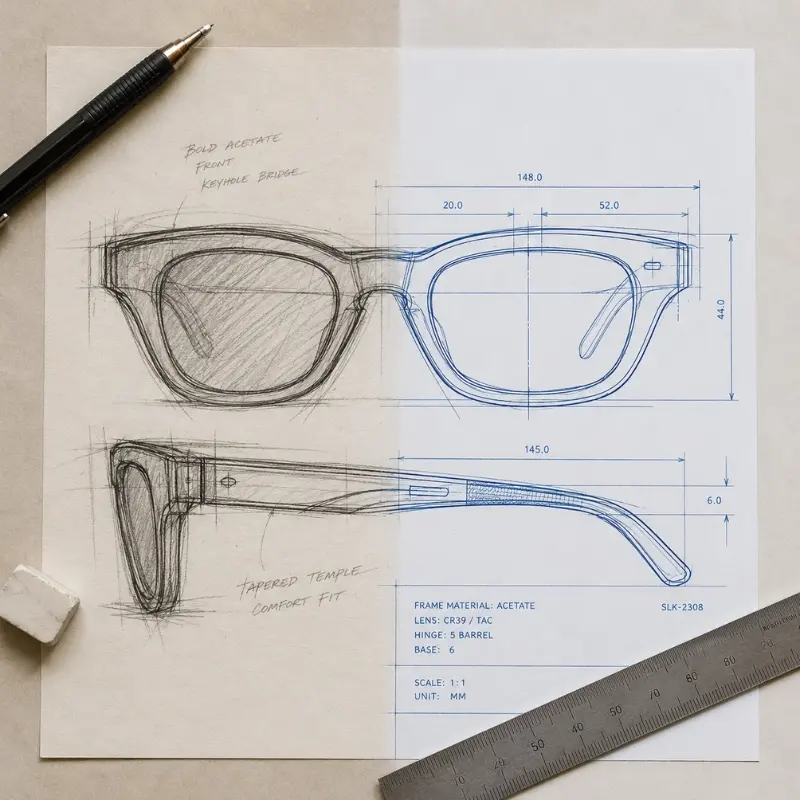
The Gap Between "I Have a Design" and "It's Manufacturable"
A sketch or a rendering captures intent, but it doesn't answer the practical questions — will this hinge geometry actually hold up, is this temple too thin to survive shipping, does this curve translate to a mold. That gap is where most designer-led eyewear projects stall. We work on the other side of that gap: taking a design direction and engineering it into a frame that can actually be built.
What You Can Actually Start With
Most designer projects don't begin with a finished spec sheet — they begin with one of these.
Hand Sketches or Mood Boards
Rough drawings, silhouette references, or a mood board that captures the direction — engineering can work from intent, not just finished drawings.
Partial or Incomplete CAD
A 2D/3D file that's stalled on a specific detail — a hinge that doesn't resolve, a curve that won't translate — is a normal starting point, not a dealbreaker.
A Reference Frame to Reverse-Engineer
A vintage piece, a prototype from another maker, or a physical model you've built by hand — we can build the 2D/3D file from the object itself.
From Sketch to Production, Step by Step
You bring the design direction — sketches, renderings, or a reference frame you want re-engineered. Here's how it moves forward from there.
Sketch
Hand drawings, digital renders, or a reference piece — whatever form your design direction is currently in.
2D/3D
Engineering translates the sketch into precise 3D CAD — dimensions, curves, thickness, hinge geometry.
Prototype
A physical prototype built to test fit, function, and whether the design holds up outside the render.
Modification
Adjustments based on what the prototype reveals — structure, weight, fit — before anything is locked.
Production
The refined design moves into tooling and manufacturing, built to match the approved prototype exactly.
Where We Add What a Design Alone Can't
This is the part that separates a manufacturing partner from a factory that just executes a spec sheet.
Adjust Thickness
Finding the point where a frame reads as slim and intentional without becoming fragile in the areas that take the most stress — temples, hinge recesses, bridge.
Improve Structure
Reinforcing or reshaping load-bearing areas of a design so it survives daily wear and shipping, without changing the silhouette you designed.
Solve Hinge Problems
Working through hinge geometry, tension, and placement when a design's proportions don't match a standard hinge — a common snag in more sculptural or minimal shapes.
Optimize Weight
Balancing material choice and frame geometry so a bold silhouette doesn't translate into a frame that's uncomfortable to wear for a full day.
A Few Builds Where Engineering Made the Difference
Not every design needs this level of problem-solving — but when it does, this is the kind of work our engineering team handles. Simpler designs get the same attention, just fewer steps.
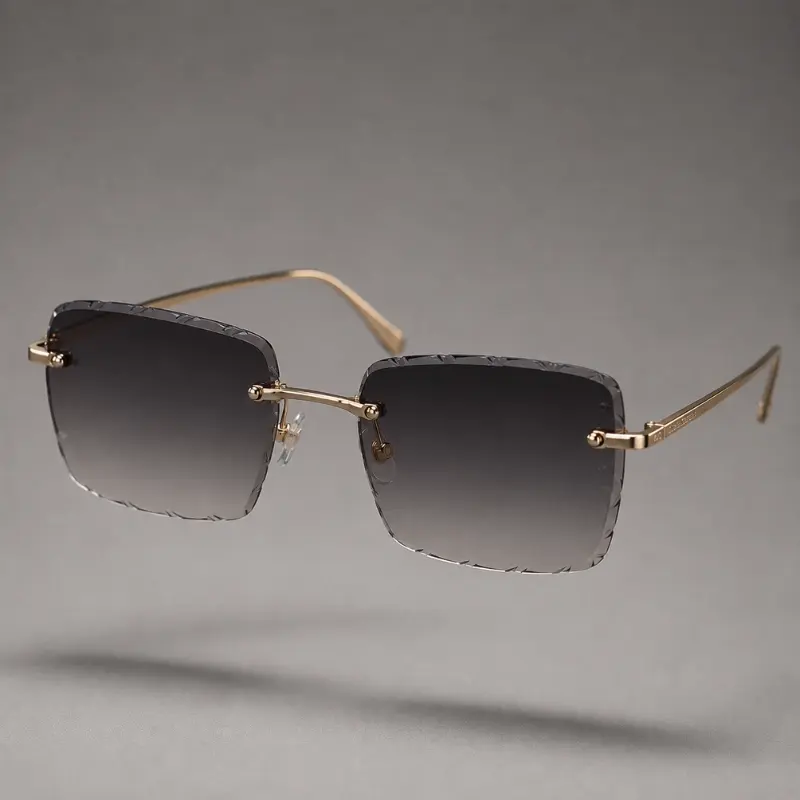
Rimless with Engraved Edge Lenses
Lens-mounting systems that hold securely without a full frame, paired with a decoratively engraved lens edge that has to stay perfectly even all the way around. Precision drilling, hardware placement, and edge-cutting all have to align — there's no frame left to hide a mistake.
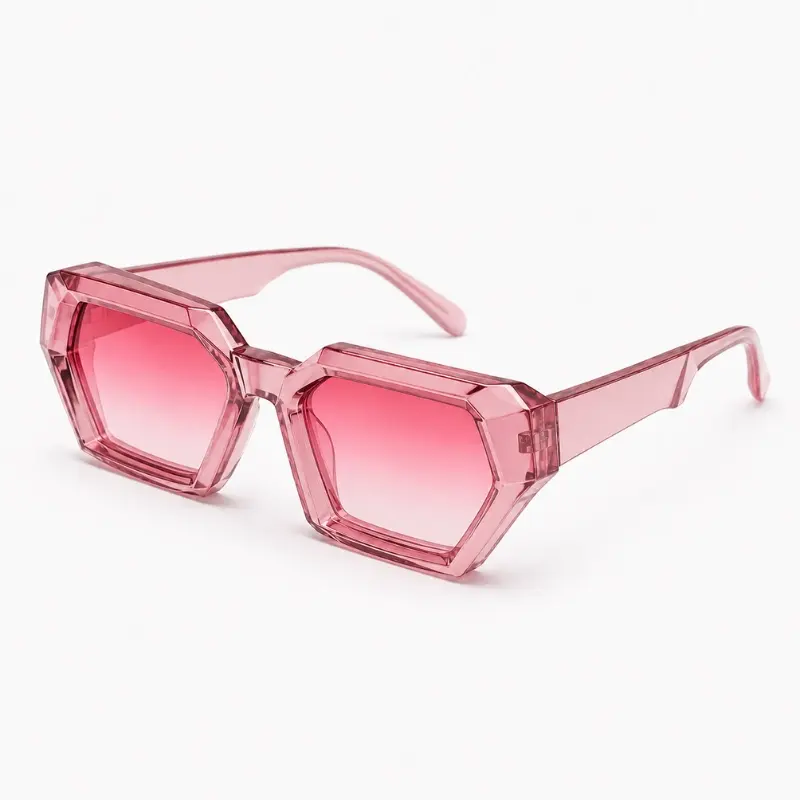
Faceted Acetate Geometry
Multi-angled, gem-cut style facets carved directly into thick acetate — each surface has to catch light consistently and stay symmetrical across every unit in the run, which is a very different challenge from a standard rounded edge.
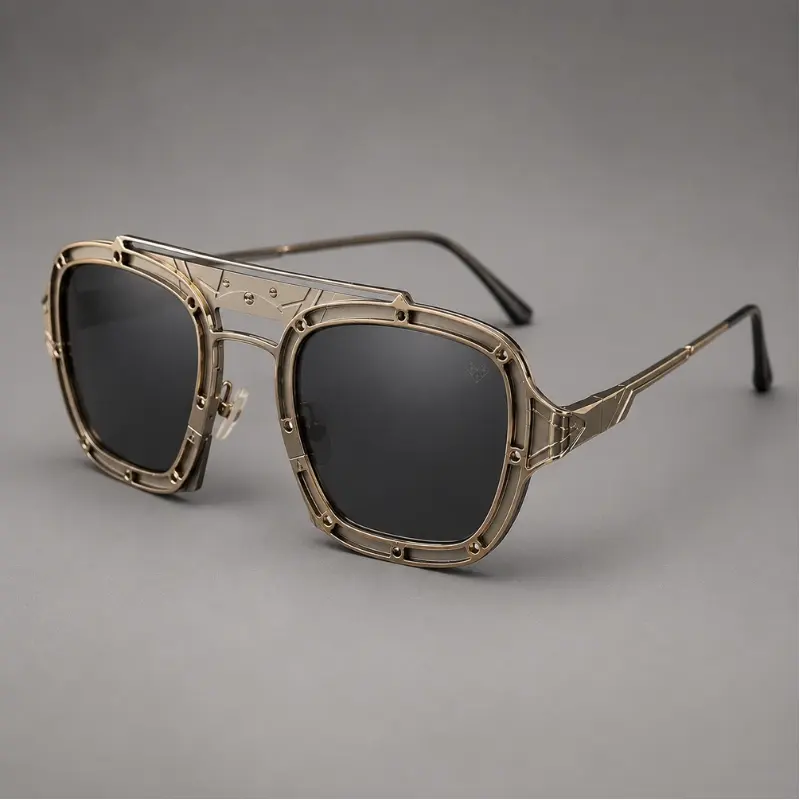
Exposed Structural Metalwork
A layered, multi-piece metal build where the hardware and structure are part of the design, not hidden inside it — every screw, seam, and panel has to line up exactly, since there's nowhere for a misalignment to disappear.
Sharing an Unreleased Design?
Most designer projects come to us before anything is public — no press, no trademark filed yet. NDAs are standard practice here, not a special request, and your files stay internal to your project team. If you want the fuller picture on how mold ownership, exclusivity, and confidentiality typically work with a factory, our IP & confidentiality guide covers what's worth asking before you share anything.
Have a Design That Needs an Engineering Partner?
Send over your sketches, renderings, or reference pieces — we'll walk through what it takes to get from where the design is now to a manufacturable frame.
Start a Design Conversation