Pure Titanium vs Titanium Alloy (Beta-Titanium) for Sunglasses

Search “pure titanium vs beta titanium” and you’ll find a genuine mess of conflicting definitions — some sources describe beta-titanium as a different molecular state of pure titanium, others describe it as an alloy containing 70-80% titanium mixed with aluminum and vanadium. Both of these claims show up across supplier and retailer content, and they can’t both be right in the way they’re usually phrased.
This guide sorts out what beta-titanium actually is, what pure titanium does differently, and — more practically — why most well-built titanium frames don’t use just one of these materials throughout, but combine them deliberately based on where strength matters and where flexibility does.
Clearing Up the Confusion: What Beta-Titanium Actually Is
Beta-titanium is a titanium alloy — not a different molecular arrangement of pure titanium existing on its own. The “beta” refers to a specific crystal phase structure that titanium adopts when combined with certain alloying elements (commonly vanadium, aluminum, or molybdenum, depending on the specific alloy) and processed with particular heat treatment. This phase structure is what gives beta-titanium its characteristic flexibility, which pure titanium’s different crystal structure doesn’t share to the same degree.
Typical beta-titanium eyewear alloys run roughly 70-80% titanium content, with the remainder made up of elements like vanadium and aluminum. A commonly cited industry standard requires beta-titanium to maintain at least 70% titanium content and remain nickel-free to qualify for the designation — which matters directly for the hypoallergenic claims a brand might make about a beta-titanium product.
Pure titanium, by contrast, is titanium at typically 99%+ purity, sometimes processed in different grades (commercially pure titanium is often categorized Grade 1 through Grade 4, with higher grades offering more strength at a slight cost to ductility). It’s genuinely titanium with minimal alloying, which is part of why it behaves differently in manufacturing and in the finished frame.
A third material worth distinguishing here, since it’s frequently confused with beta-titanium in casual product descriptions: memory titanium (sometimes labeled “Ti-Ni” or simply “memory metal”) is a genuinely different alloy, typically composed of roughly 50% titanium and 50% nickel. It offers exceptional flexibility — more than beta-titanium — which is why it shows up in some flexible eyewear designs. But because it contains substantial nickel content, it does not meet the nickel-free standard that beta-titanium is held to, and it isn’t a safe assumption for hypoallergenic claims the way pure titanium and properly specified beta-titanium are. Some product copy uses “beta-titanium” and “memory titanium” loosely, almost interchangeably — they are not the same material, and the distinction matters specifically for any brand making allergy-safe claims.
| Property | Pure Titanium | Beta-Titanium |
|---|---|---|
| Composition | 99%+ titanium | ~70-80% titanium + alloying elements (V, Al) |
| Flexibility | Lower — more rigid | Higher — genuine spring-back |
| Workability | Softer, easier to shape into texture and pattern | Requires more specialized processing |
| Typical use | Frame fronts, structural elements | Temples, hinges, flexible high-stress areas |
| Relative cost | Baseline | Generally higher, due to processing complexity |
Why the Two Materials Behave So Differently
Pure titanium’s relative softness compared to beta-titanium isn’t a flaw — it’s exactly what makes it suited to certain frame elements. A softer material is easier to press, stamp, and shape into the textured or patterned surface details some frame designs call for, which is part of why pure titanium remains common in frame fronts where this kind of detail work matters. The tradeoff is that pure titanium frame elements generally need to be made slightly thicker to maintain structural rigidity, since the material itself doesn’t resist bending as strongly as beta-titanium does.
Beta-titanium’s defining trait is genuine elasticity — it can flex significantly under stress and return to its original shape rather than bending out of true the way pure titanium would under the same force. This is the same underlying material science that makes beta-titanium temples able to flex outward during fitting and during repeated daily wear without gradually losing their shape, which is a meaningfully different durability profile than a rigid pure titanium temple would offer under the same repeated stress.
This is also why beta-titanium generally costs more to produce: achieving and maintaining that flexible crystal phase requires more specialized processing than working with pure titanium, and that processing complexity is reflected in unit cost.

The Practical Answer Most Brands Miss: Combining Both
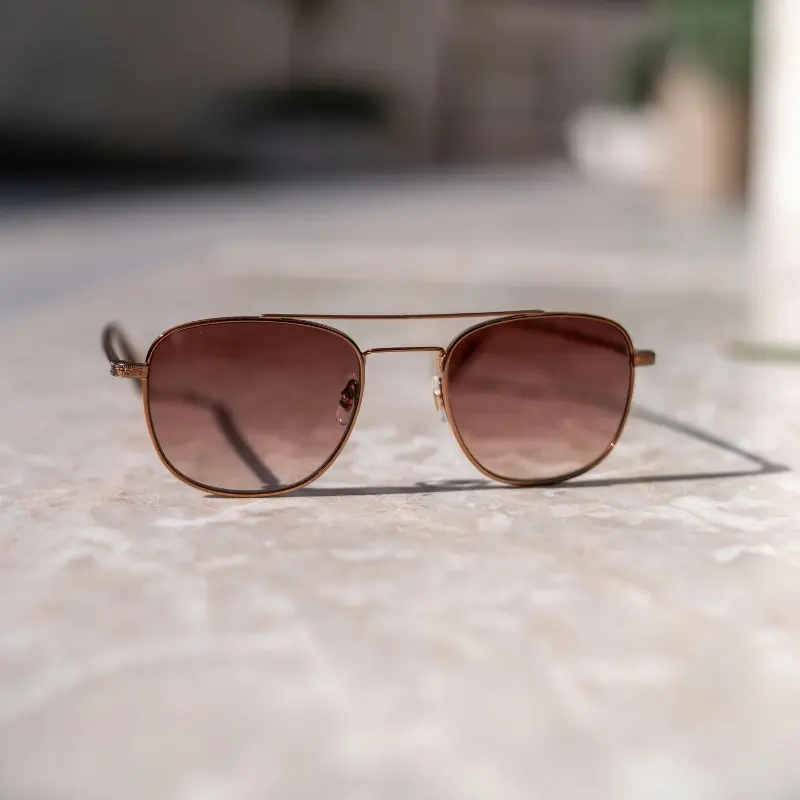
The framing of “pure titanium vs beta-titanium” as a single choice misses how most well-engineered titanium frames are actually built. A genuinely common approach uses pure titanium for the frame front — where rigidity, shape stability, and surface detail matter most — and beta-titanium specifically for the temples, hinge area, or other high-flex points, where the material needs to bend repeatedly without fatigue.
This combination plays to each material’s actual strength rather than asking one material to do a job it’s not particularly well suited for. A frame front built in beta-titanium gains little from that material’s flexibility, since the front isn’t the part of the frame under repeated bending stress — while a temple built in rigid pure titanium loses the spring-back that makes daily wear and fitting more comfortable over time.
For a brand specifying construction, this means the useful question often isn’t “which material should this frame use,” but “which material should each part of this frame use” — and that’s a spec worth discussing explicitly with your manufacturer rather than assuming a single material designation covers the whole build.
A Note on Labeling: What “Titanium” on a Spec Sheet Actually Means
This is worth being direct about, since it affects how brands should read both their own supplier’s documentation and competitor marketing claims.
A frame labeled simply “titanium” doesn’t necessarily mean every component is titanium — it can mean only specific parts, commonly the temples, are titanium-built, while the front uses a different material entirely. A frame labeled “all-titanium” or “full titanium” is a more specific claim, indicating titanium construction throughout. This distinction matters for accurate product copy: a brand making hypoallergenic or weight-reduction claims based on titanium content should know precisely which parts of the frame those claims actually apply to, rather than assuming the whole product qualifies because one component does.
This is the same labeling-precision principle that applies to PVD coating and anodized finishes — vague material claims erode customer trust in titanium marketing generally, including the legitimate claims, which is part of why specificity in your own spec sheets and product copy is worth the extra sentence.
Which Material Fits Which Product Position

A few practical starting points for specifying pure titanium, beta-titanium, or a combination:
Classic, minimalist, comfort-focused designs — pure titanium frame fronts, where shape stability and a more substantial structural feel suit the design language, paired with standard hinges rather than relying heavily on flex.
Active, daily-wear, or fitting-flexible products — beta-titanium temples specifically, where the genuine spring-back improves comfort across a wider range of head sizes and holds up better to repeated daily flexing than a rigid alternative.
Rimless or semi-rimless styles, covered in more detail in our guide to full-rim, rimless, and semi-rimless titanium structures — material choice interacts with frame structure here specifically, since the structural demands of a drilled or grooved lens connection point add another variable to whether pure titanium’s rigidity or beta-titanium’s flexibility better suits a given build.
Budget-conscious programs — pure titanium throughout is generally the more cost-effective option, given beta-titanium’s higher processing cost, while still delivering titanium’s core benefits of light weight and corrosion resistance.
None of these are fixed rules — the right answer depends on the specific design and what the product needs to deliver, which is exactly why this is worth a direct conversation with your manufacturer rather than a default assumption either way.
The Practical Takeaway
Beta-titanium is a titanium alloy, not an alternate state of pure titanium — and once that’s settled, the more useful question for most brands sourcing titanium sunglasses isn’t which material is universally better, but which material suits which part of the frame. Pure titanium offers shape stability and surface workability well suited to frame fronts; beta-titanium offers genuine flexibility well suited to temples and high-flex points. Many of the best-engineered titanium frames use both, deliberately, rather than asking a single material to do every job. Getting specific about which material is used where — and labeling that accurately in your own product copy — protects both your customer’s expectations and your brand’s credibility in a category where vague claims are common.
Frequently Asked Questions
Is beta-titanium the same as titanium alloy? Yes — beta-titanium is a specific type of titanium alloy, typically combining roughly 70-80% titanium with elements like vanadium and aluminum, processed to achieve a particular crystal phase that gives it characteristic flexibility. It’s not a different molecular state of pure titanium existing independently, despite some sources describing it that way.
Is pure titanium or beta-titanium better for sunglasses? Neither is universally better — they suit different parts of a frame. Pure titanium offers shape stability and surface detail well suited to frame fronts; beta-titanium offers genuine flexibility well suited to temples and hinge areas. Many well-built titanium frames combine both rather than using a single material throughout.
Why are beta-titanium frames sometimes more expensive than pure titanium frames? Beta-titanium requires more specialized processing to achieve and maintain its flexible crystal phase compared to working with pure titanium, and that processing complexity is reflected in production cost. This is part of why beta-titanium is more commonly used for specific high-flex components rather than an entire frame.
Does “titanium” on a spec sheet mean the whole frame is titanium? Not necessarily. A frame labeled simply “titanium” may mean only specific components, commonly the temples, are titanium-built, while other parts use a different material. A frame needs to be labeled “all-titanium” or “full titanium” to indicate titanium construction throughout — a distinction worth confirming before making hypoallergenic or weight claims based on titanium content.
Is beta-titanium hypoallergenic like pure titanium? Generally yes, provided the alloy meets the nickel-free standard commonly required for the beta-titanium designation. Beta-titanium alloys are typically formulated without nickel specifically to preserve this property, but it’s worth confirming with your manufacturer or supplier rather than assuming every beta-titanium source meets the same standard. This is also worth distinguishing from memory titanium, a separate alloy that typically does contain substantial nickel — the two are sometimes described loosely as similar, but they aren’t interchangeable for allergy-safe claims.
Can pure titanium and beta-titanium be combined in a single frame? Yes, and it’s a common, practical approach — using pure titanium for the frame front where rigidity and shape stability matter most, and beta-titanium for temples or hinge areas where repeated flexing without fatigue is the priority. This combination uses each material for what it does best rather than asking one material to handle every structural demand.
Let's get started!
Get in touch with a custom eyewear specialist now for a free consultation and instant price quote.
WHATSAPP ME GO!
📱 Scan with your phone to start chatting