Is "Titanium" on the Spec Sheet Really Titanium? How to Verify

A spec sheet that says “titanium” is a claim, not a guarantee. The word costs nothing to print, and the metal underneath it varies enormously in how closely it actually matches what was promised — full titanium construction, a titanium-coated alloy, or something in between. For a brand placing a bulk order based on that spec sheet, the gap between the claim and the actual material is a real sourcing risk, not just a consumer concern.
This guide covers the practical ways to verify titanium content — methods used by industrial buyers and quality inspectors, not just brand-side trust — along with the construction details that tend to separate genuine titanium builds from frames using the word more loosely than the material.
Why the Word “Titanium” Alone Isn’t Verification

Etching or printing “titanium” on a temple is inexpensive and unregulated in most markets — there’s no universal certification requirement forcing a manufacturer to back up the claim before the label goes on. This doesn’t mean most suppliers are misrepresenting their materials; reputable manufacturers have every reason to deliver what they spec. But it does mean a label alone isn’t something a brand should treat as sufficient verification, particularly for a new supplier relationship or a significant bulk order for a titanium sunglasses collection.
It also helps to understand where the material itself comes from. Eyewear factories don’t smelt titanium — they purchase sheet, wire, or bar stock from dedicated titanium material suppliers, then cut, shape, and finish it into frames. This means verification really happens at two points: whether the eyewear factory’s raw material actually matches what its own supplier certified, and whether that material is what ends up in the finished frame you receive. A factory with disciplined incoming inspection on its titanium stock — checking it against the material supplier’s certification before it ever reaches the production floor — is in a much stronger position to back up a “titanium” claim than one that simply trusts whatever arrives.
The practical risk isn’t usually outright fraud — it’s more often ambiguity. A frame using titanium for the temples but a different metal for the front, or a thin titanium coating over a base alloy, can reasonably be marketed as containing titanium without being a fully titanium build. Knowing the difference, and having a way to verify it independently of the spec sheet, protects both your sourcing decisions and the claims you can credibly make to your own customers.
The Most Reliable Method: Density Testing
Density is the most accurate verification method available without specialized lab equipment, and it’s the test industrial buyers and quality inspectors rely on most.
Titanium has a density of approximately 4.51 g/cm³ — distinctly lower than stainless steel (around 7.9 g/cm³) and higher than aluminum, which makes it identifiable through a fairly simple calculation. For a regularly shaped sample, density is calculated by dividing weight by volume using standard geometric formulas. For an irregularly shaped piece — a finished frame component, for instance — the water displacement method works: submerge the piece in a graduated container, measure the volume of water displaced, and divide the component’s weight by that volume.
A result close to 4.51 g/cm³ strongly indicates genuine titanium. A result significantly higher suggests a denser metal — stainless steel or another alloy — is present instead of, or in addition to, titanium. Minor deviations can reflect measurement error or a surface coating, but a substantial gap is a meaningful red flag worth raising with your supplier before committing to bulk production.
| Material | Approximate Density | What a Mismatch Suggests |
|---|---|---|
| Titanium | ~4.51 g/cm³ | — |
| Stainless steel | ~7.9 g/cm³ | Stainless steel present instead of titanium |
| Aluminum | ~2.7 g/cm³ | A lighter, less durable alloy |

Construction Details That Indicate Genuine Titanium Work
Beyond density, several construction details tend to separate genuinely titanium-built frames from frames using the material more loosely. None of these is conclusive on its own, but together they form a useful pattern.
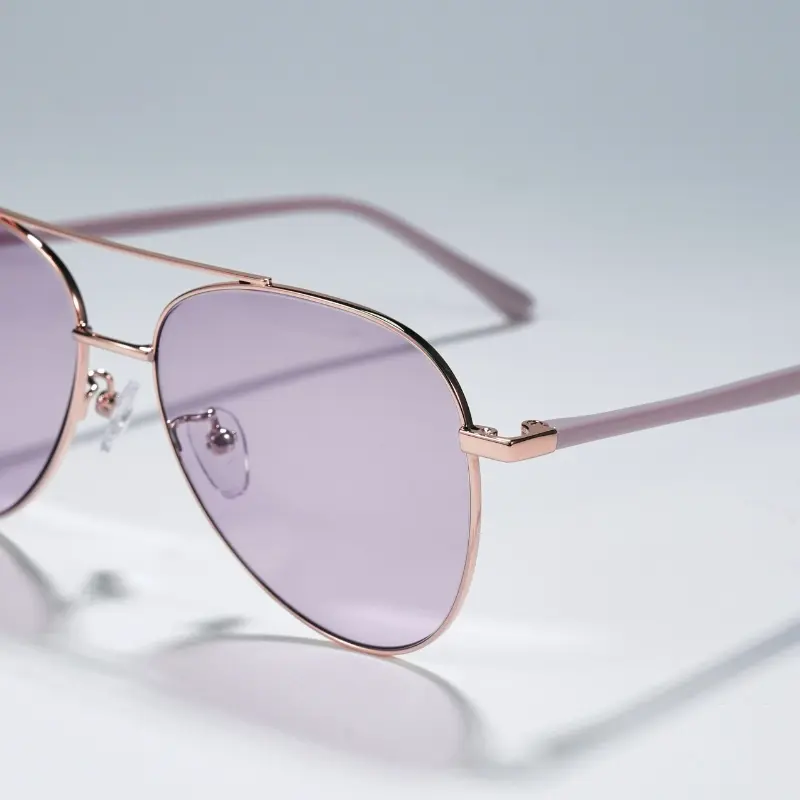
Welding quality at stress points. Titanium requires specialized, high-heat welding technique, and a manufacturer with real titanium capability typically produces clean, precise joints — often described as having a stepped or stacked contour at points like the nose pad arms, rather than a smooth, blobby weld. Genuine titanium work is difficult to fake convincingly because the welding technique itself requires equipment and skill that a low-cost imitation typically doesn’t invest in.
Fine engraving and detailed cutting. Titanium’s hardness and the specialized equipment required to cut and shape it mean that intricate engraving, fine cutting, or sculpted detail work is genuinely harder to achieve cheaply. A frame with crisp, detailed metalwork is more consistent with real titanium capability than one with soft, simplified shaping — not because softer metals can’t be detailed, but because the cost and equipment required to achieve that detail in titanium specifically tend to filter out low-effort suppliers.
Hinge spacers between metal contact points. This is a detail worth knowing specifically: pure titanium has a relatively high coefficient of friction, and titanium-on-titanium contact can gall — meaning the surfaces can seize or bind under repeated motion rather than moving smoothly. Because of this, genuine titanium hinges typically include a small plastic or metal spacer between the moving titanium parts specifically to prevent this. A hinge that’s metal-on-metal with no spacer, especially one that feels gritty or inconsistent when opened and closed, is worth a closer look.
Oxide-layer color development under heat. As covered in more detail in our guide to titanium eyewear customization and anodized color, titanium develops a distinctive oxide layer when heated or anodized, producing gold, blue, or purple tones through a genuine electrochemical and thermal process. This color development is a property of titanium’s own surface chemistry — it’s a sign of authentic material, not a coating that’s wearing through, and it’s difficult to replicate convincingly on a different base metal.
What to Ask Your Supplier Directly
A few specific questions get more useful answers than a general request to “confirm it’s titanium”:
- What grade or alloy specification is being used? A supplier with genuine titanium capability should be able to name a specific grade (commercially pure Grade 1-4, or a named beta-titanium alloy) rather than offering only the general term “titanium.”
- Is the entire frame titanium, or specific components? As covered in our comparison of pure titanium and beta-titanium, “titanium” on a spec sheet can legitimately mean only the temples are titanium-built. Ask explicitly which parts.
- Can a density test be performed on a sample before bulk production, and what incoming inspection do you run on titanium stock from your own material supplier? A factory confident in its material should have no objection to either question — the second one in particular reveals whether the factory is actively checking its titanium stock against supplier certification, or simply assuming it’s correct.
- What hinge construction is used, and is there a spacer between titanium contact points? This is a specific, technical question that a supplier with genuine titanium experience will answer readily and specifically; a vague or evasive answer is worth noting.
The Practical Takeaway
A spec sheet claim of “titanium” is a starting point for verification, not the verification itself. Density testing is the most reliable check available without lab equipment, and it’s worth building into your sampling process as a standard step rather than an exceptional one. Construction details — clean welding at stress points, hinge spacers, fine detail work, and authentic oxide color development — add useful corroborating evidence, even though none of them is definitive alone. Asking specific, technical questions rather than a general request for confirmation tends to reveal more about a supplier’s actual capability than the label on the spec sheet does.
Frequently Asked Questions
What’s the easiest way to verify titanium without lab equipment?
Density testing is the most accessible reliable method. Titanium’s density of approximately 4.51 g/cm³ is distinct enough from common substitute metals like stainless steel that a water displacement measurement on a sample component can meaningfully confirm or raise doubt about a titanium claim.
Can the word “titanium” on a frame be printed without the frame actually being titanium?
Yes. Labeling isn’t independently certified in most markets, so a printed or etched claim alone isn’t proof. This doesn’t imply most suppliers misrepresent materials, but it does mean a brand placing a significant order should verify independently rather than relying on the label alone, particularly with a new supplier.
Why do genuine titanium hinges need a spacer between the moving parts?
Pure titanium has a relatively high coefficient of friction, and titanium-on-titanium contact can gall, causing the metal surfaces to bind or seize under repeated motion. A small plastic or metal spacer between the moving titanium parts prevents this, which is why its presence is a useful, specific detail to check for.
Does color change on a titanium frame mean the coating is wearing off?
Not necessarily, and often the opposite. Titanium develops a genuine oxide layer that produces color — gold, blue, purple — through heat or anodizing, which is a property of the metal’s own surface chemistry rather than a coating sitting on top of it. This kind of color development is actually a sign consistent with genuine titanium rather than a defect.
Is asking a factory to density-test a sample an unusual request?
No — it’s a standard, low-cost verification step that a factory confident in its material should accommodate without difficulty. It’s also worth asking what incoming inspection the factory runs on the titanium stock it purchases from its own material supplier, since the factory itself doesn’t smelt titanium — it sources sheet or wire stock and is responsible for verifying that material before it goes into production.
Does “titanium” on a spec sheet always mean the whole frame is titanium?
Not necessarily. As covered in our guide to pure titanium versus beta-titanium construction, the term can legitimately apply to specific components — commonly the temples — while other parts of the frame use a different material. Asking your supplier explicitly which parts of the frame are titanium-built is worth doing before finalizing a spec, rather than assuming the whole build qualifies.
Let's get started!
Get in touch with a custom eyewear specialist now for a free consultation and instant price quote.
WHATSAPP ME GO!
📱 Scan with your phone to start chatting