TR90 Sunglasses Manufacturing: Injection Molding vs CNC, What's the Difference?
A tech pack that simply says “TR90” or “acetate” skips over a decision that actually determines most of a project’s cost structure and timeline before a single frame gets cut: which manufacturing process is being used to make it. TR90 and acetate aren’t built the same way, and the process behind each material is the real reason they have different MOQs, different lead times, and different cost curves at volume.
This guide breaks down what injection molding and CNC machining actually are, how each one shapes a sunglasses frame from raw material to finished piece, and what that difference means for a brand planning a production run.
Two Fundamentally Different Manufacturing Principles
Injection molding and CNC machining solve the same problem — turning raw material into a precisely shaped frame — through opposite physical processes.
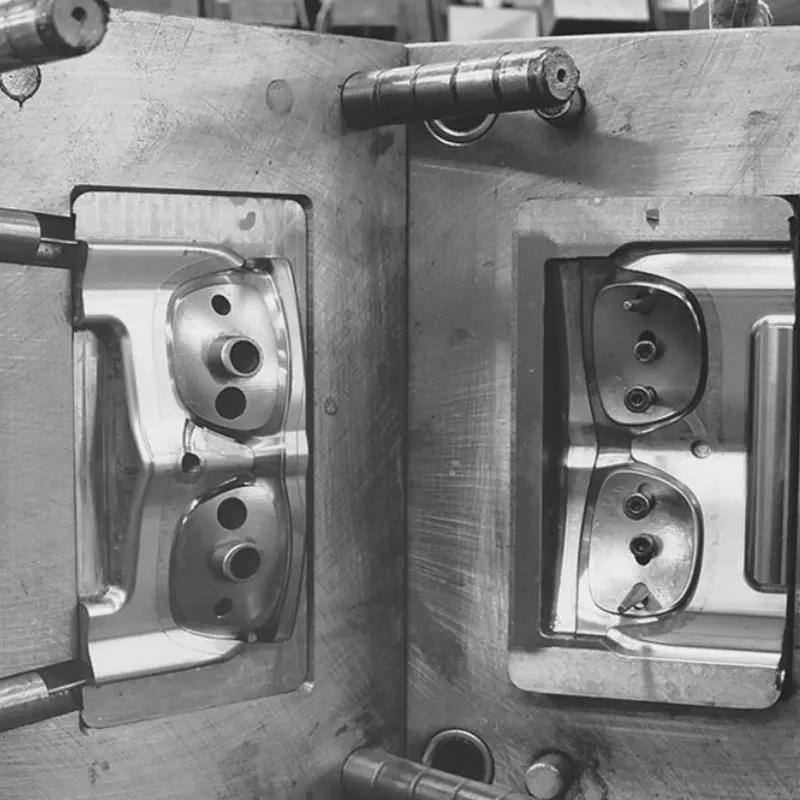
Injection molding is an additive, formative process. Material starts as loose pellets, gets heated until molten, and is forced under pressure into a precision steel mold cavity shaped like the final part. The material takes the shape of the mold rather than being carved into it. This is the process behind TR90 frames, which we cover in more detail in our guide to what TR90 actually is.
CNC machining is a subtractive process. Material starts as a solid block — in eyewear, a layered acetate sheet — and a computer-controlled cutting tool removes material to carve out the final shape. Nothing is added; everything not part of the final frame gets cut away. This is the process behind acetate frames, covered in more detail in our guide to how acetate sunglasses are made.
This single distinction — adding material into a mold versus removing material from a block — is the root cause of nearly every practical difference between the two processes, from tooling cost to production speed to design flexibility.
How TR90 Injection Molding Actually Works
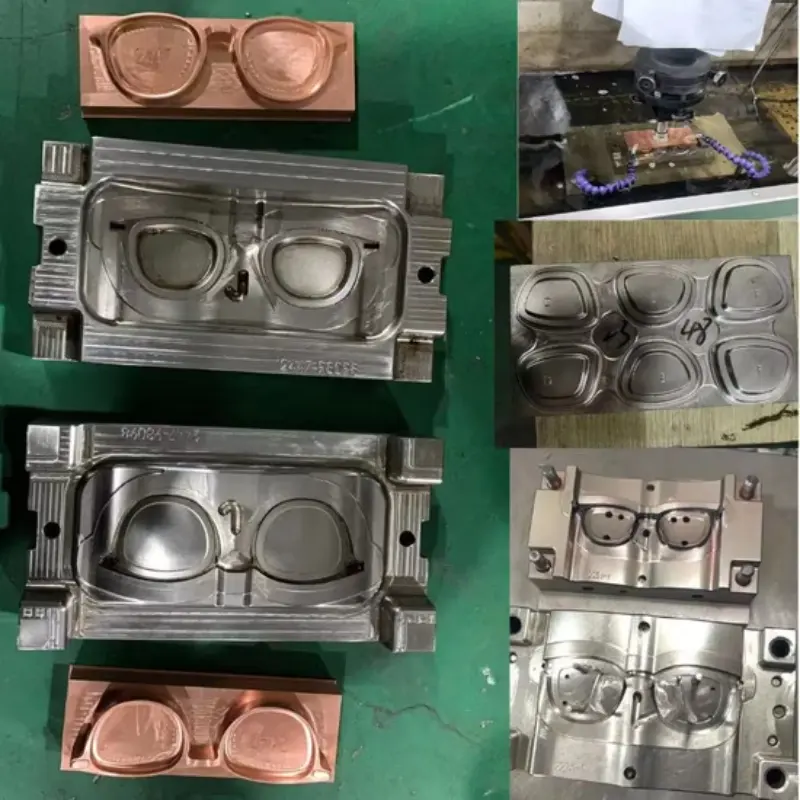
TR90 pellets are heated to a molten state and injected into a precision steel mold under substantial pressure — commonly cited at roughly 120 tons for eyewear-scale injection molding. The mold cavity is shaped as the exact negative of the finished frame, including fine surface detail, and the molten material fills that cavity in a single continuous flow.
Pressure and temperature control during this stage matter more than the process might suggest from the outside. Inconsistent pressure or temperature can introduce air bubbles or structural weak points into the finished frame, which is why this stage is closely monitored rather than left to run on fixed settings regardless of conditions. Cooling time is similarly controlled — cooling too quickly or unevenly can build internal stress into the plastic, which shows up later as warping or reduced durability even though the frame looks correct when it first comes out of the mold.
Once cooled, the frame ejects from the mold in essentially finished form — TR90’s injection process produces identical, symmetrical pieces in seconds, which is the foundation of its cost efficiency at volume. Minor finishing work (trimming any flash at the mold parting line, polishing if specified) follows, but the bulk of the shaping happens in this single molding step.
How CNC Machining Actually Works for Acetate
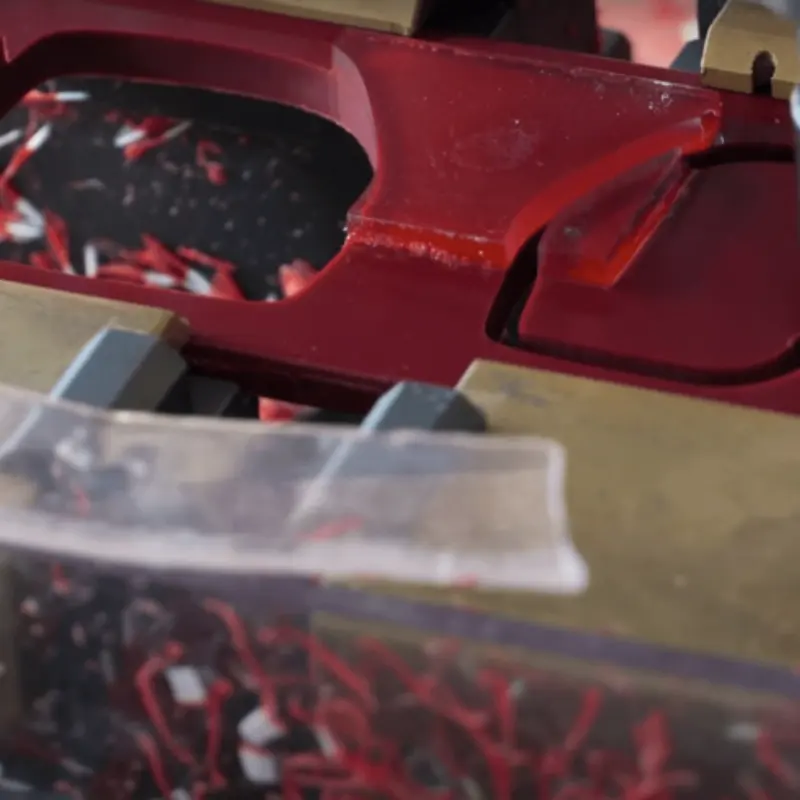
CNC machining starts from the opposite direction: a solid, pre-formed acetate sheet, already colored and patterned through the material itself rather than through the manufacturing process. A CNC machine — guided by a digital file specifying the exact frame geometry — uses a rotating cutting tool to remove material around the frame outline, working through the sheet’s thickness to separate the frame shape from the surrounding material.
This is a precision-cutting process, not a forming process, and the tolerances achievable are tight — CNC machining in general is capable of holding tolerances down to roughly ±0.001 inch (about 0.025mm), which is part of why it remains the standard for acetate eyewear despite being slower than injection molding. After cutting, the frame goes through additional shaping stages — heating to make it pliable enough to press into the curved base shape that fits a face, followed by extensive tumbling and hand polishing, covered in more detail in our acetate manufacturing guide.
| Factor | Injection Molding (TR90) | CNC Machining (Acetate) |
|---|---|---|
| Material starting form | Loose pellets, heated molten | Solid pre-formed sheet |
| Process type | Additive — material fills a mold | Subtractive — material is cut away |
| Tooling required | Yes — steel mold, upfront cost | No — works directly from sheet stock |
| Typical precision | High, consistent across units once mold is set | Very high — tolerances to ~0.001 inch |
| Speed per unit | Seconds per piece once mold is running | Minutes to hours per piece across multiple stages |
| Best suited for | Large volume runs, simple-to-moderate geometry | Smaller runs, intricate detail, frequent style changes |
Why This Process Difference Drives Cost and MOQ
The manufacturing process is the direct explanation for why TR90 and acetate have different minimum order quantities and different cost curves at different volumes, a topic covered in more detail in our comparison of TR90 versus acetate.
Injection molding requires a steel mold built specifically for each frame design before any production can begin — a real, often substantial upfront cost that has to be amortized across the units produced. This is why TR90 programs typically carry higher minimum order quantities: the mold cost only makes financial sense spread across enough units, and per-unit cost drops significantly as volume increases once that mold is in place.
CNC machining doesn’t require a mold for the frame front — the cutting tool works directly from a digital file against sheet stock — but acetate temples are typically a partial exception: temples are commonly produced using a small, low-cost mold, often in the range of roughly $119–$149 USD per temple mold, considerably less than a full steel injection mold for a TR90 frame. This means acetate isn’t entirely tooling-free, but the tooling investment is far smaller and concentrated on one component rather than the full frame. This is part of why acetate accommodates smaller minimum orders and more frequent style changes without the same volume commitment injection molding requires, even though the per-unit cutting and polishing labor cost is higher than TR90’s per-unit molding cost at scale.
Neither structure is better in the abstract — which one favors your project depends on your order volume, how many distinct styles you’re producing, and how much upfront tooling investment makes sense for your specific production plan.
What This Means for Design Flexibility and Iteration
The two processes also differ meaningfully in how easily a design can change after the initial brief, which matters for brands still refining a style.
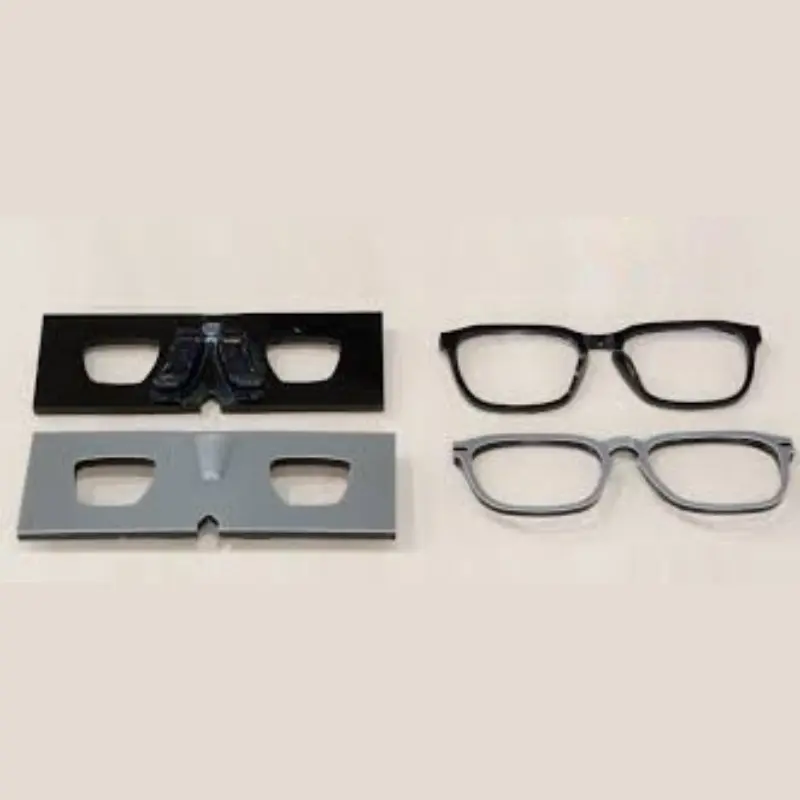
A CNC-cut acetate design can be adjusted relatively easily between samples, since each piece is cut fresh from a digital file with no mold to modify — a design tweak between rounds is a file edit, not a tooling change. An injection-molded TR90 design is more committed once tooling begins: meaningful changes to the mold after it’s built and cut typically mean rework or a new mold entirely, which adds both cost and lead time. This is part of why TR90 programs commonly confirm structure with an RP (rapid prototyping, typically 3D-printed) sample before committing to steel mold tooling — it’s a faster, lower-cost way to validate fit and structure than discovering a problem after the mold is already cut. Locking the design at the RP stage, rather than after tooling begins, is worth the extra review round it might require.
The Practical Takeaway
Injection molding and CNC machining aren’t simply two ways of making the same kind of frame — they’re opposite manufacturing principles, one building up material inside a mold and the other cutting it away from a solid sheet, and that difference explains nearly everything else that separates a TR90 sunglasses program from an acetate one: tooling cost, MOQ, per-unit speed, and how easily a design can change mid-project. Knowing which process is actually behind your material choice is worth understanding before a tech pack gets finalized, not after a quote comes back higher or with a longer lead time than expected.
Frequently Asked Questions
Is injection molding cheaper than CNC machining for sunglasses?
It depends on volume. Injection molding requires a substantial upfront steel mold cost, but per-unit cost drops significantly at higher volumes once the mold is built. CNC machining has minimal tooling cost — the frame front needs no mold at all, and acetate temples typically use a small, low-cost mold — but per-unit labor cost runs higher throughout, which generally makes it more cost-effective at smaller volumes while injection molding wins out at scale.
Why does TR90 require a mold but acetate doesn’t?
TR90 is shaped through injection molding, an additive process where molten material is injected into a steel mold cavity — that steel mold is a significant tooling investment. Acetate is shaped mostly through CNC machining, a subtractive process that cuts the frame front directly from sheet stock with no mold required, though temples are typically produced using a small, low-cost mold — often in the range of roughly $119–$149 per temple mold — considerably less than a full TR90 injection mold.
How precise is CNC machining compared to injection molding?
CNC machining can achieve very tight tolerances, commonly cited around ±0.001 inch. Injection molding is also highly precise once a mold is properly built and calibrated, producing consistent, identical parts unit to unit — the precision comparison matters less than which process fits your material and volume.
Can a TR90 frame design be changed after the mold is built?
Significant changes typically require reworking or rebuilding the mold, which adds cost and lead time. This is different from CNC-cut acetate, where a design adjustment between sampling rounds is a digital file change rather than a tooling change, making acetate more flexible for iterative design work.
What causes warping or weak spots in injection-molded TR90 frames?
Inconsistent pressure, temperature, or cooling time during the molding process can introduce internal stress or air bubbles that aren’t visible when the frame first comes out of the mold but can show up later as warping or reduced durability. This is why these parameters are closely controlled rather than left at fixed settings.
Which process is better for a brand planning frequent style changes?
CNC machining generally suits brands iterating on multiple styles or smaller batches, since there’s no mold investment tied to a specific design. Injection molding suits brands committed to a specific design at meaningful volume, where the upfront mold cost is justified by the per-unit savings at scale.
How is a TR90 design confirmed before committing to steel mold tooling?
TR90 programs commonly use an RP (rapid prototyping, typically 3D-printed) sample to validate structure and fit before the steel mold is built. This catches design issues at a fraction of the cost and lead time of discovering them after tooling is already cut, which is why locking the design at the RP stage is worth the extra review round it might require.
Let's get started!
Get in touch with a custom eyewear specialist now for a free consultation and instant price quote.
WHATSAPP ME GO!
📱 Scan with your phone to start chatting