How Acetate Sunglasses Are Made: The Manufacturing Process Explained
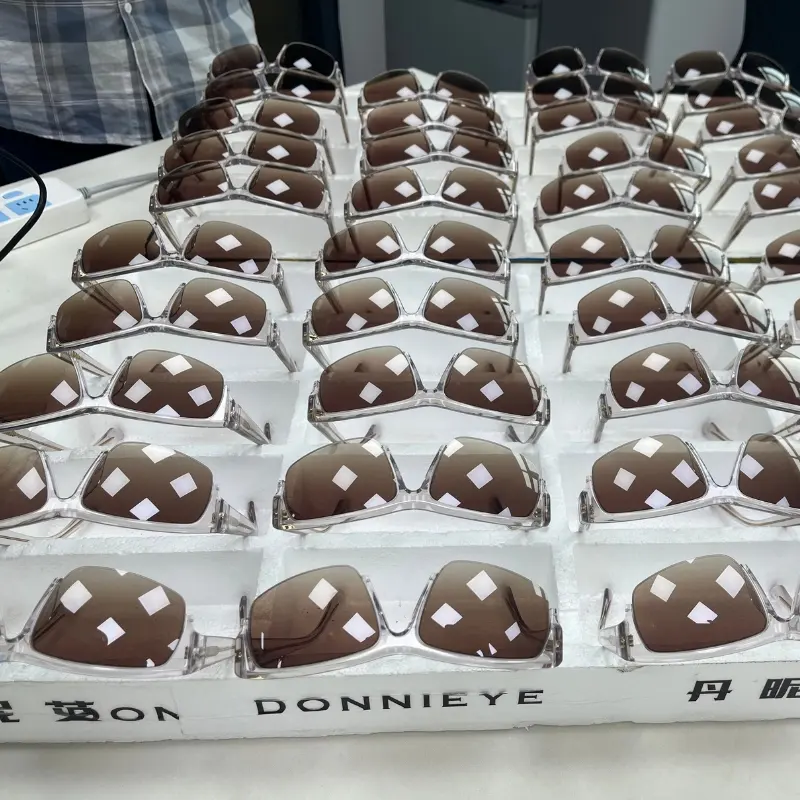
You’ve seen acetate frames. You know they look better and feel better than injection plastic. But what actually happens between a raw sheet of cellulose and a finished pair of sunglasses on a shelf?
Acetate sunglasses go through eight distinct production stages — each requiring specific equipment, skilled labor, and time. Understanding this process doesn’t just satisfy curiosity. It explains why acetate costs more than injection plastic, what quality problems form at each stage, and how to evaluate whether your manufacturer is doing it right. For brand buyers, this knowledge is a sourcing advantage.
We produce acetate sunglasses daily. Here’s the complete process — with the quality checkpoints that matter for your brand.
The Quality System: IQC, IPQC, FQC, and OQC
Before walking through each production stage, it helps to understand the quality system that runs across all of them.
A professional acetate sunglasses factory runs four quality control stages: IQC (Incoming Quality Control), IPQC (In-Process Quality Control), FQC (Final Quality Control), and OQC (Outgoing Quality Control). Each stage catches different categories of problems at different points in the process. Together they form a complete quality chain — materials are verified before production starts, checked during production, inspected before packing, and audited before shipment.
| QC Stage | When It Happens | What It Covers |
|---|---|---|
| IQC — Incoming Quality Control | Before production begins | All incoming materials: acetate sheets, hinges, lenses, packaging components |
| IPQC — In-Process Quality Control | During each production stage | Dimensions, surface quality, hinge action, logo accuracy — checked at each stage |
| FQC — Final Quality Control | After production, before packing | Finished frames inspected against golden sample and spec sheet |
| OQC — Outgoing Quality Control | Before shipment | Random audit of packed goods; shipping documents and compliance paperwork verified |
Understanding this system helps brand buyers ask the right questions when evaluating a manufacturer — and know which stage a quality problem belongs to when it’s discovered.
IQC: Incoming Material Inspection
Before any production stage starts, all incoming materials go through IQC.
When acetate sheets, hinges, lenses, and other components arrive at the factory, they are inspected against the project’s specifications before being released for production use. IQC is the first quality gate. Materials that fail inspection are rejected or returned to the supplier before they enter the production line — this is significantly less costly than discovering material problems after production is complete.
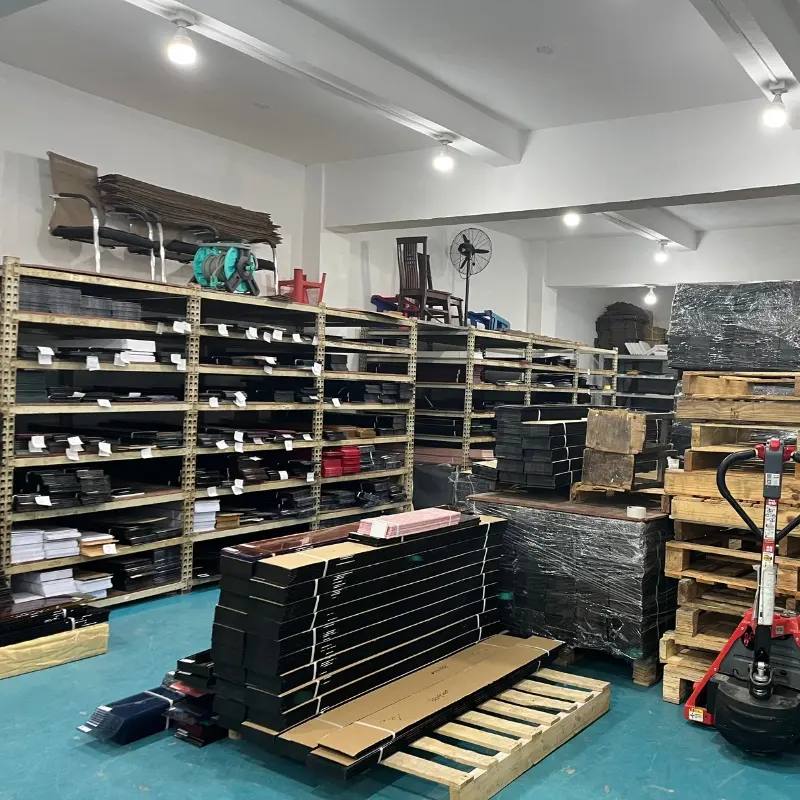
IQC covers:
- Acetate sheets: Color accuracy against the confirmed color reference, pattern consistency across the sheet, surface defects, thickness uniformity
- Hinges: Dimensional accuracy, plating quality, opening and closing action, screw thread condition
- Lenses: Color and tint accuracy, optical clarity (no inclusions or distortion), coating integrity, UV treatment verification
- Packaging components: Case, cloth, hang tag — correct specifications per the approved packaging sample
Catching material problems at IQC prevents them from compounding through production. A lens that fails optical clarity at IQC costs nothing to reject. The same lens discovered at FQC after the frame has been fully produced costs significantly more to address.
Stage 1: Sheet Selection and Material Preparation
Everything in acetate production starts with the sheet.
Acetate sheets arrive at the factory in the color, pattern, and thickness specified for the project. Sheet selection is a quality decision that determines the visual character of every frame in the run. A sheet with inconsistent color saturation, visible inclusions, or uneven thickness will produce inconsistent finished frames — and no amount of downstream processing can fix a material problem that starts here.
Acetate sheets for sunglass frames typically run 6–10mm thick for the front frame and 3–6mm for the temples. Sheets are inspected on arrival for color accuracy against the reference standard (Pantone code or physical color chip), pattern consistency across the sheet area, surface defects, and thickness uniformity.
For brands specifying Mazzucchelli or other premium sheet suppliers, material lead time is an important production planning factor. Standard domestic acetate sheets are typically available within 7–20 days. Mazzucchelli sheets ordered in standard colors run 15–45 days; custom colors can take 60–90 days. This lead time runs before any frame production begins — it’s the most commonly underestimated variable in acetate production timelines.
What to check at this stage
Color confirmation happens before material is ordered — not after sheets arrive. The process is: you provide a color reference (Pantone code, physical swatch, or reference frame photo), the factory finds the closest match from the acetate supplier’s catalog and presents options for your selection, you confirm the colorway, and only then does the factory place the sheet order.
This means the most important quality action at this stage is thorough color selection — not a quick glance at a swatch, but a confirmation that accounts for how the color will look in the finished frame (post-polishing, acetate colors deepen slightly). Ask your factory to show you the selected sheet’s catalog reference and, where possible, a photo of a previously produced frame in that specific color.
Stage 2: CNC Cutting and Frame Shaping
With sheets selected and confirmed, frame production begins.
CNC (Computer Numerical Control) machines cut frame blanks from the acetate sheet using programmed tool paths derived from the frame’s technical drawings. The CNC cuts the frame front and temples as separate pieces. Precision at this stage determines frame symmetry, lens aperture accuracy, and temple length consistency across the production run.
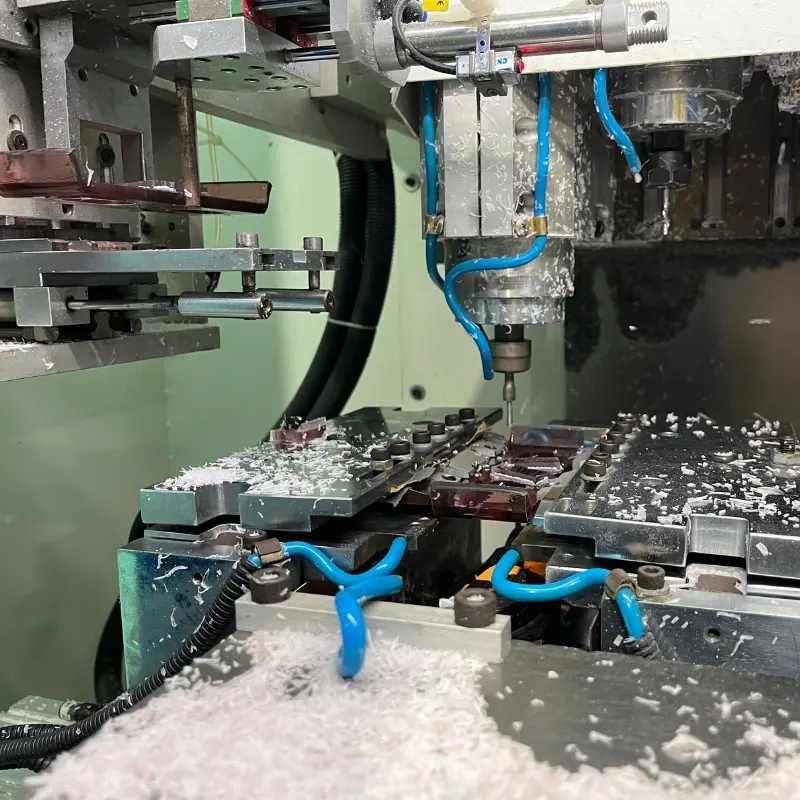
The CNC process for a standard acetate front frame involves multiple passes:
- Rough cut: The machine cuts a blank slightly larger than the final frame shape to remove bulk material
- Profile cut: The outer shape of the frame is cut to specification
- Internal shaping: Lens apertures, nose bridge, and any structural details are cut
- Bevel and edge profiling: The frame edges are given their characteristic rounded profile
After CNC cutting, frame blanks are inspected for dimensional accuracy. Template gauges or digital calipers verify that front width, lens aperture dimensions, bridge width, and temple length match the approved drawing tolerances — typically ±0.5mm for structural dimensions.
What to check at this stage
Frame symmetry is the key concern. A frame front that is asymmetrical left-to-right — even by 0.5mm — will sit crooked on the face and generate immediate returns. At sample stage, place the frame face-down on a flat surface. It should sit level with no rocking. Hold it at arm’s length and sight down the temples — they should be parallel. These checks take 30 seconds and catch symmetry problems before bulk production.
Stage 3: Tumbling
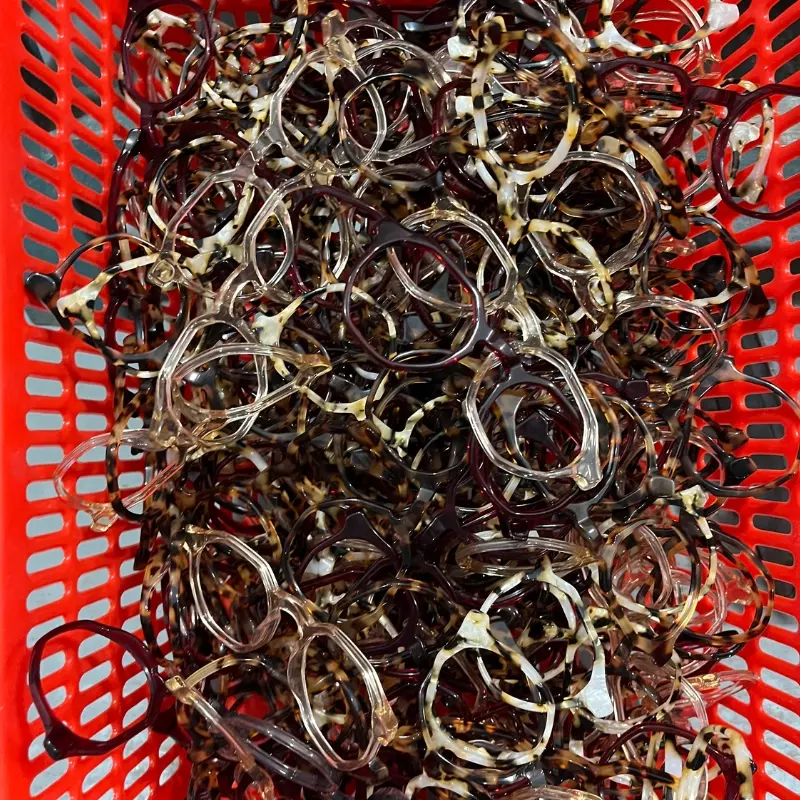
After CNC cutting, frame blanks have sharp edges, CNC tool marks, and a raw surface. Tumbling is the first stage of surface development.
Frame blanks are loaded into rotating barrel tumblers with abrasive media — typically ceramic or plastic chips of progressively finer grit. Quality acetate production runs multiple tumbling stages in sequence, each with different media and duration. The total tumbling time across all stages runs approximately 120+ hours for a quality acetate frame.
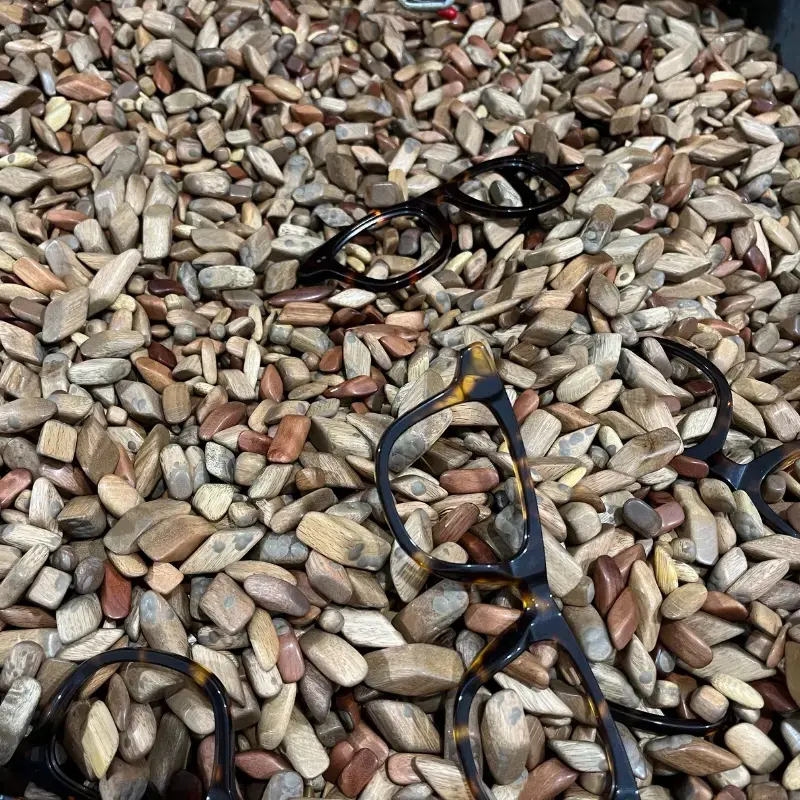
A typical tumbling sequence for quality acetate frames runs three stages:
- Rough tumbling: 4–6 hours. Removes CNC tool marks, sharp edges, and gross surface irregularities. The frame exits this stage with a uniformly matte surface.
- Medium tumbling: Approximately 70 hours. This is the longest stage — the extended run time allows the medium-grit media to develop the surface smoothness that defines acetate’s tactile quality. This stage cannot be rushed without visible quality loss.
- Fine tumbling: Approximately 48 hours. Develops the pre-polish surface condition, preparing the frame for hand polishing.
The exact duration of each stage depends on the surface finish specification — a high-gloss fashion frame requires more tumbling time than a matte-finish frame. Factories that compress tumbling time to reduce production days make a direct trade-off against surface quality that shows in the finished product.
What to check at this stage
Surface uniformity. After rough tumbling, the frame surface should be uniformly matte with no visible CNC tool marks or edge chips. Check the inner edges and corners — these areas receive less tumbling contact and are where surface problems most often hide.
Stage 4: Hinge Fitting and Assembly
With frame blanks tumbled to shape, hinge components are fitted.
Acetate frame hinges are made from white copper (cupro-nickel alloy) — pressed into pre-routed channels in the frame front and temple ends. White copper is the industry standard hinge material for acetate frames due to its machinability, plating compatibility, and cost efficiency. Hinge fitting is one of the most technically demanding stages in acetate production — the fitting must be precise, repeatable, and consistent across every unit in the run.
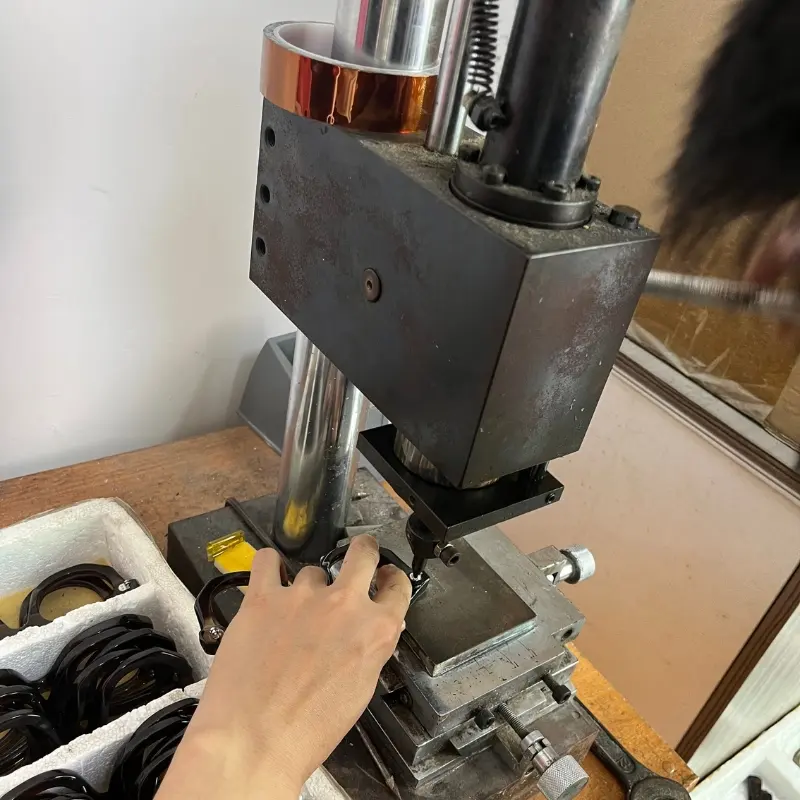
The hinge fitting process:
- Channels are CNC-routed into the frame front and temple ends at the hinge location
- White copper hinge components are pressed into the channels using a hinge press machine
- Screws are inserted and tightened to specified torque
- Hinge alignment is verified — both temples should open to the same angle and sit at the same height
| Hinge Type | Characteristics | Typical Use |
|---|---|---|
| Standard barrel hinge (3-barrel) | Narrower contact area, suitable for slim temples | Slim frames, semi-rimless, narrow temple designs |
| Standard barrel hinge (5-barrel) | Most common configuration, balanced contact | Standard acetate sunglasses, most frame styles |
| Standard barrel hinge (7-barrel) | Wider contact area, smoother action | Wide temples, thicker acetate, longer-wear designs |
| Spring hinge | Flex beyond 90°, returns to position | Active lifestyle, optical, comfort focus |
The number of barrels is primarily determined by temple width — not by price point alone. Confirm the hinge barrel count matches the temple width in your technical drawing.
What to check at this stage
Open and close each hinge 20 times on both sides. The movement should be smooth, consistent, and require the same force on both sides. With the frame on a flat surface and temples fully open, both temples should touch the surface simultaneously. Any variation indicates a hinge alignment problem.
Stage 5: Fine Tumbling and Hand Polishing
After hinge fitting, frames re-enter tumbling for fine surface development — followed by hand polishing to achieve the final finish.
Fine tumbling uses progressively smaller abrasive media to develop a smooth, even surface across the entire frame. After mechanical tumbling, skilled workers hand-polish individual frames using cloth wheels and polishing compounds, targeting the high-gloss finish that distinguishes quality acetate from frames that have been under-processed.
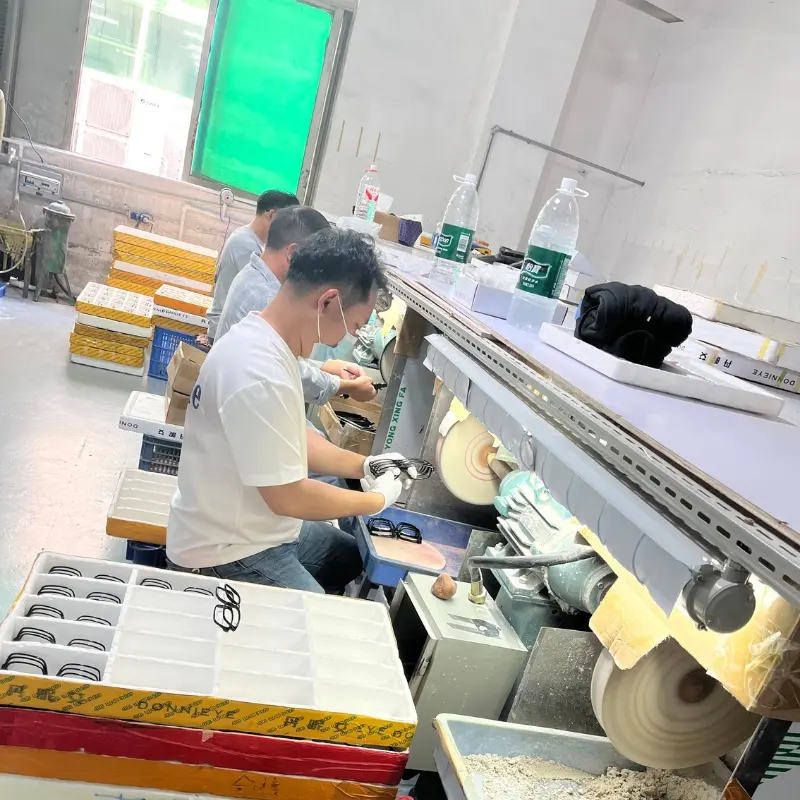
Hand polishing targets specific areas: the top edge of the frame front, the temple surfaces, the nose bridge curve, and the inner lens rim — areas that tumbling media doesn’t contact evenly. A factory that skips hand polishing delivers a frame that looks acceptable in photographs but underperforms the customer’s expectations in person.
Quality standard: run your finger across the front surface of the sample. It should feel smooth and warm — not cold, not plasticky, not with any detectable irregularity. High-gloss acetate should have a surface reflection depth — when you tilt it under light, you should see the light source reflected clearly, not diffused.
What to check at this stage
The inner lens rim and the nose bridge underside. Run your fingertip along the inside of the lens aperture — it should be smooth with no sharp or rough edges. Check the nose bridge from below — this curved area should be as evenly polished as the flat front surface.
Stage 6: Logo Application
With frames polished to finished surface quality, branding is applied.
Logo application timing depends on the method chosen. Most methods happen after polishing. However, two methods — crystal logo inlay and UP sticker embedding — require logo elements to be embedded before rough tumbling begins. Understanding the timing of your chosen logo method is essential for production planning.
Pre-tumbling logo methods
Crystal logo inlay: A crystal or acrylic logo element is embedded into the acetate frame blank before tumbling begins. The tumbling process polishes both the frame and the inlaid element together, producing a flush, integrated logo within the frame material.
UP (under-polish) sticker: A logo film element is placed into a pre-cut recess in the frame blank before tumbling. The tumbling and polishing process seals and integrates the element into the frame surface, producing a logo with depth and a polished-over appearance.
Post-polishing logo methods
Laser engraving: A CNC laser traces the logo vector path, removing a controlled depth of acetate material to create a recessed mark. Epoxy color fill is typically applied after engraving — most commonly gold, silver, or white. The fill sits inside the frame material, making it permanent and resistant to wear.
Hot stamping: A heated die transfers metallic foil to the frame surface under pressure — gold, silver, or custom foil colors. Strong visual impact. Trade-off is durability — foil sits on the surface and can wear over time on high-contact areas.
Printing (pad printing / silk screen): Logo printed directly onto the frame surface using ink. Suitable for multi-color logos or complex graphic designs that laser engraving or hot stamping cannot reproduce. Ink sits on the surface — durability is lower than engraving but acceptable for temple inner surfaces where contact is minimal. Most commonly used for size, model, and color codes printed inside the temple.
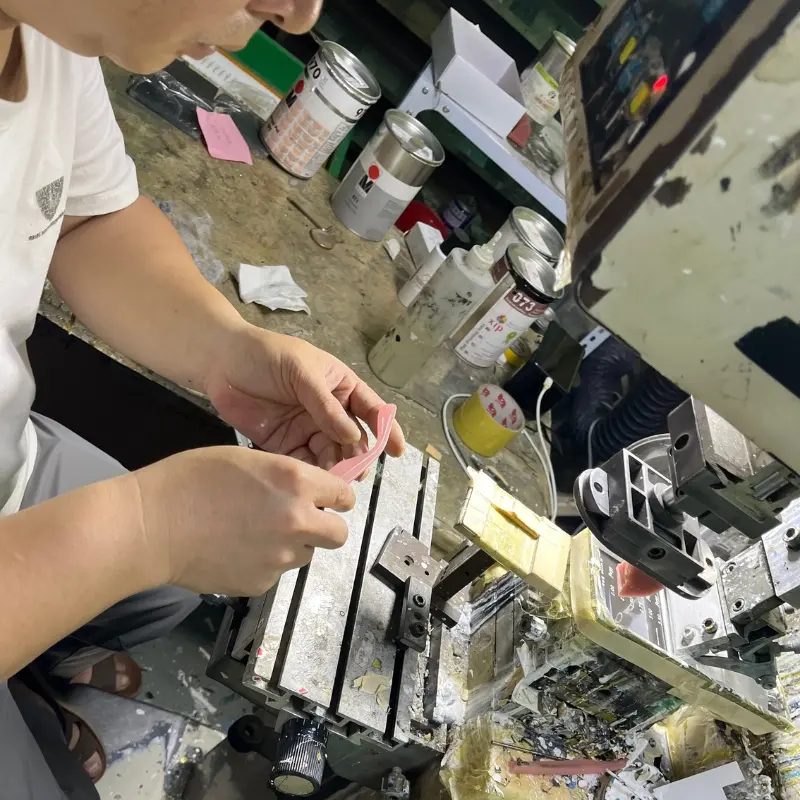
Metal inlay: A separately manufactured metal logo component is pressed into a routed recess in the frame. Produces a three-dimensional logo element with substantial visual and tactile quality. The premium method for brands where the logo is a design element.
What to check at this stage
Logo position accuracy and finish consistency. Measure the logo position from the hinge end against your specification. On a 300-unit run, check five to ten frames from different production batches to confirm position consistency. For laser engraving with epoxy fill, check color accuracy against your Pantone reference.
Stage 7: Lens Fitting
With frames branded and complete, lenses are cut and fitted.
Lens fitting involves cutting lens blanks to the exact shape of the frame’s lens aperture and fitting them with the correct orientation, edge bevel, and pressure. Too loose and the lens will rattle or fall out; too tight and the frame will stress, distort, or crack.
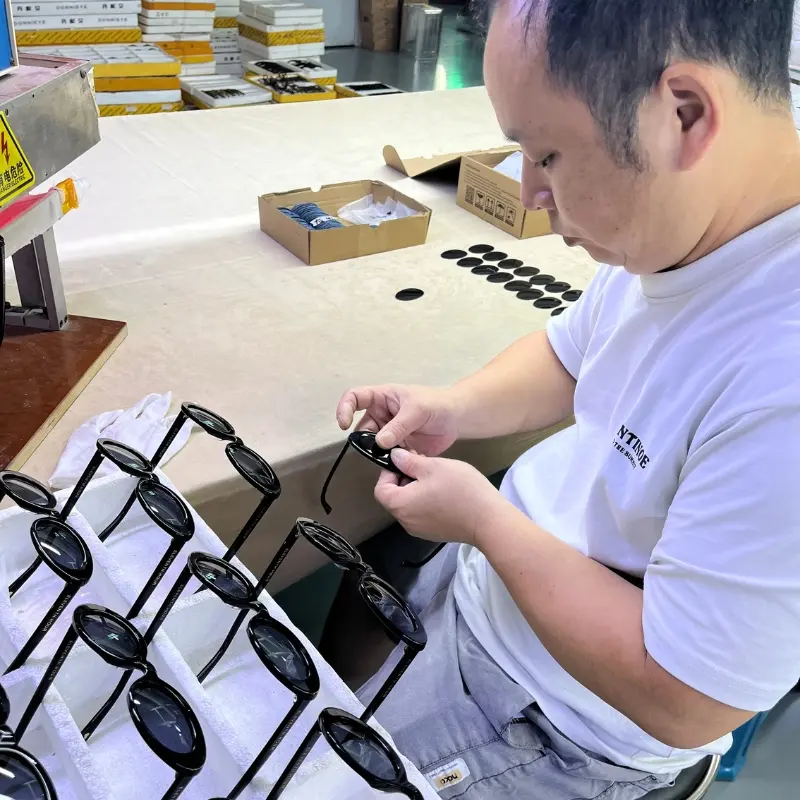
Lens blanks are cut using a computerized lens edger, beveled to match the frame’s groove profile, then fitted by hand. After lens fitting, frames are checked for lens seat evenness, optical distortion, polarization (where applicable), and UV treatment documentation.
What to check at this stage
Hold the sample frame at arm’s length and look through the lens at a straight horizontal line. The line should appear straight with no wave or distortion. For polarized lenses, rotate the frame 90° while looking at a reflective surface — the glare should disappear at one orientation and return at the other.
Stage 8: FQC — Final Quality Control
Every frame goes through FQC before packing.
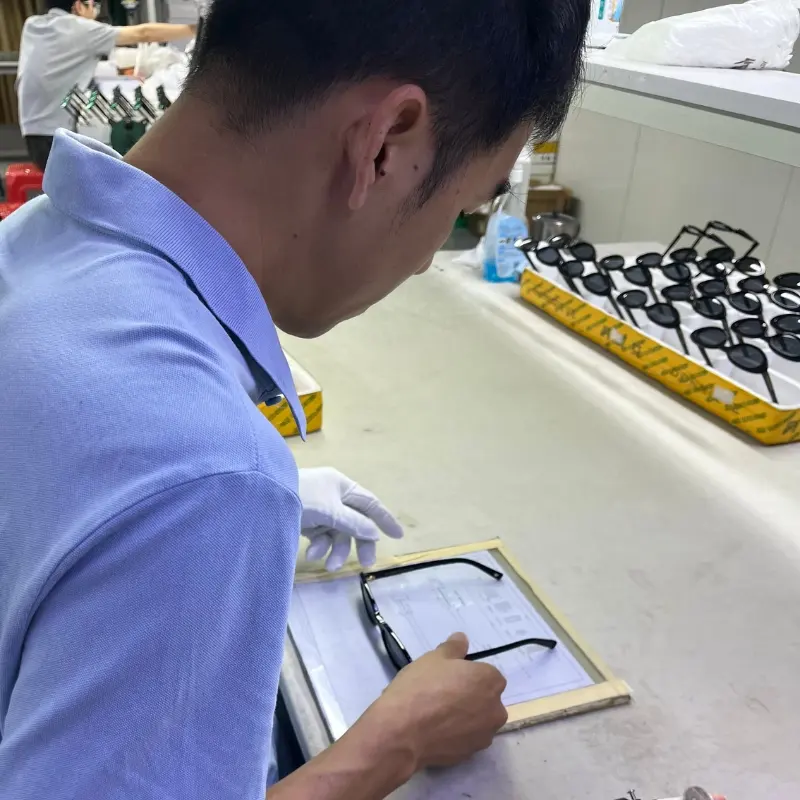
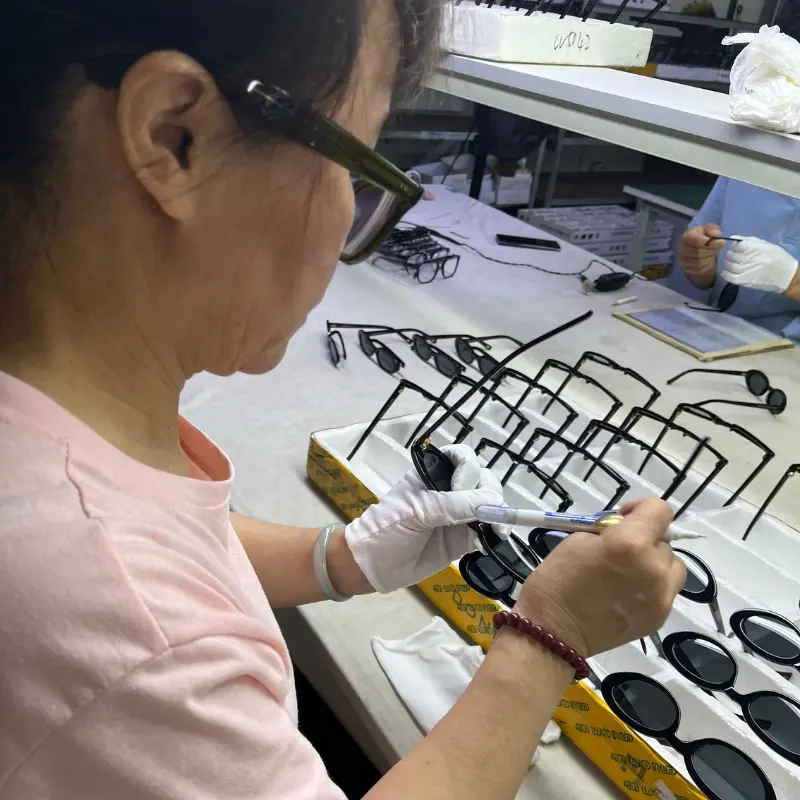
FQC compares a statistically representative sample of finished goods against the approved golden sample and spec sheet. Defects are classified as major (functional problems) or minor (cosmetic issues), with different AQL acceptance thresholds for each.
FQC checks at final inspection:
| Check Category | What’s Inspected | Standard |
|---|---|---|
| Frame dimensions | Width, temple length, bridge width | ±0.5mm tolerance |
| Hinge function | Open/close 20 cycles both sides | Smooth, consistent, equal |
| Logo accuracy | Position, depth, color, edge quality | Per spec sheet |
| Surface quality | Polish, no scratches, no marks | Golden sample standard |
| Lens fit | No gaps, no distortion, correct tint | Per spec sheet |
| Lens treatment | UV400 verification | Test report |
| Symmetry | Frame sits flat, temples parallel | Visual + surface check |
| Packaging | Correct case, cloth, hang tag | Per spec sheet |
Stage 9: OQC — Outgoing Quality Control and Shipment
The final stage before goods leave the factory.
OQC is a random audit of packed, carton-sealed goods — conducted after FQC and packing are complete. OQC verifies that packed goods match what was approved at FQC, that carton labeling and quantities are correct, and that all export documentation and compliance paperwork is in order before shipment is released.
OQC covers:
- Random carton audit: Open a sample of sealed cartons and verify contents match packing list
- Quantity verification: Confirm total quantity matches the purchase order
- Labeling check: Carton labels, barcode stickers, country of origin marking
- Documentation: Commercial invoice, packing list, CE certificate or test reports if required
- Shipment release: OQC sign-off authorizes shipment booking
For brand buyers, OQC is the final confirmation before you approve shipment. Request the OQC report — including photos — before releasing payment or authorizing the shipping booking.
The Complete Production Timeline
The total production time for a quality acetate sunglass run — from material procurement to ready-to-ship — is typically 50 to 60 working days for domestic acetate, and 60 to 120 working days when Mazzucchelli or other imported sheets are specified. These timelines reflect real factory conditions including production scheduling. They assume sample approval has already happened and do not include sampling, revision rounds, or shipping.
| Stage | Domestic Acetate | Mazzucchelli / Import Acetate |
|---|---|---|
| Material procurement | 7–20 days | 30–90 days |
| CNC cutting | 3–5 days | 3–5 days |
| Tumbling (all stages) | 7–14 days | 7–14 days |
| Hinge fitting | 2–3 days | 2–3 days |
| Hand polishing | 3–5 days | 3–5 days |
| Logo application | 2–3 days | 2–3 days |
| Lens fitting | 2–3 days | 2–3 days |
| FQC + packing + OQC | 3–5 days | 3–5 days |
| Total production | 50–60 working days | 60–120 working days |
For project planning, add sampling time (10–20 days per sample round) and sea freight or express courier (sea: 20–35 days to US/EU/AU ports; express: 3–5 business days) to get your total project timeline.
Why Acetate Costs More Than Injection Plastic: The Process Comparison
The cost premium for acetate over injection-molded plastic is not arbitrary. It’s the direct result of significantly more machine time, multiple tumbling stages totaling 120+ hours, and manual hand polishing that injection molding does not require.
| Production Stage | Acetate | Injection Plastic (TR90/PC) |
|---|---|---|
| Material form | Sheet — cut to blank | Pellet — melted to liquid |
| Shaping method | CNC milling (multiple passes, hours) | Injection mold (seconds per cycle) |
| Surface development | 3 tumbling stages, 120+ hours total | None required |
| Hinge fitting | Pressed into routed channel | Molded into frame or simple press |
| Hand polishing | Required for quality finish | Not applicable |
| Logo application | After polishing (separate stage) | During or after molding |
| Total process time | 50–60 working days | 5–15 working days |
The result: a quality acetate frame costs $6–$18 EXW versus $2–$12 for TR90 or PC. That premium is earned by process — not by supplier margin. The cost difference between a $6 and an $18 EXW acetate frame almost always reflects the difference between a complete polishing process and a shortcut.
This is part of our complete guide to custom acetate sunglasses manufacturing. If you want to discuss production specifications for your next acetate collection — including material grade, polishing standard, and realistic lead times — we respond within 4 business hours.
Conclusion
Acetate sunglasses production runs from IQC through nine stages to OQC — a complete quality chain where every stage contributes to the finished product. Sheet selection sets the color standard. CNC cutting sets the dimensional standard. Tumbling and polishing develop the surface quality that makes acetate worth its price. Hinge fitting determines functional durability. Logo application cements brand identity. Lens fitting and FQC validate that what was approved at sample ships in bulk. OQC ensures that what ships matches what was approved. Understanding this process is the foundation for evaluating suppliers, interpreting quotes, and making sourcing decisions that your brand won’t regret.
Frequently Asked Questions
How long does it take to produce acetate sunglasses?
For domestic acetate, total production time from material procurement to ready-to-ship is typically 50 to 60 working days. For imported premium acetate (Mazzucchelli), total production runs 60 to 120 working days. These figures reflect real factory conditions including production scheduling. They do not include sampling rounds or shipping. For project planning, add 10–20 days per sample round and sea freight or express courier time.
What is the difference between IQC, IPQC, FQC, and OQC in eyewear production?
IQC (Incoming Quality Control) inspects all materials before production begins. IPQC (In-Process Quality Control) checks quality at each production stage during manufacturing. FQC (Final Quality Control) inspects finished frames against the golden sample and spec sheet before packing. OQC (Outgoing Quality Control) audits packed, sealed cartons before shipment and verifies all documentation. Together they form a complete quality chain from material to shipment.
What is CNC cutting in acetate frame production?
CNC (Computer Numerical Control) cutting uses programmed machine tools to cut frame blanks from acetate sheets according to the frame’s technical drawings. The CNC cuts the outer frame shape, lens apertures, nose bridge, and edge profiles in multiple passes. It produces dimensionally precise blanks that then go through tumbling, hinge fitting, polishing, and finishing stages.
How many hours does tumbling take for acetate frames?
Quality acetate production runs three tumbling stages totaling approximately 120+ hours: rough tumbling (4–6 hours), medium tumbling (approximately 70 hours), and fine tumbling (approximately 48 hours). After tumbling, frames also receive hand polishing. The exact duration depends on the surface finish specification. Factories that compress tumbling time make a direct trade-off against surface quality.
Why does acetate cost more than TR90 or PC plastic frames?
Acetate requires significantly more production time and skilled labor. CNC milling takes hours versus seconds for injection molding. Three tumbling stages add 120+ hours of process time that injection molding doesn’t require. Hand polishing requires skilled labor at multiple points. Total acetate production runs 50–60 working days versus 5–15 days for injection plastic. The cost premium directly reflects process complexity.
What quality problems should I look for in acetate sunglasses samples?
Check frame symmetry (frame should sit flat on a surface, temples parallel), hinge smoothness (consistent open-close on both sides, same force required), surface polish quality (warm, smooth, deep — not plasticky), logo position accuracy (measure from hinge end against your spec), lens fit (no gaps, no optical distortion), and color accuracy against your reference standard.
What is the difference between tumbling and hand polishing for acetate frames?
Tumbling uses rotating barrels with abrasive media to develop surface quality across the entire frame in bulk. Hand polishing targets specific areas — top edges, nose bridge curves, inner lens rims — that tumbling media doesn’t contact evenly. Quality production requires both. Frames polished only by tumbling have noticeably lower surface quality than frames that also receive hand polishing.
What material are acetate frame hinges made from?
Acetate frame hinges are made from white copper (cupro-nickel alloy). White copper is the industry standard for acetate frame hinges due to its machinability, plating compatibility, and cost efficiency. The number of barrels (3, 5, or 7) is determined primarily by temple width — not by price point alone.
Let's get started!
Get in touch with a custom eyewear specialist now for a free consultation and instant price quote.
WHATSAPP ME GO!
📱 Scan with your phone to start chatting