TR90 vs Acetate for Blue Light Glasses: Choosing Your Frame Material
The choice between TR90 and acetate for a blue light glasses line is often framed as a simple tradeoff: TR90 for durability and value, acetate for aesthetics and premium positioning. That framing is accurate as far as it goes, but it misses the specific factors that make this decision different for blue light glasses than for sunglasses or fashion eyewear.
Blue light glasses are worn primarily indoors, for extended periods, often continuously throughout a working or gaming day. That use pattern creates material requirements that do not apply to sunglasses worn for a few hours outdoors. Weight, comfort over a full day, and the interaction between frame material and lens coating care all become more significant than they would be for a product worn in shorter sessions. For brands developing a blue light blocking glasses line, understanding how these factors apply to each material is what produces a frame specification that actually matches the product’s intended use case.
Why Frame Material Matters More for Blue Light Glasses Than Sunglasses
The fundamental difference between blue light glasses and sunglasses, from a frame material perspective, is session length. A customer wearing sunglasses typically puts them on and takes them off multiple times during a day — during outdoor periods, removed indoors. A customer wearing blue light glasses may put them on when they sit down at their desk in the morning and not take them off until late afternoon or evening.
This extended continuous wear is what makes weight and comfort-per-hour more consequential for blue light glasses than for most eyewear categories. A frame that feels comfortable for thirty minutes of outdoor wear may cause noticeable pressure at the nose bridge and temples after six hours of desk wear. The frame’s weight, how it distributes across the nose, and whether its temple arms maintain consistent gentle pressure without fatigue are all more significant for a product designed for all-day screen use.
Material choice is the starting point for all of these properties — not the only determinant, but the most fundamental one that cannot be changed after the frame is designed.
TR90: The Standard Choice for Blue Light Eyewear
TR90 is the dominant frame material in the blue light glasses category, accounting for the large majority of commercial production across price points from entry-level to mid-range. This dominance is not arbitrary — it reflects a genuine alignment between TR90’s material properties and the demands of the blue light glasses use case.
Weight and Extended Wear Comfort
TR90 frames typically weigh between 8 and 12 grams for a standard blue light glasses frame, depending on design. Acetate frames in comparable dimensions typically weigh two to three times more. In isolation, a difference of 15 to 20 grams sounds minor. Over a six to eight hour wear session, it is not.
The weight of a frame determines how much pressure it applies to the nose bridge and the area behind the ears throughout the day. At 10 grams, a TR90 frame distributes its weight in a way that most wearers do not notice after the first few minutes. At 25 grams, an acetate frame applies a consistent load to the same pressure points throughout a session — not enough to cause pain for most wearers in a short session, but enough to accumulate into noticeable fatigue by late afternoon.
For blue light glasses specifically — a product designed for use during the most sustained screen-use periods of the day — this matters. Customer reviews of blue light glasses consistently cite comfort as the primary satisfaction driver and weight or pressure as the primary complaint. TR90’s weight profile directly addresses the most common negative feedback in the category.
TR90’s flexibility adds a secondary comfort dimension: the material bends slightly under normal head movement and spring-loaded temple pressure, conforming to the face rather than requiring the face to conform to the frame. This is particularly relevant for glasses worn continuously for extended periods, where small fit inconsistencies accumulate into discomfort more quickly than they would for occasional-wear products.
Production Economics at Blue Light Category Volumes
TR90 uses injection molding — a production method that achieves low per-unit costs at commercial scale. For blue light glasses, which are often developed as a higher-volume category relative to premium fashion eyewear (the all-day comfort positioning attracts a broad audience rather than a niche one), TR90’s cost structure fits naturally. The material is the right choice for brands targeting volume at accessible price points, and it remains a sensible choice for mid-range products where the cost savings can be directed toward lens quality, documentation, or packaging rather than frame material.
The injection mold investment is real — it is a meaningful upfront cost that should be factored into the product development plan. However, for a brand committed to the blue light category with a realistic volume outlook, the per-unit economics of TR90 production improve significantly as volume increases, making it the efficient long-term choice for the category’s mainstream tier.
Acetate: The Premium Tier Option
Acetate is the right frame material for brands positioning at the upper end of the blue light glasses market — where the product’s value proposition includes the frame itself, not just the lens technology.
Color Depth and Design Differentiation
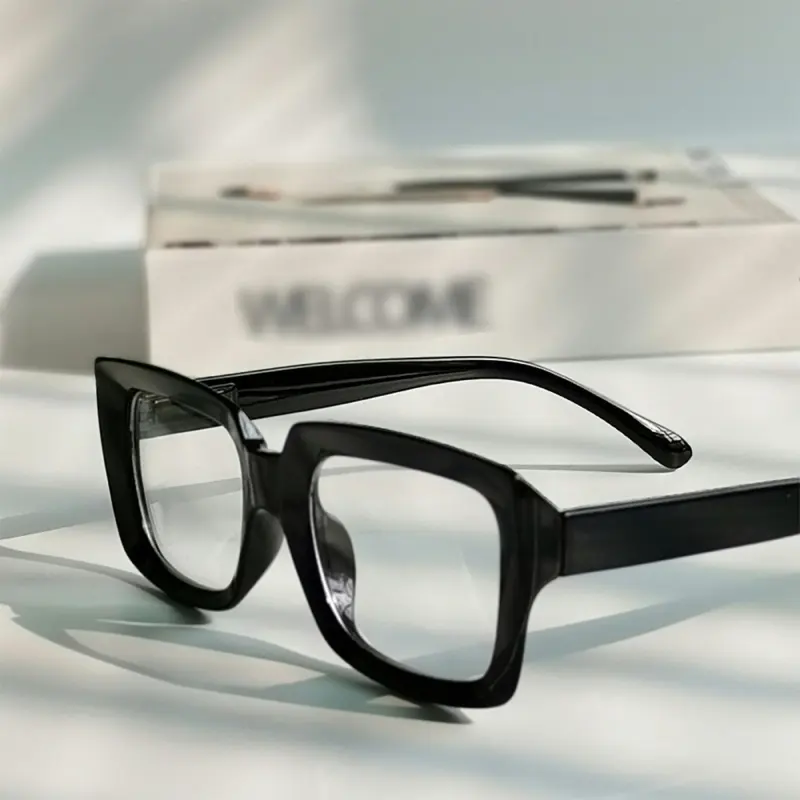
Acetate’s core advantage over TR90 is visual: the material absorbs color and pattern in ways that injection-molded plastics cannot replicate. Deep tortoiseshell patterns, layered gradients, translucent finishes with visible depth, and multi-layer color combinations all require acetate’s block-cut and hand-polish manufacturing process. TR90’s injection-molded color, while available in a wide range of solid and gradient options, cannot produce the same visual richness.
For blue light glasses positioned at $60 and above — particularly for brands whose target customer is a style-conscious professional who wants a blue light frame that looks as good as the fashion frames they own — acetate’s visual differentiation is a genuine selling point that TR90 cannot match on equal terms.
This matters in the specific context of blue light glasses because the category faces a design credibility challenge that sunglasses do not: a customer buying blue light glasses for extended desk wear wants a frame that looks at home in a professional environment, not one that reads as athletic or purely functional. Acetate’s visual associations — craft, quality, design — align with the professional-wear positioning that many blue light brands aspire to at the upper end of the market.
Acetate is also adjustable by heat — a professional optician can gently reshape acetate temples and nose bridge to fit a specific face. For customers who have struggled with frame fit and are spending $80 or more on a pair of glasses they plan to wear every day, this is a meaningful service advantage.
The MOQ Advantage for Market Testing
One practical advantage of acetate for brands entering the blue light category is that acetate production can accommodate smaller initial order quantities than TR90 injection molding. Because acetate frames are CNC-cut from sheet material rather than requiring dedicated injection tooling per design, the barrier to a first order in a new design is lower.
For a brand testing the blue light category for the first time — or testing a new acetate frame design alongside an existing TR90 line — this lower minimum order threshold means less inventory risk on a new style. If a new acetate design performs well, scaling into larger volumes is straightforward. If it does not, the exposure is more contained than a full injection mold program would represent.
This is worth noting as a strategic entry point, not just a production detail: acetate’s production economics make it more accessible for small-batch market testing, while TR90 makes more economic sense once a design is proven and volume is committed.
How Frame Material Connects to Your Pricing and Channel Strategy
Frame material and retail price are directly linked in the blue light glasses market, and getting that alignment right matters for how the product is received by retail buyers, marketplace algorithms, and end consumers.
TR90 at $20–60 retail: TR90 frames with PC lenses, surface blue light coating, and quality packaging sit naturally in the $20–60 retail range. This is where the majority of blue light glasses volume is sold and where TR90’s cost profile supports viable margins for both DTC and wholesale channels. At this price tier, the frame material is part of the cost efficiency that makes the price point work — using acetate at this price point would compress margins to the point where the rest of the specification (lens quality, packaging, documentation) would need to be compromised.
Acetate at $60–120 retail: Acetate frames with blue light lens technology, documentation, and premium packaging sit naturally in the $60–120 retail range. At this tier, the acetate frame itself is part of the price justification — its visual richness and weight and feel signal quality to a customer at the point of purchase in a way that TR90 cannot at the same price. The frame material and the price point are aligned, and the customer experience of holding the product matches what the price implies.
Multi-tier collections: Many blue light glasses brands run both materials within the same collection — TR90 as the accessible entry and mid-tier, acetate as the flagship or premium SKU. This structure allows a brand to address different customer segments within one collection without the products competing against each other, and provides a natural upgrade path for customers who start with a TR90 pair and want to trade up.
What to Specify in Your Brief
For a TR90 blue light glasses frame:
- Frame weight target — specify the maximum acceptable weight, not just the material
- Temple design — straight or curved, with or without spring hinges; spring hinges are recommended for TR90 frames worn continuously to accommodate head movement without fatigue
- Color specification — solid or gradient; provide Pantone reference or physical color sample
- Surface finish — matte, gloss, or soft-touch; matte finishes are more forgiving for extended wear marks and fingerprints during desk use
- Lens specification — blue light coating type (surface or in-mass), tint, and AR coating, as covered in How Blue Light Filtering Lens Coatings Actually Work
For an acetate blue light glasses frame:
- Color and pattern — provide a physical color reference or Mazzucchelli sheet reference; describe layering or transparency requirements in writing
- Frame thickness — acetate allows more variation here than TR90; thicker fronts read as premium, thinner as fashion-forward
- Core wire — whether a metal core wire is required in the temples for adjustability
- Surface finish — polished (standard acetate finish) or matte
- Heat adjustability — confirm whether the frame design supports optician adjustment, which is a service benefit worth communicating in the product’s retail positioning
For both materials:
- Target retail price — this should align with the material choice as described above; providing the target price at brief stage allows the manufacturer to calibrate the full specification to what the price point can support
- Blue light lens specification — the frame material choice does not change the lens specification requirements; confirm coating type, tint, and required test documentation separately
At Sailook, we produce blue light glasses frames in both TR90 and acetate, and the material recommendation we make to clients is almost always driven by two questions: What is the target retail price? And how long will the customer wear this frame in a single session? The answers to those two questions usually determine which material fits the product concept — the rest of the specification follows from there.
FAQ
Is TR90 or acetate better for blue light glasses? For most commercial blue light glasses programs — particularly those targeting extended daily screen use at accessible to mid-range price points — TR90 is the more practical choice. Its lower weight reduces cumulative discomfort during long wear sessions, it suits the production volumes typical of this category, and it fits the price points where most blue light glasses are sold. Acetate is the better choice for brands positioning at $60 and above where frame design and premium feel are part of the value proposition.
Why does frame weight matter more for blue light glasses than sunglasses? Blue light glasses are typically worn for extended continuous periods — four to eight hours or more at a desk — while sunglasses are worn in shorter, interrupted sessions. Weight that is not noticeable over a two-hour outdoor wear becomes a cumulative pressure issue over a full workday. TR90’s 8–12 gram typical frame weight imposes meaningfully less cumulative load on the nose bridge and temples than acetate’s 20–25 gram range during extended desk wear.
Can acetate blue light glasses be comfortable for all-day wear? Yes, with the right design. Acetate frames that are well-fitted for the wearer — and that can be adjusted by heat if needed — can be worn comfortably for extended periods. The key is fit precision, which acetate accommodates through optician adjustability. For DTC sales where fit adjustment is not available after purchase, the weight difference between acetate and TR90 is more consequential because the customer cannot tune the fit if the frame applies uneven pressure.
What is the typical minimum order for TR90 vs acetate blue light glasses? TR90 injection molding requires tooling investment before production can begin, which means initial orders have a minimum quantity. Acetate CNC production can accommodate smaller initial quantities since the production method does not require dedicated tooling per design. For brands testing the blue light category with a new frame, acetate can be a lower-risk starting point in terms of inventory commitment. Contact your manufacturer early in the development process to discuss what minimums apply to your specific design.
How does frame material affect the care requirements for blue light glasses? Both TR90 and acetate frames require the same basic lens care — rinse before wiping, avoid alcohol and ammonia-based cleaners on the lens coating, do not leave in a hot car. Acetate frames have slightly more sensitivity to strong solvents at the lens-frame junction, and some acetate colors may be affected by prolonged UV exposure outdoors. Neither material concern changes the lens coating care requirements, which are driven by the coating type rather than the frame material.
Which frame material should I choose for a gaming blue light glasses sub-brand? TR90 is the standard for gaming eyewear, for reasons that mirror the extended-wear logic above: gaming sessions run long, frame weight and comfort are performance factors, and TR90’s durability under physical handling suits a product category where frames may be taken on and off frequently and stored casually. Acetate gaming glasses are not common and would require strong design justification to succeed in a category where TR90 is the established material expectation.
Summary
TR90 and acetate serve different roles in the blue light glasses category, and the choice between them is a pricing and positioning decision as much as a technical one. TR90’s lighter weight addresses the single most important comfort variable in a product designed for extended continuous wear, and its production economics suit the volumes and price points where most blue light glasses are sold. Acetate’s visual richness and professional aesthetic support higher price positioning for brands whose product story centers on design and quality as much as lens technology. For brands building a multi-tier collection, using TR90 for the accessible and mid-range tiers and acetate for the flagship creates a structure that serves multiple customer segments without the materials competing against each other.
For Sailook’s full range of blue light glasses frame options, lens specifications, and production parameters, visit our blue light blocking glasses page.
Let's get started!
Get in touch with a custom eyewear specialist now for a free consultation and instant price quote.
WHATSAPP ME GO!
📱 Scan with your phone to start chatting