Do Dogs (and Cats) Really Need Eye Protection? When It Helps and When It's Just for Fashion
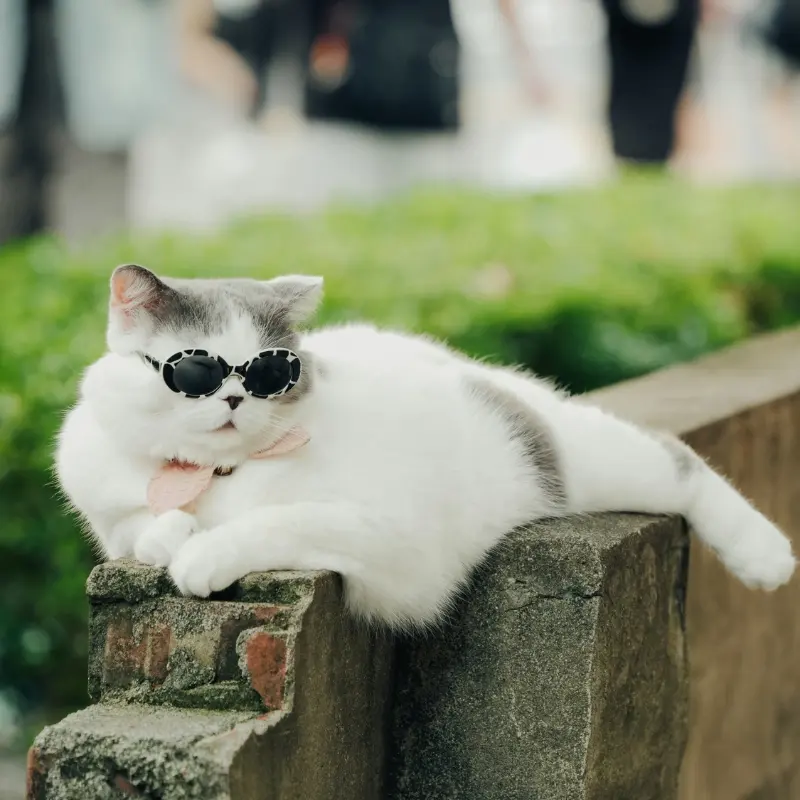
Most pet sunglasses sold online block none of the UV light they claim to. That’s a real problem if a vet actually prescribed eye protection for your dog or cat, and a costly one if you’re a brand selling “UV protection” without checking what your factory actually put in the lens.
Most healthy dogs and cats don’t need eye protection at all. A smaller group with diagnosed eye conditions do, and vets recommend eyewear in those specific cases — not as a blanket rule for every pet. Knowing which group you (or your customer) fall into changes what product you actually need.
The bottom line? “Does my pet need sunglasses” and “does my pet’s sunglasses actually protect anything” are two different questions. Most articles online only answer the first one.
When Do Dogs Actually Need Eye Protection?
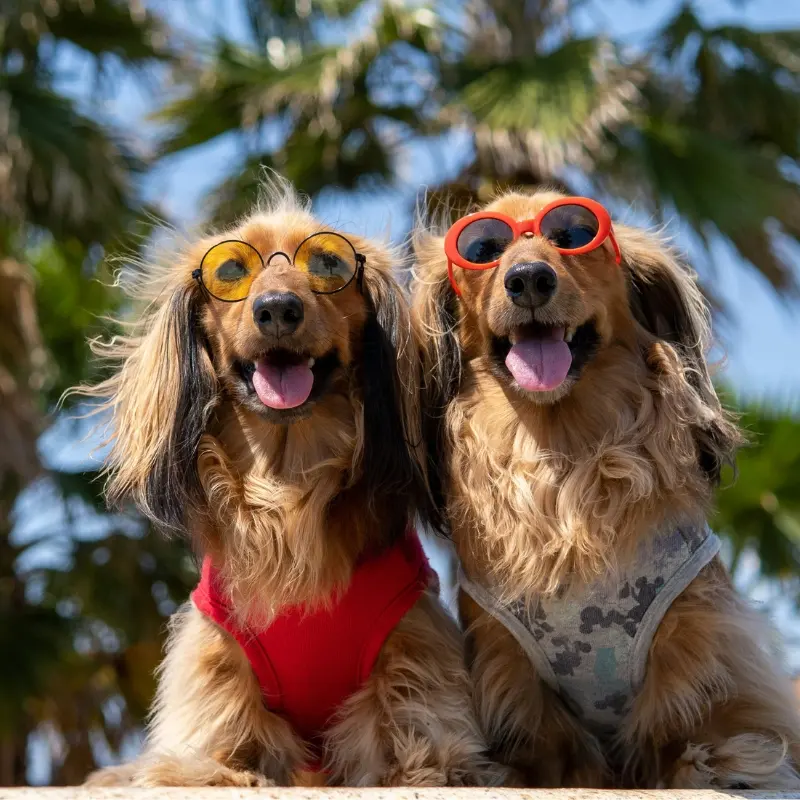
Healthy dogs don’t build up sun damage the way people do. They simply don’t live long enough for decades of UV exposure to matter the way it does for a human lens.
Dogs benefit from eye protection when a vet has diagnosed a specific condition: pannus, cataracts, glaucoma, or iris atrophy. Breed and lifestyle also play a role — brachycephalic breeds, light-eyed dogs, and working or highly active dogs face higher real-world risk than the average pet.
Pannus, also called chronic superficial keratitis, is the condition that shows up most often in veterinary guidance on this topic. It’s an autoimmune inflammation of the cornea that UV light makes worse, and it’s more common in German Shepherds, Border Collies, Greyhounds, and long-haired Dachshunds, though any breed can develop it. Cataracts and glaucoma are less directly tied to sun exposure but still make a dog’s eyes more sensitive to bright light, which is where tinted or UV-blocking lenses come in. Iris atrophy, an age-related condition, keeps the pupil from closing down properly, so older dogs with this condition often struggle in bright outdoor light the same way a person would without sunglasses.
Breed and lifestyle matter as much as diagnosis. Brachycephalic breeds like Pugs, French Bulldogs, and Shih Tzus have eyes that sit closer to the surface of the face, which raises the risk of scratches and debris injury regardless of UV exposure. Dogs with light-colored eyes or fur tend to be more sensitive to bright light in general. And dogs that ride with their heads out of car windows, work outdoors at high elevation, or spend long hours on trails, boats, or bikes face a real risk of wind, dust, and debris injury that has nothing to do with cataracts — this is a physical protection need, not a medical one, and it’s the group most goggles on the market are actually built for.
Do Cats Need Eye Protection Too?
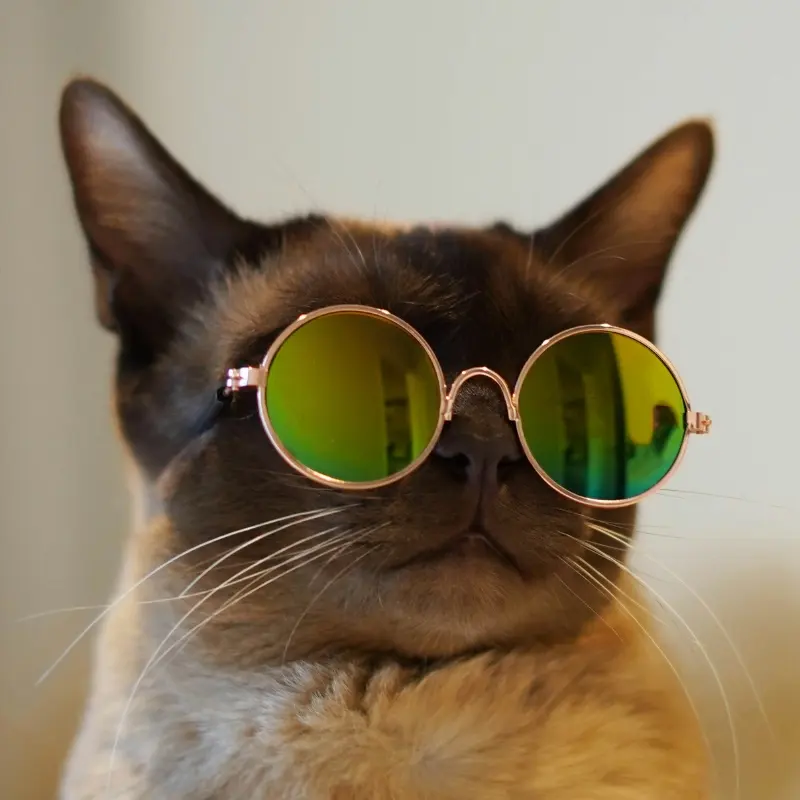
Cat eye protection barely shows up in the search results, and that’s not because cats never need it — it’s because the cases are rarer and the information is thinner than it is for dogs.
Most healthy, indoor cats never need eye protection. A small group of outdoor cats with heavy sun exposure, diagnosed photophobia, corneal conditions, or post-surgical recovery may benefit from vet-recommended protective eyewear, following the same logic as dogs but with a much smaller pool of candidates.
Cats evolved for a wide range of light conditions, from bright daylight to near-darkness, and most spend the bulk of their time indoors or in shaded areas, which limits their real-world UV exposure compared to an active outdoor dog. That’s why the case for cat eye protection is narrower. The situations that come up most in veterinary and behavioral sources are outdoor or working cats with long daily sun exposure, cats recovering from eye surgery who need a protective shield rather than a cone, and cats with a diagnosed light sensitivity condition where a vet has specifically recommended tinted lenses.
Fit matters even more for cats than for dogs, because cat faces are smaller and flatter with far less variation between breeds. A cat frame needs a shorter, softer strap and a smaller lens cup than almost any dog product on the market, and cats tolerate anything around the head far less readily than dogs do. For a brand or factory building a cat-specific line, this isn’t a smaller version of a dog product — it’s a different fit profile with a narrower, more specific buyer, and the same measurement logic covered in pet eyewear sizing and fit applies here too, just on a smaller scale.
Fashion vs. Function: How to Tell the Difference in a Pet Sunglasses Product
A dog or cat in sunglasses gets attention online no matter what the lens is made of. That’s exactly why the fashion segment of this market is so easy to get wrong, on purpose or by accident.
A fashion-first product is built around color, shape, and how the pet looks in it. A function-first product is built around lens material, strap security, and coverage. The two aren’t mutually exclusive, but a factory or brand needs to know which one it’s actually building before claiming any protective benefit.
The clearest signal is what’s printed on the packaging versus what’s actually inside the frame. A product marketed with words like “UV protection” or “eye safety” is making a claim that should hold up under testing, not just look convincing in a product photo. A product marketed purely as a costume accessory or photo prop doesn’t need to make that claim at all, and there’s nothing wrong with selling a fun, decorative item as long as it’s labeled honestly.
Problems start when a fashion-first product borrows protective language it hasn’t earned. Novelty-grade lenses are often built from thin, unrated acrylic or basic tinted plastic that changes how the world looks without actually filtering UV light or resisting impact. That’s fine for a product sold as a costume piece or a photo prop. It’s a liability when the same claim shows up next to “UV protection” on a listing aimed at a buyer managing a real eye condition.
What Real UV and Impact Protection Actually Requires
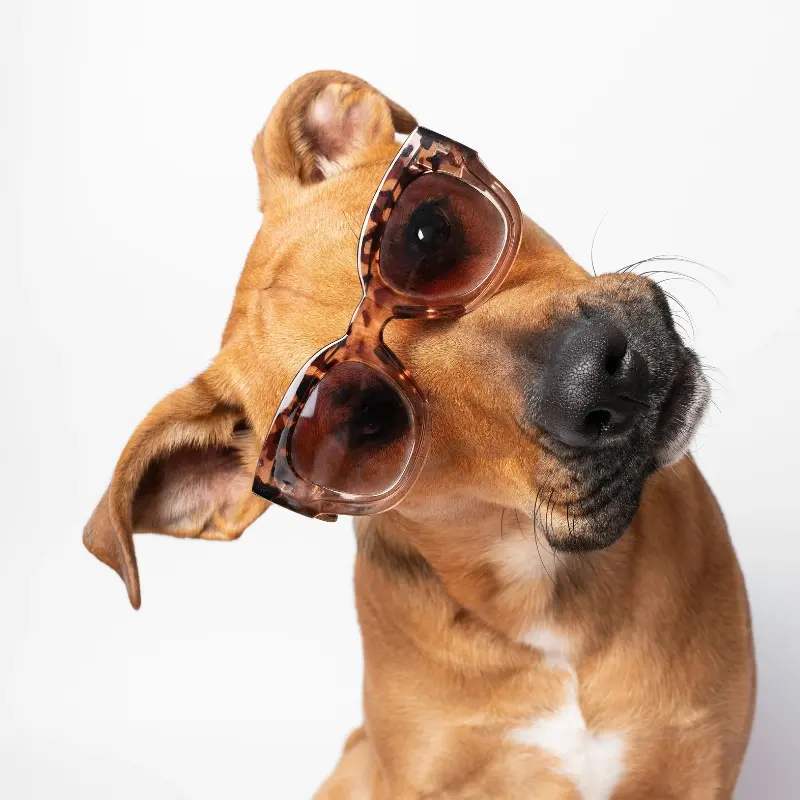
Not every tinted lens does the same job, even if it looks identical in a product photo.
Real UV protection requires a lens rated UV400, blocking both UVA and UVB light, along with a frame and strap system that holds the lens securely in place during normal pet movement. Tint alone does nothing — a dark lens can still let most UV light straight through if the material and coating aren’t specified correctly.
Lens thickness is one of the easiest specs to overlook and one of the easiest to get wrong. Independent testing on low-cost novelty pet sunglasses has found lenses as thin as 0.5mm, well under the roughly 1.5mm minimum typically used for impact-resistant human eyewear, letting nearly all incoming UV radiation straight through despite a tinted appearance. A dark lens tells a buyer nothing about UV performance on its own; it only tells them the world will look darker to the pet wearing it — and since no official body currently sets a minimum standard here, verifying the actual spec is left entirely to the buyer.
hem the world will look darker to the pet wearing it.
This is where sourcing decisions matter more than marketing copy. Polycarbonate remains the standard lens material for genuine protective pet eyewear because it combines shatter resistance with the ability to hold a proper UV400 coating. Pairing that lens with a frame and strap system that keeps it correctly positioned over the eye matters just as much — as covered in pet eyewear construction and materials, even a properly rated lens won’t do its job if it slides or tilts during normal movement. A factory that understands this distinction can build two very different product lines under the same “pet sunglasses” category: one for the fashion buyer, and one that a vet-referred customer can actually rely on.
How to Tell If Your Pet (or Your Customer) Actually Needs Protective Eyewear
Not every question about pet eye protection needs a vet visit to answer, but some do.
A pet likely benefits from real protective eyewear if it has a diagnosed eye condition, spends heavy time in bright sun or harsh outdoor conditions, or is recovering from eye surgery. A pet with none of these factors is a fashion buyer, and that’s a perfectly valid market — as long as the product is labeled honestly.
For dog owners and brands selling to them, the practical checklist looks like this: has a vet mentioned pannus, cataracts, glaucoma, or light sensitivity? Does the dog ride with its head out of the car window, work outdoors, or spend long hours hiking, biking, or on the water? Does the dog belong to a brachycephalic breed with exposed, protruding eyes? Any “yes” points toward a genuine protective need, not just a styling choice.
For cats, the checklist is shorter and the threshold higher: heavy daily outdoor exposure, a specific vet-diagnosed light sensitivity, or post-surgical recovery. Outside of those cases, cat sunglasses sit almost entirely in the fashion and photo-prop category, and that’s fine to build and sell, provided the marketing matches the product.
For a brand working with a factory, this checklist is also a product-line decision. Fashion buyers and protection buyers rarely want the same frame, lens, or price point, and trying to serve both with one generic “pet sunglasses” SKU usually satisfies neither.
Conclusion
Most pets don’t need eye protection — but the ones that do need real UV400 lenses and secure straps, not a tinted lens that only looks the part.
Frequently Asked Questions
Do all dogs need to wear sunglasses?
No. Most healthy dogs never need eye protection. Vets recommend it mainly for dogs with pannus, cataracts, glaucoma, or iris atrophy, plus dogs with higher physical risk from breed traits or an active outdoor lifestyle.
Can cats safely wear sunglasses?
Some cats can, but most healthy indoor cats don’t need to. Outdoor cats with heavy sun exposure, diagnosed light sensitivity, or post-surgical recovery are the main cases where a vet might recommend protective eyewear.
How can I tell if pet sunglasses actually block UV light?
Check for a UV400 rating specifically, not just a tinted lens. Dark tint alone doesn’t block UVA or UVB rays; the lens material and coating have to be rated and tested to make that claim accurate.
What eye conditions in pets benefit most from protective eyewear?
Pannus (chronic superficial keratitis), cataracts, glaucoma, and iris atrophy are the conditions most often mentioned by vets. In each case, a vet should confirm the diagnosis before recommending specific eyewear.
Is it wrong to sell pet sunglasses purely for fashion?
No, as long as the product isn’t marketed with protective claims it can’t back up. A costume-grade novelty item and a real UV400 protective frame can both be legitimate products — they just need honest labeling.
Let's get started!
Get in touch with a custom eyewear specialist now for a free consultation and instant price quote.
WHATSAPP ME GO!
📱 Scan with your phone to start chatting