Pet Eyewear Safety Standards: UV Protection, Impact Resistance, and What Buyers Should Ask For
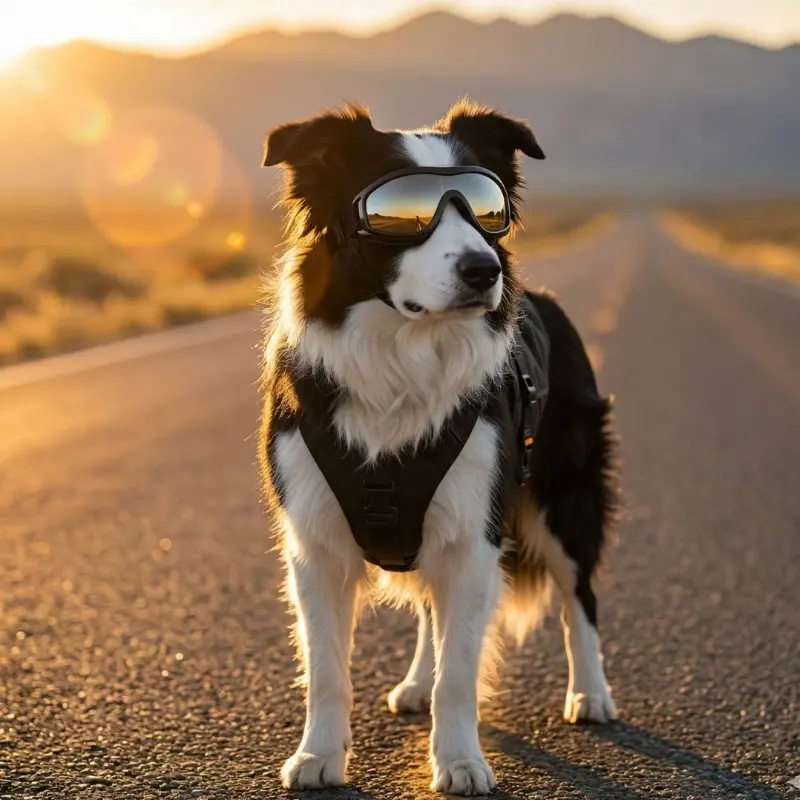
A supplier tells you their dog goggles are “ANSI certified.” Sounds solid, until you find out ANSI never wrote a standard for pet eyewear in the first place — and neither did anyone else.
No government body or international standards organization has published a mandatory safety standard for pet eyewear. Suppliers who claim strong UV or impact protection are almost always borrowing standards written for human occupational eyewear, like ANSI Z87.1 or MIL-PRF-32432, as a voluntary benchmark rather than a legal requirement.
Here’s the deal. That’s not automatically a red flag — borrowing a solid human standard is a reasonable way to test a product. But it does mean the burden of proof sits entirely with the supplier’s actual testing, not with a legal minimum nobody has to meet. Knowing that changes what you should be asking for.
Why There’s No Official Safety Standard for Pet Eyewear
Search for “pet eyewear safety regulation” and you’ll come up mostly empty. That’s not a gap in the research — it’s the actual state of the industry.
The US Consumer Product Safety Commission (CPSC) and the EU’s General Product Safety Regulation both cover consumer products broadly, but neither has issued a standard specific to pet eyewear. ASTM’s pet products subcommittee has only published one pet-specific standard so far, covering dog vehicle harnesses — eyewear isn’t on that list yet.
CPSC has said directly that it doesn’t classify most pet products the way it classifies children’s products, and it generally only steps in after an injury is reported, not before. ASTM formed a dedicated pet products subcommittee (F15.05) a few years back specifically because there was no unified testing protocol for anything pets wear or use, from harnesses to toys. That subcommittee is actively working on standards for dog toys, collars, and crates. As of now, eyewear hasn’t reached that stage.
This matters for anyone sourcing or building a pet eyewear line, because it means there’s no compliance checklist to hand a factory and no government mark to demand on a product label. The responsibility for proving a lens actually blocks UV light or resists impact sits with whatever testing the factory chooses to run, and whether they can show you the results.
UV Protection: What “UV400” Actually Means for Pet Eyewear
UV400 shows up on nearly every pet sunglasses listing, but it’s worth knowing exactly what that number is measuring before you take it at face value.
UV400 means the lens blocks light wavelengths up to 400 nanometers, covering both UVA and UVB radiation. It’s a lens material and coating specification, not a pet-specific rating — the same UV400 standard used in human sunglasses. Tint color alone doesn’t confirm a lens meets it.
A UV400 rating comes from the lens material and its coating, not from how dark the lens looks. As covered in what pet sunglasses are actually made of, polycarbonate is the standard lens material for real protection because it holds a UV coating reliably and resists shattering at the same time. A dark tint without the right material or coating underneath can still let most UV radiation straight through — the lens just makes the world look darker to the animal wearing it, without doing the actual filtering job.
For a buyer, the practical takeaway is to ask for the coating specification and, ideally, a lens transmittance test report, not just a UV400 label on a spec sheet. A lot of fashion-grade eyewear fails this test even when it looks convincing on a product photo, which is worth keeping in mind when weighing a fashion buy against a genuine protective one. A supplier who can produce actual transmittance data — even a basic in-house test — is already ahead of most of the category.

Impact Resistance: What ANSI Z87.1 and MIL-Spec Testing Tell You (and What They Don’t)
Impact resistance is where the human-standard borrowing gets more visible, because a handful of premium pet goggle brands actively market their ANSI or military-spec test results.
ANSI Z87.1 is a US standard for occupational eyewear that tests high-velocity impact, high-mass impact, and penetration resistance. MIL-PRF-32432 is a stricter US military spec involving higher-speed projectile testing. Neither standard is written for or legally required of pet eyewear — brands cite them as a voluntary quality benchmark.
| Standard | What it tests | Typical test method | Legally required for pet eyewear? |
|---|---|---|---|
| ANSI Z87.1 | Impact, penetration, optical clarity, dust, liquid splash | Steel ball fired at lens at high speed; 500g weight dropped from 50 inches | No |
| ANSI Z87+ | Higher-tier impact resistance under Z87.1 | Same tests, stricter pass thresholds | No |
| MIL-PRF-32432 | High-velocity impact and penetration | .22-cal projectile at 580–590 ft/second | No |
Passing either standard means a lens and frame held up under a specific, defined lab test — that part is real and verifiable. What it doesn’t mean is that the product is “certified for pets” in any official sense, since neither ANSI nor the US military wrote these standards with animal anatomy, strap systems, or head shapes in mind. A pet goggle that passes ANSI Z87.1 has proven its lens and frame can survive a specific impact event. It hasn’t proven the strap will stay secure on a Labrador’s head during a full sprint, which is a separate engineering question these standards don’t touch.
For sourcing purposes, this distinction is useful rather than discouraging. A factory that tests against ANSI or MIL-spec methods, even informally, is applying a real, repeatable benchmark instead of guessing. A factory that can’t explain what test method backs up an “impact resistant” claim is offering a marketing phrase instead of a spec.
What to Ask a Pet Eyewear Supplier Before You Order
Since no regulator is going to check this for you, the questions you ask before placing an order carry more weight than they would in a category with mandatory certification.
Buyers should ask for the exact lens material and thickness, the specific UV coating and any transmittance test data, which impact standard (if any) the frame and lens were tested against, and whether third-party test reports exist versus in-house claims only.
Lens material and thickness come first, because this is the spec most likely to get quietly downgraded to cut cost without changing how the product looks in a listing photo. Ask for the material grade (polycarbonate versus lower-cost acrylic) and a thickness figure in millimeters, not just a general description like “impact-resistant.”
UV coating and test data come next. A supplier who can produce even a basic transmittance test result is showing you real data instead of a label. If they can’t produce anything beyond “UV400” printed on a spec sheet, treat that as a starting point for questions, not a finished answer.
Impact testing is worth asking about directly, especially for goggles marketed for active or working dogs. A straightforward question — “what standard or method did you test this frame and lens against” — tends to separate factories with a real quality process from those repeating a phrase they found on a competitor’s listing.
Third-party versus in-house testing is the last filter. In-house testing isn’t automatically unreliable, but a third-party lab report carries more weight for retail compliance, marketplace requirements, and simply proving a claim to your own customers later.
Reading a Pet Eyewear Spec Sheet: Materials, Coatings, and Test Reports
A spec sheet should answer the questions above before you have to ask them. If it doesn’t, that’s information too.
A complete pet eyewear spec sheet lists frame material and hardness, lens material and thickness, UV coating type with a transmittance figure, strap material and load rating, and any impact or safety test method referenced, along with whether results came from a third-party lab.
Frame material and hardness set the baseline. A soft TPR frame and a rigid PC frame carry different comfort and strap-load implications, much like the construction differences between dog goggles and dog sunglasses — both should be specified explicitly on a spec sheet rather than left as “durable plastic.”
Lens material, thickness, and coating make up the core protective spec. A number in millimeters and a named coating type (UV400, anti-fog, scratch-resistant) tell you more in five seconds than a paragraph of marketing copy.
Strap material and load rating matter more for active or working-dog products than for fashion lines, but they belong on every spec sheet regardless, since a lens that meets every optical standard still fails in practice if the strap lets go during normal movement — the tradeoffs between different strap hardware options are covered in more depth in strap systems and lens protection design.
Test method and lab source close out the sheet. Even a short note — “tested against ANSI Z87.1 impact method, in-house lab” — gives a buyer more to work with than a bare claim, and it signals a factory that treats safety as a specification, not a slogan.
Conclusion
No regulator sets the bar for pet eyewear safety, which means the factory’s test data does — ask for the specs, not just the claims.
Frequently Asked Questions
Is there an official safety certification for pet sunglasses or goggles?
No. Neither the CPSC, the EU’s product safety regulation, nor ASTM has published a mandatory standard specific to pet eyewear. Suppliers who cite ANSI Z87.1 or MIL-PRF-32432 are borrowing human occupational standards as a voluntary benchmark.
What does UV400 mean on a pet eyewear listing?
UV400 means the lens blocks light wavelengths up to 400 nanometers, covering UVA and UVB radiation. It describes the lens material and coating, not the tint color, and a dark lens without the right coating may not meet it.
Does passing ANSI Z87.1 mean a product is certified for pets?
No. ANSI Z87.1 is a human occupational eyewear standard. Passing it shows the lens and frame survived a specific impact test, but it doesn’t cover pet-specific factors like strap security on an animal’s head or fit across breeds.
What should I ask a pet eyewear factory before placing an order?
Ask for exact lens material and thickness, the UV coating type with any transmittance data, which impact standard (if any) was used for testing, and whether test reports came from a third-party lab or in-house testing only.
Why doesn’t the government regulate pet eyewear safety?
Agencies like the CPSC generally focus on products that pose risks to people, and most pet products fall outside their routine oversight. Industry groups like ASTM are building voluntary standards for some pet products, but eyewear isn’t covered yet.
Let's get started!
Get in touch with a custom eyewear specialist now for a free consultation and instant price quote.
WHATSAPP ME GO!
📱 Scan with your phone to start chatting