Private Label Pet Sunglasses: Packaging, Branding, and Launching Your Own Line
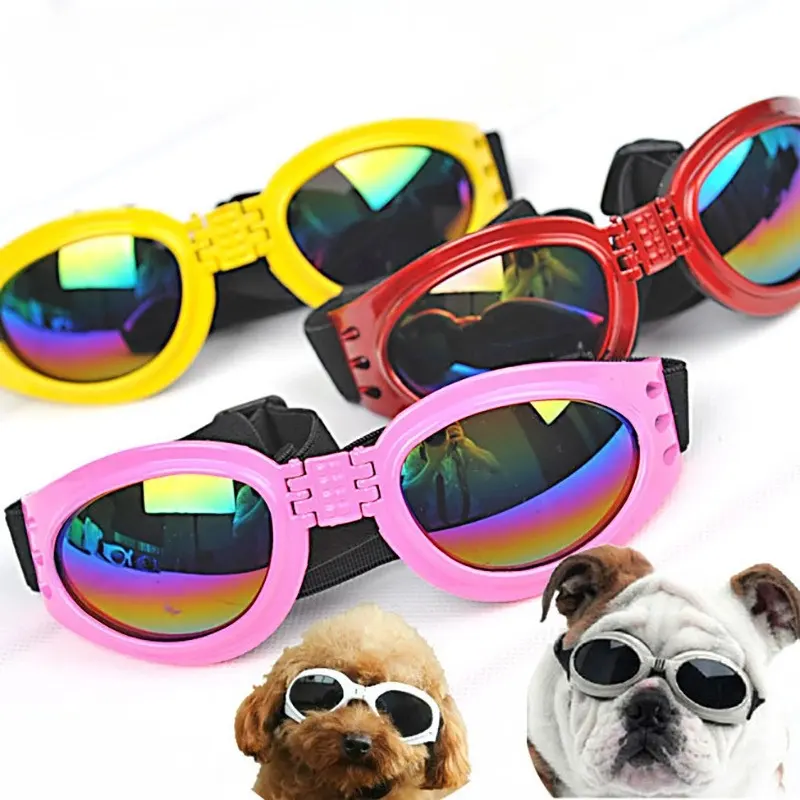
Most first-time pet eyewear brands either over-invest in packaging before they know what sells, or under-invest and end up with a product that looks like everyone else’s. Both mistakes come from skipping the same step: deciding which level of private label the brand actually needs right now.
Private label pet sunglasses generally run through three levels: basic branding on an existing frame, upgraded lenses and packaging once sales data exists, and full custom mold development once the market is proven. Most first launches are better served starting at level one than jumping straight to a custom design.
Here’s the deal. A brand that skips ahead to full customization before it has sales data to justify the investment usually ends up carrying inventory risk it didn’t need to take on. What follows is how to sequence a launch so packaging, branding, and product development all match where the brand actually is.
Three Levels of Private Label Pet Sunglasses
Private label gets used as a catch-all term, but it covers a wide range of actual commitment, and knowing which level fits a brand’s current stage changes almost every decision downstream.
Level one is basic branding on an existing frame — a logo on the temple or packaging, no new tooling. Level two adds better lenses, refined color options, and upgraded packaging once early sales validate the product. Level three is full custom mold development, justified once order volume and market fit are proven.
| Level | What changes | Best for |
|---|---|---|
| 1. Basic branding | Logo, packaging, existing frame | New brands testing the market |
| 2. Upgraded product | Better lens coatings, refined colors, premium packaging | Brands with early sales data |
| 3. Full custom mold | Exclusive frame shape, strap system, size range | Proven demand, ready to scale |
Level one keeps risk low by design. As covered when comparing logo-only customization to full custom mold, starting with an existing frame keeps MOQ and sampling time manageable, which matters most when a brand is still confirming whether pet eyewear is the right product for its audience in the first place.
Level two is where a brand with early traction differentiates without the cost of a new mold. This usually means moving from a basic lens to one with real UV400 and anti-fog coatings, tightening the color lineup to what actually sold, and upgrading from a basic pouch to branded packaging that better reflects the brand’s positioning.
Level three only pays off once a brand has evidence the investment is worth it — proven sales volume, a clear gap in fit or function that existing frames don’t solve, or a strap and lens cup design tailored to a specific buyer segment, along the lines covered when comparing strap and lens design choices. Jumping here before levels one and two have generated real data is the most common way a first launch overspends before it has proof the spend will pay off.
Logo Application Methods: What Actually Works on Pet Eyewear
The logo method matters more on pet eyewear than most first-time brands expect, since a product that gets pawed at, chewed near, and occasionally rained on has different durability needs than something that lives in a pocket.
Common logo application methods for pet eyewear include hot stamping (pressed foil or ink on the frame, usually near the strap anchor or temple area), laser engraving (etched directly into the frame material), and molded logos (built into the frame during injection molding). Each has different durability and cost tradeoffs.
Hot stamping is the most common method for a first private label order, since it’s fast, relatively low-cost, and works well on both rigid PC and softer TPR surfaces. The tradeoff is durability over time — a stamped logo on a frame that gets frequent water exposure or rough handling can fade or wear faster than other methods.
Laser engraving cuts the logo directly into the frame surface rather than applying something on top of it, which makes it more resistant to fading and abrasion. It works best on rigid materials and shows up more clearly on darker frame colors, since the engraving typically exposes a lighter layer underneath.
Molded logos are built into the mold itself, which means they’re only available at the full custom development level rather than on an existing frame. Since mold investment is a one-time cost tied to frame development, a molded logo only makes financial sense once a brand has already committed to a custom mold for other reasons — it’s rarely worth developing a mold for logo placement alone.
Packaging That Builds Brand Trust, Not Just Looks
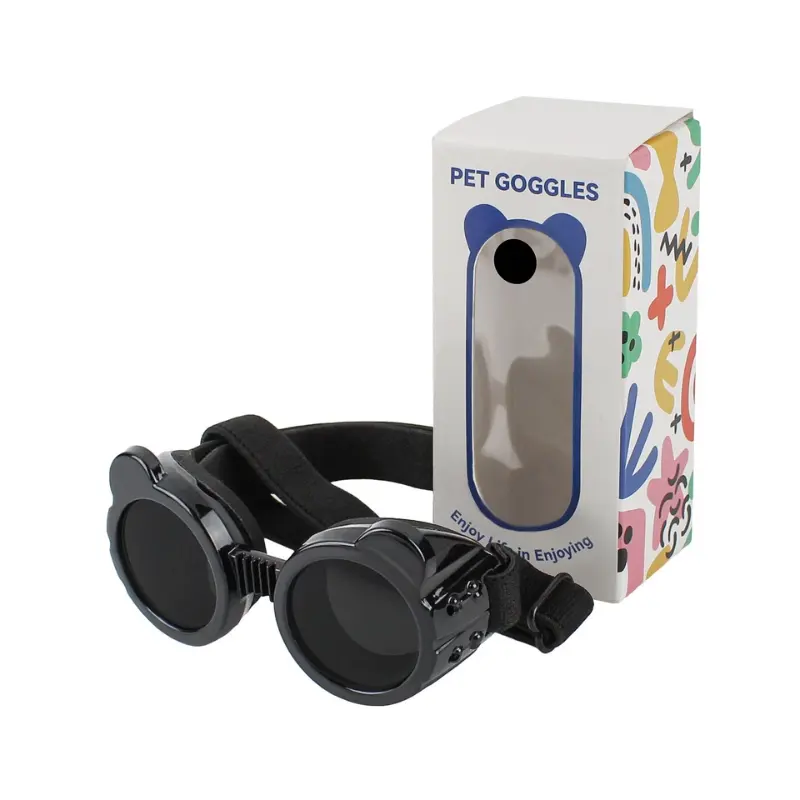
Packaging on a pet product does more work than packaging on most consumer goods, since the buyer is making a decision on behalf of an animal that can’t weigh in on the purchase.
Effective pet eyewear packaging balances presentation with practical information: sizing guidance, care instructions, and honest material or protection claims. A basic pouch and cleaning cloth suits an online-first, budget-conscious launch; a branded box with hangtag and barcode suits retail shelf placement or a premium positioning.
Packaging tier should match the sales channel rather than a fixed idea of what “professional” looks like. A product sold primarily through an online marketplace listing gets little practical benefit from a retail hangtag and barcode system, since most of the buying decision happens on a product page rather than a physical shelf. A product headed for pet boutiques or specialty retail genuinely needs that packaging to function at the point of sale.
Sizing and fit information belongs on packaging regardless of tier, since fit is one of the most common reasons a pet eyewear purchase gets returned. A brief measurement guide printed on the box or insert, rather than buried only on a website, reduces the odds of a mismatched purchase before it happens.
What Not to Put on Your Packaging
This is the point where private label branding for pet eyewear diverges most from general sunglasses branding advice, and it’s worth being direct about it.
Avoid printing unverified protection claims on packaging — “UV protection,” “impact resistant,” or “certified safe” only belong on packaging if the lens and frame actually meet a specific, testable standard. Since there’s no official pet eyewear safety certification, any claim printed on packaging should be backed by real material specs, not marketing language borrowed from a competitor’s listing.
This matters more than it might seem for a small brand, because there’s no regulator checking pet eyewear safety claims before a product reaches a shelf. That absence of oversight means the brand carries the full weight of any claim it prints, and a buyer who discovers a “UV protection” label doesn’t match the actual lens coating has grounds for more than a bad review.
The safer approach is packaging language that matches what the factory can actually verify — a specific coating name, an actual lens material, a strap type — rather than a broad protective claim with nothing behind it. This is also a genuine differentiation opportunity: a brand whose packaging makes specific, accurate claims stands out against a market where most competitors print generic protection language with no data to support it.
Planning Your Launch: From First Order to Scaling Up
A launch plan built around the private label levels above tends to avoid the two most common first-order mistakes: overbuilding before the market responds, and underbuilding to the point that the product looks generic.
A practical launch sequence starts with a level-one order in a manageable size range and a small color lineup, tracks return rates and customer feedback closely, then reinvests in lens quality and packaging once sales data supports it. Full custom mold development comes last, once demand and fit requirements are clear.
Starting small on SKU count is worth the discipline it requires. A first order spread across too many colors or two sizes stretches attention and inventory thin without giving any single SKU enough volume to actually learn from. Two to three colors in a small-to-medium size range is usually enough to test both product-market fit and initial demand.
Watching return rates and fit-related complaints in the first few months tells a brand more than sales volume alone. A product selling reasonably well but generating consistent size-related returns points toward a sizing or strap adjustment before the next order, not a packaging upgrade — the two problems get solved differently, and mixing them up wastes the next production cycle.
Reinvestment should follow evidence rather than confidence. Once a color or size consistently outperforms the others, that’s the signal to expand the lineup, upgrade packaging, or start scoping what a custom mold would actually need to solve — rather than guessing at level three before level one has generated the data to justify it.
Conclusion
Start at the level your sales data supports, not the level that looks most impressive — build up from there, and the rest of the launch gets a lot less risky.
Frequently Asked Questions
What’s the easiest way to start a private label pet sunglasses brand?
Start at level one: an existing frame with your own logo and basic packaging. This keeps MOQ and sampling time low, letting you test the market before committing to lens upgrades, premium packaging, or a custom mold.
What logo application methods work best on pet eyewear?
Hot stamping is common for first orders due to lower cost, though it can fade with heavy wear. Laser engraving is more durable since it’s etched into the frame rather than applied on top. Molded logos only apply once you’ve committed to a custom mold.
Should I print “UV protection” on my packaging?
Only if the lens actually meets a verified UV400 standard with real coating data behind it. Since there’s no official pet eyewear safety certification, unverified claims put the liability entirely on your brand if a customer questions them.
How much should I invest in packaging for a first order?
Match packaging to your sales channel. A basic pouch and cleaning cloth suits an online-first launch; a branded box with hangtag and barcode makes more sense once you’re placing product in retail stores.
When should I move from logo-only customization to a custom mold?
Once you have proven sales volume and a clear gap in fit or function that existing frames don’t solve. Jumping to a custom mold before level one and two generate real sales data is the most common way a first launch overspends.
Let's get started!
Get in touch with a custom eyewear specialist now for a free consultation and instant price quote.
WHATSAPP ME GO!
📱 Scan with your phone to start chatting