Custom Pet Sunglasses for Your Brand: MOQ, Materials, and What to Specify
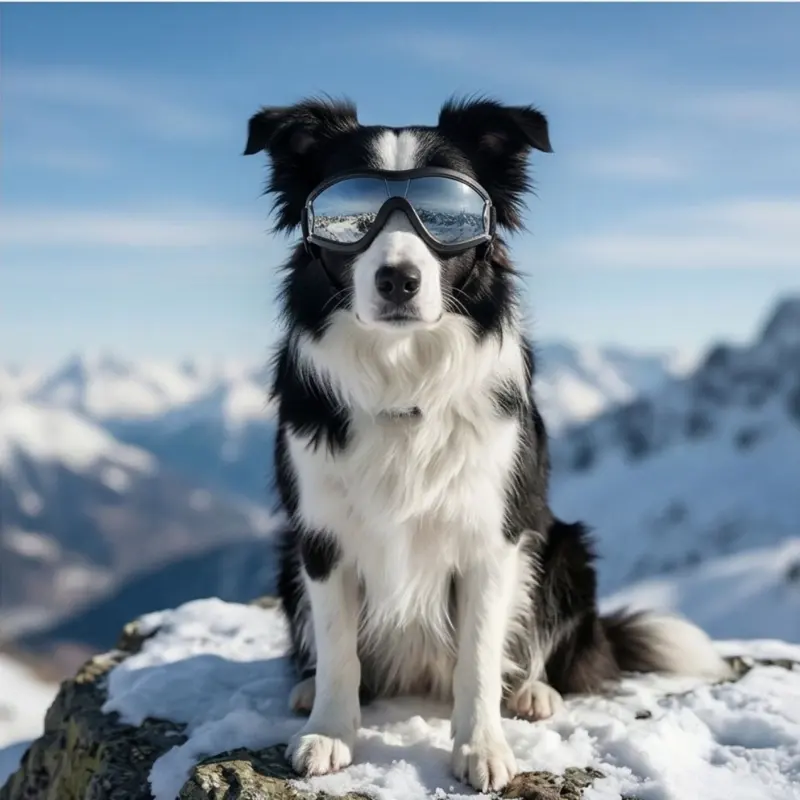
Most brands lose weeks on a first pet eyewear order not because a factory is slow, but because nobody specified the frame material, lens coating, or size range clearly enough to quote against.
Custom pet sunglasses generally follow two paths: logo-only customization on an existing frame, or a fully custom mold built to your own design. The first path keeps MOQ low and sampling fast. The second gives full control over frame shape, size range, and branding, at a higher MOQ and longer lead time.
Here’s the deal. Picking the wrong path for your brand’s current stage is the single biggest reason first orders go sideways. What follows is what actually needs deciding before you request a quote.
Two Paths to Custom Pet Sunglasses: Logo-Only vs. Full Custom Mold
Every custom pet eyewear project starts with one decision, and it shapes everything downstream: cost, lead time, and how much risk sits on the first order.
Logo-only customization uses an existing frame mold with your branding added — usually a printed or embossed logo, custom packaging, or a specific color combination. Full custom mold development builds a frame from your own design, giving control over shape, strap system, and size range, but at a higher MOQ and longer development timeline.
Logo-only customization is the lower-risk starting point for a new brand. Since no new mold gets cut, sampling moves faster and MOQ stays lower, which makes this path suited to testing a design or a market before committing to a bigger order. The tradeoff is limited differentiation — competitors sourcing from the same factory can access the same base frame.
Full custom mold development is the path for a brand with a specific design, a proven market, or a functional requirement an existing frame doesn’t meet — a particular lens cup depth for brachycephalic breeds, for example, or a strap system built for a specific activity. This path takes longer and costs more upfront, but the resulting frame is exclusive to the brand that commissioned it.
Neither path is automatically the “better” one. A new brand testing pet eyewear as a product line extension is usually better served starting with logo-only customization, then moving to a custom mold once a design proves out in the market. A brand entering with a clear functional gap to fill — a size range competitors don’t cover, for instance — often has good reason to start with a custom mold from day one.
What MOQ Actually Looks Like for Pet Eyewear
MOQ is the number that determines whether a project is realistic for a brand’s current order size, and it varies more than most first-time buyers expect.
Logo-only pet eyewear orders typically start in the range of 100–300 units per style, since no new tooling is involved. Full custom mold projects usually require around 1,200 units per style, depending on frame material and mold complexity, often split across a limited number of color combinations.
The MOQ gap between these two paths comes down to what the factory has to set up before the first unit rolls off the line. Logo-only orders use existing tooling, so the minimum mainly covers efficient material sourcing and labor scheduling. Custom mold orders have to cover the mold’s own cost and the labor required to develop, test, and confirm it, which only makes financial sense spread across a larger unit count.
Color and combination limits often sit inside these MOQ numbers rather than on top of them. It’s common for a factory to structure an order as, say, 1,200 units total across three or four frame-and-lens color combinations, rather than requiring a full MOQ commitment on a single color. Locking this down before requesting a quote avoids a round of back-and-forth once numbers are already on the table.
For a brand weighing whether to commit, MOQ shouldn’t be evaluated in isolation from mold cost and sample lead time. A lower-MOQ path with a higher per-unit price can work out cheaper for a first order than a lower-per-unit price locked behind a large custom-mold commitment.
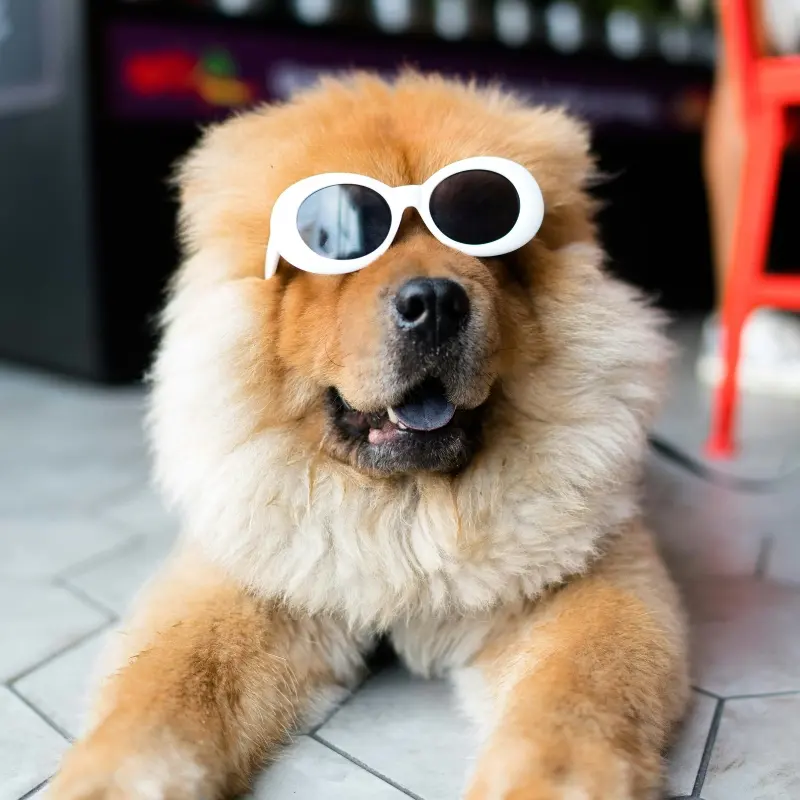
Materials to Specify: Frame, Lens, and Strap
Material decisions made loosely tend to surface as quality issues after the first shipment, not before — which is exactly why they belong in the initial spec, not in a post-production conversation.
A complete pet eyewear material spec covers frame material (TPR, rubber, or PC), lens material and coating (polycarbonate with UV400), and strap type (elastic, nylon webbing, or hook-and-loop). Each choice affects unit cost, durability, and which segment of buyers the product actually fits.
Frame material sets the baseline for feel and durability, and the choice between a soft TPR or rubber frame and a rigid PC frame comes with real tradeoffs, covered in more detail when comparing pet eyewear construction options — a softer frame flexes and tolerates rough handling, while a harder frame holds a sharper shape but needs a more forgiving strap system.
Lens material and coating decide whether the finished product delivers on any UV or impact-protection claim. Since there’s no official pet eyewear safety standard to fall back on, it’s worth specifying an exact coating type and requesting a transmittance figure at the sampling stage, rather than accepting “UV protection” as a line item without detail.
Strap type should match the product’s actual use case rather than defaulting to whatever’s cheapest. An elastic band suits a fashion-first line where the product won’t see heavy daily wear, while nylon webbing with an adjustable buckle holds up better for goggles marketed to active or working dogs. Specifying strap material without specifying the buyer segment it’s built for is one of the more common gaps in a first-time order.
What to Specify Before You Request a Quote
A factory can only quote accurately against a spec that’s actually complete. A vague brief gets a vague quote, and a vague quote tends to shift once real numbers come into the conversation.
Before requesting a quote, specify the customization path (logo-only or custom mold), frame and lens materials, strap type, target size range across breed categories, color and combination count, packaging level, and any coatings or test standards required.
Size range deserves its own line item rather than a passing mention. A size grid decided after tooling starts is far more expensive to fix than one specified upfront, which is the core lesson from pet eyewear sizing and fit. Deciding on three to four standard sizes plus a brachycephalic-specific option before requesting a quote keeps that decision out of a costly remolding conversation later.
Packaging level changes unit cost more than most first-time buyers expect. A basic pouch-and-cloth setup and a retail-ready box with hangtag and barcode sit at very different price points, and specifying this upfront prevents a quote from arriving priced for one packaging tier while the brand was picturing another.
Color and combination count belongs in the same conversation as MOQ, since the two are directly linked. Deciding on three colorways instead of six, for example, can be the difference between hitting a comfortable per-color minimum and stretching thin across too many small batches.
From Sample to Bulk Production: What the Timeline Actually Looks Like
Once the spec is locked, the project moves through a fairly predictable sequence, and knowing the shape of that sequence in advance makes it much easier to plan a launch date around it.
For a logo-only order, sampling typically takes 1–2 weeks before moving to bulk production. For a full custom mold project, expect design and mold development first, followed by sample confirmation, then bulk production — a process that commonly runs two to three months from confirmed design to finished goods.
Logo-only orders move fastest because the frame tooling already exists. Once branding, color, and packaging are confirmed, the main step left is a quality sample run before bulk production begins, which keeps the overall timeline closer to weeks than months.
Custom mold projects run through more stages: a design and drawing phase, mold development, a trial sample for confirmation, and only then bulk production. Mold development is the single longest step in this sequence, and it’s also the stage most likely to stretch if a design change comes in after the mold is already underway — which is the strongest argument for locking materials, size range, and strap system before this phase starts rather than during it.
Quality control should run through the whole sequence rather than showing up only at the end. A factory checking incoming materials, in-process work, and finished units at multiple points catches problems while they’re still cheap to fix, rather than after a full batch has already been packed and is waiting to ship.
Conclusion
Choosing logo-only or full custom mold, then locking materials and size range before quoting, is what keeps a pet eyewear launch on schedule and on budget.
Frequently Asked Questions
What’s the minimum order quantity for custom pet sunglasses?
Logo-only orders on an existing frame typically start around 100–300 units per style. Full custom mold projects usually require around 1,200 units per style, depending on material and mold complexity, often split across a limited number of color combinations.
Can I start with logo-only customization before committing to a custom mold?
Yes, and it’s often the lower-risk path for a new brand. Starting with an existing frame and your own branding keeps MOQ and sampling time lower, letting you test the design in the market before committing to a full custom mold.
What materials should I specify for custom pet eyewear?
Specify frame material (TPR, rubber, or PC), lens material and coating (typically polycarbonate with UV400), and strap type (elastic, nylon webbing, or hook-and-loop). Each choice affects cost, durability, and which buyer segment the product suits.
How long does custom pet eyewear production take?
A logo-only order typically takes 1–2 weeks for sampling before bulk production. A full custom mold project usually runs two to three months total, covering design, mold development, sample confirmation, and bulk production.
What information should I send a factory before requesting a quote?
Share your customization path, frame and lens material preferences, strap type, target size range, color and combination count, packaging level, and any specific coatings or test standards you need — a complete spec gets a more accurate quote.
Let's get started!
Get in touch with a custom eyewear specialist now for a free consultation and instant price quote.
WHATSAPP ME GO!
📱 Scan with your phone to start chatting