What Are Pet Sunglasses and Dog Goggles? Types, Construction, and the Real Difference
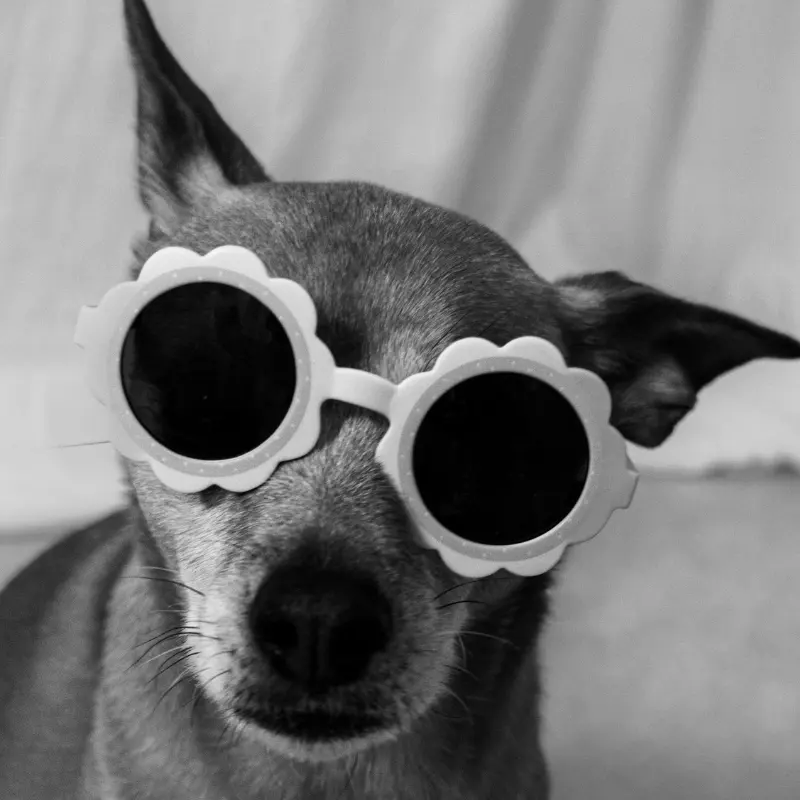
Search “dog sunglasses” and you’ll see shades, goggles, and “doggles” all mixed together. Pick the wrong style and your dog’s eyes stay exposed, or your brand ships a product that keeps falling off.
Pet eyewear falls into two main types: open-frame sunglasses and closed-fit goggles. Sunglasses sit like human shades and work for casual sun glare, while goggles seal around the eye socket and block wind, dust, and impact. The frame style you pick decides what your product actually protects against.
Here’s the deal. The terms get thrown around like they mean the same thing. They don’t. If you’re sourcing or building a pet eyewear line, that difference changes your material choice, your strap design, and your price point.
What Is Pet Eyewear, Exactly?
Pet eyewear is any frame-and-lens product built to sit on an animal’s face and shield its eyes. Most of it is made for dogs, though cat and small-animal versions exist too.
Pet eyewear covers three jobs: blocking UV light, shielding eyes from wind and debris, and covering the eye during recovery from surgery or injury. A single product can do one job or all three, depending on the frame, lens, and strap design.
Unlike human eyewear, pet eyewear doesn’t sit on a nose bridge and ears. It needs a strap system instead, because a dog’s face has no ears positioned to hold a temple arm in place, and a flat nose bridge won’t grip a frame the way a human nose does. That’s the first design problem every pet eyewear factory has to solve, and it’s why pet frames look nothing like scaled-down human sunglasses.
Vets group pet eyewear by purpose. Some pieces are sun protection only. Others are built for dogs with pannus, cataracts, or glaucoma, where a vet has recommended UV-blocking lenses. A third group covers eyes recovering from surgery, sitting closer to a soft, padded shield than a pair of shades. Each purpose calls for a different lens tint, a different seal around the eye, and a different strap tension. A factory building a general fashion line and a factory building post-surgical recovery eyewear are not making the same product, even if both get called “pet sunglasses” on a marketplace listing.
Dog Goggles vs. Dog Sunglasses: What’s the Real Difference?
Ask five pet owners and you’ll get five different answers. Most don’t know that goggles and sunglasses are built on two different frame structures.
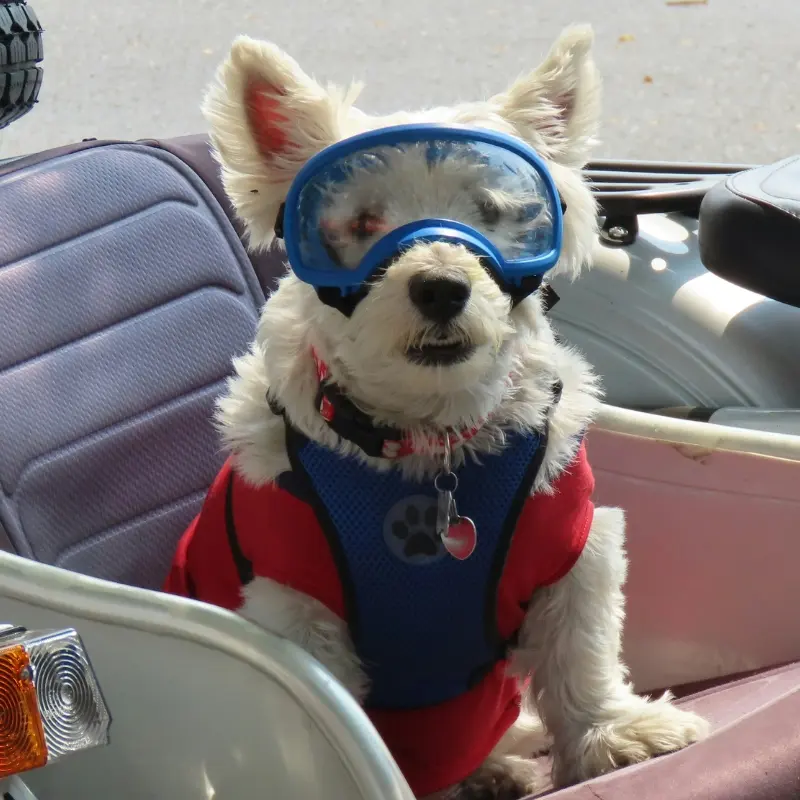
Dog goggles use a closed, wraparound frame that seals fully around the eye socket, similar to swim goggles. Dog sunglasses use an open frame, similar to human shades, that shades the eyes but leaves gaps at the sides. Goggles block wind and debris; sunglasses mainly cut glare.
| Feature | Dog Goggles | Dog Sunglasses |
|---|---|---|
| Frame style | Closed, wraparound | Open-sided |
| Best for | Wind, dust, impact, post-surgery | Sun glare, casual wear |
| Lens cup depth | Deep, fits over bulging eyes | Shallow |
| Strap system | Head strap + chin strap common | Single elastic band |
| Typical buyer | Active or working dogs | Everyday, fashion-first pets |
The lens cup depth matters more than most buyers realize. A flat-faced breed like a Pug or a French Bulldog has eyes that sit close to the surface of its face. A shallow lens cup will press straight onto the eyeball. Goggles built for these breeds need a deeper cup so the lens never touches the eye, no matter how the dog moves its head.
Strap systems tell the same story. A basic pair of sunglasses might use one elastic loop that runs behind the ears. Goggles built for motorcycle rides, hiking, or working dogs use two straps, one over the head and one under the chin, so the frame can’t shake loose. If you’re specifying a new mold, this is the detail to lock down early. A strap point placed too far back will slide off a narrow-skulled breed; placed too far forward, it’ll ride up onto the ears of a floppy-eared breed. The hardware behind these straps varies more than it looks from the outside, which is worth understanding in more detail when comparing strap systems and lens protection design.
What Are Pet Sunglasses Made Of? (Construction and Materials)
A pair of pet sunglasses looks simple from the outside. Underneath, three separate material choices decide whether it lasts a season or falls apart in a week.
Pet eyewear frames are usually built from soft TPR or rubber for flexibility, or PC (polycarbonate) for a firmer shape. Lenses are almost always polycarbonate for shatter resistance, with a UV400 coating. Straps are elastic, nylon webbing, or adjustable hook-and-loop, chosen based on how active the dog will be.
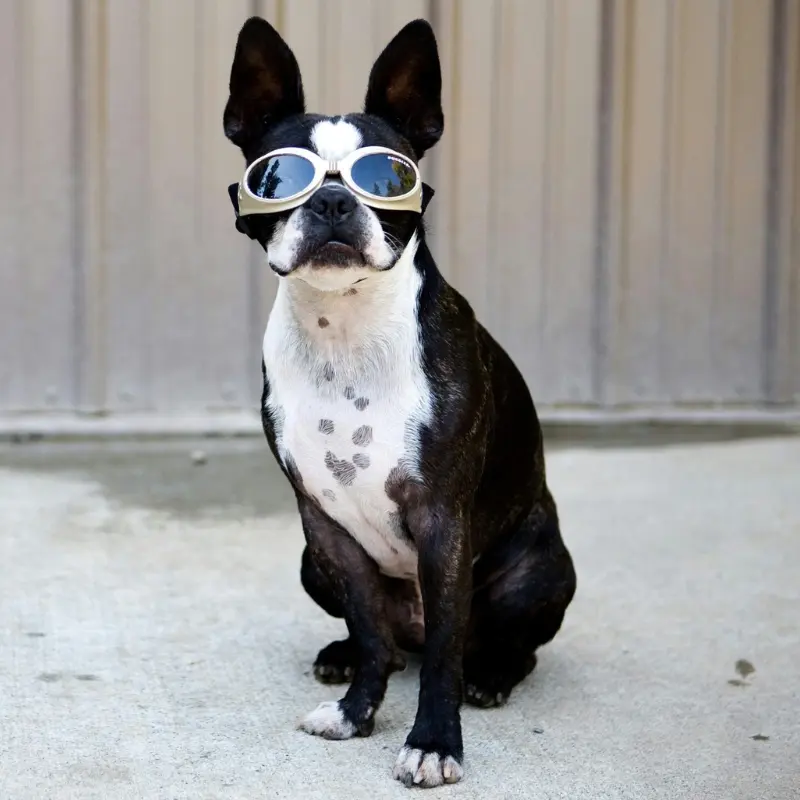
Frame material is the first fork in the road. A soft rubber or TPR frame flexes around a dog’s face and takes rough handling without cracking, which is why most low-cost, mass-market pet sunglasses use it. A harder PC frame holds a sharper shape and looks closer to human eyewear, but it needs a more forgiving strap system since the frame itself won’t flex to absorb pressure.
Lenses are simpler to standardize. Polycarbonate is the near-universal choice because it’s shatter-resistant and light. What separates a basic lens from a better one is the coating: UV400 protection, anti-fog treatment, and in some cases a mirrored or tinted finish for glare reduction. None of these add real weight to the frame, but they do add cost, so it’s worth deciding upfront which coatings actually matter for the end use rather than adding every option by default.
Straps are where most quality complaints start. An elastic band is cheap and simple, but it stretches out over time and loses its grip. Nylon webbing with an adjustable buckle holds tension longer and suits active or working dogs. Hook-and-loop straps offer the fastest on-off but wear out faster with repeated use. None of these is universally “better.” The right strap depends on how the dog will actually use the eyewear, and that’s a question worth asking before a mold gets built, not after the first batch ships back with complaints.
How Should Pet Eyewear Fit Different Heads and Breeds?
A goggle that fits a Labrador will slide right off a Chihuahua. Head shape, not weight, is what actually determines fit.
Pet eyewear sizing depends on skull shape more than breed size alone. Brachycephalic breeds (Pugs, Bulldogs, Shih Tzus) need a deeper lens cup and wider nose bridge. Long-snouted breeds need a narrower bridge and longer strap range. A one-size frame rarely fits both groups well.
Three measurements decide fit: the distance between the eyes, the depth of the eye socket, and the width of the skull at the strap point. Brachycephalic breeds have wide-set, protruding eyes and a short snout, so they need a frame with a shallow nose bridge and a lens cup deep enough to clear the eyeball completely. Long-snouted breeds like Greyhounds or Collies need the opposite: a narrower bridge and a longer, more adjustable strap to reach around a longer skull.
This is also where cat and small-animal eyewear splits off entirely from dog eyewear. Cat faces are smaller and flatter across the board, with less variation between breeds than dogs show. A cat frame usually needs a single, smaller mold size with a shorter, softer strap, since cats tolerate head straps far less than most dogs do.
For a brand building out a size range, the practical answer is rarely “one universal fit.” Most working pet eyewear lines land on two to three size tiers, split roughly at small/toy breeds, medium breeds, and large or extra-large breeds, sometimes with a separate brachycephalic-specific mold for the deeper lens cup. Getting this sizing grid right before development starts saves a full round of remolding later — the exact measurements and step-by-step process for getting there are covered in pet eyewear sizing and fit.
Why Do Pet Owners (and Brands) Buy Pet Eyewear?
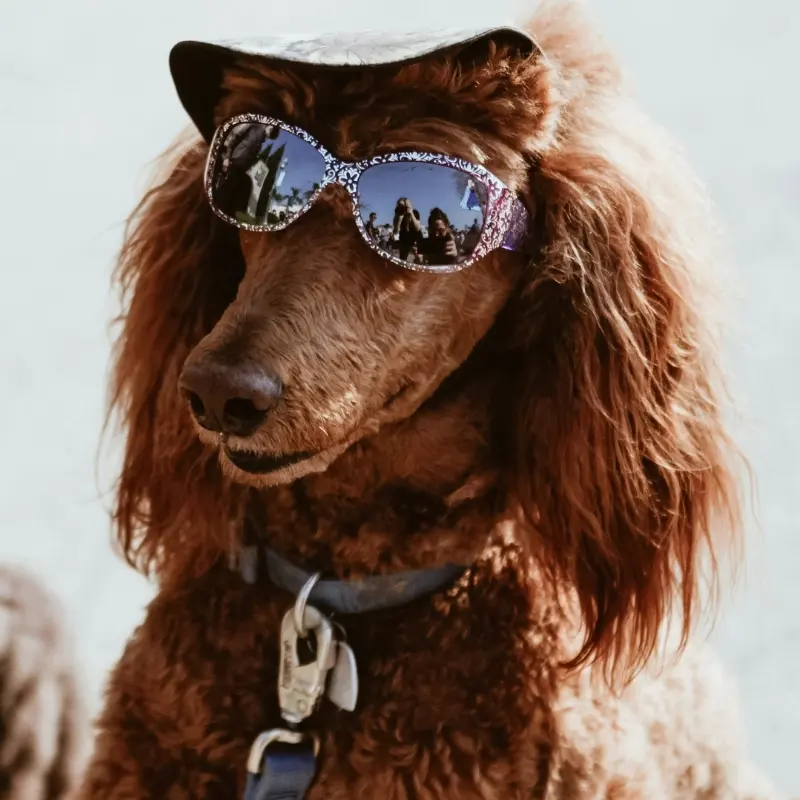
Not every pair of pet sunglasses gets bought for the same reason, and that mix of motivations shapes what a good product line actually needs to cover.
Owners buy pet eyewear for three reasons: UV and injury protection recommended by a vet, practical use during outdoor activities like biking or boating, and fashion. Fashion-driven buyers care most about looks; protection-driven buyers care most about fit, coating, and strap security.
Vet-recommended purchases are the smallest slice but the most demanding. These buyers are managing a real condition — pannus, cataracts, post-surgical recovery — and they’ll return a product that doesn’t fit correctly or doesn’t block enough UV. Product pages and packaging aimed at this group need to be specific about UV rating and coverage, not just “stylish and fun.” Which pets actually fall into this category, versus which ones are buying for looks, is worth understanding before building a product line around either assumption.
Activity-driven buyers are the middle group: owners taking dogs on bike rides, boats, hikes, or motorcycle trips. They care about strap security and lens coverage first, looks second. This is the segment goggles were built for, and it’s also the segment most likely to leave a bad review over a strap that stretches out after a month.
Fashion buyers are the largest and most visible group, especially on marketplaces and social media. For this segment, color, shape, and how “cute” a dog looks in the frame outweighs technical specs. A private-label brand targeting this group can get away with a simpler build, but only if it’s honest with the customer about what the product is (and isn’t) built to protect against.
Understanding which of these three buyers a product is built for isn’t a marketing exercise. It decides frame material, lens coating, strap type, and size range before a single mold gets cut.
Conclusion
Pet eyewear isn’t one product. Frame, material, and fit depend on whether you’re building for fashion, activity, or vet-recommended protection — get the construction right and the rest follows.
Frequently Asked Questions
Are dog goggles the same as dog sunglasses?
No. Goggles use a closed, wraparound frame that seals around the eye socket. Sunglasses use an open frame with gaps at the sides. Goggles block wind and debris better; sunglasses mainly reduce glare.
What material is best for pet sunglasses frames?
Soft TPR or rubber frames flex and hold up to rough handling, making them common in mass-market lines. Harder PC frames hold a sharper shape but need a more forgiving strap system to stay comfortable.
Do cats wear the same eyewear as dogs?
Not usually. Cat faces are smaller and flatter with less breed variation, so cat eyewear uses a single smaller mold size with a shorter, softer strap rather than the multi-tier sizing dog lines need.
Why do some dog breeds need a deeper lens cup?
Brachycephalic breeds like Pugs and Bulldogs have protruding eyes set close to the surface of the face. A shallow lens cup can press against the eyeball, so these breeds need a deeper cup that clears the eye fully.
Can pet sunglasses be customized for a brand?
Yes. Frame material, lens coating, strap type, and size range can all be adjusted during development to match a brand’s target buyer, whether that’s fashion-focused, activity-focused, or vet-recommended protection.
Let's get started!
Get in touch with a custom eyewear specialist now for a free consultation and instant price quote.
WHATSAPP ME GO!
📱 Scan with your phone to start chatting