How Much Does It Cost to Manufacture Custom Pet Sunglasses? Pricing Factors Explained
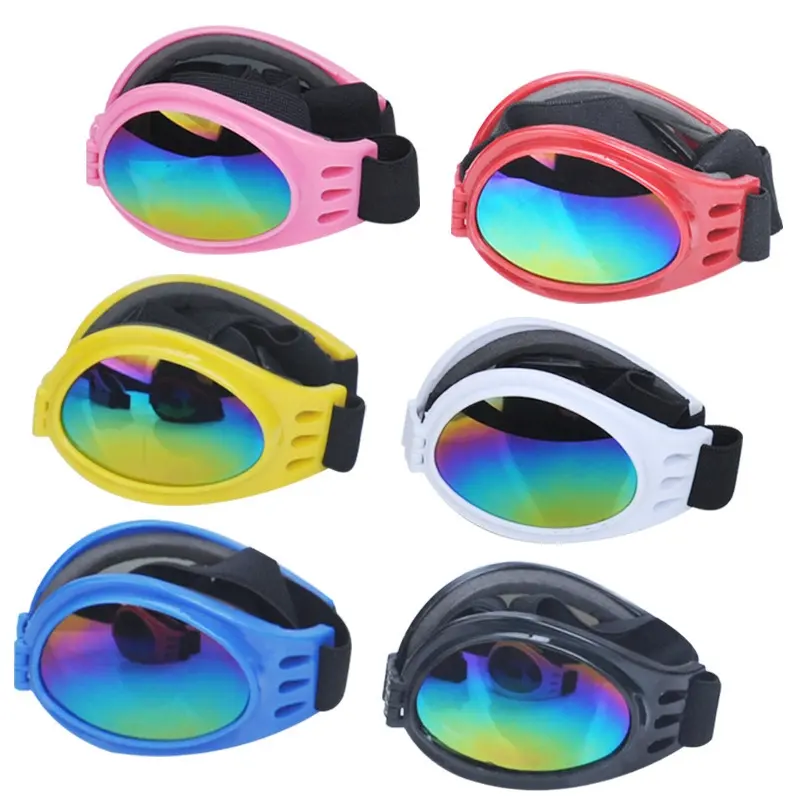
Two pet sunglasses can look nearly identical in a product photo and still cost several times apart to manufacture. The gap almost never comes from the parts you can see.
Pet sunglasses pricing is driven by frame and lens material, strap hardware, mold investment, size range, packaging tier, and order volume. No single factor sets the price alone — cost is the sum of these choices, which is why two visually similar products can land at very different unit prices.
Here’s the deal. Asking “how much does it cost” without specifying these variables gets a range too wide to plan around. What follows is what actually moves the number, so a quote makes sense the moment it lands in your inbox.
What Actually Drives the Price of a Pair of Pet Sunglasses
Cost in eyewear manufacturing isn’t one number — it’s built layer by layer, the same way it works for human sunglasses, with a few pet-specific additions on top.
The main cost layers for pet eyewear are: frame and lens material, strap hardware, mold and tooling investment, size range, packaging tier, and order volume. Design complexity multiplies the cost of every other layer, since a more intricate frame raises material use, labor time, and tooling precision all at once.
Material and hardware set the base cost per unit — what it takes to physically build one pair. Mold investment and size range are largely fixed costs, spread across however many units get produced, so they matter more per-unit at low volume and fade at high volume. Packaging and order volume are the levers a buyer has the most direct control over, since both can be adjusted without touching the product itself.
Design complexity sits on top of all of it rather than as its own line item. A simple, symmetrical frame with a shallow lens cup and one strap point is cheaper to tool and assemble than a wraparound frame with a deep lens cup, multiple strap anchors, and ventilation channels — the more intricate design touches nearly every other cost layer at once.
Frame and Lens Material: The Base Cost Layer
Material is the most visible cost driver, and it’s also the one most buyers already have some intuition about before requesting a quote.
Frame material cost generally runs soft TPR or rubber lower than rigid PC, since PC requires tighter tooling tolerances and more precise injection work. Lens cost scales with coating complexity — a basic tinted polycarbonate lens costs less than one with UV400, anti-fog, and polarized or mirrored finishes layered on.
Frame material cost isn’t just about raw material price per kilogram — tooling precision matters just as much. As covered in pet eyewear construction and materials, a soft TPR or rubber frame tolerates more variation in mold precision since the material itself flexes, while a rigid PC frame needs tighter tolerances to hold its shape correctly, which raises both tooling and per-unit production cost.
Lens cost stacks in layers rather than jumping all at once. A basic tinted polycarbonate lens is the starting point. Adding a genuine UV400 coating raises cost modestly; adding anti-fog treatment on top raises it further; adding a polarized or mirrored finish adds another increment again. None of these layers is expensive in isolation, but a lens carrying all of them costs meaningfully more than a lens with none, and it’s worth deciding early which coatings the target buyer will actually value rather than adding every option by default.
Strap Hardware and Mold Investment: Where Pet Eyewear Costs Diverge From Human Eyewear
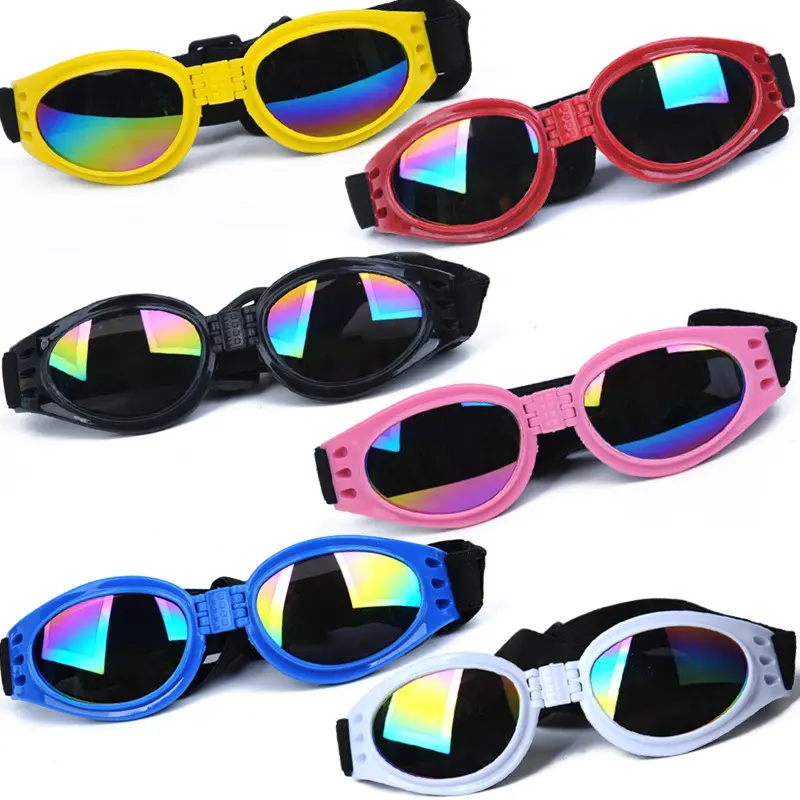
This is the point where pet eyewear pricing splits from the general eyewear cost frameworks that dominate search results, since human sunglasses don’t need a strap system at all.
Strap hardware adds a real, often underestimated cost layer specific to pet eyewear — a basic elastic band costs less than two-point elastic, which costs less than adjustable webbing with a tri-glide buckle. Mold investment is a one-time cost that covers frame development, and it scales with how many sizes and how complex the frame shape is.
Strap hardware cost differences are small per unit but add up across a full order, and they’re often the piece a first-time buyer forgets to price separately from the frame itself. As covered when comparing strap systems and lens protection design, tri-glide hardware costs more than elastic both in raw material and in the extra assembly step it requires, which is easy to justify on an active or working-dog product and harder to justify on a fashion-first item.
Mold investment is the cost most sensitive to decisions made early in development. A single-size, simple frame needs one mold. A product line with three or four standard sizes plus a brachycephalic-specific option, as covered in pet eyewear sizing and fit, needs a mold for each size variation, since the frame proportions genuinely change rather than simply scaling up or down. This is a one-time cost, but it’s a real one, and it’s the reason locking down a size range before requesting a quote produces a far more accurate number than pricing a single sample size and assuming the rest will follow proportionally.
Packaging and Order Volume: The Levers Buyers Control Most
Unlike material or mold cost, packaging and volume are decisions a buyer can adjust without touching the product design at all — which makes them the fastest place to bring a quote in line with a budget.
Packaging cost ranges from a basic pouch and cleaning cloth at the low end to a retail-ready box with hangtag, barcode, and custom insert at the high end, with a meaningful cost gap between them. Order volume affects unit price directly — higher volume spreads fixed costs like tooling across more units, lowering the per-unit price.
Packaging tier should match the actual sales channel rather than defaulting to whatever looks most premium. A product sold primarily online through a marketplace listing gets little visible return from a retail hangtag and barcode system, while a product headed for physical retail shelves needs that packaging to function at the point of sale. Specifying packaging based on where the product will actually be sold, rather than upgrading it across the board, keeps this cost layer proportional to what it’s actually doing for the sale.
Order volume is the most direct lever a buyer controls, and its effect on price isn’t linear — the drop in per-unit cost from doubling a small order tends to be larger than the drop from doubling an already-large one, since fixed costs like mold amortization get absorbed faster at the lower end of the volume curve. This is also where the logo-only versus custom mold decision connects directly to price: a smaller volume commitment is far easier to justify against a logo-only order than against a full custom mold, since the mold cost has to be recovered either way.
How to Read a Pet Eyewear Quote (Without Guessing)
A quote with a single number on it doesn’t tell a buyer much. A quote broken into the cost layers above tells them exactly where their money is going and where there’s room to adjust.
A useful pet eyewear quote itemizes frame material cost, lens material and coating cost, strap hardware cost, a one-time mold fee (if applicable), packaging cost per tier, and unit price at the quoted volume — rather than presenting a single bundled per-unit figure with no breakdown.
An itemized quote makes tradeoffs visible instead of abstract. If a target price point isn’t achievable at the current spec, an itemized breakdown shows exactly which layer to adjust — dropping from tri-glide hardware to two-point elastic, simplifying packaging, or trimming a size tier — rather than leaving a buyer to guess which change would actually move the number.
A bundled, unbroken quote isn’t automatically dishonest, but it does put more of the burden on the buyer to ask the right follow-up questions before committing. Requesting an itemized breakdown costs nothing and tends to surface exactly the kind of specification gaps — an unclear strap type, an undecided size range, a packaging tier that doesn’t match the sales channel — that lead to a revised, higher quote later in the process rather than an accurate one upfront.
Conclusion
Price follows spec, not the other way around — lock down materials, hardware, and size range before requesting a quote, and the number that comes back will actually hold.
Frequently Asked Questions
What’s the biggest cost driver in custom pet sunglasses manufacturing?
There isn’t one single biggest factor — cost is built from frame and lens material, strap hardware, mold investment, size range, and packaging together. Design complexity multiplies the cost of all of these at once, which is why it has an outsized effect.
Why does strap hardware affect pet eyewear cost more than human eyewear?
Human sunglasses don’t need a strap system, so this is a cost layer unique to pet eyewear. Basic elastic costs less than two-point elastic, which costs less than adjustable webbing with a tri-glide buckle, and the hardware also adds assembly time.
Does adding more sizes increase manufacturing cost?
Yes, since each size variation in a pet eyewear line typically needs its own mold rather than a simple scale-up. A three-to-four size range plus a brachycephalic-specific option costs more upfront in tooling than a single-size product.
How much does packaging affect the final unit price?
Significantly. A basic pouch and cleaning cloth sits at the low end of cost, while a retail-ready box with hangtag, barcode, and custom insert sits considerably higher. Matching packaging tier to the actual sales channel avoids overpaying for presentation the product doesn’t need.
What should a pet eyewear manufacturing quote include?
A useful quote itemizes frame material cost, lens material and coating cost, strap hardware cost, any one-time mold fee, packaging cost, and unit price at the quoted volume, rather than a single bundled number with no breakdown.
Let's get started!
Get in touch with a custom eyewear specialist now for a free consultation and instant price quote.
WHATSAPP ME GO!
📱 Scan with your phone to start chatting