TR90 Sunglasses Production Timeline: From Sample to Bulk Shipment
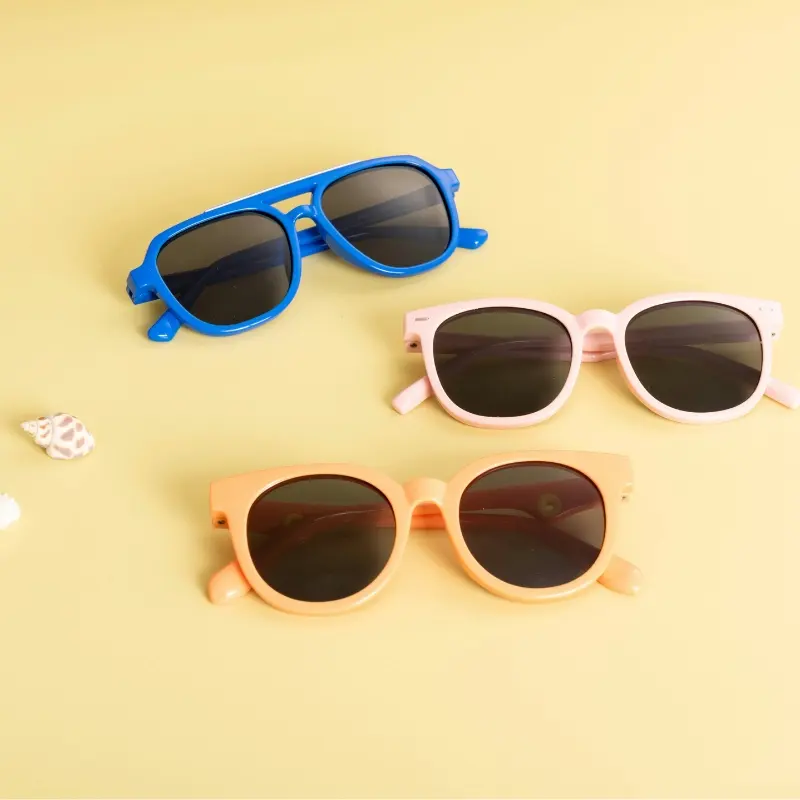
“How long will this take?” doesn’t have a single answer for a TR90 collection, because the honest answer depends entirely on where your project starts. A style pulled from existing stock can ship in days. A genuinely new design requiring a new mold runs on a completely different clock. Both are accurate TR90 timelines — they’re just answers to different questions.
This guide breaks down the TR90 production timeline by starting point — ready stock, existing mold, and new mold — and maps out what happens at each stage from sample to bulk shipment, so you can plan a launch date around the real sequence rather than a single number.
Why TR90’s Timeline Depends on Where You Start
Unlike acetate, where the CNC-cutting process means every style starts from roughly the same point, TR90’s injection-molded construction — covered in more detail in our guide comparing injection molding and CNC machining — creates a genuine fork in the road depending on whether tooling already exists. This is the single biggest variable in a TR90 timeline, more than order volume or design complexity, because it determines whether you’re working with a mold that’s ready to run or one that doesn’t exist yet.
Path 1: Ready Stock — Fastest Option
If your brief can work from an existing in-stock style with minimal changes, this is the fastest path available. Samples from ready inventory can typically ship within 3–5 days, since no mold work or pellet formulation is required — you’re essentially confirming fit, color, and branding placement on a frame that already exists.
This path works well for brands testing the category quickly, validating a style before committing to deeper customization, or working within a tight launch timeline where a near-identical existing style meets the brief.
Path 2: Existing Mold, Minor Modifications — Moderate Speed
As covered in more detail in our guide to TR90 pricing and MOQ, using an existing mold with a minor modification — a different frame color, lens color, or logo printing — keeps both cost and timeline closer to the fast end. Sampling on this path typically takes 7–15 working days, since the mold itself doesn’t need to be built, only the specific modification needs to be confirmed and produced as a sample.
This is the middle path most brands land on for a first custom order: meaningful enough customization to feel brand-specific, without the lead time or cost of developing entirely new tooling.
Path 3: New Mold — Longest, Most Customized
A genuinely new frame design requires building tooling from scratch, and this path runs on a longer, more structured timeline.
RP Sample: Confirming the Design Before the Mold Is Cut
Before mold cutting begins, there is one step that protects both the brand and the production schedule: the Rapid Prototype (RP) sample.
An RP sample is produced through 3D printing or SLA resin — no mold is required — and allows a brand to physically confirm the frame’s shape, proportions, and fit before tooling is committed. Because RP samples cost a fraction of a mold, this is the lowest-cost point in the entire development process to catch a design issue and correct it. Adjustments at the RP stage cost little and take days; the same adjustment after a mold has been machined can set the project back weeks and adds real cost.
At Sailook, clients confirm the RP sample before we proceed to mold production. The mold is only cut once the design has been signed off in three dimensions — not on paper alone. RP samples are priced separately and are not subject to MOQ.
RP sample lead time: 3–5 days. This step is not always included in a manufacturer’s quoted timeline, but for any genuinely new design, asking about RP availability before committing to tooling is worth doing.
Mold Development and Testing: 20–30 Days
This covers cutting the steel mold itself and running test shots to confirm the cavity produces a frame matching the approved design — checking dimensions, structural integrity, and fit before the mold is considered production-ready.
Sampling From the New Mold: 5–7 Days
Once the mold passes testing, producing pre-production samples for your review and approval is comparatively fast, since the tooling itself is the part that took time.
Bulk Production: 45–60 Days
Counted from mold completion. This is meaningfully faster than acetate’s CNC-and-hand-polish process for comparable volume, since injection molding produces consistent parts in seconds once the mold is running — the time in this stage is mostly about scaling that process across your full order quantity, plus assembly, branding, and quality control.
| Path | Sample Lead Time | Bulk Production | Total to First Shipment |
|---|---|---|---|
| Ready stock | 3–5 days | Same as sample stock or short reorder | Fastest — days to roughly 2 weeks |
| Existing mold, minor modification | 7–15 working days | 45–60 days | Roughly 7–9 weeks |
| New mold | RP 3–5 days + mold 20–30 days + sample 5–7 days45–60 daysRoughly 11–14 weeksdays (sample) | 45–60 days | Roughly 10–13 weeks |
What Happens During Bulk Production
Once a sample is approved and bulk production begins, several stages run in sequence within that 45–60 day window.
TR90 pellets go through incoming inspection before molding — checking purity and moisture content, since pellet condition affects both molding quality and final frame strength. Injection molding itself, covered in more detail in our TR90 manufacturing process guide, runs continuously once the mold is calibrated, with each frame produced in seconds rather than the multi-day process acetate requires. Assembly follows — attaching hinges (whether standard, spring, or molded-in, covered in more detail in our guide to TR90 hinge and frame construction), fitting lenses, and applying branding. Quality control checks run throughout this process and again before packaging, confirming dimensional consistency, hinge function, and color match against the approved sample.
What Actually Causes Delays in This Timeline
A few specific factors push a TR90 project toward the longer end of its expected range, and it’s worth knowing which ones are within a brand’s control.
Incomplete specs at the brief stage adds time before sampling even begins — a vague color reference, an undecided lens spec, or unconfirmed branding placement means back-and-forth that happens before the visible production clock starts. This is fully preventable with a complete brief covering mold path, color and finish, lens type, branding, and packaging.
Multiple rounds of internal approval on the brand side — a sample that needs sequential sign-off from several stakeholders rather than one decision-maker — adds real time with zero involvement from the factory floor. Establishing a single approval owner before sampling begins is a practical way to prevent this from quietly extending the timeline.
Mold revisions after initial testing happen occasionally when a test shot reveals a fit or structural issue that needs correcting before the mold is finalized — this is a normal part of new-mold development, but it’s worth building some buffer into a launch date for a genuinely new design rather than assuming the 20–30 day mold window is absolute.

The Practical Takeaway
A TR90 sunglasses timeline isn’t one number — it’s three different paths with genuinely different speeds, and knowing which one your project falls into is the first step in planning a realistic launch date. Ready stock ships in days. An existing mold with minor modifications runs roughly 7–9 weeks to first shipment. A genuinely new design runs roughly 10–13 weeks, accounting for mold development, sampling, and bulk production. Planning around the full chain — including brief completeness and approval speed on the brand side, not just the factory-quoted production stages — is what keeps a quoted timeline and an actual delivery date aligned.
Frequently Asked Questions
How fast can I get TR90 sunglasses samples?
It depends on your starting point. Ready-stock styles can sample in 3–5 days. Existing-mold styles with minor modifications typically take 7–15 working days. A genuinely new design requires 20–30 days for mold development and testing, followed by 5–7 days to produce samples from the finished mold.
What is an RP sample, and when does it happen in the TR90 timeline?
An RP (Rapid Prototype) sample is a physical model of the frame produced through 3D printing or SLA resin, before any mold is cut. It sits at the very beginning of the new-mold path — after the design brief is finalized and before tooling begins. At Sailook, clients confirm the RP sample before mold production starts. RP samples are not subject to MOQ and are priced separately. Lead time is typically 3–5 days, and catching design issues at this stage is significantly cheaper and faster than correcting them after a mold has been machined.
How long does a new TR90 mold take to build?
Generally 20–30 days for mold cutting and test-shot verification, confirming the cavity produces a frame matching the approved design before it’s considered production-ready. Sampling from the completed mold then takes an additional 5–7 days.
What’s the typical bulk production time for TR90 sunglasses?
Commonly 45–60 days, counted from mold completion (for new molds) or from sample approval (for existing-mold orders). This is generally faster than comparable acetate volume, since TR90’s injection molding process produces parts in seconds rather than requiring multi-day CNC cutting and hand polishing.
Why is TR90 generally faster to produce than acetate at scale?
Because injection molding, once the mold is built and calibrated, produces identical parts continuously and quickly. Acetate’s CNC-cut-and-hand-polish process is more labor-intensive per unit. The tradeoff is that TR90 requires upfront mold tooling time that acetate’s mold-free process doesn’t.
What’s the most common cause of TR90 timeline delays that isn’t the factory’s fault?
Sequential internal approval rounds — when a sample needs sign-off from multiple people in turn rather than one decision-maker — are a common source of delay that has nothing to do with production capability. Establishing one approval owner before sampling begins helps prevent this.
Should I plan my launch date around the sample timeline or the full production timeline?
The full timeline, including bulk production and any internal approval rounds — not just how fast a sample arrives. Brands that plan a launch date around sample speed alone are the ones most likely to find their actual delivery date slipping, since bulk production and brand-side decision time are both real parts of the chain.
Let's get started!
Get in touch with a custom eyewear specialist now for a free consultation and instant price quote.
WHATSAPP ME GO!
📱 Scan with your phone to start chatting