Acetate Sunglasses Care and Maintenance: What Brands Need to Tell Their Customers
Most of the support tickets and one-star reviews we hear about from brand clients aren’t caused by a manufacturing defect. They’re caused by a customer who left their acetate sunglasses on a hot car dashboard, wiped the lenses with a t-shirt, or twisted the frame to “fix” a fit issue with one hand. None of that is a quality problem. All of it is preventable with the right information at the right moment.
This guide isn’t a generic cleaning checklist — there’s plenty of that already online, written for consumers who’ve already bought a pair. This is about what you, as a brand, should be telling your customers before and after the sale, and why getting this right has a direct effect on your return rate and review scores.
Why Care Instructions Are a Brand Problem, Not Just a Customer Problem
Acetate is a material with real strengths — rich color depth, a premium tactile feel, and the ability to hold a high-gloss finish for years. It’s also a material with specific sensitivities that most customers don’t know about until something goes wrong.
When a customer doesn’t know that acetate softens under heat, leaving sunglasses on a dashboard or in direct sun for an extended period can warp the frame. When a customer doesn’t know that grit on a dry lens cloth causes scratching, the wrong cleaning habit slowly degrades the product they paid for. Neither of these is a manufacturing flaw, but from the customer’s side, the result looks identical to one: a product that stopped performing the way it should.
This is where care instructions stop being a courtesy and start being a brand cost-control measure. Every return driven by a preventable care issue is a unit you’ve already paid to produce, ship, and often replace — and a review that doesn’t distinguish between “this broke because it was defective” and “this broke because I didn’t know not to do that.”
What Makes Acetate Different From Other Frame Materials
Acetate is a cellulose-based material, CNC-cut from sheet stock and hand-polished, which is exactly what gives it the color depth and tactile quality brands choose it for. That same composition is what makes it behave differently from injection-molded plastics like TR90 or polycarbonate.
Heat sensitivity. Acetate softens at a lower temperature threshold than rigid plastics, which is why it can be reshaped slightly by a professional with controlled heat — useful for fit adjustments, but also why an uncontrolled heat source (a hot car interior, direct sun on a dark dashboard) can cause warping that isn’t reversible without professional reshaping.
Surface sensitivity. The high-gloss finish that makes acetate look premium is achieved through extended polishing, and that same finish can be dulled or scratched by abrasive cleaning materials — paper towels, clothing fabric, or cleaning sprays not formulated for acetate.
Color behavior over time. Acetate color runs through the material rather than sitting on the surface, which means it resists fading better than painted plastic — but extended UV exposure and contact with oils (sunscreen, skin oils, hair products) can still cause gradual color shift on lighter or more translucent acetate tones over years of wear.
This is useful context for your own product development too — if you’re sourcing acetate sunglasses for your collection, these same material properties affect everything from polishing standards to packaging design, not just the care instructions you send home with the customer.

The Five Things Every Brand Should Tell Customers
This is the core information worth putting in front of a customer — on a care card, in a confirmation email, or as part of your packaging insert. Each point below addresses a specific failure mode we see come back as returns or complaints.
1. Heat Is the Number One Risk for Acetate
Tell customers explicitly: don’t leave acetate sunglasses in a hot car, on a sun-exposed dashboard, or near direct heat sources. Acetate’s softening point is lower than most customers assume, and warping from heat exposure is one of the most common preventable damage patterns — and one that customers frequently mistake for a structural defect rather than something they could have avoided.
2. Use Two Hands to Put On and Take Off
This sounds minor, but it directly affects hinge longevity. One-handed removal puts uneven, repeated stress on a single hinge rather than distributing it across both — which accelerates the loosening process on a standard barrel hinge well ahead of its normal wear timeline. If you’ve already specified hinge type for your collection, this single habit instruction does more to protect that investment than almost anything else you can tell a customer.
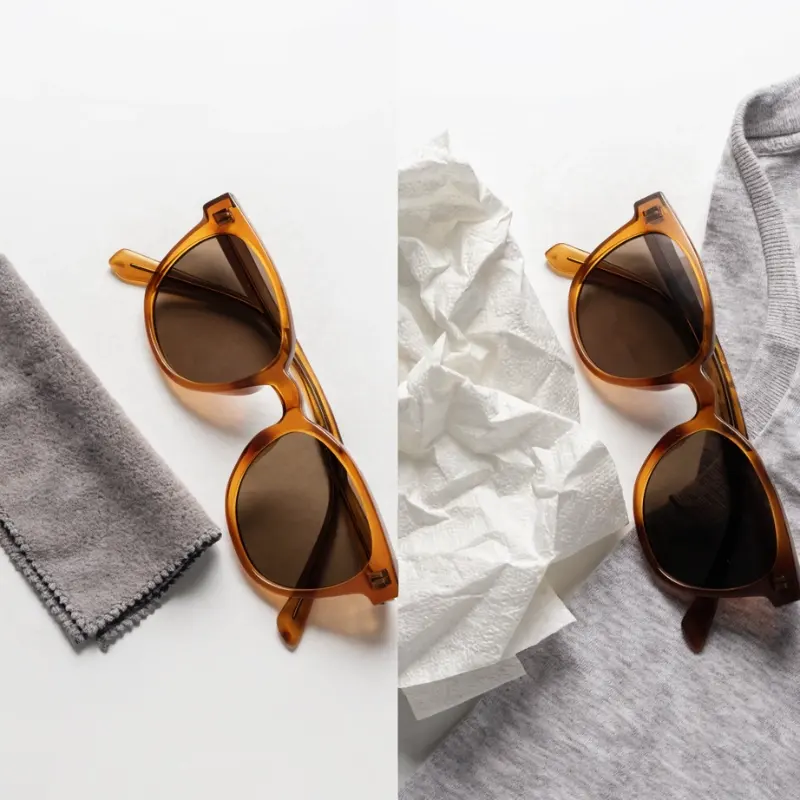
3. Clean With a Microfiber Cloth and Lens-Safe Solution Only
Paper towels, tissues, clothing, and household glass cleaners all carry a risk of introducing scratches or breaking down lens coatings. A microfiber cloth, ideally paired with a lens-specific cleaning spray or lukewarm water and a small amount of mild soap, removes oils and debris without the abrasion risk.
4. Store in a Case When Not in Use
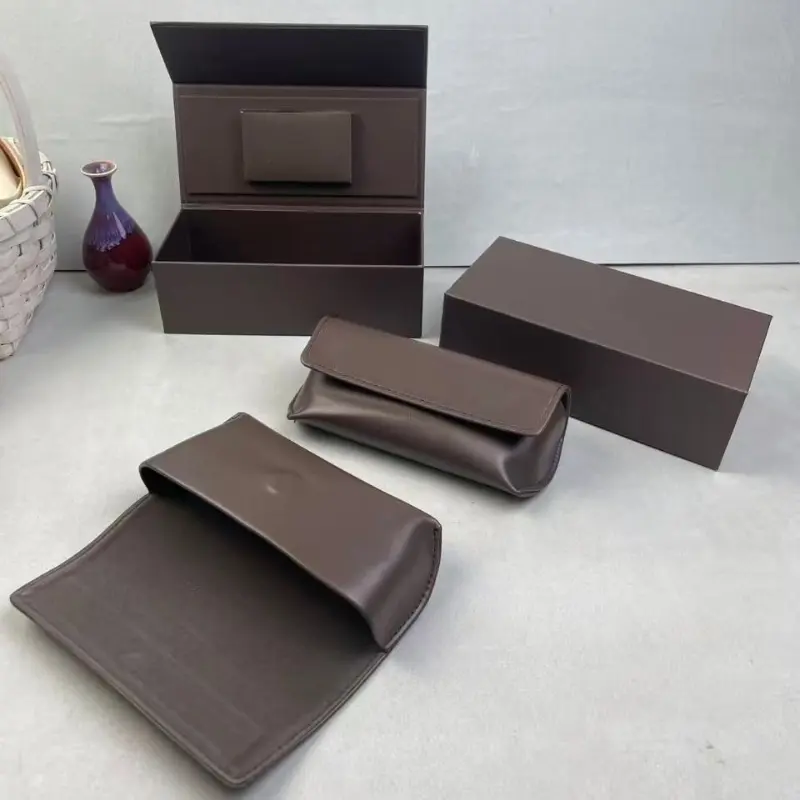
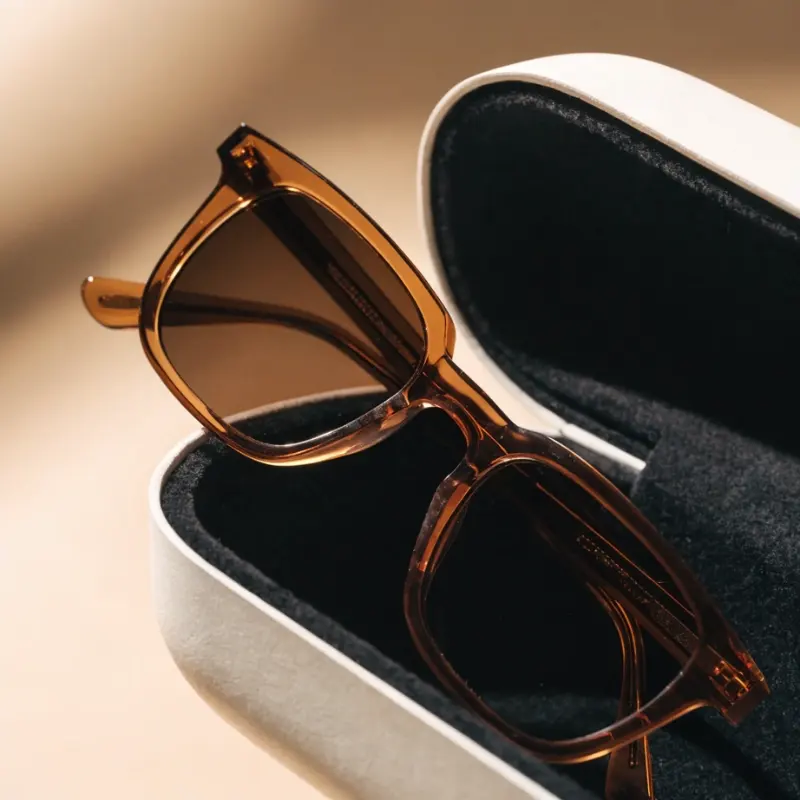
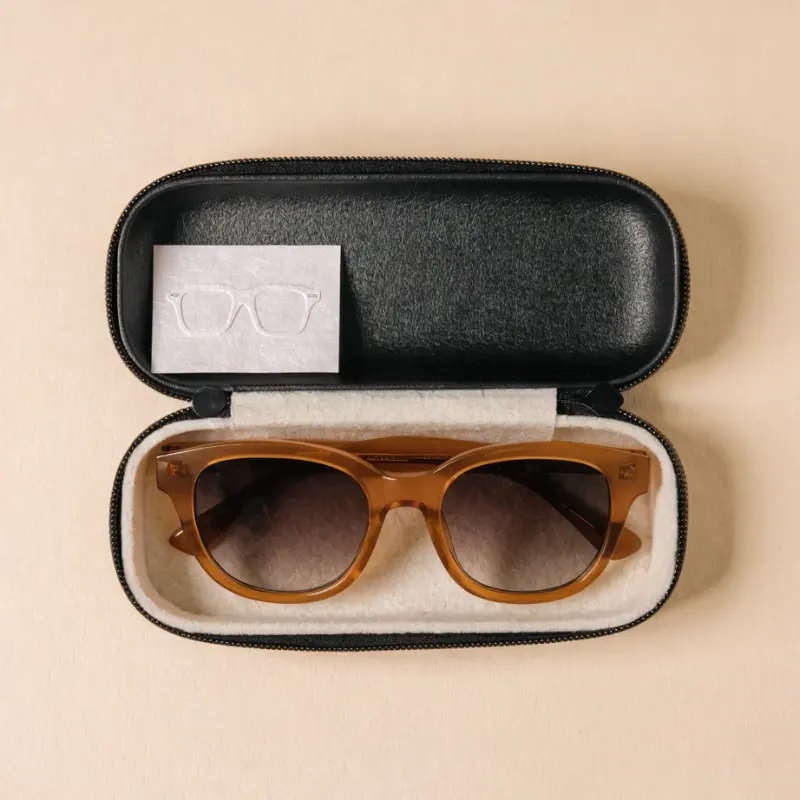
Loose sunglasses tossed into a bag accumulate scratches from keys, coins, and other contents — damage that has nothing to do with manufacturing quality but shows up looking exactly like a defect. A hard case is worth the marginal packaging cost, particularly for mid-to-premium collections where a scratched lens or frame undermines the brand experience disproportionately to its actual cause.
5. Don’t Self-Adjust a Loose or Misaligned Frame
Customers who feel their frame doesn’t sit right often try to bend or twist it back into shape themselves. Acetate can tolerate gentle, controlled adjustment by a professional with the right technique and sometimes light heat — but an untrained adjustment is far more likely to crack the material or permanently misalign the hinge than to fix the original problem.
| Care Topic | What to Tell Customers | What Happens If Skipped |
|---|---|---|
| Heat exposure | Avoid hot cars, dashboards, direct heat | Visible warping, frame no longer sits flat |
| Hinge handling | Use two hands to remove and put on | Accelerated hinge loosening, uneven temple play |
| Cleaning method | Microfiber cloth + lens-safe solution only | Surface scratching, dulled finish |
| Storage | Use the case when not wearing | Scratches from bag contents, accidental crushing |
| Self-adjustment | Leave fit adjustments to a professional | Cracked acetate, permanently misaligned hinge |
Where This Information Should Actually Live
Knowing what to say is only half the problem — the other half is making sure customers actually see it. A care guide buried in a separate FAQ page on your website gets read by almost nobody. The same information, placed at the right touchpoints, gets seen.
The unboxing moment is the highest-attention point in the entire customer relationship. A printed care card inside the case — short, scannable, not a wall of text — gets read because the customer is already engaged with a new product.
A post-purchase email, sent a few days after delivery rather than buried in the order confirmation, reaches the customer after the initial excitement but before they’ve developed careless habits. This is also a natural place to mention warranty terms and what is and isn’t covered.
Product packaging itself — even a single line on the box or a QR code linking to a short care video — extends the message beyond whoever reads the insert card.
The brands we see with the lowest acetate-related return rates aren’t necessarily using better materials than competitors at a similar price point. They’re more consistent about making sure customers actually receive and absorb this information at a moment when they’re paying attention.
Common Acetate Issues and Whether They’re a Defect or a Care Problem
Brands fielding customer complaints benefit from being able to tell the difference quickly — both to respond accurately and to identify where a customer education gap exists.
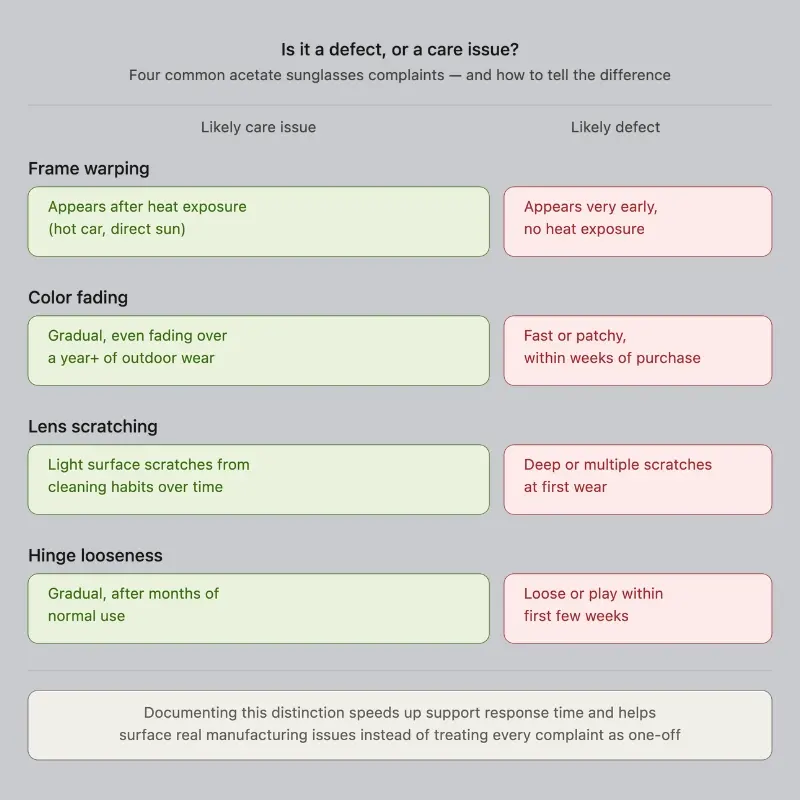
Frame warping or no longer sitting flat: Usually a heat exposure issue, not a defect, unless it happens very early in the product’s life with no heat exposure the customer can identify. Early, unexplained warping is worth investigating with your manufacturer; warping after a summer of car use almost always traces back to heat.
Color fading or shifting: Gradual, even fading over a year or more of regular outdoor wear is normal material behavior, especially on lighter acetate tones. Rapid or patchy discoloration within weeks of purchase suggests a material or processing issue worth raising with your supplier.
Lens scratching: Surface-level light scratching from cleaning habits is the customer’s responsibility to manage going forward; deep or multiple scratches present at first wear point to a quality control gap before the product shipped.
Hinge looseness: Gradual loosening over months of normal use, particularly with one-handed removal habits, is expected mechanical wear — covered in more detail in our guide to acetate sunglasses hinge types. Looseness or play present within the first few weeks of light use is a legitimate quality concern.
Having this distinction documented — even informally, for your own customer service team — speeds up response time and helps you flag real manufacturing issues to your supplier instead of treating every complaint as a one-off.
The Practical Takeaway
Acetate’s material properties — heat sensitivity, surface finish, color behavior — aren’t flaws to hide from customers. They’re characteristics that, explained clearly and at the right moment, prevent a meaningful share of the returns and negative reviews that get misattributed to product quality. A short care card, a well-timed email, and clear guidance on what’s normal wear versus a real defect cost very little to implement and pay for themselves in reduced returns and a more accurate read on actual manufacturing issues.
If you’re developing care instructions, packaging inserts, or warranty language for an acetate collection, start a conversation with our team — we’re happy to share what we’ve seen work across other brand programs.
Frequently Asked Questions
How long should acetate sunglasses last with proper care?
With reasonable care, acetate frames commonly last several years of regular wear. Lifespan depends heavily on handling habits — heat exposure, one-handed removal, and improper cleaning are the most common factors that shorten a frame’s usable life well before the material itself would otherwise fail.
Can warped acetate sunglasses be fixed?
Often yes, if the warping is moderate and addressed reasonably quickly. A professional can reheat and reshape acetate using controlled heat — this isn’t something a customer should attempt at home, since uncontrolled heat or force is more likely to crack the frame than restore it.
What’s the best way to clean acetate sunglasses?
A microfiber cloth with a lens-safe cleaning spray, or lukewarm water with a small amount of mild soap, removes most dirt and oils without scratching. Paper towels, clothing, and household glass cleaners should be avoided, since they introduce abrasion risk or can degrade lens coatings.
Is it normal for acetate sunglasses to fade over time?
Gradual, even fading over a year or more of regular outdoor wear is normal, particularly on lighter or more translucent acetate tones, since the material is exposed to UV and skin oils with every wear. Fast or uneven discoloration shortly after purchase is unusual and worth raising with the brand or manufacturer.
Why do acetate sunglasses feel loose after a few months?
This is most often hinge wear from normal use, which is a mechanical reality of any hinge mechanism rather than a defect — though the timeline varies significantly by hinge type and handling habits. Removing glasses with one hand instead of two accelerates this process noticeably.
Should brands include a care card with every order?
It’s one of the more cost-effective additions a brand can make. A short, well-designed card placed inside the case gets read at the unboxing moment, when customer attention is highest — and it’s a low-cost way to prevent returns and complaints that stem from care habits rather than product defects.
Let's get started!
Get in touch with a custom eyewear specialist now for a free consultation and instant price quote.
WHATSAPP ME GO!
📱 Scan with your phone to start chatting