Acetate Sunglasses Frame Shapes: A B2B Buyer's Style Guide
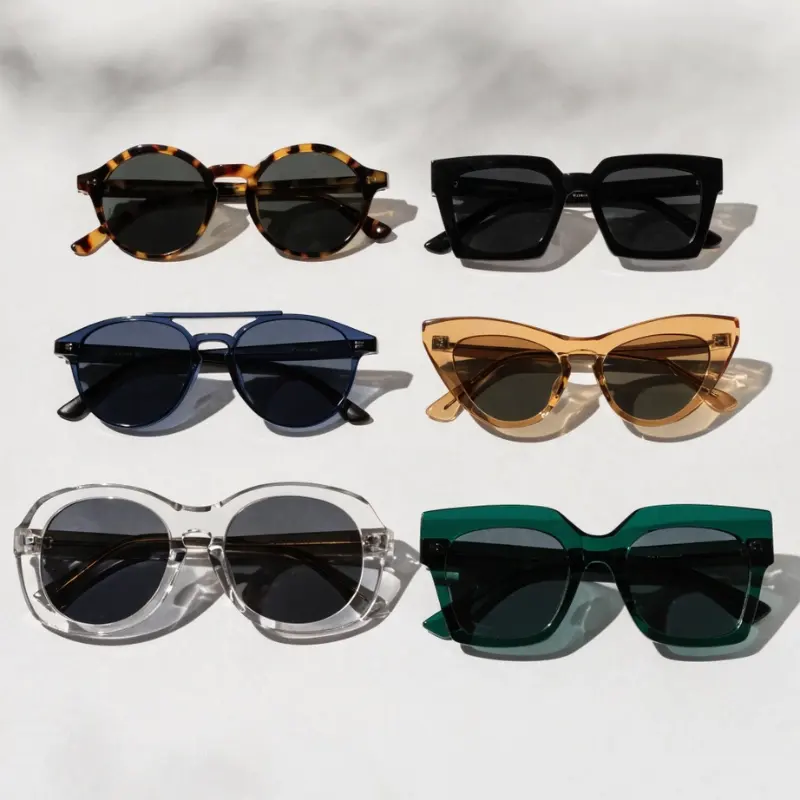
You’re building a sunglasses collection. You know you want acetate. But when it comes to frame shapes, where do you start — and how do you choose shapes that actually sell?
Frame shape is not a style preference. It’s a brand decision. The shape you choose communicates your brand’s positioning before a customer reads a single word of copy. Round says something different from square. Oversized says something different from minimalist. Choosing the right shapes for your collection — and the right combination of shapes — is one of the most consequential decisions in building an eyewear brand.
We produce acetate sunglasses in a full range of frame shapes for brands across the US, EU, and Australia. Here’s how to think about shape selection from a B2B brand-building perspective.
Frame Shape as Brand Language: What Every Shape Communicates
Before reviewing individual shapes, it’s worth understanding why shape selection matters at the brand strategy level.
Every frame shape carries a set of cultural and aesthetic associations that customers read instantly — without thinking about it. These associations are not arbitrary. They are built up through decades of design history, fashion cycles, and cultural reference points. When a customer picks up a pair of sunglasses, the shape tells them what kind of person wears this — and whether that’s them.
For brand builders, this means frame shape selection is positioning work. The shapes you carry define your brand’s aesthetic territory. Choose shapes that are coherent with each other and with your target customer’s self-image, and you have a collection. Choose shapes randomly, and you have inventory.
Here’s the brand signal each major frame shape sends:
| Frame Shape | Brand Signal | Customer Profile | Retail Positioning |
|---|---|---|---|
| Round | Artistic, vintage, intellectual | Creative professionals, fashion-forward | Boutique, independent retail |
| Square / Rectangle | Urban, confident, modern | Professional, style-conscious | Premium, optical, fashion |
| Cat Eye | Feminine, retro, bold | Style-led women, fashion buyers | Fashion boutique, lifestyle |
| Aviator | Classic, confident, versatile | Broad demographic, mainstream | Multi-channel, wholesale |
| Oversized | Fashion-forward, statement | Trend-driven, high fashion | Boutique, luxury adjacent |
| Geometric | Avant-garde, editorial | Fashion industry, early adopters | Concept retail, boutique |
| Browline | Intellectual, retro-modern | Creative, professional | Boutique, optical |
| Oval | Soft, refined, accessible | Broad demographic, accessible premium | E-commerce, lifestyle |
Round Frames: The Creative’s Choice
Round frames are one of the oldest sunglass shapes and one of the most enduring.
Round acetate frames carry strong vintage associations — they reference early 20th century round glasses, the 1960s counter-culture, and decades of artistic and intellectual iconography. For brands targeting creative professionals, fashion-forward consumers, and boutique retail buyers, round frames are often the anchor of the collection. They have a clear aesthetic identity that reads immediately as considered and fashion-aware.
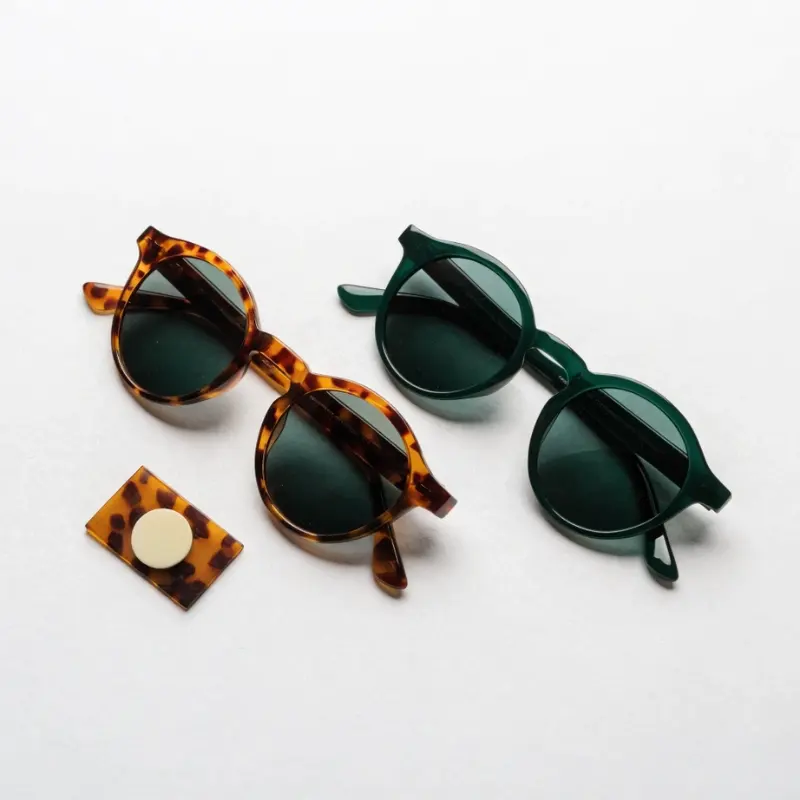
Round frames work particularly well in acetate because the material’s color depth and pattern capability complement the shape’s expressive nature. A round frame in a rich tortoiseshell or a distinctive custom color has a completeness that injection-molded plastic struggles to match.
What to know before specifying round acetate frames
Lens diameter range: Round sunglass lenses typically run 44–52mm in diameter for standard sizing, with oversized round frames pushing to 54–58mm. Specify your target diameter clearly — a 2mm difference in lens diameter changes the visual impact significantly.
Bridge width: Round frames typically have a narrow-to-medium bridge (16–20mm). A narrower bridge reads as more vintage; a slightly wider bridge reads as more contemporary.
Temple style: Thin straight temples reinforce the vintage character. Slightly thicker or keyhole-shaped temples add a modern twist.
Brand fit: Round frames suit brands building at $60–$150 retail that are targeting independent boutiques, art-adjacent lifestyle brands, or fashion-forward consumer segments.
Square and Rectangle Frames: The Urban Standard
Square and rectangle frames are the most commercially versatile shape in acetate sunglasses.
Square frames read as confident, deliberate, and modern. They reference the clean geometry of mid-century design and the professional aesthetic of contemporary fashion. Rectangle frames are a softer variation — slightly longer than they are tall — that reads as more refined and less assertive than a true square. Both shapes photograph exceptionally well, which makes them strong choices for e-commerce brands where product photography drives conversion.
Square and rectangle acetate frames are the shape most likely to work across multiple retail channels simultaneously — boutique, optical, e-commerce, and wholesale — which makes them a smart anchor for a first collection or a core SKU that carries consistent volume.
What to know before specifying square or rectangle acetate frames
Lens width: Square lenses typically run 50–58mm wide. Wider frames (55mm+) read as bolder and more fashion-forward; narrower frames (50–53mm) read as more refined and accessible.
Temple thickness: Frame temple thickness is where acetate’s material advantage shows most clearly. A thick acetate temple in a bold color or tortoiseshell creates an immediate visual signal of quality. Thin temples in solid colors create a more minimalist reading.
Corner radius: The degree to which the square corners are rounded significantly affects the frame’s character. Sharp corners read as urban and contemporary; rounded corners read as softer and more approachable.
Brand fit: Square and rectangle frames suit brands across a wide range — from entry-level fashion at $40–$80 retail to premium boutique collections at $100–$200. They are the safest starting shape for a first collection.
Cat Eye Frames: The Fashion Statement
Cat eye frames are one of the most distinctly fashion-oriented shapes in eyewear — and in acetate, they are at their best.
The cat eye silhouette — characterized by an upswept outer corner — is closely associated with 1950s and 1960s fashion, feminine confidence, and bold personal style. For brands targeting women’s fashion buyers, boutique retail accounts, and fashion-forward consumers, cat eye frames signal that the brand has a clear aesthetic point of view. They don’t try to be for everyone — and that’s exactly what makes them effective as a brand-building shape.
Acetate is the natural material for cat eye frames because the shape’s expressiveness demands material quality to match. A cat eye frame in a rich transparent amber or a layered multi-tone color communicates premium instantly. The same shape in injection plastic at the same price point loses most of its impact.
What to know before specifying cat eye acetate frames
Upswept angle: The degree of the outer corner sweep defines the frame’s character — from a subtle lift that reads as sophisticated and wearable, to a dramatic point that reads as avant-garde and statement-making. Match the sweep angle to your target customer’s style confidence level.
Front depth: Cat eye frames typically run shallower than round or square frames — lens height usually 38–46mm. Deeper frames read as more dramatic; shallower frames read as more refined.
Target market: Cat eye frames sell well to fashion boutiques, women’s lifestyle brands, and online fashion channels. They are less suitable for unisex positioning and not typically strong in wholesale or mass market contexts.
Brand fit: Cat eye frames suit brands building at $60–$180 retail with a clear women’s fashion positioning. They are a strong second or third shape in a collection after establishing with a more versatile anchor shape.
Aviator Frames: The Classic That Works Everywhere
Aviator frames are the most commercially proven shape in the global sunglasses market.
The aviator silhouette — a teardrop-shaped lens, thin metal or acetate bridge, and often a double bridge bar — was developed for military pilots and has been commercially dominant for over seven decades. Its longevity is not nostalgia: it’s function. The shape is flattering on a wide range of face shapes, the association with confidence and classic style transcends fashion cycles, and it is familiar enough globally that customers understand it immediately across different markets.
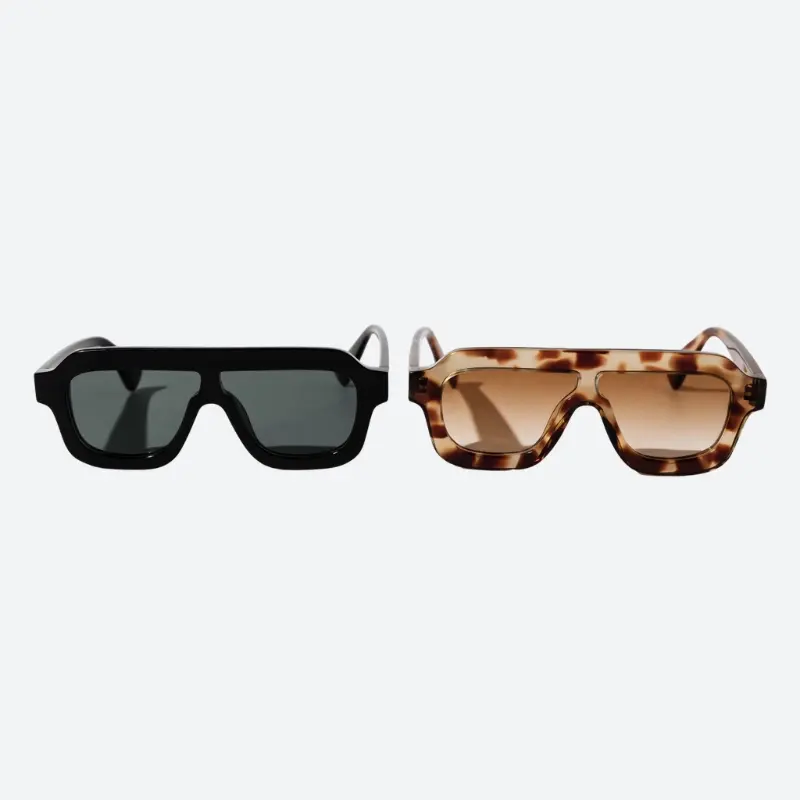
Acetate aviators are a distinct category — the shape is traditionally associated with thin metal frames, but acetate aviators offer a material upgrade that feels premium without being heavy. The key is getting the proportions right: acetate adds visual weight, so the frame lines need to be slightly cleaner than an equivalent metal aviator.
What to know before specifying aviator acetate frames
Bridge construction: The classic double bar bridge in acetate requires careful engineering — the bar needs to add visual reference without becoming dominant. Single bar acetate aviators offer a cleaner, more modern interpretation.
Lens size: Aviators typically run 58–64mm wide. Oversized acetate aviators (62mm+) read as fashion-forward; standard sizing (58–60mm) reads as classic and versatile.
Color approach: Unlike round or cat eye frames where distinctive colors are part of the appeal, aviators often work best in classic colorways — black, tortoiseshell, transparent — that reinforce the shape’s timeless character. Bold colors can work but require a stronger brand story.
Brand fit: Aviator acetate frames suit brands targeting a broad demographic at $60–$150 retail. They are particularly strong in wholesale and multi-channel distribution because of their broad appeal and universal familiarity.
Oversized Frames: The Fashion-Forward Statement
Oversized acetate frames are the highest-risk, highest-reward shape in the category.
Oversized frames — defined as frames with lens widths of 58mm or above, or frame fronts that extend notably beyond the face — are fashion statements by definition. They require commitment from the brand and the wearer. When they work, they create an immediate, memorable visual impact that smaller frames cannot achieve. In acetate, the material’s weight and surface richness add to the presence of an oversized frame in a way that injection plastic cannot replicate.
The commercial reality of oversized frames: they sell well in fashion boutiques and to fashion-forward e-commerce customers, but they are harder to move in wholesale or mass retail where broader wearability is the priority. For brands building at premium price points with a fashion-forward positioning, one oversized style in the collection can be a signature piece.
What to know before specifying oversized acetate frames
Proportional consistency: Oversized frames only work when every dimension is proportionally scaled — wider temples, deeper lenses, appropriate bridge width. An oversized lens in a standard-width frame looks unbalanced.
Material thickness: Oversized acetate frames typically run 6–8mm thick to provide the visual weight the shape requires. Thinner acetate on an oversized frame looks lightweight and undercuts the design intention.
Color strategy: Oversized frames tend to work best in statement colors — rich tortoiseshell, bold solid colors, distinctive patterns — that match the frame’s visual ambition. A large frame in matte black is commercial; a large frame in a distinctive custom color is a collection hero.
Brand fit: Oversized frames suit brands building at $80–$200+ retail with a fashion-forward positioning. Best as one or two styles in a collection, not as the anchor shape.
Geometric Frames: The Editorial Edge
Geometric frames — hexagonal, octagonal, pentagonal, shield-style — represent the most forward-facing end of the acetate frame shape spectrum.
Geometric frames signal that a brand has a genuine design point of view. They are not for everyone, which is precisely why they work for brands targeting fashion industry buyers, concept retail, and style-leading consumers who actively seek differentiation. In acetate, geometric shapes benefit from the material’s ability to carry complex colors and patterns that reinforce the shape’s distinctive character.
Geometric frames require the most careful brand fit assessment of any shape. They sell to a smaller customer base than round, square, or aviator frames — but to that customer base, they are exactly the right product. For brands building a fashion-credible collection, one geometric style signals design seriousness.
Brand fit
Geometric frames suit brands at $80–$200+ retail targeting boutique, concept retail, or fashion-forward e-commerce. They work as accent pieces in a collection that includes more commercially accessible anchor shapes — not as the primary shape.
How to Build Your First Acetate Frame Shape Collection
Understanding individual shapes is one thing. Knowing how to combine them into a coherent first collection is another.
The most common mistake first-time eyewear brands make is choosing shapes based on personal preference rather than market strategy. A collection of five shapes that all say the same thing is repetitive. A collection of five shapes that say contradictory things is incoherent. The goal is a shape range that covers different styling moments within a consistent brand aesthetic.
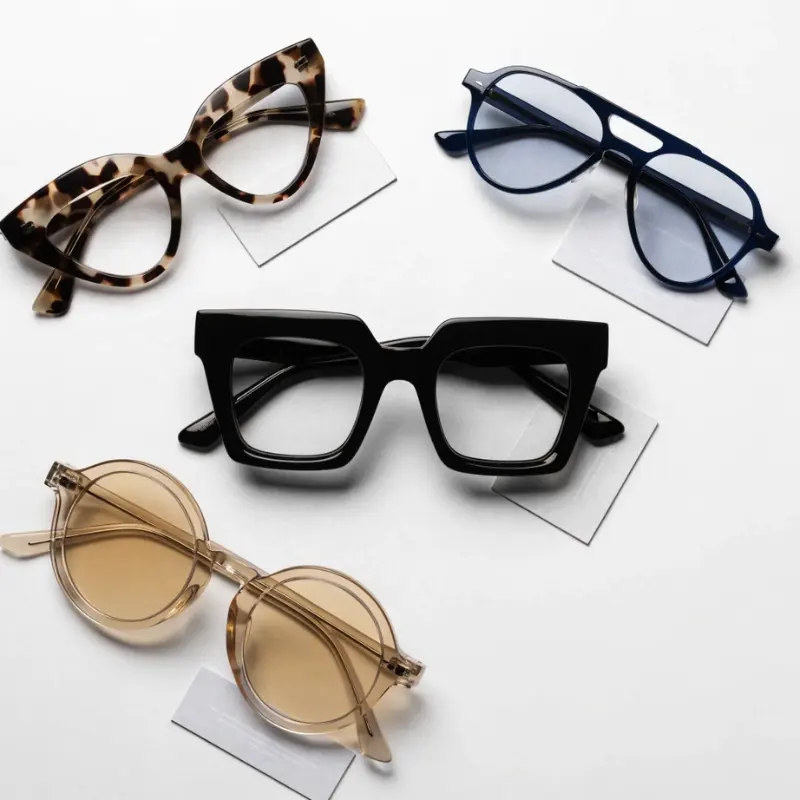
Here’s a framework for building a first acetate collection of three to five shapes:
Shape 1: Your anchor shape (choose one)
Your anchor shape should be your most commercially accessible style — the one you expect to drive the most volume. For most brands, this is a square or rectangle frame, an oval, or a round frame depending on your brand positioning.
The anchor shape should work across the widest range of your target customers, photograph well for e-commerce, and be suitable for wholesale conversations if wholesale is part of your distribution strategy.
Shape 2: Your signature shape (choose one)
Your signature shape is the one that defines your brand’s aesthetic. It’s usually more fashion-forward than the anchor — a cat eye, an oversized style, a distinctive geometric — that gives your collection a point of view.
The signature shape doesn’t need to be your highest-volume seller. It needs to be the piece that makes buyers and customers understand what your brand is about.
Shape 3: Your range extension (choose one or two)
Range extensions fill out the collection with shapes that complement the anchor and signature without competing with them. An aviator alongside a round anchor gives the collection a classic option. A browline alongside a square anchor gives it a vintage dimension.
The shape coherence test
Before finalizing your shape selection, apply this test: lay out the frame shapes side by side and ask whether they could all plausibly appear in the same lookbook, worn by the same type of person. If the answer is yes, your collection is coherent. If one shape feels out of place, it’s pulling your brand positioning in two directions.
This is part of our complete guide to custom acetate sunglasses manufacturing. If you want to discuss frame shape options for your collection — including technical specifications and existing mold availability — we respond within 4 business hours.
Frame Shape Quick Reference for Brand Buyers
Use this table when planning your collection:
| Shape | Best Retail Price Range | Best Channel | Collection Role | MOQ |
|---|---|---|---|---|
| Round | $60–$150 | Boutique, e-commerce | Anchor or signature | 300 pcs/style/color |
| Square / Rectangle | $40–$200 | Multi-channel | Anchor | 300 pcs/style/color |
| Cat Eye | $60–$180 | Boutique, fashion e-com | Signature | 300 pcs/style/color |
| Aviator | $60–$150 | Multi-channel, wholesale | Anchor or range ext. | 300 pcs/style/color |
| Oversized | $80–$200+ | Boutique, fashion e-com | Signature | 300 pcs/style/color |
| Geometric | $80–$200+ | Boutique, concept retail | Signature or accent | 300 pcs/style/color |
| Browline | $60–$150 | Boutique, optical | Range extension | 300 pcs/style/color |
| Oval | $40–$120 | E-commerce, lifestyle | Anchor or range ext. | 300 pcs/style/color |
Conclusion
Frame shape selection is brand positioning work. Each shape carries associations, communicates to a specific customer profile, and fits certain retail channels better than others. A coherent collection built around an anchor shape, a signature shape, and one or two range extensions gives your brand a clear aesthetic identity — and gives buyers a reason to carry your line. In acetate, the material’s color depth and surface quality amplify the impact of any shape you choose. The shape determines who the product is for. The acetate determines how well it delivers on that promise.
Frequently Asked Questions
What are the most popular acetate sunglasses frame shapes for brands?
Square and rectangle frames are the most commercially versatile — they work across boutique, e-commerce, optical, and wholesale channels. Round frames are strong for fashion-forward and boutique positioning. Aviators have the broadest demographic appeal. Cat eye frames are the strongest shape for women’s fashion positioning. Most brands build their first collection around one anchor shape (square or round) and one signature shape (cat eye, oversized, or geometric).
Which frame shape is best for a first acetate sunglasses collection?
Square or rectangle frames are the safest starting point for most brands — they photograph well, suit a broad demographic, work in multiple retail channels, and have the most consistent commercial demand. Round frames are a strong alternative for brands with a clear boutique or fashion-forward positioning. Avoid leading with oversized or geometric shapes for a first collection — save these for your second or third collection once your brand’s aesthetic identity is established.
How does frame shape affect brand positioning?
Frame shape is one of the primary visual signals your brand sends before any copy is read. Round frames signal artistic and vintage character. Square frames signal confident and urban character. Cat eye frames signal feminine fashion confidence. Oversized frames signal fashion-forward ambition. Geometric frames signal editorial design credibility. Choosing shapes that are coherent with each other and with your target customer’s self-image is essential for building a collection that feels intentional rather than assembled.
What is the MOQ for custom acetate sunglasses by frame shape?
MOQ for acetate sunglasses using existing molds (ODM) is typically 300 pieces per style per colorway, regardless of frame shape. For fully custom OEM frame shapes requiring new mold tooling, MOQ varies — typically 300–500 pieces with a one-time mold tooling fee. Confirm mold availability for your preferred shapes with your manufacturer before committing to a shape that requires new tooling.
Can I use existing molds for acetate frame shapes, or do I need custom tooling?
Most manufacturers maintain a library of existing molds across all major frame shapes — round, square, rectangle, cat eye, aviator, oversized, geometric, browline, oval. Using an existing mold (ODM approach) eliminates mold tooling costs and reduces lead time. If your brand requires a fully original silhouette, custom mold tooling is required — this adds cost and 4–8 weeks to the production timeline. For a first collection, ODM with existing molds is typically the right approach.
Which acetate frame shapes work best for boutique retail?
Round, cat eye, oversized, and geometric frames perform best in boutique retail — shapes with a distinct aesthetic identity that boutique buyers can build a story around. Square and rectangle frames also work well in boutique contexts when they have distinctive proportions or color. Aviators and oval frames are better suited to e-commerce and multi-channel distribution where broad wearability is more important than distinctive character.
How do I choose between an anchor shape and a signature shape for my collection?
Your anchor shape should be your most commercially accessible style — the one you expect to drive volume across your widest customer range. Your signature shape should be the one that defines your brand’s aesthetic and gives buyers a reason to remember you. For most brands, the anchor is a square, rectangle, or round frame; the signature is a cat eye, oversized, or geometric style. Start with the anchor, add the signature, then extend with one or two complementary shapes.
Let's get started!
Get in touch with a custom eyewear specialist now for a free consultation and instant price quote.
WHATSAPP ME GO!
📱 Scan with your phone to start chatting