CSA Z94.3 Explained: What Brands Need to Know Before Selling Safety Eyewear in Canada
CE gets you into the UK and EU. ANSI Z87.1 covers the US. Neither one covers Canada. If your line includes safety or protective eyewear and Canada is on your map, CSA Z94.3 is the standard your product actually needs to meet — and it works differently enough from ANSI that assuming they’re interchangeable can cost you a resample.
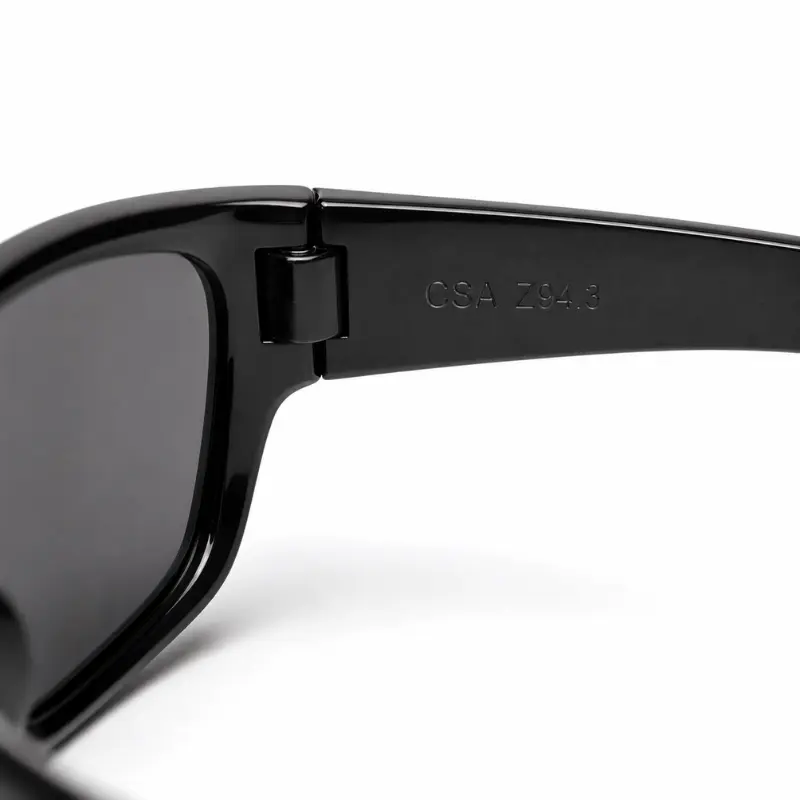
What CSA Z94.3 Actually Tests
The standard covers a handful of core performance areas:
- Impact resistance — how the lens and frame hold up against a direct hit
- Penetration resistance — resistance to sharp or pointed objects breaching the lens
- Optical transmittance — UV and visible light transmission, tied to UV protection performance
- Corrosion resistance — how the frame holds up against sweat exposure over time
- Flammability — resistance to ignition
None of this is unusual on its own — it overlaps substantially with what ANSI Z87.1 tests for in the US. Where CSA Z94.3 gets specific, and where it actually changes how you plan a product line, is in what gets tested and how.
The Detail That Changes Your Cost Math: Prescription vs. Non-Prescription
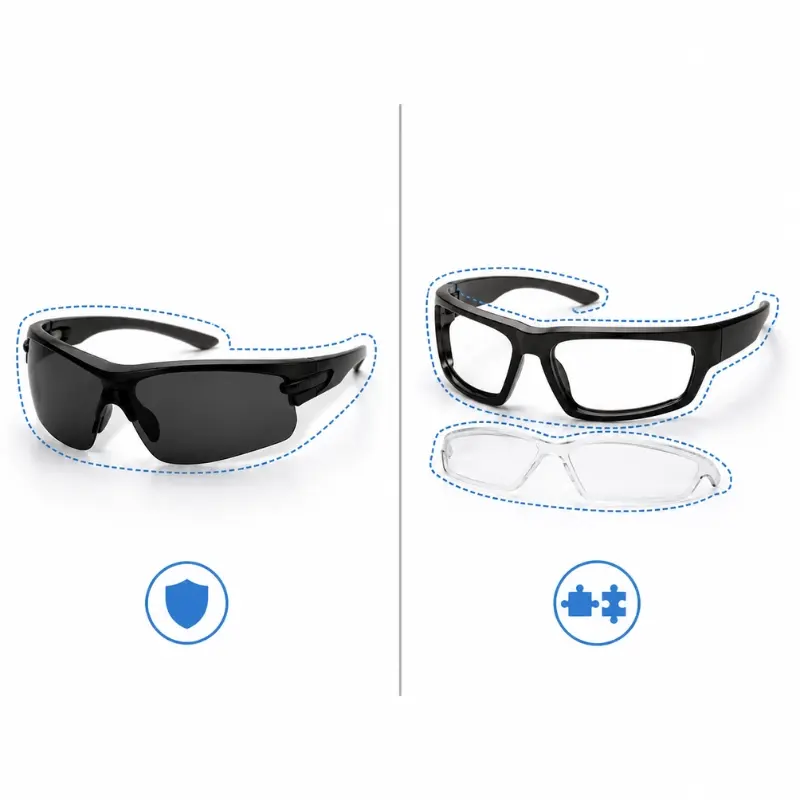
This is the part that catches brands off guard, and it’s not something you’ll find spelled out on a retailer’s product page. CSA Group’s own standard documentation draws a clear line between two testing approaches:
Non-prescription eyewear (standard protective sunglasses, plano safety glasses) is tested as a fully assembled product — frame and lens together, not as separate components. In practice, this means every frame-and-lens combination is treated as its own product for testing purposes. Offer the same frame in three lens colors, and you’re potentially looking at three separate certifications, not one certificate covering all three.
Prescription eyewear (Class 1 protectors with corrective lenses) gets evaluated differently — the standard allows frame and lens to be assessed separately. Once a frame is certified, swapping in different prescription lenses doesn’t necessarily require recertifying the whole assembly.
If you’re planning a multi-colorway or multi-SKU safety eyewear line for the Canadian market, this single distinction has a direct impact on your certification budget and timeline — and it’s worth mapping out before you finalize how many lens/frame combinations go into a first order, not after.
Who Can Actually Test to This Standard
It’s a common assumption that CSA Group is the only place that can certify a product to CSA Z94.3. That’s not quite right. CSA Group operates in two separate roles — one side develops the standard itself, the other operates as an accredited testing lab. But testing and certification can be carried out by any lab recognized as a qualified Certification Body by the Standards Council of Canada (SCC) — CSA Group is one option among several, not the only one. SEI is another certifying body that appears on real certified products alongside the CSA mark. The test that matters when evaluating a lab isn’t “is this CSA Group” — it’s whether the SCC recognizes that lab as an accredited certification body for this standard.
What Gets Tested — and What Doesn’t Count
A few practical requirements are easy to miss:
- Physical samples only. Certification testing has to be done on an actual finished product — design files or CAD drawings aren’t accepted as a substitute. This has a direct scheduling implication: you can’t start certification testing before a real sample exists, so it needs to be planned as a step after sampling, not in parallel with it.
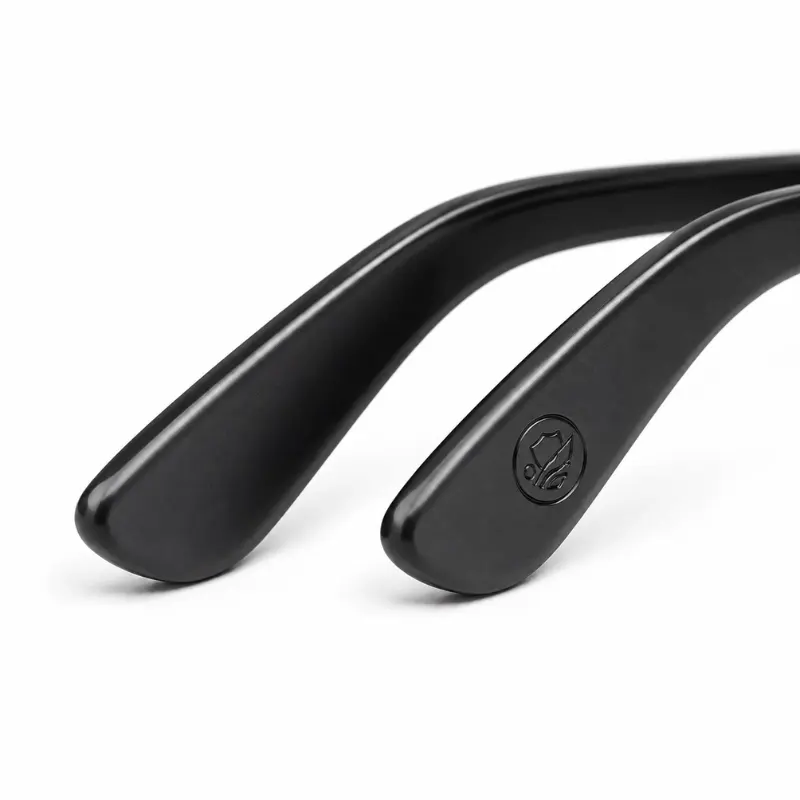
- Marking requirements are specific. The certification mark has to appear on every approved component — lenses, front frame, temples, and any removable side shields. This is also a useful way to spot a genuine certification versus a claim: if a product only carries the text “Z94.3” without an accompanying CSA, SEI, or other accredited certifying body’s mark, it likely hasn’t actually been through accredited third-party testing — it’s a compliance claim, not a certified result.
Frequently Asked Questions
Can multiple frame colors or styles share one CSA Z94.3 certificate?
For non-prescription eyewear, generally no — testing applies to the whole assembled product, so each frame-and-lens combination is typically treated as a separate product requiring its own testing. Prescription (Class 1) products are the exception, since frame and lens can be evaluated separately.
What’s the order of operations — do we need a finished sample before testing can start?
Yes. Certification testing requires a physical, finished sample; design files alone aren’t sufficient. Plan certification as a step that follows sample approval, not one that runs in parallel with development.
Who typically pays for CSA Z94.3 certification, and whose name goes on the certificate?
This varies by project, but in practice, certification costs are usually carried by the brand commissioning the design, and the certificate is issued in that brand’s name — which is also why a factory generally can’t share another client’s certification documents as a reference or proof of capability for your product.
If we add our logo after a design is certified, does the certification still apply?
Not automatically. The logo needs to be part of the same physical sample that was submitted for testing — certifying a plain, unbranded version first and adding a logo afterward isn’t the same product from a certification standpoint.
How does CSA Z94.3 relate to ANSI Z87.1 — do we need both?
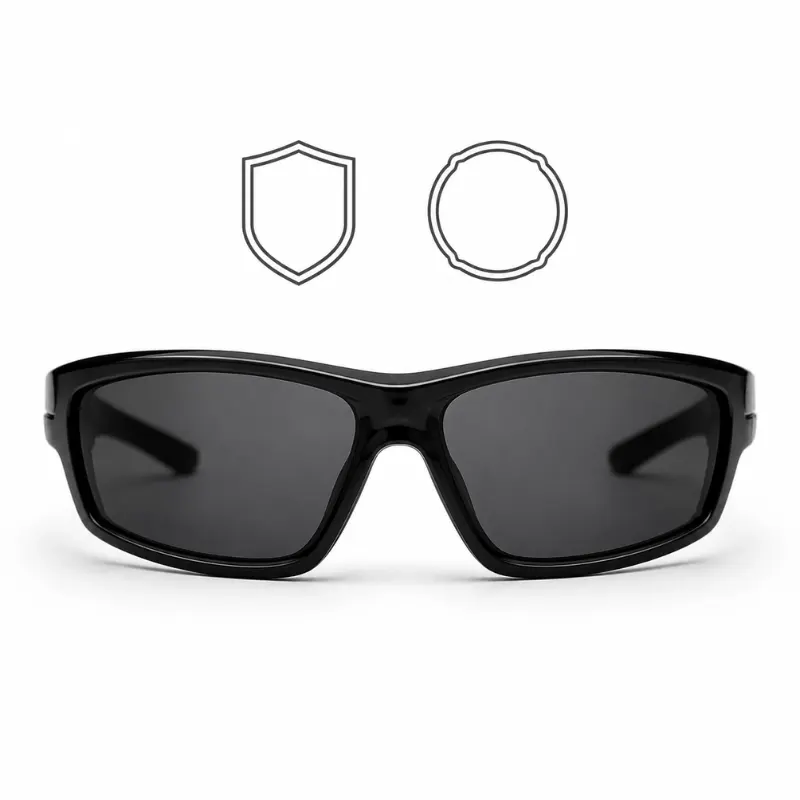
They’re separate standards for separate markets (Canada and the US, respectively), but they aren’t mutually exclusive. Dual certification — a product tested and marked for both CSA Z94.3 and ANSI Z87.1 — is common, and it lets a single product line serve both markets rather than requiring separate development for each.
Certification is one of those steps that looks like paperwork until it isn’t — planned early, alongside the rest of your production process, it barely changes your timeline. Planned late, it can reshape it.
Let's get started!
Get in touch with a custom eyewear specialist now for a free consultation and instant price quote.
WHATSAPP ME GO!
📱 Scan with your phone to start chatting