Sunglasses Base Curve Explained: What Brand Buyers Need to Know Before Briefing a Factory
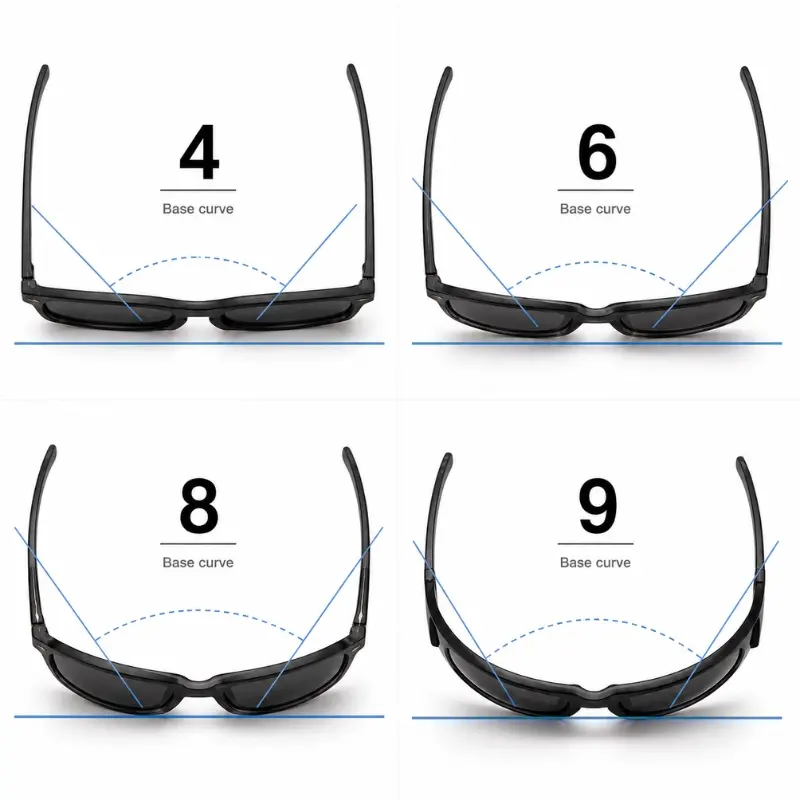
Base curve is one of those specs that’s easy to skip over in a design brief — until a sample comes back looking flatter or more wrapped than you pictured, or a prescription version turns out not to be possible in the shape you wanted. It’s a real engineering decision, not a style detail, and it’s worth understanding before you’re deep into sampling rounds.
What Base Curve Actually Is
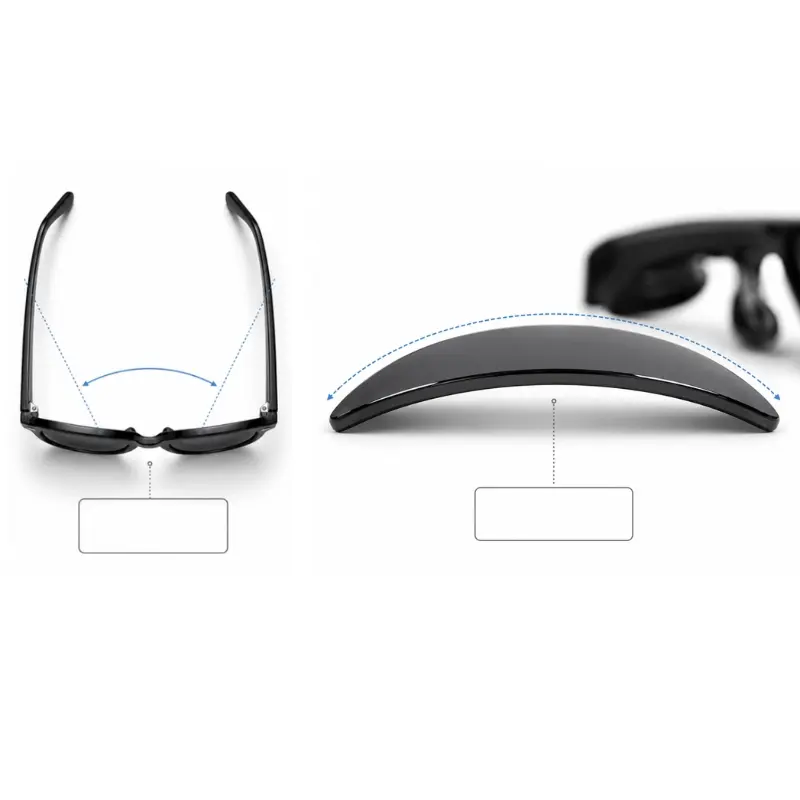
Base curve describes how curved the front surface of a lens is — flat like a windowpane, or wrapped like a section of a sphere. The industry expresses this as a number: the higher the number, the more pronounced the wrap.
It’s easy to confuse with a related but different measurement: frame curve (sometimes called face form angle) — the angle at which the two lens planes of a frame sit relative to each other, independent of how curved each individual lens is. A frame can have a wide face-form angle while still being fitted with relatively flat lenses, or vice versa — but in practice, the two need to be matched. A high-wrap frame paired with a lens that isn’t curved enough will get forced flat during assembly, distorting the intended shape and putting stress on the lens that can eventually cause it to pop out of the frame. If you’re briefing a factory, it’s worth being specific about which one you’re referring to when you say “curve” — the two get mixed up often enough that it causes real confusion in a design brief.
The Scale Most International Buyers Will Recognize
Base curve is typically referenced on a scale from roughly 0 to 10:
- Base 0–4 — flat to nearly flat. Common in prescription-first eyewear, since a flatter front surface accommodates a wider range of prescription strengths without distortion.
- Base 4–6 — the range most mainstream fashion sunglasses sit in. It gives a natural field of view and enough wrap to feel current without limiting prescription compatibility too much.
- Base 8–9 — pronounced wraparound. This is where sport, cycling, and performance eyewear lives — the wrap improves peripheral coverage and wind/glare protection, though it narrows how strong a prescription can be fitted without visible distortion.
The Numbers You’ll See on a Chinese Production Floor
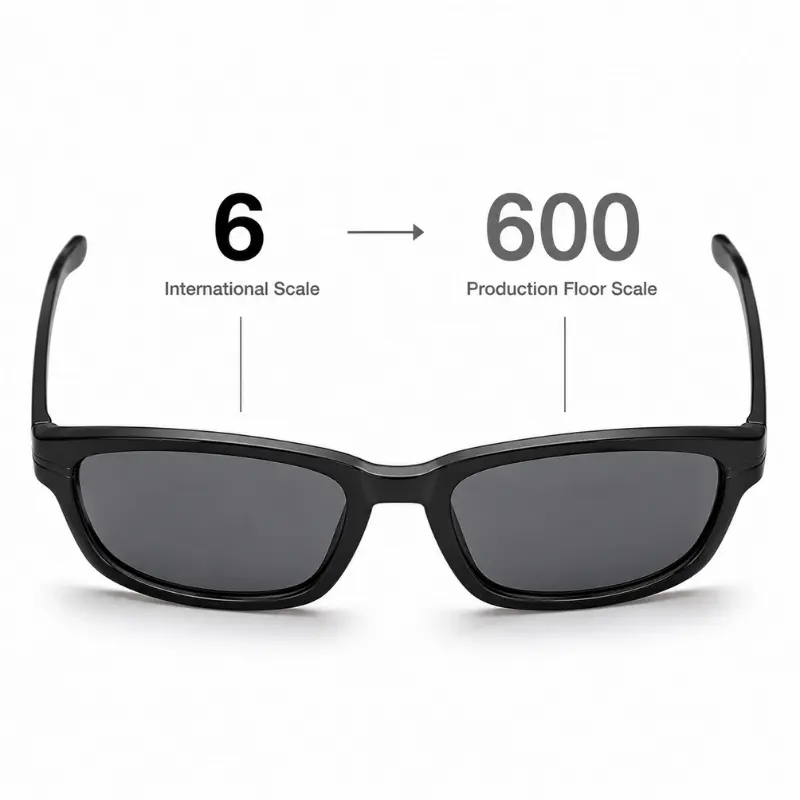
If you’re sourcing from a Chinese factory, don’t be surprised to hear curve referenced in a different-looking number — 200, 400, 600, 800, sometimes up to 900 rather than 2, 4, 6, 8. This isn’t a separate, incompatible system — it’s the same underlying measurement, commonly expressed at a larger scale on the production floor rather than with a decimal (writing “250” instead of “2.5,” for example, reads more clearly on a spec sheet than a fraction does). Lining the two scales up:
| Production floor | International equivalent | Typical use |
|---|---|---|
| 0 | Base 0 | Completely flat |
| 200 | Base 2 | Flat baseline, optical/prescription |
| 400 | Base 4 | Common sunglasses curve |
| 450 | Base 4.5 | More common on optical/prescription lenses than on sunglasses |
| 600 | Base 6 | Common sunglasses curve, more wrapped |
| 800 | Base 8 | High wrap — sport, performance |
| 900 | Base 9 | Maximum wrap — shield-style, extreme wraparound |
This lines up with how the terms are actually used on the floor — sources in the trade describe 200 as the standard for ordinary optical lenses and 400 as typical for sunglasses, with 600 and 800 specifically called out as the “large curve” values reserved for sunglasses and sport lenses. Treat the table above as a working reference rather than a fixed conversion rule, though — confirm the exact figure your factory is using before it goes into a tech pack, since notation can vary between suppliers.
Flat Doesn’t Mean “Settled For”
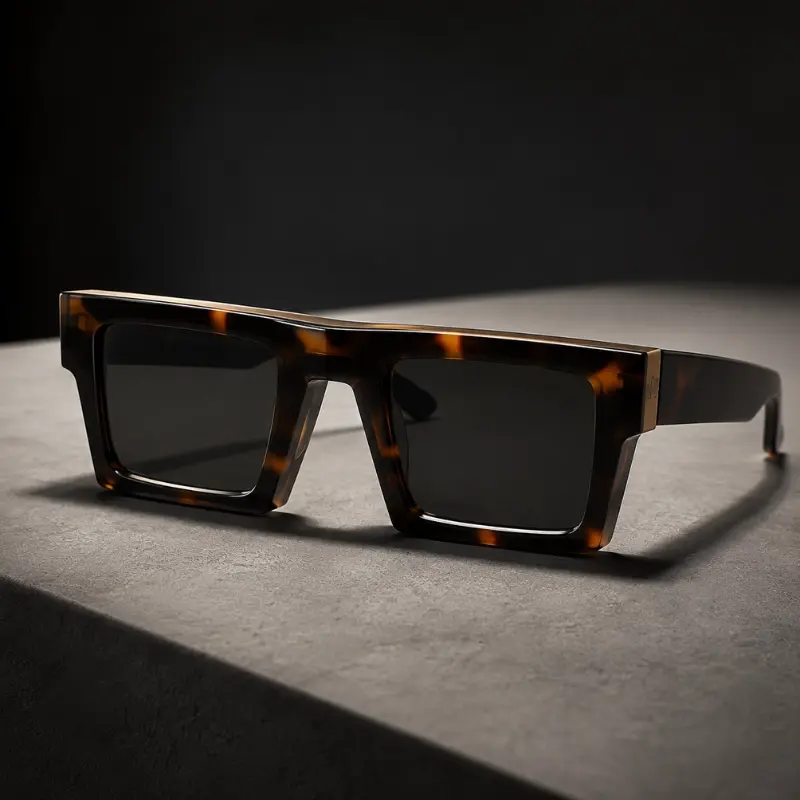
Most consumer guides frame a flat base curve as a practical compromise — what you accept if you need a strong prescription and can’t have much wrap. That’s true for prescription eyewear, but it undersells what flat curves are doing in fashion sunglasses right now.
Gentle Monster, the Korean eyewear brand known for bold, sculptural design, has released styles explicitly described as flat, boeing-shaped acetate frames — a deliberate design choice, not a limitation. In a category that’s leaning into geometric, architectural silhouettes, a flat front surface reads as a clean, intentional statement rather than a missed opportunity to wrap. If a customer or a design reference is asking for a flat build, it’s worth clarifying early whether that’s a cost/simplicity decision or a genuine style direction — the two get treated differently in development, even though the resulting curve number might look the same on paper.
What This Means When You’re Briefing a Factory
A few things worth putting in writing before sampling starts, rather than assuming they’ll be sorted out later:
- State the base curve explicitly, using whichever scale your factory works in, and confirm which measurement — base curve or frame curve — you’re actually specifying.
- Flag it early if you’re planning a prescription-ready line. A high base curve locks you out of stronger prescriptions without visible lens distortion; if Rx compatibility matters to your brand, this needs to be decided before a mold is cut, not after.
- Say whether the curve is a style choice or a cost decision. A flat frame built because it’s cheaper to tool reads differently in development than a flat frame built because it’s the design language — even if the spec sheet looks identical.
Frequently Asked Questions
What’s a “normal” base curve for sunglasses?
Sunglasses most commonly run base 4 or base 6 (400 or 600 on the production-floor scale) — enough wrap to feel current without significantly limiting prescription options. 450 (base 4.5) shows up more often on optical/prescription lenses than on sunglasses.
Is a higher base curve always better?
No — it depends on the use case. Higher base curves (8–9) suit sport and performance eyewear where wraparound coverage matters, but they limit how strong a prescription can be fitted without distortion, and they can look overly sporty for a fashion-first collection.
Can any base curve be made into prescription sunglasses?
In principle, but the practical range narrows as base curve increases. Flatter curves (0–4) accommodate the widest range of prescriptions cleanly; high-wrap curves (8+) typically only work well with milder prescriptions before distortion becomes noticeable.
Is a flat frame a sign of a lower-quality or budget build?
Not necessarily. Flat construction is standard for prescription-first eyewear, and it’s also a deliberate design choice in some of today’s boldest fashion eyewear. The context — and the rest of the build quality — matters more than the curve number alone.
Why do the base curve numbers I hear from my factory look so different from what I’ve read online?
Chinese production floors commonly reference base curve on a larger numeric scale (200, 400, 600, 800) rather than the international 2–8 scale, largely to avoid decimals on spec sheets. The two describe the same measurement — just confirm the exact figures with your factory before finalizing a tech pack.
Base curve is a small line on a spec sheet with an outsized effect on how a frame fits, wears, and photographs — worth locking down clearly with your factory during the production process, not something to leave implied.
Let's get started!
Get in touch with a custom eyewear specialist now for a free consultation and instant price quote.
WHATSAPP ME GO!
📱 Scan with your phone to start chatting