Metal Optical Frame Rim and Hinge Design: What Opticians Need from Your Frame Supplier
A metal optical frame looks finished the moment it leaves the factory, but two parts of it are really only half-done: the hinge, which has to survive years of daily opening and closing, and the rim, which has to hold a lens that hasn’t been cut yet. Get either one wrong and the problem doesn’t show up on your QC bench — it shows up months later, in a local optician’s chair, as a loose temple or a lens that won’t seat properly.
This is the part of a metal optical frame brief that’s easiest to under-specify, because “hinge” and “rim” sound like finished, standardized components. They’re not. Here’s what actually varies, and what to ask your supplier for.

Why Hinge and Rim Specs Matter More on Optical Frames Than Sunglasses
An optical frame is opened and closed far more often than a sunglasses frame, and its rim has a job sunglasses rims don’t: holding a demo lens that will eventually be removed and replaced with an edged prescription lens by a lab the factory never sees. We’ve covered why that changes frame construction overall in Metal Optical Frames vs Metal Sunglasses: What Actually Changes in Frame Construction — this article goes deeper into the two components where that difference actually gets engineered: the hinge and the rim.
Hinge Types: Standard, Spring, and What Barrel Count Signals
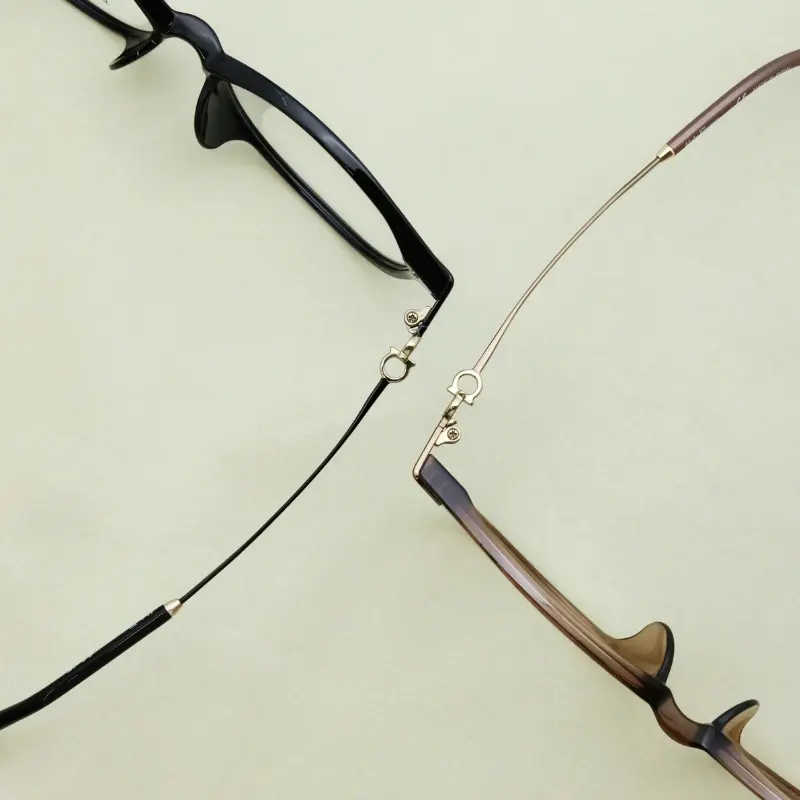
Most metal optical frame hinges are one of two types. A standard (barrel) hinge uses interlocking metal loops held together by a screw, opening to a fixed angle around 90 degrees. A spring hinge adds an internal spring cartridge that lets the temple flex outward past that angle and return to shape, which is why it’s the more common specification for frames worn most of the day rather than occasionally.
Barrel count is a second, easy-to-overlook signal. Standard hinges are typically built with three, five, or seven interlocking barrels — more barrels generally means a stronger, more stable joint, which is part of why heavier or wider temple designs are usually paired with five- or seven-barrel hinges rather than three. If your supplier can’t tell you the barrel count on a given hinge, that’s worth flagging before tooling.
Hinge Durability: What Cycle Testing Actually Means
“Durable hinge” isn’t a spec — cycle count is. Reliable hinge manufacturing is tested against ISO 12870, the international standard for spectacle frame requirements, which calls for hinges to withstand tens of thousands of open-close cycles before showing looseness or failure. This is the number to ask your factory for directly, rather than accepting “premium hinge” as a description: an optical frame worn and folded ten-plus times a day accumulates cycles far faster than a sunglasses frame worn intermittently, so a hinge that tests fine for sunglasses use can still fail early in an optical program.
Hinge screws are part of this same conversation. Screws that back out or corrode are one of the most common after-sales complaints on metal frames, and specifying a nickel-free screw — not just a nickel-free frame alloy — is worth confirming explicitly if your product is positioned around sensitive-skin comfort, since the screw sits in direct, constant contact with skin at the hinge.
At Sailook, hinges are an outsourced component sourced from specialist hinge suppliers, with white copper as the primary hinge material — a detail worth knowing if you’re comparing quotes, since hinge quality and sourcing is a separate line item from the frame’s main alloy.
Rim and Groove Design: Building for a Lens That Isn’t Cut Yet
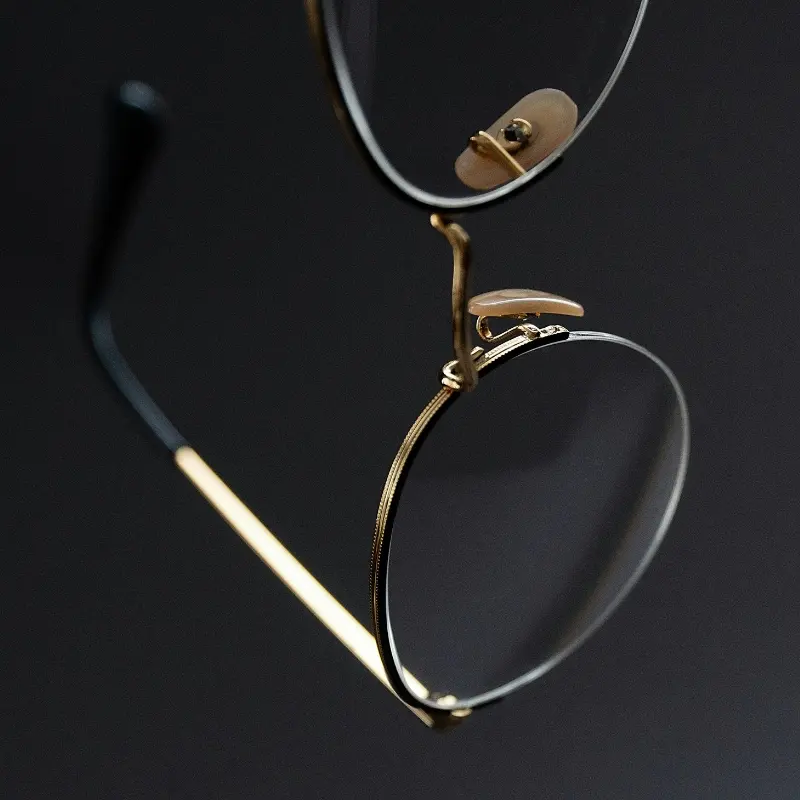
A full-rim optical frame’s eyewire is typically closed by brazing — a locking block clamped at the join, then soldered so the rim can tighten around a lens. That join gets reopened at least once, when the demo lens comes out and the local lab’s prescription lens goes in, and possibly again if the wearer’s prescription changes later. A rim built to close cleanly exactly once, the way some lower-cost sunglasses production treats it, is the wrong spec for an optical program.
Semi-rimless designs raise the same issue in a different place: the nylon-cord groove. A grooving wheel cuts this channel to a fairly tight tolerance — commonly around 0.5 mm wide and 0.4 to 0.5 mm deep — and the groove has to track the lens’s exact contour, not just an approximate outline. A groove cut inconsistently across a production batch means some units fit the local lab’s lens perfectly and others don’t, which shows up as inconsistent complaints from different regions rather than a single obvious defect.
Rimless mounts shift the question again, to drilling: hole placement and depth have to account for lens thickness at that specific point, which varies by prescription strength.
Groove Tolerance and Boxing Dimensions: The Numbers Worth Asking For
Two figures are worth putting directly into your supplier brief rather than leaving implicit:
- Boxing dimensions and tolerance. Frame measurements (lens width, bridge width, temple length) are typically expected to hold within about ±0.25 mm of spec, in line with widely used industry tolerance standards for frame dimensions. A batch that drifts beyond that on the groove’s “bottom of groove” dimension will cause lenses traced to spec to sit loose or tight once they reach an optical lab.
- Bevel and groove position. For semi-rimless and full-rim frames alike, where the lens bevel or groove sits relative to the front and back face of the eyewire affects how flush a high-prescription lens sits — labs typically shift the bevel toward the front face for strong minus lenses to avoid the front edge extending past the rim. This isn’t something your frame factory controls at the finishing stage, but rim depth and groove geometry set the boundaries the lab is working within, so a rim that’s too shallow limits what the lab can do regardless of their equipment.
What to Put in Your Supplier Brief
Before tooling starts on a metal optical frame program, these are the specifics worth confirming in writing rather than assuming:
- Hinge type (standard or spring) and barrel count for each temple design
- Cycle-testing standard the hinge is rated against, and whether that rating reflects daily optical wear rather than intermittent sunglasses use
- Hinge screw material, with nickel-free screws confirmed separately from the frame alloy if hypoallergenic positioning matters
- Rim closure method (brazed join, threaded groove, or drilled mount) and whether it’s built to be reopened by a third-party lab more than once
- Groove width and depth for semi-rimless designs, and the tolerance range the factory holds across a production run
- Boxing dimensions and the tolerance standard used for lens width, bridge width, and temple length
Frequently Asked Questions
What’s the difference between a spring hinge and a standard hinge for optical frames?
A standard (barrel) hinge opens to a fixed angle, usually around 90 degrees, using interlocking metal loops and a screw. A spring hinge adds an internal spring that lets the temple flex further outward and return to shape, which is why it’s more commonly specified for frames worn most of the day.
How many hinge cycles should a metal optical frame hinge withstand?
Reliable hinge construction is tested against ISO 12870, which calls for tens of thousands of open-close cycles before the hinge loosens or fails. Ask your supplier for the specific cycle rating rather than accepting a general “durable” or “premium” description.
Why does barrel count matter on a metal eyeglass hinge?
More barrels generally means a stronger, more stable joint. Hinges with five or seven interlocking barrels are typically specified for heavier or wider temple designs, while three-barrel hinges are common on lighter, simpler frames.
What groove depth do opticians need for semi-rimless lens fitting?
Semi-rimless (nylor) grooves are typically cut to around 0.5 mm wide and 0.4 to 0.5 mm deep, and need to track the lens’s exact contour rather than an approximate outline. Inconsistent groove depth across a production batch is a common cause of lenses fitting well in some units and poorly in others.
Should optical frame hinge screws be nickel-free?
If your product is positioned around sensitive-skin comfort, yes — this is worth confirming separately from the frame alloy, since the hinge screw sits in direct, constant contact with skin and is easy to overlook when a brand only specifies the main frame material as nickel-free.
If you’re briefing a metal optical frame program and want hinge cycle ratings, groove tolerances, and rim construction specified correctly from the first sample rather than caught at QC, our metal optical frames program is built around exactly this level of detail.
Let's get started!
Get in touch with a custom eyewear specialist now for a free consultation and instant price quote.
WHATSAPP ME GO!
📱 Scan with your phone to start chatting