Metal Optical Frames vs Metal Sunglasses: What Actually Changes in Frame Construction
Pull a metal sunglasses frame and a metal optical frame from the same production line, and at first glance they look like siblings — same stainless steel or Monel, same wire-cutting and welding process, same plating line. But brands sourcing a metal optical frame program for the first time are often surprised at how many small construction decisions change once the frame’s job shifts from “worn a few hours outdoors” to “worn eight to ten hours a day, then handed to an optical lab to be fitted with a prescription lens.”
The metal doesn’t change. The engineering around it does. Here’s what actually shifts, and why it matters if you’re briefing a factory.
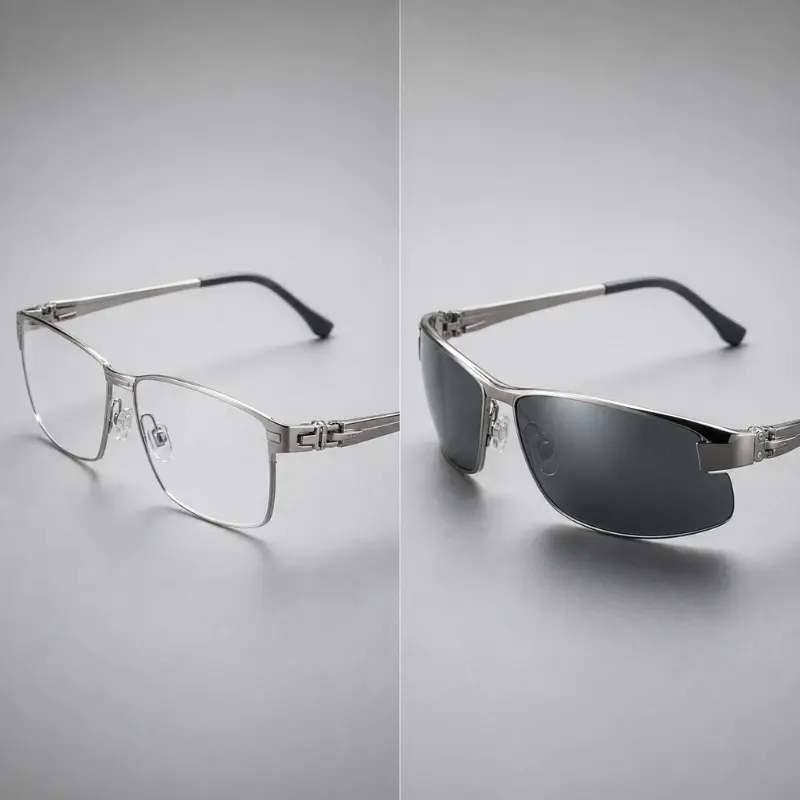
The Real Difference Isn’t the Metal — It’s How the Frame Gets Used
A pair of metal sunglasses is typically worn intermittently, outdoors, with a lens that’s fixed into the frame once at the factory and rarely touched again. A metal optical frame is worn most of the waking day, indoors and out, against bare skin at the nose and temples, and it’s built with the expectation that a local optical lab — not the factory — will be cutting and mounting the actual prescription lens, possibly more than once over the frame’s life.
Every construction difference below traces back to that one fact: optical frames are built for daily, long-duration wear and for a lens that goes in after the frame leaves the factory.
Rim Construction: Why Optical Frames Have to Open Again Someday
Metal rims are typically joined by brazing — a small locking block is clamped at the join, flux is applied, and the two ends of the eyewire are soldered together so the rim can be tightened around the lens. On a sunglasses frame, that joint is closed once, the tinted lens is seated, and the frame is done.
An optical frame’s rim has to do more. Frames typically ship with one of two things installed: a demo lens, which is a placeholder — it protects the frame from deformation in transit and storage, not a finished product — or a blue-light lens, which is a functional, ready-to-use lens the brand can sell as-is without any further lab work. When a frame ships with a demo lens, the rim gets opened at the wearer’s optical lab, the demo lens comes out, an edged prescription lens goes in, and the rim is tightened again. If the wearer’s prescription changes, that cycle can repeat. This is exactly why we ship optical frames with a demo lens installed rather than leaving the rim empty: the demo lens holds the rim’s shape and geometry during shipping and storage, so it opens and closes cleanly when the local lab is ready to fit the real lens.
For semi-rimless and rimless designs, the same logic applies to the nylon-cord groove or the drilled lens-edge mounting: these need to tolerate being reworked by a lab technician using different tools thousands of kilometers from the factory, not just hold a lens that was seated once under controlled conditions.
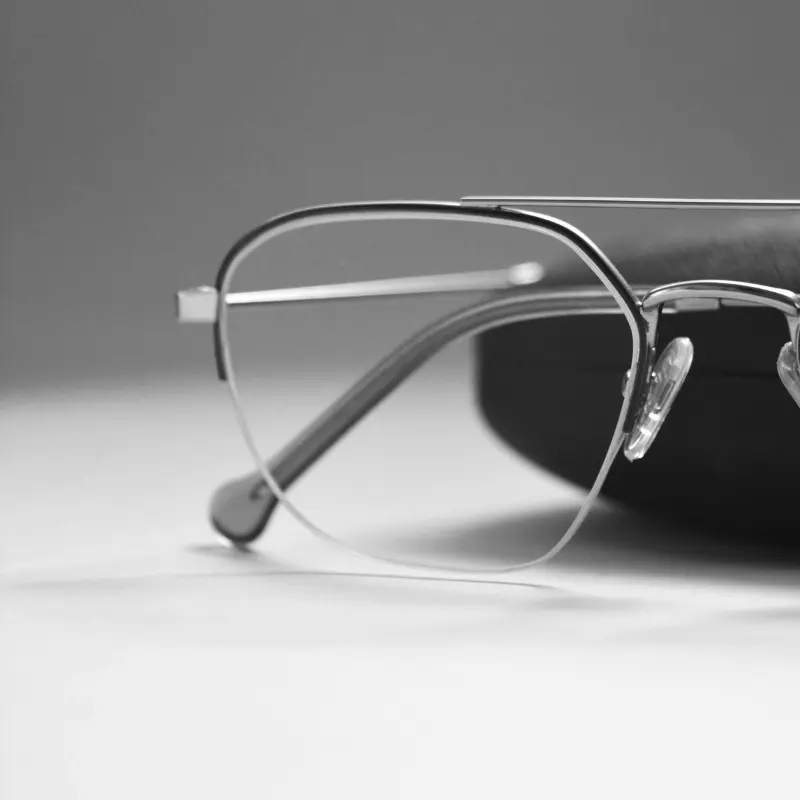
Base Curve: Why Optical Frames Are Built Flatter
This is the difference brands notice least and feel the most once bulk arrives. Frame curvature is measured as base curve — a low number (2 to 4) means a relatively flat frame front, while a high number (6, 8, or higher) means a pronounced wraparound curve. Sunglasses, especially sport and fashion-forward styles, lean toward higher base curves for coverage and a snug, wraparound look. Optical frames are traditionally built flatter, because forcing a standard prescription lens into a steeply curved frame introduces peripheral distortion, and correcting for it requires more expensive freeform or digitally surfaced lenses rather than a standard edged lens from a local lab.
In practice, this means a wraparound metal sunglasses silhouette can’t simply be re-issued as an optical frame with a demo lens swapped in — the curve that makes the sunglasses look sporty is the same curve that limits which prescriptions a local lab can fit into it without distortion. If a brand wants an optical version of a wrap-style sunglasses frame, the front curvature usually needs to be flattened at the design stage, not adjusted later.
Hinges: Built for Constant Opening and Closing
A pair of sunglasses might be put on and taken off a handful of times a day. Optical frames are opened and closed far more often — first thing in the morning, at every desk-to-outdoors transition, every time they come off for a video call. Hinge quality standards in the industry are built around that difference: a hinge intended for daily wear is generally expected to withstand tens of thousands of open-close cycles without loosening, and spring hinges — which let the temple flex outward and return to shape — are the more common specification for frames that will be worn all day, rather than the fixed-angle standard hinges that are common on sunglasses.
At the sourcing stage, this is a simple line item to get right or wrong: an optical frame program built around a sunglasses-grade hinge will show up as a warranty problem within months, not years.
Surface Plating: Same Coating Technology, Different Failure Mode
Metal frames of both types get plated for color and corrosion resistance, but the reason the plating needs to hold up is different. Sunglasses face rougher handling and more direct sun and heat exposure. Optical frames face something more corrosive over time: sweat and skin oils, in continuous contact with the nose bridge and temples for most of the day. A plating layer that looks fine on a sunglasses frame worn outdoors on weekends can wear through faster on an optical frame worn daily against skin — which is also when the base alloy underneath starts to matter, since a plating layer that wears through on a nickel-containing alloy is a common cause of skin irritation, while nickel-free alloys and titanium frames avoid that failure point even if the coating eventually wears.
For a brand building an optical program, this is worth specifying explicitly with your factory rather than assuming “the same plating we used for sunglasses” will perform the same way in daily optical use.
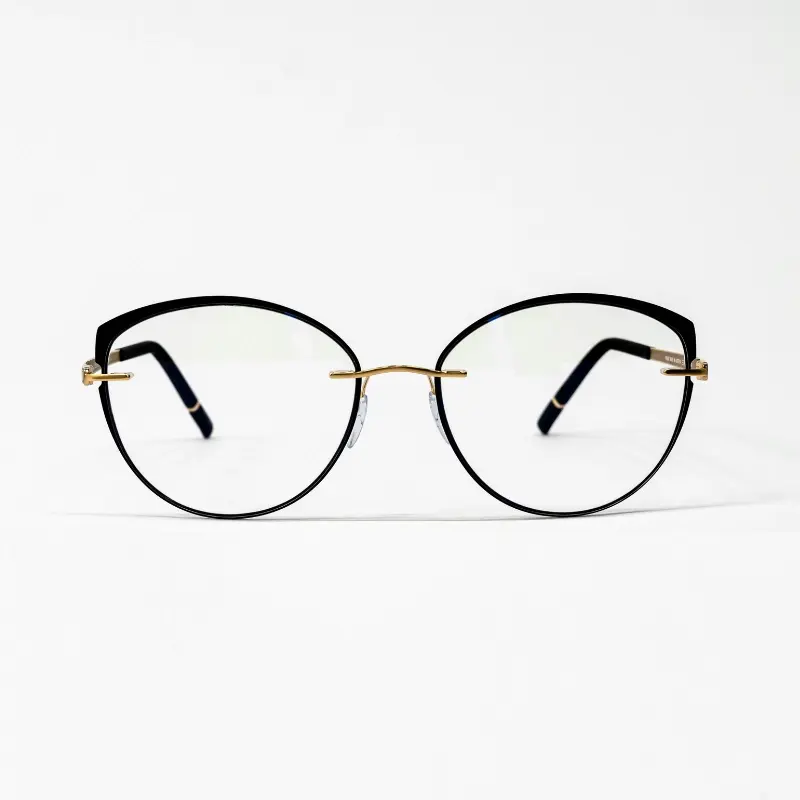
Nose Pads: Adjustability Matters More When You Wear Them All Day
Metal frames typically use separate, screw-mounted nose pads rather than a molded-in bridge, and on an optical frame that adjustability isn’t a nice-to-have — it’s what keeps the frame comfortable across a full day of wear and prevents the slow slide-down-the-nose that shows up in customer complaints. Sunglasses get more design latitude here because comfort only has to hold up for shorter, intermittent wear.
What This Means When You’re Briefing a Metal Optical Frame Program
If you’re sourcing metal optical frames for the first time, a few specifics are worth confirming with your factory before tooling starts:
- Ask for the base curve of the front, not just the frame shape — and flag if the design is adapted from an existing sunglasses silhouette.
- Confirm hinge type and cycle-testing expectations for daily wear, not sunglasses-grade hinges.
- Ask what alloy and plating combination is being used, and whether it’s rated for constant skin contact rather than intermittent outdoor wear.
- Confirm the rim, groove, or drilling tolerance is built to be reworked by a third-party optical lab, not just to hold a lens installed once at the factory.
- Clarify what lens ships with the frame. At Sailook, metal optical frames ship with a demo lens or a blue-light lens — never a finished prescription lens — since prescription grinding and edging is handled by the brand’s own optical lab or local lens center after the frame arrives.

Frequently Asked Questions
Can the same metal frame mold be used for both a sunglasses and an optical version?
Sometimes, but not automatically. If the sunglasses version has a low base curve (a relatively flat front), the same mold can often be adapted for an optical build. If it’s a higher base-curve wraparound design, the curve usually needs to be flattened for the optical version so a local lab can fit standard prescription lenses without distortion.
Why do metal optical frames need adjustable nose pads more than metal sunglasses?
Because the frame is worn for most of the day rather than intermittently. Screw-mounted, adjustable nose pads let an optician fine-tune fit and weight distribution for long-duration comfort, which matters far less on a frame worn outdoors for an hour or two at a time.
Do metal optical frames use a different hinge than metal sunglasses?
Not always a different part number, but often a different specification. Frames built for daily wear are generally expected to hold up to a much higher number of open-close cycles than a sunglasses hinge, which is why spring hinges are more commonly specified for optical builds.
Can a semi-rimless or rimless metal optical frame have its lens replaced later if the prescription changes?
Yes, that’s the design intent — the rim, groove, or drilled mount is built to be reopened by a local optical lab. Repeated reworking does put some wear on the joint over time, so a well-made frame is designed to tolerate more than a single lens change.
Does Sailook supply prescription lenses with metal optical frames?
No. Sailook ships metal optical frames with a demo lens installed, or with a blue-light lens if the brand has specified one. Prescription grinding, edging, and fitting is handled by the brand’s own optical lab or a local lens center after the frame arrives — the frame construction itself is built to make that step straightforward.
If you’re specifying a metal optical frame program and want the base curve, hinge, and plating decisions matched to daily wear rather than sunglasses use from the start, our metal optical frames capabilities are built around exactly that brief.
Let's get started!
Get in touch with a custom eyewear specialist now for a free consultation and instant price quote.
WHATSAPP ME GO!
📱 Scan with your phone to start chatting