Acetate Optical Frames: Choosing Frame Shape and Thickness for Different Prescription Strengths
A frame that looks perfectly proportioned in a product photo can turn into a “coke bottle” lens the moment a strong prescription goes into it. This isn’t a quality issue with the lens or the frame — it’s a mismatch between the two, and it’s entirely predictable before a single lens gets edged. For a brand catalog that serves a meaningful share of higher-prescription customers, frame width and shape deserve the same deliberate attention as color and hinge selection
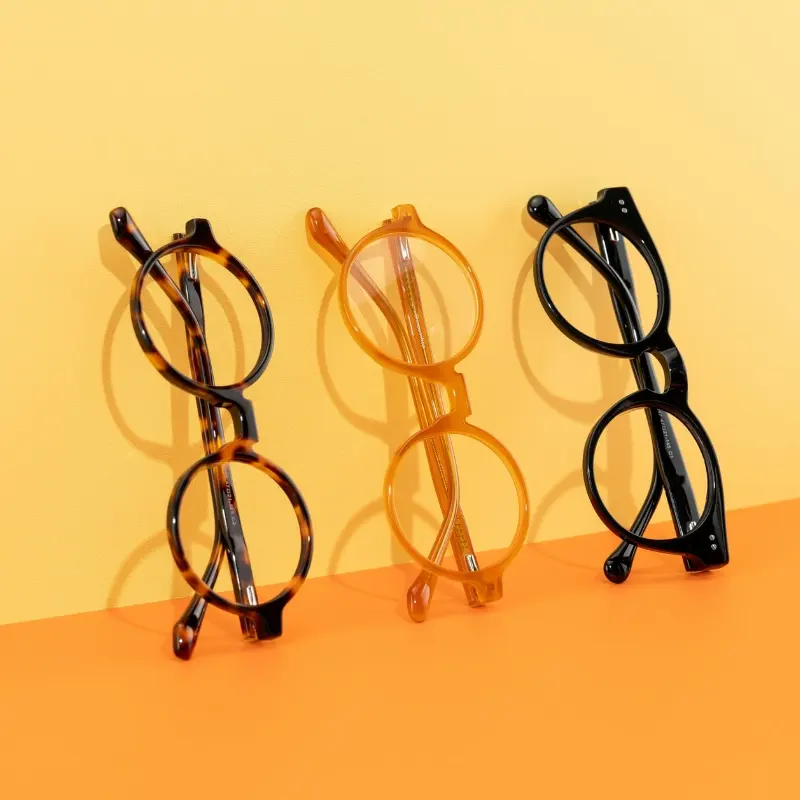
Myopia and Hyperopia Thicken the Lens in Opposite Places
The starting point is understanding that “high prescription” doesn’t mean one predictable shape of lens. Myopic (nearsighted, minus-power) lenses are thinnest at the optical center and thicken toward the edge — the stronger the prescription, the more pronounced that edge becomes. Hyperopic (farsighted, plus-power) lenses work in reverse: thickest at the center, thinning toward the edge, which tends to bulge forward and magnify the eyes rather than create a visible rim of thickness. A prescription is generally considered high once the sphere power passes roughly ±4.00 to ±6.00 diopters, or the cylinder (astigmatism) correction exceeds about ±2.00 diopters. Frame recommendations differ slightly for each case, but the core sourcing principle — using the frame to work with the lens’s natural shape rather than against it — applies to both.
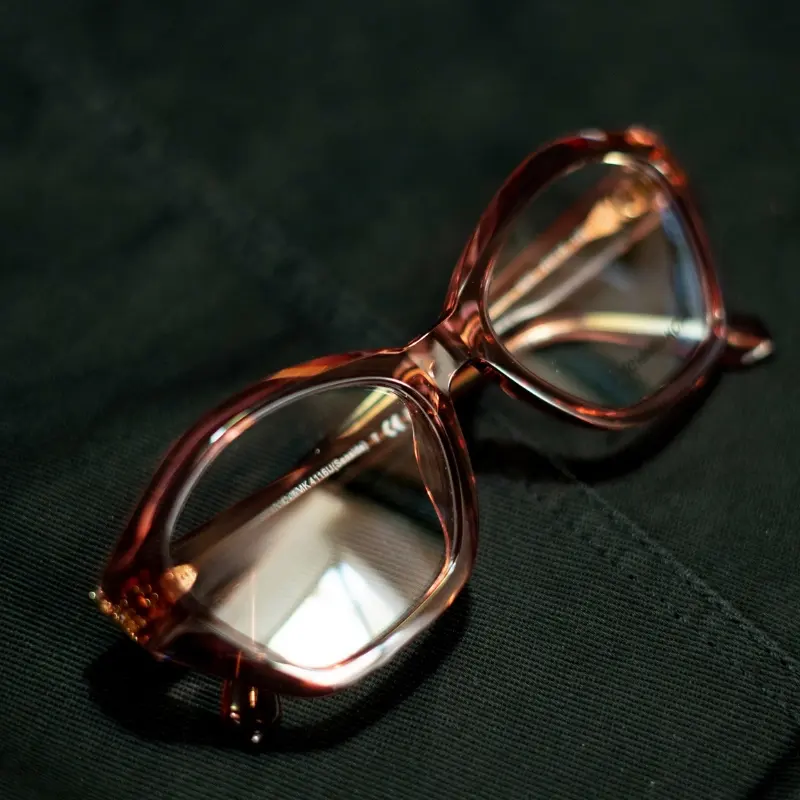
Frame Width Is the Single Biggest Lever
Before shape or material even enters the conversation, frame width does more to control edge thickness than anything else. Because a myopic lens keeps thickening as it moves away from the optical center, a wider frame simply requires a larger lens blank — which means capturing more of that thick outer edge. The relationship isn’t small: even a modest increase in frame width has been shown to increase edge thickness by roughly 30 to 40 percent at higher prescription strengths. For sphere powers stronger than about -6.00, keeping the lens width (the frame’s A-measurement) in the 46 to 50mm range is a reasonable sourcing target — well inside standard acetate optical ranges, but meaningfully narrower than the oversized silhouettes that dominate a lot of current styling trends.
Shape: Why Round and Oval Outperform Rectangular and Cat-Eye
Shape matters almost as much as width, and the logic is geometric rather than aesthetic. In a rectangular or square frame, the distance from the optical center to the corners is longer than the distance to the top or bottom edge, which forces the lens to be thicker exactly at those corners. A round or oval shape has no corners to stretch toward — the distance from center to edge stays comparatively even all the way around, which effectively removes the thickest portions of the lens before it’s even edged. Sharply angled cat-eye silhouettes and oversized aviators behave like exaggerated rectangles in this respect, and tend to be the least forgiving shapes for a strong prescription. This is part of why round and oval acetate styles have stayed a durable category for higher-prescription wearers regardless of what’s trending elsewhere in a collection.
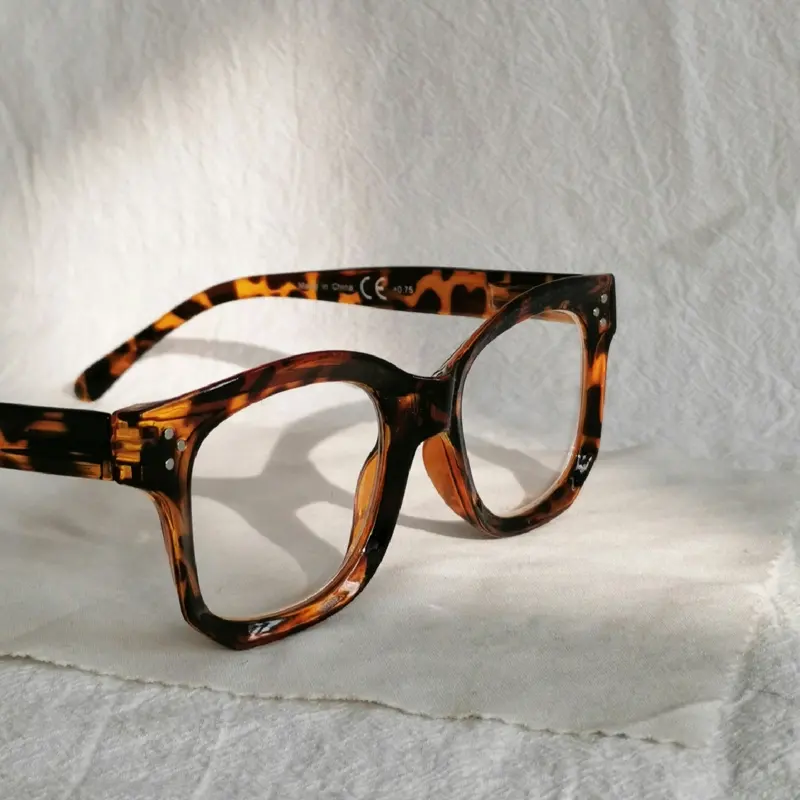
Material: Why Acetate Hides What Metal Can’t
A thick acetate rim does something a thin metal wire simply can’t: it physically encloses the lens edge rather than leaving it exposed. The lens’s beveled edge sits recessed inside the acetate groove, and the rim material itself becomes the visual boundary a customer’s eye lands on — not the lens edge underneath it. A thin metal frame offers no equivalent cover; the full thickness of a strong lens sits in plain view, often visible as a set of concentric rings at the edge. Darker or patterned acetate colorways — tortoise, solid black, deep neutrals — do this even more effectively, since the contrast and visual texture draw attention away from the lens-to-frame transition altogether. This is one of the more overlooked reasons acetate remains a strong material recommendation specifically for higher-prescription customers, independent of styling trends.
Full Rim vs Rimless: Not a Style Choice at This Prescription Range
We’ve covered the lens material requirements for rimless and semi-rimless construction in detail elsewhere, but it’s worth restating plainly in this context: rimless and semi-rimless styles expose the full thickness of the lens edge by design, which works directly against everything a higher-prescription customer needs from a frame. A full-rim frame does the opposite — it contains and visually buffers the thickest part of the lens while also providing more structural support for a heavier lens overall. For this reason, a full-rim acetate recommendation for high-prescription wearers isn’t a fallback option; it’s consistently the better-performing choice, which is also reflected in full-rim styles holding the largest share of the global eyewear frame market.
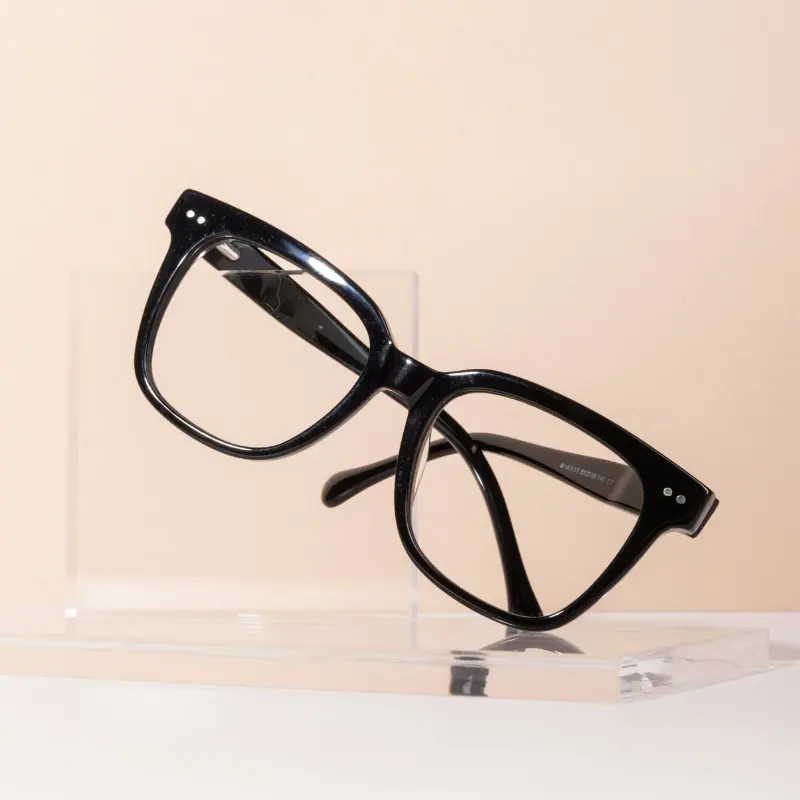
A Bevel Detail Worth Knowing
One technical detail that rarely comes up outside professional optical circles: in a thick acetate frame, the specific bevel style used to seat the lens — a shelf bevel or a step bevel, as opposed to a standard bevel — can leave a faint visible ring around the lens edge, sometimes informally called a “raccoon ring” effect. A shallower bevel selection can reduce how visible this ring appears. It’s a small detail, but it’s the kind of finishing knowledge that separates a frame supplier who understands high-prescription glazing from one who only thinks about groove depth in the abstract — a theme we’ve touched on in our guide to frame rim depth.
What This Means for Your Style Catalog
If a meaningful share of your buyers serve higher-prescription customers — alongside the presbyopic and progressive-lens buyers we’ve covered separately in our guide to frame design for progressive lenses — it’s worth treating frame width and shape as a standard filter in style development, the same way MOQ and colorway planning already get evaluated for every new design. A handful of round, oval, or modestly sized full-rim styles kept in the A 46-50mm range gives your buyers something to point higher-prescription customers toward, rather than leaving that segment underserved by a catalog built entirely around oversized, trend-forward silhouettes.
Frequently Asked Questions
What frame width is best for a high prescription?
For sphere powers stronger than roughly -6.00, keeping the lens width (A-measurement) between 46 and 50mm is a reasonable target. Wider frames require a larger lens blank, which increases visible edge thickness disproportionately at higher powers.
Are round frames really better than rectangular ones for strong prescriptions?
Yes, for geometric reasons rather than just style preference. A rectangular frame’s corners sit farther from the optical center than a round frame’s edge does at any point, which forces the lens to be thicker exactly at those corners.
Is acetate really better than metal for hiding thick lenses?
Generally, yes. A thick acetate rim physically encloses the lens’s beveled edge, while a thin metal frame leaves the full edge thickness exposed. Darker or patterned acetate colorways conceal it even further.
Should high-prescription customers avoid rimless frames?
In most cases, yes. Rimless and semi-rimless styles expose the lens edge by design, which works against the goal of concealing thickness, and they also carry separate lens material requirements worth reviewing before ordering.
Does hyperopia (farsightedness) need different frame advice than myopia?
The underlying goal is similar — work with the lens’s natural shape rather than against it — but hyperopic lenses thicken at the center and bulge forward rather than thickening at the edge, so the visual concern shifts from a visible rim of thickness to magnified-looking eyes.
None of this requires new tooling or a specialized product line — it’s a matter of knowing which existing acetate shapes and widths already work in a higher-prescription customer’s favor, and being intentional about keeping a few of them in your acetate optical frames catalog rather than defaulting entirely to oversized, trend-led silhouettes.
Let's get started!
Get in touch with a custom eyewear specialist now for a free consultation and instant price quote.
WHATSAPP ME GO!
📱 Scan with your phone to start chatting