Demo Lenses vs Prescription Lenses: What Your Optical Frame Manufacturer Actually Supplies (and What Happens After)
Here’s a confusion that shows up more often than most acetate optical frame suppliers like to admit: a brand orders its first batch of optical frames, the box arrives, and the lenses inside aren’t what anyone expected — they’re not tinted, they’re not the customer’s prescription, and in some cases they’re not even meant to be worn at all. This isn’t a shipping error. It’s a gap in expectations that starts long before the purchase order, and it’s worth closing before your first batch ever leaves the factory floor.
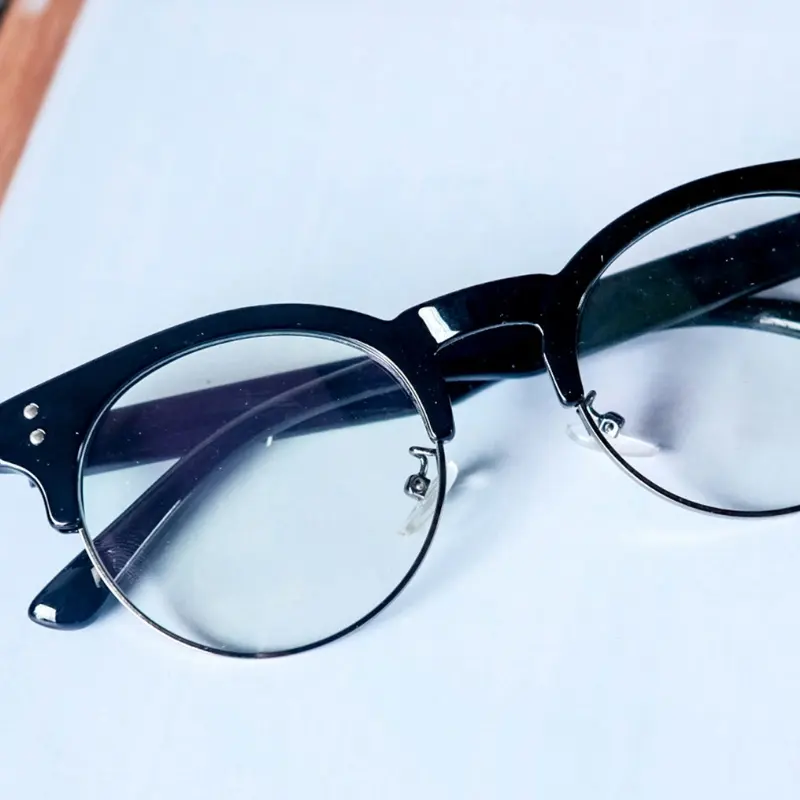
What a Demo Lens Actually Is
A demo lens — sometimes called a plano lens — is a placeholder. It’s a thin, non-prescription lens, usually cut from acrylic or a similar clear plastic, whose entire job is to sit in the frame’s groove and hold the frame’s shape during shipping, warehousing, and retail display. Without it, an acetate frame can warp slightly in transit, and a customer trying on a bare frame has no real sense of how the finished glasses will actually look.
A demo lens is not designed to be worn as vision correction, and it isn’t built to the durability standard of a lens meant for daily use. Its job ends the moment a customer’s prescription is ready to be fitted — at that point, it’s removed and set aside, usually for good.
Why the Confusion Happens So Often
The root of the issue isn’t that this process is complicated. It’s that the responsibility for each step isn’t always spelled out clearly between a frame supplier, a lens lab, and the brand selling the finished product. A buyer sourcing their first optical frame program may reasonably assume a factory that handles frame design, material sourcing, and quality control is also finishing the eyewear end-to-end. A supplier, meanwhile, may assume the buyer already has a relationship with a local optical lab for the prescription side, because that’s simply how the category has always worked. Neither assumption is unreasonable on its own — but left unstated, they’re exactly the kind of mismatch that turns into a support ticket after the first shipment arrives.

What Happens After the Frame Leaves the Factory
Once an acetate optical frame ships with its demo lens in place, the next stop is almost always a local optical lab or optician, not the factory. That’s where the actual prescription work happens: a lens blank is edged to the frame’s shape, cut with a bevel that matches the frame’s groove angle, and — depending on the frame’s construction — either seated into a full-rim groove, secured with a nylon cord on a semi-rimless style, or drilled and mounted directly for a rimless build. We’ve covered the technical side of each of these in detail elsewhere: how groove depth and bevel angle affect the fit, and how rimless and semi-rimless construction changes both the hardware and the lens material requirements. All of that work happens downstream of the factory, at the point where the customer’s actual prescription enters the picture.
Who Is Responsible for What: A Clear Breakdown
Laid out plainly, the split usually looks like this:
- The frame factory designs and manufactures the frame itself — the acetate front, temples, hinges, and groove or mounting hardware — and ships it with either a demo lens or, in some cases, a finished non-prescription lens already installed.
- The local optical lab or optician handles everything prescription-related: taking the customer’s measurements, edging and beveling the lens to the frame’s exact groove or mounting spec, and glazing or drill-mounting it into the frame.
- The brand or buyer is the one who needs to set this expectation with their own end customer, since it’s rarely obvious to someone buying glasses online for the first time that a factory-shipped frame and a ready-to-wear pair of glasses aren’t the same thing.
None of these roles are unusual once they’re stated this way — the confusion almost always comes from them being assumed rather than said out loud.
Can a Demo Lens Ever Be a Real, Functional Lens?
Sometimes, yes — and it’s worth knowing the difference. Some demo lenses are built purely to look like they have a feature, such as a faint blue tint suggesting blue light filtering, purely for retail display. That kind of lens has no real optical function; it’s a prop, not a product.
That’s different from a genuinely functional non-prescription lens shipped in the frame — for example, an actual blue light filtering lens installed as the finished product for a customer who doesn’t need vision correction at all. In that case, nothing needs to be swapped out afterward; the lens that ships is the lens that gets worn. The distinction matters when you’re briefing a supplier or explaining a product to your own customer: ask specifically whether what’s installed is a placeholder or a finished, functional lens, since “comes with a lens” can mean either one.
A Sustainability Footnote Worth Knowing
Demo lenses are single-use by design, and at scale that adds up. Industry estimates put global demo lens waste at roughly 4,000 tons a year, generated by an eyewear industry producing hundreds of millions of frames annually — with the bulk of that plastic still ending up in landfill or incineration rather than being recycled. A handful of eyewear brands have started reclaiming demo lenses into new materials, from recycled acetate blends to injection-molded accessories, which is worth being aware of if a sustainability story is part of how you’re positioning your own optical frame collection.
What to Tell Your Own Customers
If you’re building a private label or brand-direct optical program, the simplest fix for this whole confusion is saying it plainly, upfront, wherever the product is described: the frame ships ready for prescription fitting, with a demo lens in place to protect its shape in transit, and the customer’s local optician or lens lab handles the final prescription glazing. That single sentence, placed on a product page or in a fulfillment email, heads off the vast majority of “why don’t these lenses work” messages before they’re ever sent.

Frequently Asked Questions
Can I wear glasses with the demo lens still in?
No. Demo lenses have no vision correction and aren’t built to the durability or optical standard of a lens meant for daily wear. They’re a placeholder, not a finished product.
Does my optical frame supplier install prescription lenses?
Usually not. Most acetate optical frame manufacturers ship the frame with a demo lens in place, and the prescription lens is fitted afterward by a local optical lab or optician, since that’s where the customer’s actual eye measurements and lens edging happen.
What is a demo lens made of?
Typically a thin, clear acrylic or similar non-prescription plastic. It’s chosen for being lightweight and easy to cut cleanly, not for long-term durability, since it’s meant to be removed and discarded once a prescription lens is fitted.
Is a demo lens the same as a blue light lens?
Not necessarily. Some demo lenses are designed only to visually suggest a feature like blue light filtering for display purposes, with no real optical function. A genuine blue light lens installed as a finished, wearable product is a different thing entirely, and it’s worth confirming with your supplier which one you’re getting.
What happens to demo lenses after they’re removed?
Most are discarded, though a small but growing number of eyewear brands have started recycling programs that turn used demo lenses into new materials rather than sending them to landfill.
Getting this right isn’t complicated — it just needs to be said out loud instead of assumed. If you’re building out your acetate optical frames program, it’s worth putting this explanation directly into your product listings, not just your internal sourcing notes, so the same clarity that saves you a supplier conversation also saves your customer a support ticket.
Let's get started!
Get in touch with a custom eyewear specialist now for a free consultation and instant price quote.
WHATSAPP ME GO!
📱 Scan with your phone to start chatting