Full-Rim vs Semi-Rimless Metal Sunglasses: Which Frame Style Fits Your Brand
The choice between full-rim and semi-rimless metal sunglasses looks like an aesthetic decision. At the product development stage, it is also a structural decision, a positioning decision, and a production specification decision — each of which affects what the finished product costs, how it performs over time, and what kind of brand story it supports.
This article focuses on what that choice means for brands sourcing custom metal sunglasses, not for individual consumers picking a pair. The framing throughout is: which construction serves your product line, your target market, and your after-sales expectations.

The Structural Difference
Full-rim frames enclose the lens completely within a continuous metal channel. The frame carries the structural load; the lens sits protected inside it.
Semi-rimless frames (half-rim) frame the upper portion of the lens in metal, while the lower edge is held by a thin nylon cord running through a groove cut into the lens edge. The metal frame carries most of the structural load, but the lower lens edge is exposed and the nylon cord is a functional wear component.
For a detailed breakdown of how these structures — including rimless — place different demands on lens material, drilling tolerances, and hardware precision in a titanium context, see Full-Rim vs Rimless vs Semi-Rimless Titanium Frames: Pros and Cons. The structural principles carry across to metal frames; what differs is how material choice and plating interact with each construction.
Brand Positioning: What Each Frame Style Communicates
Frame construction is not neutral from a brand positioning standpoint. The two styles send different signals to different customer segments, and understanding those signals helps match frame style to brand identity before sampling begins.
Full-Rim: Design Range and Market Reach
Full-rim metal frames are the broader commercial canvas. The continuous frame surface supports a wider range of design expressions — thicker wire for a more substantial presence, thinner wire for a minimal look, varied colorways through electroplating and spray color, logo placement on the temple or end-piece.
What full-rim communicates:
- Bold, expressive, confident — the frame is a visible design element, not background
- Versatile across market segments: fashion, commercial, sport-adjacent, outdoor
- Durable and reliable — the enclosed lens structure reads as protective and substantial
Where full-rim fits:
- Multi-SKU collections targeting broad retail distribution
- Fashion sunglasses at mid-range price points ($30–$120 retail)
- Brands targeting Gen Z and trend-driven consumers who want the frame to make a statement
- Products sold in environments where handling care is variable — street retail, beach shops, festivals
Full-rim is the default construction for commercial metal sunglasses production for a reason: it tolerates a wider range of handling, supports more design variety, and is the most straightforward to produce consistently at scale.
Semi-Rimless: The Professional Middle Ground
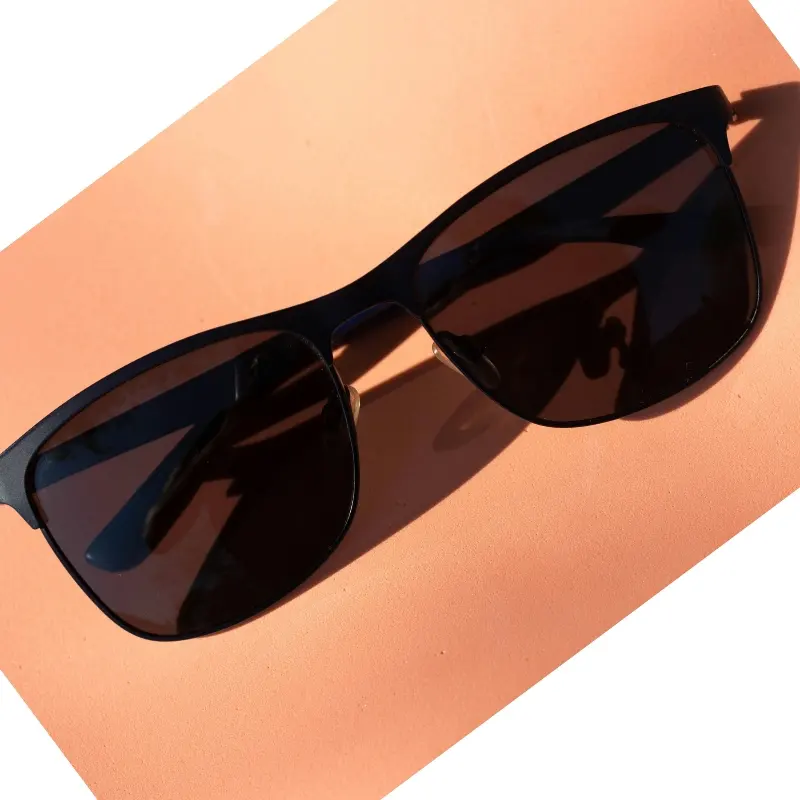
Semi-rimless metal frames sit between full-rim’s visual weight and rimless’s near-invisibility. The metal brow bar frames the upper face prominently while the lower lens edge floats without visible support — creating a distinctive silhouette that reads as refined rather than bold.
What semi-rimless communicates:
- Balanced, professional, understated — the frame complements rather than dominates
- Elevated without being precious — approachable premium
- Classic with a contemporary edge — the browline emphasis has a heritage feel that reads well in professional and lifestyle contexts
Where semi-rimless fits:
- Lifestyle and professional brands targeting 30–50 year old buyers
- Premium DTC brands where the frame silhouette is a design signature
- Collections where visual lightness is a selling point without going fully rimless
- Boutique retail and online channels where photography can convey the subtle silhouette difference
Semi-rimless is a more specialized construction than full-rim. It fits fewer market contexts precisely, but in the right context it creates a more distinctive product impression than full-rim at the same specification level.
Plating and Finish: Where the Two Styles Diverge
Both full-rim and semi-rimless metal frames use the same electroplating methods — water plating for standard fashion finishes, IP plating for harder matte surfaces. The difference is how the frame geometry affects where the plating has to perform and where it is most exposed.
Full-Rim Plating Considerations
On a full-rim frame, the plating covers a continuous surface that wraps around the lens. The inside of the lens channel — where the lens sits — is plated but not visible and not subject to direct abrasion from handling.
The critical plating points on a full-rim frame are:
- The nose bridge and nose pad arm connection — highest skin contact, highest sweat exposure
- The hinge end-piece junction — stress concentration point where plating is thinnest
- The outer rim surface — visible face of the frame, subject to incidental contact
For a full breakdown of plating method, sealing coat standards, and what to specify, see Electroplating on Metal Eyewear: Colors, Durability, and What to Ask Your Supplier.
Semi-Rimless Plating Considerations
Semi-rimless frames have an additional plating challenge: the transition between the plated metal brow bar and the nylon cord at the lower frame. This transition point — where the cord exits the metal end of the brow bar on each side — is a stress point and a visual detail that requires clean execution.
On well-made semi-rimless frames, the cord exit point is neatly finished with a small metal fitting that conceals the junction. On cheaper construction, the cord exits the metal with a visible gap or rough edge. This detail is worth examining closely on samples, because it is both an aesthetic indicator of production quality and a functional point where moisture and debris can accumulate.
Additionally, on semi-rimless frames, the lower portion of the lens edge is exposed. The nylon cord does not have the same plating coverage as a metal rim would — it sits in a groove cut into the lens edge, and the groove walls are lens material, not metal. This means the aesthetic continuity of the frame depends on the cord color matching the frame finish, and on the cord remaining taut rather than stretching visibly.
Plating specification implications:
- Full-rim: standard plating spec applies uniformly around the frame
- Semi-rimless: specify cord color to match plating finish; confirm cord tension standard and replacement protocol with manufacturer
Lens Mounting and After-Sales Considerations
The construction difference between full-rim and semi-rimless shows up most clearly in after-sales — specifically in how lenses are held, what can go wrong, and how customers interpret it.
Full-Rim Lens Mounting
In full-rim metal frames, lenses are typically held by a groove mount: a groove is cut around the lens perimeter, and a thin metal wire or nylon thread runs through the rim channel to hold the lens under tension. The lens sits inside the frame and is not directly stressed by the frame structure.
After-sales implications:
- Lens replacement requires re-stringing the rim wire — a straightforward repair most opticians can perform
- The lens-to-rim fit can loosen over time if the rim wire tension is not maintained — not a structural failure, but can cause the lens to shift
- Impact damage typically affects the frame before the lens, since the frame absorbs the initial contact
Semi-Rimless Lens Mounting
In semi-rimless frames, the nylon cord running through the lower lens groove is a functional wear component. It is under tension continuously, and it will stretch or wear over the product’s lifespan. This is not a defect — it is normal use wear, similar to how hinge screws loosen over time.
What this means for brands:
The nylon cord is the most common semi-rimless after-sales issue. Customers who are not told about it in advance will interpret a stretched or worn cord as a product defect. Customers who are told about it — and told it can be replaced easily and inexpensively — will treat it as normal maintenance.
The difference between a return and a satisfied customer on this issue is almost entirely in the care information provided at the point of sale. Brands running semi-rimless metal collections should include explicit cord information in their product care documentation.
At Sailook, we provide clients with the cord specification and replacement protocol for every semi-rimless style we produce, so that this information can flow directly into customer-facing care materials.
Channel Fit: Which Style Works Where
Frame construction is not just a design and production decision — it affects which sales channels the product is suited for and how it performs in each.
| Factor | Full-Rim | Semi-Rimless |
|---|---|---|
| Online DTC | Strong — bold frame photographs well in product shots | Strong — silhouette difference reads well in lifestyle photography |
| Mass retail / department stores | Very strong — broad consumer appeal, durable in display | Moderate — more specialized appeal, needs careful merchandising |
| Boutique / independent retail | Good across price points | Strong at premium positioning |
| Beach / resort / festival retail | Very strong — handles variable care | Weak — nylon cord requires more careful handling |
| Corporate / gifting programs | Good | Strong — professional aesthetic fits gifting context |
| DTC subscription / try-at-home | Good | Good, with clear care information |
The channel fit difference is most pronounced at the extremes: high-volume mass retail and casual-environment retail strongly favor full-rim for its durability and broad appeal; boutique and professional channels can support semi-rimless’s more specialized positioning.
Cost and Production: A Brief Note
Both frame styles use the same base materials and plating methods. Semi-rimless adds the nylon cord component and its associated assembly step, which adds a small per-unit cost. The more significant production difference is that semi-rimless has a lower tolerance for imprecision at the cord exit points — these details are visible on the finished frame and require clean execution.
For full cost and MOQ parameters for custom metal sunglasses, see Metal Sunglasses MOQ and Pricing: What Determines Your Quote.
What to Specify When Ordering Each Style
The specification requirements for the two styles overlap substantially, with a few additions for semi-rimless.
For both styles:
- Base material and alloy grade
- Wire gauge (mm)
- Hinge type and barrel count
- Plating method (water plating or IP), nickel-free specification, sealing coat standard
- Lens material and mounting method
- UV standard (UV400)
Additional for semi-rimless:
- Nylon cord color (should match or complement frame finish)
- Cord material and tension specification
- Cord exit fitting: confirm material, finish, and how the junction is handled
- Replacement cord protocol: confirm whether the manufacturer provides replacement cord and instructions
For both styles — logo placement:
- Full-rim: temple surface, end-piece, or lens engraving
- Semi-rimless: brow bar surface or temple — note that the brow bar is the visual focus of a semi-rimless frame, so logo placement here is prominent

FAQ
What is the difference between full-rim and semi-rimless metal sunglasses?
Full-rim frames enclose the lens completely within a continuous metal channel, making them more structurally robust and design-versatile. Semi-rimless frames have a metal brow bar on the upper portion of the lens and a thin nylon cord holding the lower edge — creating a lighter, more refined silhouette. The nylon cord is a functional wear component that can stretch or wear over time, which is normal and should be communicated to customers.
Which frame style is better for a fashion sunglasses brand?
Full-rim is the more versatile choice for fashion brands targeting broad market distribution — it supports more colorways, more design expression, and is more forgiving in retail environments where handling care varies. Semi-rimless fits fashion brands with a specific professional or lifestyle positioning, where the refined silhouette is a deliberate part of the brand identity.
Does semi-rimless cost more than full-rim to produce?
The per-unit cost difference is small — semi-rimless adds a nylon cord component and assembly step. The more significant implication is that semi-rimless requires cleaner execution at the cord exit points, which affects sampling and quality control more than it affects per-unit cost at scale.
How long does the nylon cord last on semi-rimless metal sunglasses?
Under normal daily use, the nylon cord on a semi-rimless frame will typically last one to two years before showing signs of stretch or wear. This varies with use intensity and how the frame is handled. Most semi-rimless designs allow the cord to be replaced without replacing the frame — this is worth confirming with your manufacturer at the brief stage, and worth communicating to customers in product care materials.
Which frame style photographs better for online retail?
Both work well, but for different reasons. Full-rim frames show color and design clearly in standard product photography. Semi-rimless frames photograph distinctively in lifestyle shots where the floating lower lens edge and brow bar emphasis read as more sophisticated. For high-volume e-commerce with white-background product shots, full-rim’s defined silhouette is generally easier to display consistently. For lifestyle-driven DTC brands where imagery is a core brand asset, semi-rimless can be more visually interesting.
Can I offer both full-rim and semi-rimless in the same metal collection? Yes, and many brands do. The two styles serve different customer preferences within the same collection without cannibalizing each other — full-rim for customers who want a bolder frame presence, semi-rimless for those who want something lighter and more refined. The main consideration is communicating the cord maintenance requirement clearly for the semi-rimless styles, so customers know what to expect.
Summary
Full-rim and semi-rimless metal sunglasses are not simply points on a style spectrum — they carry different structural characteristics, different brand positioning implications, and different after-sales requirements. Full-rim is the broader commercial choice: more design-versatile, more durable in varied retail environments, and more forgiving of handling. Semi-rimless is the more focused choice: a distinctive silhouette that works well in professional and lifestyle contexts, with a nylon cord component that requires explicit customer communication to manage correctly.
Getting the frame style right starts with matching these characteristics to what your product line actually needs — not just which silhouette looks best in a reference image.
For Sailook’s full range of metal sunglasses frame styles, materials, and construction options, visit our metal sunglasses page.
Let's get started!
Get in touch with a custom eyewear specialist now for a free consultation and instant price quote.
WHATSAPP ME GO!
📱 Scan with your phone to start chatting