Metal Sunglasses Logo Options: Laser Engraving, Inlay, and Pad Print Compared
The logo on a metal sunglasses frame is not just a branding decision — it is a production decision. The method used to apply a logo affects how it looks at point of sale, how long it lasts under daily wear, what it costs to produce, and whether it can be executed cleanly on the specific frame geometry you are working with.
Most brand briefs specify a logo position — “left temple, outer side” — without specifying the method. This leaves the decision to the manufacturer, who will default to whatever is simplest in their workflow rather than what best serves the brand’s positioning. Understanding the available methods, and what each one requires and delivers, is the starting point for briefing a logo correctly.
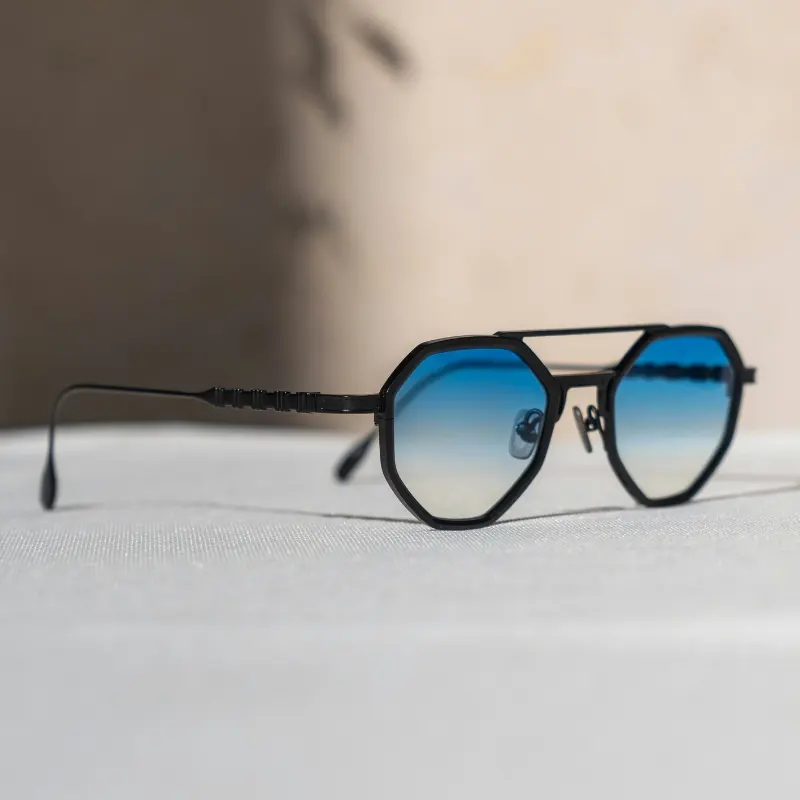
This article covers the four logo methods used on custom metal sunglasses, what each one looks like in practice, where it works and where it does not, and how to match method to brand positioning.
Why Logo Method Matters More on Metal Frames
On acetate or plastic frames, logo application is relatively forgiving — the surface is flat, the material takes ink and engraving consistently, and results are predictable. Metal frames present different challenges.
Surface curvature: Metal frame temples are typically round or oval in cross-section. A logo technique that requires a flat printing surface — standard silk screening, for example — cannot be applied directly to a round temple without adaptation. Pad printing uses a flexible silicone pad specifically to transfer ink onto curved surfaces, but the curvature still limits achievable detail.
Plating interaction: The logo is applied to a plated surface, not directly to the base metal. This means the sequence matters: a logo engraved after plating cuts through the color layer into the base metal, producing a color contrast. A logo engraved before plating will be covered by the plating layer and may lose definition. Knowing which sequence your manufacturer uses — and what result it produces — is part of specifying the logo correctly.
Surface area: Metal frame temples are thinner than acetate temples. The available logo area is smaller, which constrains the complexity of the design. A logo that works at 15mm wide on an acetate temple may need to be redesigned for a 10mm metal temple.
Visual contrast: On a gold or silver plated frame, a same-color engraved logo has low contrast and reads as subtle — appropriate for premium positioning but potentially invisible on a retail display. On a gunmetal or black frame, the contrast is higher. Understanding how your frame color affects logo legibility is a decision that should be made at brief stage, not discovered at sample approval.
Laser Engraving
Laser engraving is the most commonly used logo method on metal sunglasses frames, and for straightforward reasons: it requires no setup tooling, no printing plates, and no additional materials beyond the laser machine and the frame. The logo file is loaded into the machine, and the laser removes material from the surface along the programmed path.
How It Works on Metal
On a plated metal frame, the laser burns through the sealing coat and color layer, exposing the base metal or a different layer beneath. The contrast between the plated surface and the exposed area creates the visible logo.
The depth and intensity of the engraving can be calibrated precisely. A shallow setting produces a surface mark with subtle contrast. A deeper setting produces a more pronounced channel with stronger contrast, particularly when the base metal is a significantly different color from the plating — for example, a white copper base beneath a black IP-plated surface.
Results by Frame Color
The visual result of laser engraving varies significantly with frame color:
| Frame Color | Engraving Contrast | Result |
|---|---|---|
| Gold plating | Low–medium | Subtle, elegant, reads as premium |
| Silver / chrome | Low | Very subtle — may need deeper setting |
| Gunmetal / dark grey | Medium–high | Clean, readable |
| Black IP plating | High | Strong contrast, very legible |
| Rose gold | Low–medium | Warm tone contrast, refined look |
For frames where engraving contrast is inherently low — gold, silver — the logo can be filled with a color epoxy after engraving to improve visibility. White, black, and metallic epoxy fills are the most common options. The epoxy is applied into the engraved channel and cured, producing a color-filled logo mark.
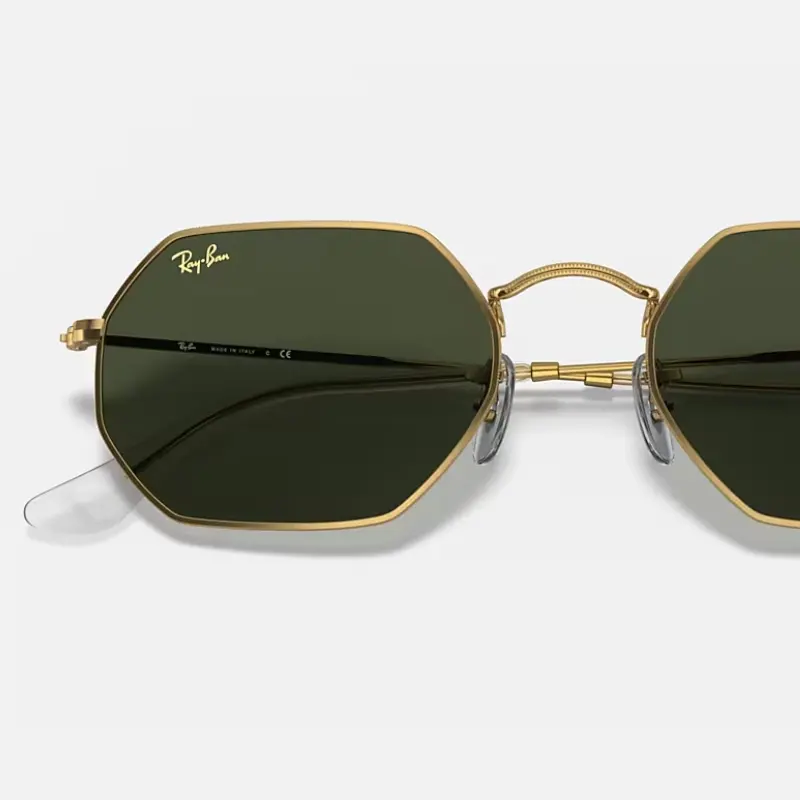
A well-known example of lens-surface laser etching on metal frames is Ray-Ban’s Legend Gold collection, which features a gold logo etched directly onto the lens corner — a subtle brand mark that reads as a premium detail rather than a prominent label.
Placement on Metal Frames
Laser engraving can be applied to almost any surface on a metal frame:
- Outer temple surface — most common position; highest visibility
- Inner temple surface — subtle, discovered on close inspection; used for brand marks and size information
- End-piece — small area near the hinge; used for brand codes or small logos
- Nose bridge — less common; suitable for very small marks
- Front frame inner rim — visible when frame is removed; used for secondary branding
Limitations Specific to Metal
The primary limitation of laser engraving on metal is visual subtlety. On bright metallic plating, the same-color etched mark may not be immediately legible from a normal viewing distance. For brands that want a visible, readable logo at point of sale, engraving alone on bright gold or silver frames may not deliver sufficient contrast without a fill.
The second limitation is that engraving on a thin metal temple removes material from the plating layer, which can create a micro-stress point at the engraving edges if the design has sharp internal corners. Well-executed engraving on a quality frame is not a structural issue, but it is a consideration for designs with very fine detail at small scales.
Metal Inlay (Flush Inlay and Riveted Badge)
Metal inlay — a small metal emblem set into or attached to the temple — is the logo method associated with premium and luxury eyewear positioning. It produces a three-dimensional, tactile logo mark that reads as substantial in a way that engraving and printing do not.
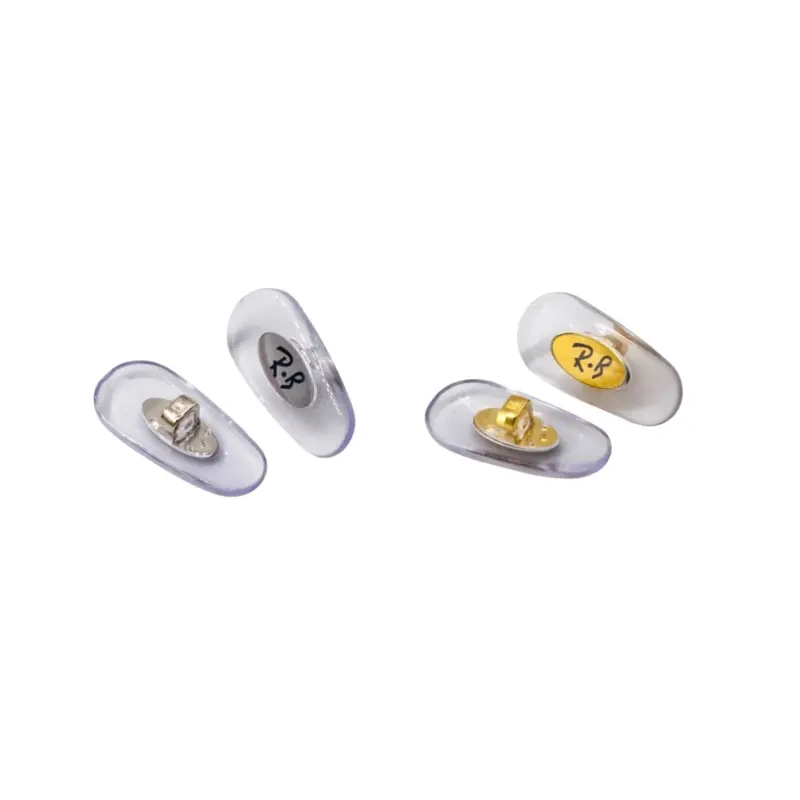
A widely recognized example is the Ray-Ban Aviator: on models with adjustable nose pads, the nose pad itself features a small metal inlay stamped with “RB” — a detail that serves as both a brand mark and an authenticity indicator. It is deliberately small and functional-feeling rather than decorative, which is consistent with Ray-Ban’s positioning.
A different expression of the same principle appears in Cartier’s Santos de Cartier collection, where exposed metal screws on the frame front — a design reference to the Santos watch — function as branded hardware details rather than a conventional logo. The screws are not a logo in the traditional sense, but they demonstrate how metal frame hardware can carry brand identity when executed with precision and consistency across a collection.

There are two distinct methods under this category, and they produce different results and have different structural requirements.
Flush Inlay
In a flush inlay, a recess is machined into the temple surface, a pre-formed metal logo plate is set into the recess, and the surface is finished flush — so the logo plate sits level with the surrounding temple surface. The logo is visible through its material contrast (typically a gold or silver logo plate against a darker frame, or vice versa) rather than through a raised profile.
Flush inlay requires sufficient temple wall thickness to accommodate the recess depth without compromising the structural integrity of the temple. On thin wire-gauge metal temples, flush inlay is not feasible — there is not enough material to cut into. This method is best suited to frames with a flat-sided or rectangular temple section, where wall thickness is adequate.
What flush inlay delivers:
- Premium, refined appearance — the logo is part of the frame, not on it
- High durability — the logo plate cannot peel or wear off
- Precise, clean edges when executed correctly
- A tactile quality that is distinctive when the frame is handled
Riveted Badge (3D Metal Logo)
A riveted badge is a pre-formed metal logo plate that is attached to the temple surface via a small pin or rivet from behind, sitting slightly above the frame surface. It creates a three-dimensional logo mark with visible depth.
Unlike flush inlay, the riveted badge does not require cutting into the temple — it attaches from the outside. This makes it feasible on a wider range of frame geometries, including round-wire temples, as long as the attachment point is accessible from the inside of the temple.
What a riveted badge delivers:
- Strong visual presence — the logo is visible and three-dimensional
- Perceived premium quality through the material and finish of the badge itself
- Flexibility in badge design — the badge can be any shape within size constraints
- A slightly higher risk of snagging on fabric if the badge edge is not flush to the frame
Both inlay methods require the logo to be produced as a separate component — typically stamped or CNC-cut from metal sheet — before being attached to the frame. This adds a component cost and a production step that is not present in engraving or pad printing.
Pad Printing
Pad printing transfers ink from a flat printing plate onto the frame surface via a flexible silicone pad. The silicone pad picks up the inked image from the plate and presses it onto the frame surface, conforming to the surface curvature in the process.
When Pad Print Makes Sense
Pad printing is the correct method when the logo requires a specific color that cannot be achieved through engraving, and when the budget or brand positioning does not call for metal inlay.
The ink can be matched to any color, which makes pad printing the only standard method that can reproduce a brand’s specific color — a PMS-matched red, a specific blue, a white logo on a dark frame. For brands where color consistency is part of the brand identity, this matters.
Pad printing also allows multi-color logos to be applied, though each color requires a separate printing pass and adds cost and alignment complexity.
Curved Surface Execution
The flexibility of the silicone pad is what allows pad printing to work on the curved temple surface of a metal frame. The pad deforms as it presses against the frame, transferring the ink without distortion. However, the degree of curvature that can be accommodated has limits — on a very small-diameter round temple, the ink transfer at the edges of the logo may be incomplete, producing slightly faded or irregular edges.
For clean pad print results on metal frames, the ideal temple geometry is a flat-sided or oval section rather than a fully round wire. A flat printing surface — even a narrow one — gives the silicone pad a stable contact area and produces more consistent results.
Durability Considerations
Pad printing on metal frames is durable if the correct ink system is used and the ink is properly cured, but it is the least permanent of the standard logo methods. The ink layer sits on the surface of the sealing coat — it is not embedded in the frame material the way engraving is, and it is not a physical component the way inlay is.
Daily handling, cleaning with certain chemicals, and sustained UV exposure can all degrade a pad-printed logo over time. For brands selling into markets where daily care habits vary — or where cleaning products containing alcohol are common — this is worth factoring into the method choice.
For more on how frame surface treatments and sealing coats interact with daily use, see Electroplating on Metal Eyewear: Colors, Durability, and What to Ask Your Supplier.
Other Methods Worth Knowing
Epoxy Fill Over Engraving
As mentioned in the engraving section, color epoxy fill is not a standalone logo method — it is used in combination with laser engraving to add color to an engraved mark. The engraving provides the channel; the epoxy provides the color. This combination delivers the permanence of engraving with the color visibility of printing, at a cost between the two standalone methods.
UV Printing
UV printing uses ultraviolet-cured ink applied directly to the frame surface through a flatbed or cylindrical printer. The result is a high-resolution, full-color image with sharp edges. UV printing is more common on flat surfaces — lens cases, packaging — than on metal frame temples, due to the curvature challenge. It is worth being aware of as an option for branded accessories around the frame.
Hot Stamping
Hot stamping transfers a metallic foil onto the frame surface using heat and pressure. It is the standard method for logo application on acetate and plastic frames, producing gold or silver metallic marks. On metal frames, hot stamping is rarely used — the metallic foil has low contrast against a metallic frame surface, and the method does not offer the durability advantages it has on acetate. It is included here for completeness, as some clients ask whether it is available.
Logo Placement Guide for Metal Frames
The position of a logo on a metal frame is as important as the method. Different positions convey different brand intentions and have different visibility at point of sale vs. point of wear.
| Position | Visibility | Common Use | Method Compatibility |
|---|---|---|---|
| Outer temple, mid-section | High at POS | Primary brand mark | Engraving, pad print, inlay |
| Outer temple, near hinge | Medium | Secondary mark or brand code | Engraving, small inlay |
| Inner temple | Low (discovered on wear) | Refined brand mark, size info | Engraving |
| End-piece | Low–medium | Brand code, small logo | Engraving |
| Nose bridge | Low | Minimal branding | Engraving only |
| Front frame outer rim | Medium | Design-led branding | Engraving, inlay |
The outer temple mid-section is the standard position for a primary brand logo on metal sunglasses. It is visible when the frame is worn, visible when the frame is displayed, and provides sufficient surface area for most logo designs.
Inner temple positioning is used by brands that prefer a more discreet brand mark — the logo is discovered when the customer removes the frame and examines it. This approach is associated with premium positioning and is common in frames where the outer surface design is intentionally clean.
Which Method Fits Which Brand Positioning
The logo method is a brand statement as much as it is a production decision.
| Method | Brand Signal | Price Tier | MOQ Sensitivity |
|---|---|---|---|
| Laser engraving | Clean, minimal, contemporary | Entry to premium | Low — no setup cost |
| Laser + epoxy fill | Refined, color-consistent | Mid to premium | Low-medium |
| Pad printing | Expressive, color-forward | Entry to mid | Medium — plate setup cost |
| Flush metal inlay | Luxury, crafted, substantial | Premium to luxury | Higher — component cost |
| Riveted metal badge | Bold, premium, tactile | Mid-premium to luxury | Medium-high |
For brands at early stage or testing a new metal sunglasses style, laser engraving is the practical starting point: no tooling cost, clean result, and available at any order quantity. For brands with an established identity where color consistency or material quality are part of the brand story, inlay or epoxy-filled engraving deliver a stronger brand expression.
The method should also be matched to the frame’s overall specification. A stainless steel frame with IP plating and 5-barrel hinges positioned at a premium price point warrants a logo method that matches that quality level — inlay or deep engraving with fill. A white copper fashion frame at a mid-range price point is well-served by clean laser engraving or pad printing.
For the full production specification context for custom metal frames, see Metal Sunglasses MOQ and Pricing: What Determines Your Quote.
What to Specify When Ordering
A logo brief that prevents revision rounds includes the following:
Logo file: Vector format (AI or EPS) at the actual size intended for application. Do not submit a rasterized logo at small scale — the manufacturer cannot reproduce fine detail that is not in the source file.
Method: Specify the method explicitly. Do not leave it to the manufacturer’s default.
Position: Temple side (left or right), surface (outer or inner), and approximate distance from the hinge end. “Left temple outer, 35mm from hinge end” is an unambiguous position specification.
Size: Logo dimensions in millimeters. Width and height.
Color (if applicable): For pad printing, specify the PMS color. For epoxy fill, specify fill color. For engraving without fill, note that the result will be the contrast between the plating color and the base metal.
Sequence relative to plating: Confirm with the manufacturer whether the logo is applied before or after plating and sealing. This affects the result, particularly for engraving.
At Sailook, logo specifications are confirmed at the sample stage with close-up photographs of the logo execution included in the pre-shipment sample photograph package. Any deviation from the brief is identified before the physical sample ships.
FAQ
What is the most durable logo method for metal sunglasses?
Metal inlay — both flush and riveted — is the most durable, as the logo is a physical component attached to the frame rather than a surface treatment. Laser engraving is the second most durable option, as the mark is cut into the frame material. Pad printing is the least permanent, as the ink layer sits on the surface and can degrade with chemical exposure and daily wear.
Can I have a colored logo on a metal sunglasses frame?
Yes, through two methods. Pad printing allows direct color application in any PMS-matched color. Laser engraving combined with epoxy fill also produces a color logo — the engraving provides the channel and the epoxy provides the color, with better durability than pad printing alone.
Does laser engraving affect the structural integrity of a metal frame?
When executed correctly, laser engraving on a metal frame does not affect structural integrity. The laser removes material from the surface layer — plating and sealing coat — rather than from the structural metal beneath. On very thin wire-gauge temples, deep engraving at high intensity warrants caution, but standard logo engraving at normal depth is not a structural concern.
What is the difference between a flush inlay and a riveted metal badge?
A flush inlay requires machining a recess into the temple surface, setting a metal logo plate into the recess, and finishing the surface level — the logo is embedded in the frame. A riveted badge attaches a pre-formed logo plate to the temple surface from outside via a pin, sitting slightly above the frame surface. Flush inlay requires sufficient temple wall thickness; riveted badges can be applied to a wider range of frame geometries.
Where should I put my logo on a metal sunglasses frame?
The outer temple mid-section — approximately 30–40mm from the hinge end — is the standard position for a primary brand logo on metal sunglasses. It is visible when the frame is worn and when displayed. Inner temple positioning is used for a more discreet brand mark associated with premium positioning. End-piece and bridge positions are used for secondary marks and brand codes.
Should the logo be applied before or after electroplating?
In most production workflows, the logo is applied after plating and sealing. For laser engraving, this means the laser cuts through the plating layer to create contrast. Applying engraving before plating — and then plating over it — would fill the engraved channel with plating material and eliminate the contrast. Confirm the sequence with your manufacturer and request a sample showing the result before approving for bulk production.
Summary
Logo method on a metal sunglasses frame is a production specification, not just a branding preference. Laser engraving is the most accessible starting point — no tooling cost, clean result, available at any quantity. Metal inlay delivers premium material quality and maximum durability but requires frame geometry that can accommodate the component. Pad printing is the right choice when color is essential and the frame geometry supports ink transfer.
Matching the logo method to the frame specification and brand positioning — and briefing it explicitly rather than leaving it to manufacturer default — is what produces a consistent, intentional brand mark across production runs.
Sailook’s full range of metal sunglasses customization options, including logo method selection and sample documentation, is covered on our metal sunglasses page.
Let's get started!
Get in touch with a custom eyewear specialist now for a free consultation and instant price quote.
WHATSAPP ME GO!
📱 Scan with your phone to start chatting