What Is TR90? The Lightweight Material Behind Sports Eyewear

Most product descriptions explain what TR90 does — lightweight, flexible, impact-resistant — without ever explaining what TR90 actually is. That gap matters more than it sounds like it should, because “TR90” isn’t a material category the way “acetate” or “titanium” is. It’s a specific branded product, and not knowing that distinction is exactly how a brand ends up specifying “TR90” on a tech pack and receiving a frame built from something else.
This guide covers what TR90 technically is, why the industry still treats “TR90” and “nylon” as separate options on a spec sheet even though TR90 is technically a type of nylon, and the physical properties that make it the default choice for sports and budget-conscious eyewear lines.
TR90 Is a Specific Branded Material, Not a Material Category
TR90 is the common industry shorthand for Grilamid TR90, a specific nylon-12 polymer formulation developed and produced by the Swiss material company EMS-Grivory. Chemically, it belongs to the broader polyamide (nylon) family — but “TR90” itself refers to this one company’s specific engineered formulation, not to nylon-based eyewear plastics generally.
This distinction is the source of a lot of confusion in casual product copy, where “TR90” gets used as though it were a general material class the way “acetate” or “polycarbonate” are. It isn’t. Acetate is a material category with many suppliers and grades. TR90 is one company’s branded formulation within a much larger category of nylon-based eyewear plastics — which is exactly why a tech pack that simply says “nylon frame” doesn’t guarantee you’re getting Grilamid TR90 specifically, even though TR90 is, chemically, a nylon.
Why “TR90” and “Nylon” Still Get Listed as Separate Options
If TR90 is technically a nylon, it’s worth understanding why so many factory spec sheets and injection molding lines list “TR90” and “Nylon” as two distinct material choices rather than one.
In practice, “Nylon” on a factory material list usually refers to other nylon-based injection resins — different formulations, different suppliers, sometimes lower-cost alternatives engineered to a different specification than Grilamid TR90 specifically. These materials share TR90’s general chemistry but not necessarily its exact performance characteristics, since nylon resin formulations vary meaningfully in impact resistance, flexibility, and consistency depending on the specific compound and manufacturer.
The practical implication for sourcing: if your brief specifies “TR90,” it’s worth confirming with your manufacturer that the material is genuinely Grilamid TR90 rather than a generic nylon-based substitute marketed under the same name. This isn’t a hypothetical concern — it’s a common enough point of ambiguity that it’s worth asking about directly, the same way verifying genuine titanium content is worth confirming rather than assuming from a label alone.
| Term | What It Actually Means | What to Confirm |
|---|---|---|
| TR90 | Grilamid TR90 specifically — a branded EMS-Grivory nylon-12 formulation | Ask whether the material is genuinely Grilamid TR90 or a generic equivalent |
| Nylon (generic) | Other nylon-based injection resins, varying by supplier and formulation | Confirm specific resin source and grade if performance consistency matters |
| Polyamide | The broader chemical family both TR90 and generic nylon belong to | Not a specific material on its own — always ask for the specific formulation |
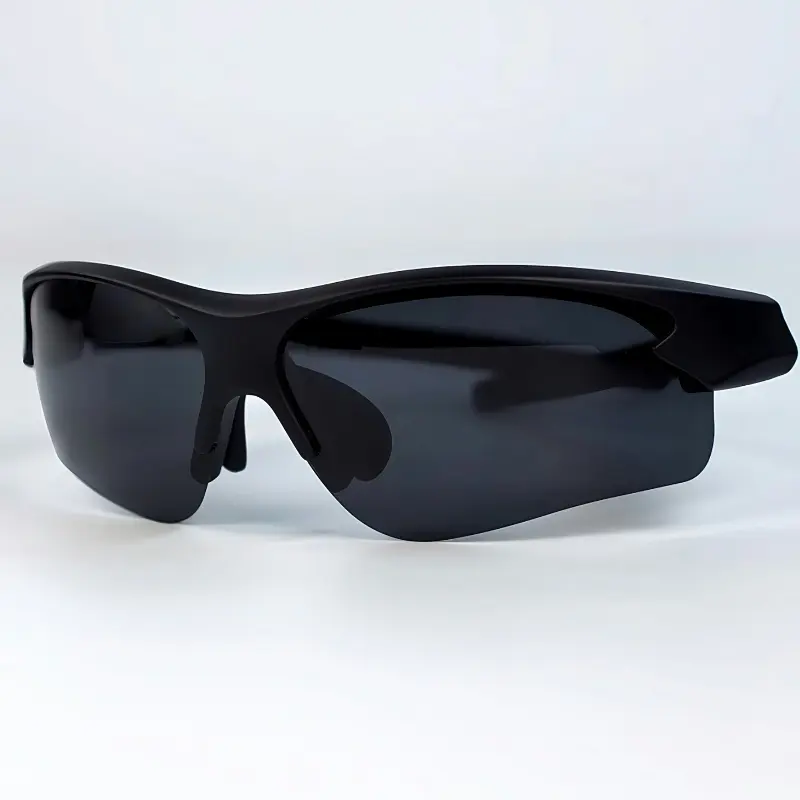
The Physical Properties That Make TR90 the Default for Sports Eyewear
Once the terminology is sorted out, TR90’s actual physical properties explain why it became the standard choice for sports and active-lifestyle eyewear specifically.
Density and weight. High-quality TR90 typically runs 1.14–1.15 g/cm³, which is lighter than standard nylon and meaningfully lighter than acetate — this is the property behind TR90’s reputation for all-day comfort, since less frame weight translates directly to less pressure on the nose and ears over hours of wear.
Flexibility with memory. TR90 belongs to a category sometimes called memory plastics — it can flex significantly under pressure and return to its original shape rather than staying bent or cracking. This is the property that makes TR90 frames resistant to the kind of damage that would crack a more rigid material: a frame that gets sat on, twisted, or bent during sports activity has a real chance of returning to shape rather than breaking.
Impact and temperature resistance. TR90 holds up well under impact and resists warping across normal temperature ranges, including conditions that would soften or deform acetate — a hot car interior being the most common example in everyday use. This combination of impact resistance and temperature stability is part of why TR90 is a common choice for kids’ eyewear specifically, alongside its flexibility.
Color and finish flexibility. TR90 takes injection coloring well, including dual-tone molding and gradient or marble-style effects achieved through the molding process itself rather than applied afterward — giving brands meaningful design range without the slower, more labor-intensive coloring process acetate requires.

How TR90 Is Actually Made
Unlike acetate, which is CNC-cut from solid sheet stock and hand-polished, TR90 frames are produced through injection molding — a fundamentally different manufacturing process with different cost and timeline implications, covered in more detail in our guide to how acetate sunglasses are made for comparison.
TR90 pellets are heated until molten and injected under high pressure into a precision steel mold, where the frame cools and solidifies in seconds rather than the multi-day process acetate requires. Proper handling of the raw pellets matters more than it might seem — TR90 granules typically need to be dried for several hours at a controlled temperature before molding to prevent moisture-related defects like bubbling or surface flaws in the finished frame, which is a quality-control detail worth confirming your manufacturer handles correctly rather than assuming.
This manufacturing process is also why TR90 requires upfront mold tooling investment, unlike acetate’s mold-free CNC process — a cost and lead-time tradeoff worth factoring into a sourcing decision alongside the material properties themselves.

Where TR90 Fits in the Eyewear Material Landscape
TR90 occupies a specific position in the broader material landscape, distinct from both premium materials and lower-cost alternatives.
In the mid-to-premium segment, acetate, metal, and titanium remain the dominant choices, valued for color depth, tactile quality, and brand prestige. In the budget-to-mid segment, TR90 and standard injection-molded plastics are the mainstream choice, valued for cost efficiency, durability, and manufacturing scalability. TR90 isn’t positioned to compete with acetate’s color richness or titanium’s premium weight advantage — it occupies the space where durability, comfort, and cost efficiency matter more than material prestige, which is exactly why it dominates sports eyewear, kids’ eyewear, and value-tier fashion lines rather than flagship designer collections.
The Practical Takeaway
TR90 is Grilamid TR90 specifically — a branded nylon-12 formulation from EMS-Grivory, not a general material category despite how casually the term gets used. The reason factory spec sheets still separate “TR90” from “Nylon” as distinct options comes down to formulation and consistency: generic nylon resins share TR90’s general chemistry without necessarily matching its specific performance characteristics. For brands building a TR90 sunglasses line, confirming the specific material source — not just the name on the spec sheet — is worth doing explicitly rather than assuming.
Frequently Asked Questions
Is TR90 the same thing as nylon?
Chemically, yes — TR90 is a nylon-12 polymer. But “TR90” specifically refers to Grilamid TR90, a branded formulation from the Swiss company EMS-Grivory, not nylon-based eyewear plastics generally. This is why factory material lists often separate “TR90” from generic “Nylon” as distinct options, even though both belong to the same broader chemical family.
Why is TR90 called “memory plastic”?
Because it can flex significantly under pressure — bending, twisting, or being sat on — and return to its original shape rather than staying deformed or cracking. This property is part of why TR90 is a common choice for sports and kids’ eyewear specifically, where frames experience more physical stress than typical daily wear.
Is TR90 lighter than acetate?
Yes. High-quality TR90 typically has a density of 1.14–1.15 g/cm³, meaningfully lighter than acetate, which contributes directly to the comfort TR90 is known for during extended wear.
How is TR90 different from acetate in manufacturing?
TR90 is produced through injection molding — pellets are heated, injected into a steel mold, and cooled in seconds. Acetate is CNC-cut from solid sheet stock and hand-polished over multiple days. This difference affects cost structure, lead time, and the upfront mold tooling investment TR90 requires that acetate’s CNC process doesn’t.
Can TR90 warp in heat the way acetate can?
No, not to the same degree. TR90 resists warping across normal temperature ranges, including conditions like a hot car interior that can soften and deform acetate. This temperature stability is one of TR90’s practical advantages for everyday and active-use eyewear.
Should I specify “TR90” or “nylon” on my tech pack?
Be specific and confirm with your manufacturer which material you’re actually receiving. If your brand’s positioning depends on TR90’s specific performance characteristics, ask explicitly whether the material is genuine Grilamid TR90 or a generic nylon-based equivalent, since both might appear on a spec sheet under similar language.
Let's get started!
Get in touch with a custom eyewear specialist now for a free consultation and instant price quote.
WHATSAPP ME GO!
📱 Scan with your phone to start chatting