Vintage vs Modern Metal Sunglasses Construction: What Changed
Vintage eyewear has a reputation for being better made than most of what is produced today — heavier metal, visible rivets at the hinge, a sense that the frame was assembled rather than mass-produced. That reputation is not entirely wrong. Mid-century eyewear construction did rely on techniques that modern production has largely replaced. But the conclusion that brands often draw from this — that vintage construction methods are simply superior, and that a heritage-style collection should replicate them as closely as possible — misses an important distinction.
The visual signature of vintage construction and the actual engineering behind it are two separate things. A brand can specify a heritage aesthetic — visible rivets, classic hinge geometry, a substantial feel — while using construction methods that are, in nearly every measurable way, more consistent and more durable than what was achievable in the era the design references. Understanding what specifically changed between vintage and modern metal sunglasses construction is what allows a brand to make that distinction deliberately rather than by accident.
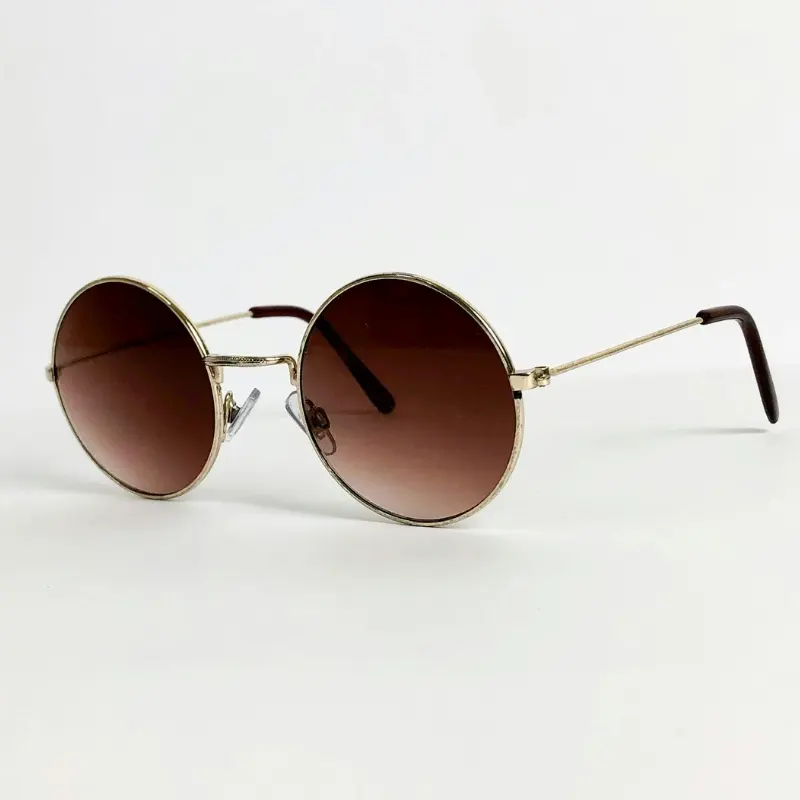
Why “Vintage Style” and “Vintage Construction” Are Not the Same Thing
A retro-styled frame and a frame actually built using period-accurate methods are not the same product, even when they look identical on a shelf.
Vintage metal eyewear from the mid-20th century was largely assembled with significant manual input — individual frames shaped, polished, and fitted by hand, with far less standardization between units than modern production achieves. This was, in its time, a skilled and labor-intensive process, and it produced frames with genuine character. It also produced inconsistency: tolerances that modern manufacturing would not accept, plating systems with a fraction of the durability standards used today, and hinge mechanisms with no built-in flexibility.
A brand developing a heritage-inspired metal sunglasses collection today is not actually choosing between “vintage quality” and “modern quality” — both options use modern manufacturing capability. The real choice is which specific visual and mechanical signatures from vintage construction to retain, and which underlying production methods to use to deliver them reliably at scale.
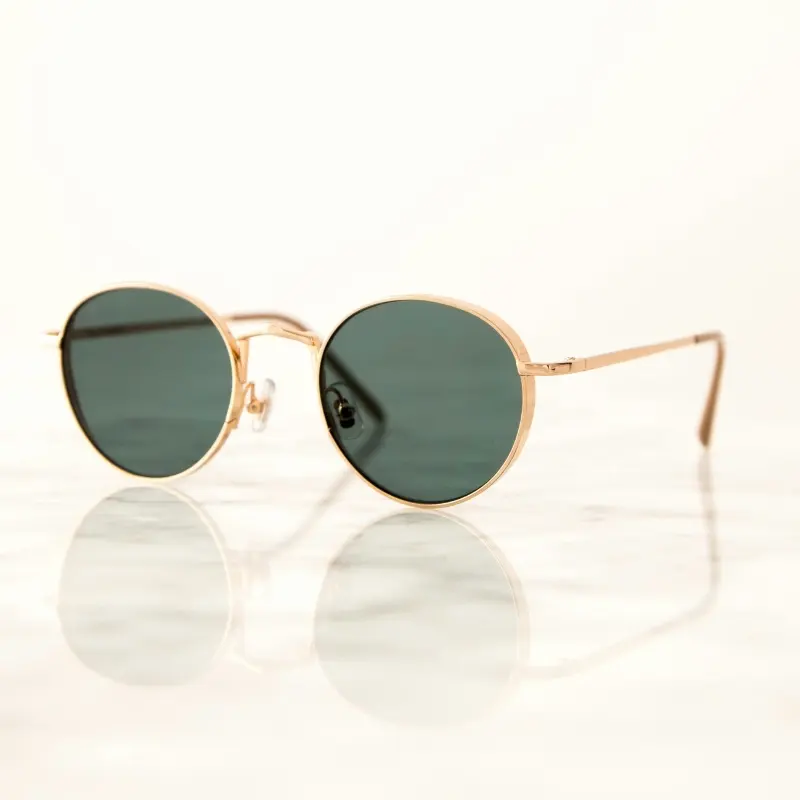
Hinge Construction: From Riveted Joints to Laser-Welded Barrels
The hinge is where the difference between vintage and modern construction is most visible — and most mechanically significant.
The Riveted Hinge
The traditional, high-end hinge attachment method used in vintage eyewear involved drilling small holes through both the frame material and the metal hinge base, inserting metal rivets through the holes, and physically pressing or hammering the rivet ends flat on both sides. This produced a mechanical bond between the hinge and the frame that was extremely difficult to pull apart, because the rivet itself — not an adhesive or a weld — was doing the structural work.
The visible signature of this method is the two small metal points on the outer surface of the temple, where the rivet heads are pressed flat. This detail has become a recognized design marker of heritage and luxury eyewear, used deliberately by brands that want to signal traditional craftsmanship even when the underlying hinge mechanism is fully modern.
The riveted method had a real engineering advantage: the mechanical bond does not rely on adhesive strength or weld penetration, both of which can degrade with heat exposure or repeated stress in ways a properly set rivet does not. It also had a real limitation: producing a riveted joint accurately and consistently across a production run requires careful, largely manual work, which limits production speed and increases the chance of unit-to-unit variation.
The Laser-Welded Hinge
Modern metal frame production attaches the hinge housing to the frame using precision laser welding, which fuses the hinge block to the frame material at a microscopic level without the drilling step a rivet requires. The weld is applied with controlled heat and pressure, producing a join with consistent strength across every unit in a production run — a level of consistency that manual riveting could not reliably achieve at scale.
Laser welding also allows the hinge housing to sit flush with the surrounding frame surface in a way that is harder to achieve consistently with manual riveting, which supports the thinner, more minimal temple profiles common in contemporary metal frame design.
Replicating the Riveted Look on a Modern Hinge
For brands that want the visible rivet detail without reverting to the manual riveting process, the practical approach is to laser-weld the structural hinge joint and add decorative rivet-head elements as a separate cosmetic component, attached to the temple surface near the hinge. This delivers the recognizable heritage signature while keeping the structural reliability of a laser-welded joint underneath it.
| Hinge Method | Structural Basis | Consistency Across Units | Visual Signature |
|---|---|---|---|
| Riveted (vintage) | Mechanical compression bond | Lower — manual process | Visible rivet heads on temple surface |
| Laser-welded (modern) | Fused metal bond | High — automated process | Flush, seamless join |
| Laser-welded + decorative rivet | Fused metal bond | High | Visible rivet heads, structurally non-load-bearing |
Hinge Mechanism: Fixed 90° vs Spring Flex
Beyond how the hinge is attached to the frame, there is a separate question of how the hinge itself functions — and this is where vintage and modern construction diverge just as significantly.
The Standard Fixed Hinge
A standard hinge opens to approximately 90 degrees and stops there, with no built-in outward flex. This is the mechanism used throughout most of the vintage eyewear era — interlocking metal barrels secured by a small screw, opening to a fixed position and no further.
This mechanism is mechanically simple and easy to repair: a loosened screw can be tightened, and the hinge has few parts that can fail in complex ways. Its limitation is that any pressure beyond the 90-degree stop point — putting the glasses on, taking them off with one hand, a customer with a wider head than the frame was designed for — transfers force directly into the temple metal itself, since the hinge has no give. Over time, this is what causes thin vintage temples to bend or splay outward at the hinge point.
The Spring Hinge
The spring hinge adds an internal spring mechanism that allows the temple to flex outward beyond the standard 90-degree position before returning to it. This is now the dominant hinge type in metal eyewear specifically — more so than in acetate — because thin metal temples rely heavily on the hinge for structural give. A metal temple with a fixed hinge has nowhere for excess pressure to go except into the temple itself; a spring hinge absorbs that pressure at the hinge, protecting the temple from the bending and splaying that affects fixed-hinge vintage frames over time.
This is not simply a comfort upgrade — it is the mechanism that allows thin, minimal metal temple designs to be both lightweight and durable in a way that vintage fixed-hinge construction in the same temple gauge generally was not.
Why Some Heritage Brands Still Specify Fixed Hinges
Despite the functional advantages of spring hinges, fixed standard hinges remain a deliberate choice for some heritage-positioned eyewear, particularly where the visible rivet detail is part of the design signature and the brand wants the hinge mechanism itself to read as authentically traditional rather than modernized. This is a legitimate design decision, but it should be made knowingly — a fixed hinge on a thin metal temple genuinely does transfer more stress to the frame than a spring hinge would, and a brand specifying this combination should expect the durability profile that comes with it.
For more on hinge barrel count and how it interacts with temple gauge, see Metal Aviator Sunglasses: Construction Details That Separate Premium from Cheap, which covers this relationship in detail.
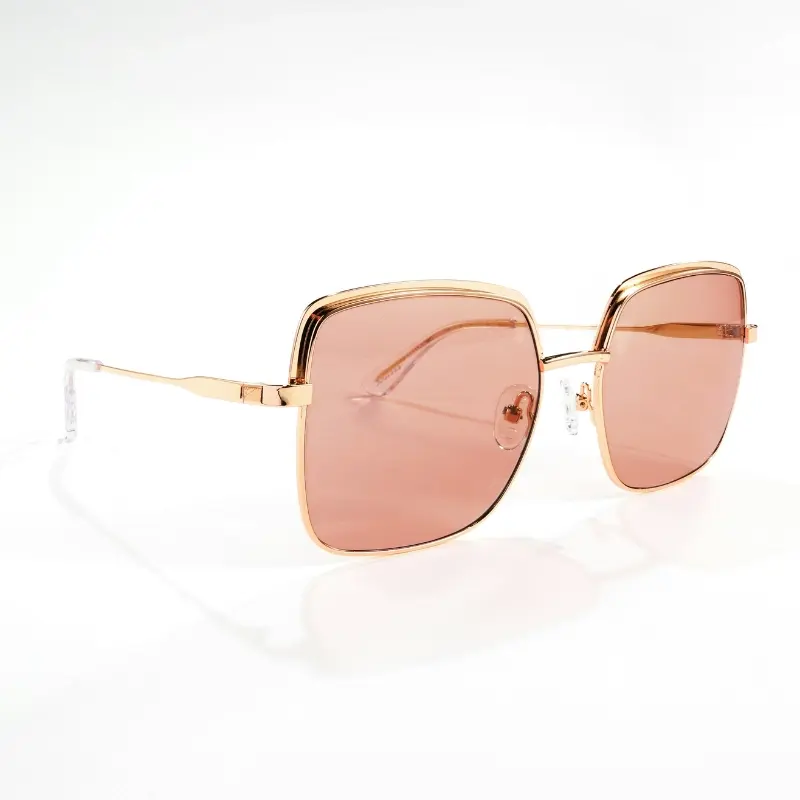
Plating: From Single-Layer Gold to Multi-Layer Sealed Systems
Surface finish is the other area where vintage and modern metal eyewear construction differ substantially, even when the visual result — a gold or silver finish — looks similar at a glance.
Vintage Plating
Vintage gold-plated eyewear was typically finished with a relatively simple plating process — a single gold layer applied directly, without the multi-layer base-coat and sealing-coat systems used in modern plating. This produced an attractive finish at the point of sale, but with limited protection against the gradual wear that occurs at contact points — the nose bridge, hinge edges, temple tips — over years of daily use. This is part of why vintage frames in genuinely worn condition often show base-metal exposure and discoloration at exactly these points.
Modern Plating Systems
Modern electroplating for metal sunglasses uses a structured multi-layer system: a base layer (typically copper or alkaline copper) for adhesion, an intermediate layer (typically nickel or a nickel-free alternative) for corrosion resistance, the visible color layer, and a sealing coat that protects the color layer from direct contact with skin, sweat, and cleaning products. This system is measurably more durable — quality modern plating can be tested to 65 hours or more of salt spray resistance, a standard that did not exist as a production benchmark during the vintage era.
For brands developing a heritage-styled collection, this means the gold or silver finish can look visually consistent with a vintage reference while being built on a plating system several generations more durable than what the original frames used. The visual outcome is similar; the underlying engineering is not.
For a full breakdown of modern plating methods and durability standards, see Electroplating on Metal Eyewear: Colors, Durability, and What to Ask Your Supplier.
Tolerance and Assembly: Hand-Finishing vs Precision Manufacturing
The third area of difference is less visible in a finished product but affects consistency across a production run, which matters significantly for any brand producing more than a handful of units.
Vintage frame production relied on individual hand-shaping, polishing, and fitting at each stage of assembly. This produced genuine character — no two frames were perfectly identical — but it also meant that unit-to-unit variation in dimensions, symmetry, and finish quality was an inherent feature of the process, not a defect to be eliminated.
Modern metal frame production uses CNC-controlled cutting and forming, automated polishing stages, and laser-guided assembly for components like hinge attachment and logo placement. This produces dimensional consistency across a production run that hand-fabrication could not reliably achieve — every unit in a batch matches the approved sample within defined tolerances, which is what makes consistent batch quality possible at commercial production volumes.
This is not a value judgment on which approach is “better” in an absolute sense — hand-fabricated variation is part of what gives genuine vintage pieces their individual character and collectible value. But for a brand producing a commercial collection at meaningful volume, dimensional consistency across units is a requirement, not an optional nicety, and this is delivered by modern precision manufacturing rather than by replicating historical hand-fabrication methods.
What Vintage-Style Brands Should Specify Today
For brands developing a heritage or retro-inspired metal sunglasses collection, the practical takeaway is to separate the visual and tactile signatures worth retaining from the underlying construction methods that should be modernized regardless of styling direction.
Retain as a deliberate styling choice:
- Visible rivet-style hinge detail, executed as a decorative element over a laser-welded structural joint
- Classic proportions — narrower temples, smaller lens dimensions consistent with the design era being referenced
- Warm metal tones (gold, brass-toned plating) consistent with period color palettes
Modernize regardless of styling direction:
- Hinge attachment method — laser-welded structural joint, with decorative rivet elements if the riveted look is wanted
- Hinge mechanism — spring hinge specification for any thin metal temple design, even on a fixed-hinge-styled frame, unless the brand has specifically evaluated and accepted the durability tradeoff of a true fixed hinge
- Plating system — multi-layer base coat, corrosion-resistant intermediate layer, and sealing coat rated to a defined salt spray standard
- Dimensional tolerance — CNC-controlled forming and assembly for consistency across the production run
At Sailook, when clients brief a heritage or retro-inspired metal sunglasses style, we work through this distinction explicitly during the specification stage — confirming which vintage signatures are intended as deliberate design choices and which production methods should use current standards regardless of the styling reference. This produces a sample that reads as authentically heritage in design while performing to current durability expectations, rather than a sample that has unintentionally inherited the actual limitations of period construction along with its look.
FAQ
Are vintage sunglasses actually better made than modern ones? Not in every measurable sense. Vintage construction involved more hand-finishing, which produced genuine character and individuality, but also less dimensional consistency than modern CNC-controlled production achieves. Vintage plating systems were generally simpler and less durable than modern multi-layer plating, and vintage fixed hinges transferred more stress into the temple than modern spring hinges do. Vintage frames have real qualities modern mass production does not replicate — but “better made” depends on which specific attribute is being compared.
What is a riveted hinge, and why do some luxury brands still use it? A riveted hinge attaches the hinge base to the frame using metal rivets pressed flat through drilled holes, creating a mechanical bond rather than a welded or adhesive one. The visible rivet heads on the temple surface have become a recognized heritage design signature. Some luxury brands replicate this look using a decorative rivet element over a modern laser-welded structural joint, preserving the visual signature while using a more consistent and reliable attachment method underneath.
Should a vintage-style metal sunglasses frame use a spring hinge or a fixed hinge? For most thin metal temple designs, a spring hinge is the more durable choice regardless of the styling direction, because thin metal temples rely on hinge flexibility to absorb pressure that would otherwise bend the temple itself. Some heritage brands specify a true fixed hinge deliberately, where the rigid 90-degree mechanism is part of an intentionally authentic vintage feel — this is a legitimate choice, but it carries a real durability tradeoff that should be made knowingly rather than by default.
Does modern plating actually last longer than vintage gold plating? Generally yes. Vintage gold plating was typically a simpler, single-layer application without the multi-layer base coat and sealing coat systems used in modern electroplating. Modern plating systems can be tested and rated for salt spray resistance — often 65 hours or more for quality production — a durability benchmark that did not exist as a standard practice during the vintage era. This is why vintage frames in genuinely worn condition frequently show plating loss at contact points that modern plating systems are specifically designed to resist.
Can a modern manufacturer replicate true vintage hand-fabrication? Technically yes, but at significant cost and with the same inherent unit-to-unit variation that hand-fabrication always produced — which is generally not desirable for a commercial production run where consistent batch quality matters. Most brands achieve a vintage aesthetic more practically by specifying the visual and proportional signatures of the era while using modern CNC-controlled manufacturing for the underlying construction, which delivers consistency that hand-fabrication does not.
Summary
The difference between vintage and modern metal sunglasses construction is not a simple story of old craftsmanship versus new mass production. Vintage construction relied on riveted hinges, fixed hinge mechanisms, single-layer plating, and hand-fabrication — methods with genuine character but real, measurable limitations in consistency and durability. Modern construction replaces these with laser-welded hinge attachment, spring hinge mechanisms, multi-layer sealed plating systems, and CNC-controlled precision — methods that can deliver a heritage aesthetic while performing to a durability standard the original construction did not achieve.
For brands building a vintage-inspired metal sunglasses collection, the useful exercise is separating which signatures are worth retaining as a deliberate styling choice from which production methods should simply use current standards. That distinction is what determines whether a heritage collection looks the part or actually performs like the era it references.
Sailook’s full range of metal sunglasses construction options, including heritage-styled hardware and modern plating systems, is covered on our metal sunglasses page.
Let's get started!
Get in touch with a custom eyewear specialist now for a free consultation and instant price quote.
WHATSAPP ME GO!
📱 Scan with your phone to start chatting