TR90 Sunglasses Color and Customization Options
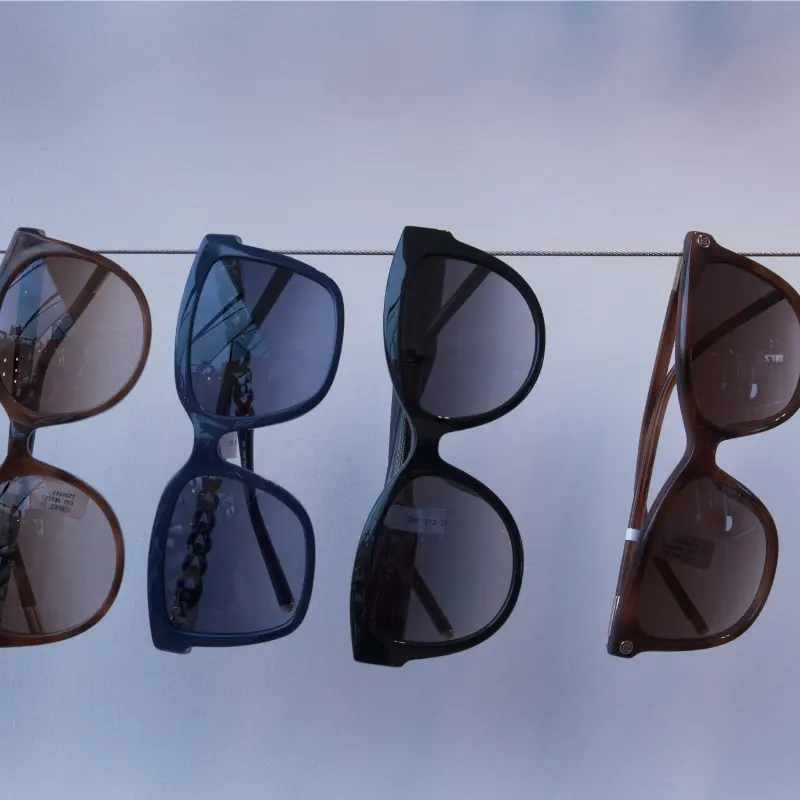
Color decisions for a TR90 collection happen at a different point in the production process than they do for acetate, and brands moving between the two materials sometimes carry acetate’s color logic into a TR90 brief without realizing the underlying mechanism is different. Acetate color comes from pigmented sheet stock that exists before the frame is ever cut. TR90 color is most commonly built into the material during injection molding, though a second path — spray coating applied after molding — is also used across the industry for effects molding alone can’t achieve. Knowing which path a given color or finish requires changes what’s achievable, what’s worth specifying, and what tradeoffs come with each approach.
This guide covers how TR90 color works through both paths — molded-in pigment and post-mold spray coating — the specific effects each one supports, the branding options layered on top, and where TR90’s color capability genuinely falls short of acetate’s.
Molded-In Color: The Preferred Path
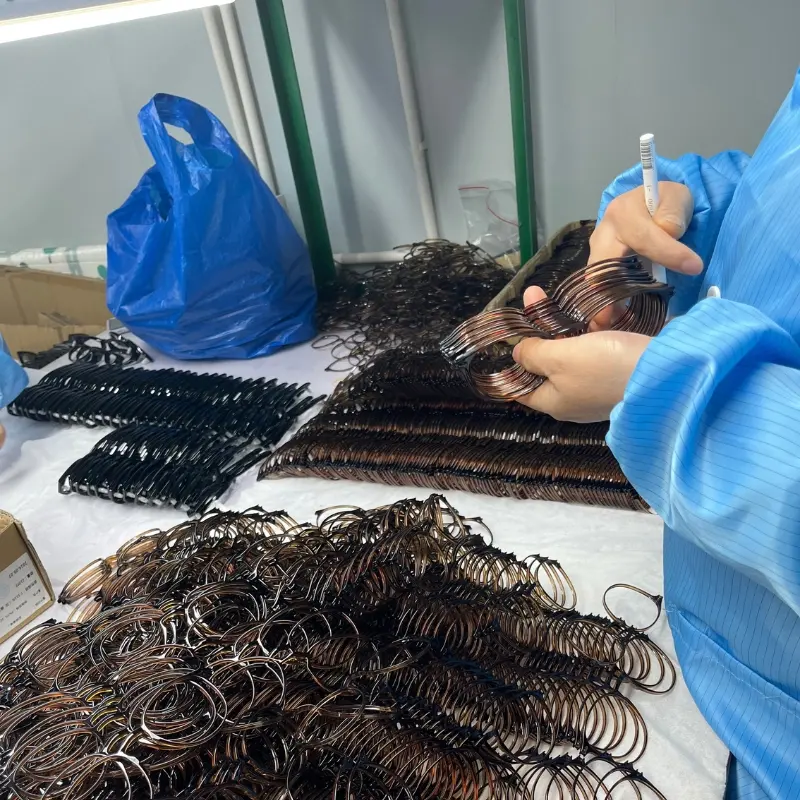
TR90’s color is most commonly determined when pigment is mixed into the raw pellets before injection molding begins, which is a fundamentally different point in the process than where acetate’s color comes from. As covered in more detail in our guide to what TR90 actually is, TR90 starts as loose pellets that get heated to molten and injected into a steel mold — pigment mixed in at this stage becomes part of the material itself, not something applied to a finished surface afterward. Because the color runs through the material rather than sitting on top of it, molded-in pigment doesn’t peel, flake, or wear thin the way a surface coating can.
This matters for sourcing because it means TR90 color isn’t selected from a physical sheet catalog the way acetate color is, covered in more detail in our guide to custom color acetate sunglasses. A TR90 color brief is closer to a pigment formula conversation than a catalog selection — your manufacturer is either matching an existing formula or working with the pellet supplier to formulate a new one, which has different lead time and minimum quantity implications than picking a sheet color off a shelf.
What Molded-In Color Can Actually Achieve
TR90’s injection process supports a genuine range of color effects, achieved through how pigment is introduced and mixed into the pellets before molding rather than through any post-production treatment.
Solid colors. Standard pigmented pellets produce consistent, opaque solid colors — the most straightforward and cost-stable option, suited to both bold and muted color directions.
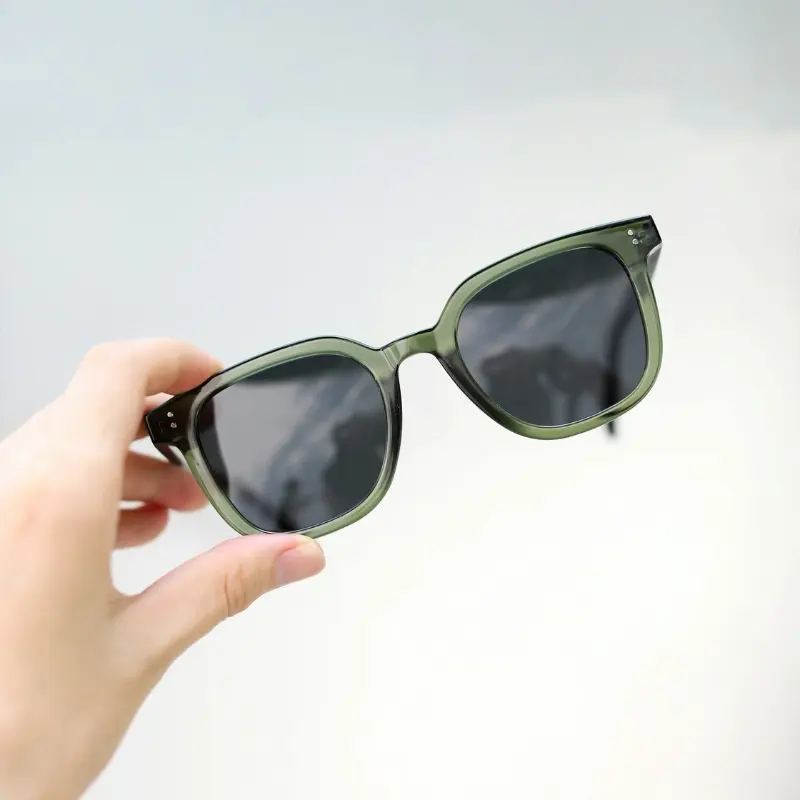
Transparent and translucent effects. TR90 can be molded with little to no pigment for a clear or lightly tinted transparent finish, letting light pass through the frame material itself rather than just the lens — a look that reads as modern and lightweight, distinct from acetate’s opaque depth.
Simple multi-color and gradient effects. Mixing two or more pigments into the pellet batch before molding can produce blended or gradient-style effects within the frame. This is worth specifying precisely, though, because TR90’s molded gradients and color blends are noticeably simpler than acetate’s layered patterns — acetate’s color runs through genuinely separate layers of pigmented sheet, which is why effects like tortoiseshell achieve a depth and complexity that TR90, whether molded or surface-coated, doesn’t fully replicate. A “TR90 tortoiseshell” frame on the market is typically a simplified approximation — a printed or blended pattern that reads as tortoiseshell at a glance — rather than the genuine layered depth acetate achieves structurally.
Dual-tone and two-color molding. Producing a frame with two distinct, cleanly separated color zones — a different color front and temple, for example — requires a specific dual-shot or sequential molding process, which is a more involved production step than single-color molding and is worth confirming as a distinct capability with your manufacturer rather than assuming it’s standard.
| Effect | How It’s Achieved | Production Complexity |
|---|---|---|
| Solid color | Standard pigmented pellets | Baseline |
| Transparent / translucent | Minimal or no pigment in the pellet mix | Baseline to slightly higher |
| Simple gradient / multi-color blend | Multiple pigments mixed before molding | Moderate — requires controlled mixing process |
| Dual-tone (clean color zones) | Dual-shot or sequential molding | Higher — distinct production step |
| Tortoiseshell-style pattern | Approximated via print or blended pigment — not a true structural match to acetate | Varies — quality depends heavily on execution |
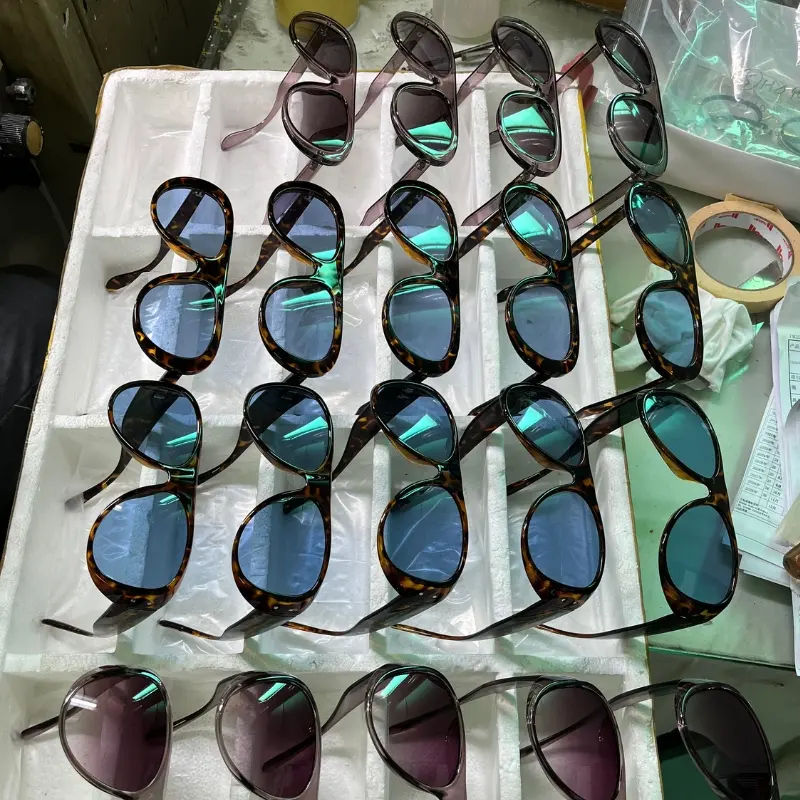
Spray Coating and Surface Printing: The Second Path
A second category of color and finish customization happens after the frame is molded, applied to the surface rather than mixed into the material itself. This path is widely used across the industry and isn’t a lesser option — it’s the only way to achieve certain effects, particularly high-gloss finishes and metallic looks, that molded-in pigment alone can’t produce.
Spray coating. Applied to the molded frame surface, spray coating can achieve gloss levels, metallic finishes, and color effects that pigment mixed into the pellets can’t replicate. The tradeoff worth understanding: because the color sits on the surface rather than running through the material, spray coating carries some risk of wear, fading, or peeling over the product’s lifespan if the coating quality or adhesion process isn’t well controlled — durability varies meaningfully based on the specific coating system and process used, which is worth discussing directly with your manufacturer rather than assuming all spray-coated finishes perform the same way.
UV printing. A printed design or pattern applied to the finished frame surface, commonly used for detail — logos, graphic patterns, fine gradients — that would be difficult to achieve through pigment mixing or spray coating alone.
Both spray coating and UV printing are surface-level treatments, distinct from molded-in pigment in how they age over the product’s lifespan — a topic covered in more detail in our guide to TR90 sunglasses care and maintenance. Neither is inherently the “wrong” choice; the right path depends on which specific effect you’re after and how much surface-finish durability matters for your product’s positioning.
Branding and Hardware Customization
Beyond color, a few other customization points are worth specifying explicitly in a TR90 brief.
Logo application. Common methods include laser engraving, pad printing, and UV printing on the temple or lens — each with different cost, durability, and visual characteristics worth discussing relative to your brand positioning, similar to the branding method considerations covered in our guide to titanium eyewear customization.
Integrated hinge construction. Some TR90 designs mold the hinge directly into the temple during the injection process rather than using a separate, externally sourced hinge component fitted afterward. This is a meaningfully different construction approach from the standard barrel or spring hinges used across acetate and metal frames — worth specifying explicitly if it’s part of what you’re sourcing, since it affects both the manufacturing process and the repair profile if a hinge issue ever comes up.
Packaging and presentation. Cases, cloths, and branded packaging apply the same way they do across any frame material — these details carry the brand experience beyond the frame itself.
A Claim Worth Being Skeptical Of
While researching this category for a TR90 sunglasses collection, it’s common to see TR90 marketed with extreme heat-resistance claims — figures like withstanding several hundred degrees without melting show up across product listings and marketing copy. These numbers are worth treating with real skepticism. TR90 is genuinely more heat-tolerant than acetate, covered in more detail in our guide comparing TR90 and acetate, but extreme, specific temperature claims well beyond what’s plausible for an engineering thermoplastic are a sign of marketing exaggeration rather than verified material data. If a manufacturer cites a specific heat-resistance figure, it’s reasonable to ask for the source rather than taking the number at face value — the same scrutiny worth applying to any unverified material claim in this category.
How to Brief a TR90 Color and Customization Request
A complete brief gives your manufacturer enough specificity to quote and sample accurately on the first attempt:
- Color reference — a Pantone code, physical sample, or clear written description (e.g., “warm amber, semi-transparent”)
- Effect type — solid, transparent, gradient/blend, or dual-tone, since each has different production implications
- Molded-in pigment vs. spray coating — confirm which path a given color or finish actually requires, since this affects both durability and cost
- Branding method and placement — logo technique, location, and size
- Hinge construction — integrated/molded versus standard external hardware, if this matters to your positioning
- Packaging requirements — case style, branded materials, retail presentation
The Practical Takeaway
TR90 color works through two distinct paths — pigment mixed into the material during molding, or coating and printing applied to the surface afterward — and each one carries different durability, cost, and capability tradeoffs. Solid, transparent, and simple gradient effects are well within molded-in pigment’s range; high-gloss, metallic, and fine-detail effects generally require spray coating or UV printing instead. Genuinely layered, deep-pattern effects like tortoiseshell remain a real limitation for TR90 relative to acetate, regardless of which color path is used. Being specific about which effect you want, which path achieves it, and how branding gets applied gets you a more accurate quote and a sample that matches what you actually pictured, rather than a round of revisions to close the gap.
Frequently Asked Questions
Can TR90 sunglasses be made in any color?
TR90 supports a wide range of solid, transparent, and translucent colors through pigment mixed into the pellets before molding, plus additional colors and finishes achievable through spray coating after molding. Custom Pantone matching is generally achievable through either path, but works more like formulating a pigment or coating recipe than selecting from a physical catalog, which affects lead time compared to picking an existing color.
What’s the difference between molded-in color and spray-coated or printed designs on TR90?
Molded-in color is part of the material itself, mixed into the pellets before injection molding, so it doesn’t peel or wear thin over time. Spray coating and printed designs like UV printing are applied to the surface of an already-molded frame, allowing for gloss, metallic, and fine-detail effects that pigment mixing alone can’t achieve — but with different durability characteristics, since the finish sits on top of the material rather than running through it. Coating quality varies, so it’s worth discussing expected durability with your manufacturer for any surface-applied finish.
Can TR90 achieve a true tortoiseshell pattern like acetate?
Not to the same depth. Acetate’s tortoiseshell pattern comes from genuinely layered pigmented sheet material, giving it a structural depth that TR90 doesn’t replicate, whether the color is molded in or applied via spray or print. A “TR90 tortoiseshell” product is typically a simplified visual approximation rather than a true structural match — worth knowing if your brand’s positioning depends on that specific depth of pattern.
Can TR90 frames have two different colors on the same piece?
Yes, through dual-shot or sequential molding, which produces a frame with distinct color zones — a different color front and temple, for example. This is a more involved production process than single-color molding and is worth confirming as a specific capability with your manufacturer.
Is it true that TR90 can withstand extremely high temperatures without melting?
Be skeptical of very specific, extreme heat-resistance figures that sometimes appear in TR90 marketing. TR90 is genuinely more heat-tolerant than acetate, but claims of withstanding several hundred degrees without effect are generally exaggerated rather than verified engineering data.
What logo application methods work on TR90 frames?
Laser engraving, pad printing, and UV printing are the common options, each with different cost, durability, and visual results. The right choice depends on whether you want a flush, permanent mark or a method that supports full color and finer detail.
Are TR90 hinges always a separate component like on acetate frames?
Not always. Some TR90 designs mold the hinge directly into the temple during injection molding, rather than using a separately sourced hinge fitted afterward. This is worth specifying explicitly if it matters to your design or repair expectations, since it’s a meaningfully different construction approach from standard external hinges.
Let's get started!
Get in touch with a custom eyewear specialist now for a free consultation and instant price quote.
WHATSAPP ME GO!
📱 Scan with your phone to start chatting