Why Luxury Eyewear Brands Choose Mazzucchelli Acetate (And When It's Worth the Cost)
If you’ve spent any time sourcing acetate frames, you’ve likely seen “Mazzucchelli” mentioned as a premium option — usually with a higher quote attached. Before deciding whether that’s a cost worth carrying into your collection, it’s worth understanding specifically what the material does differently, and for which brands that difference actually matters.
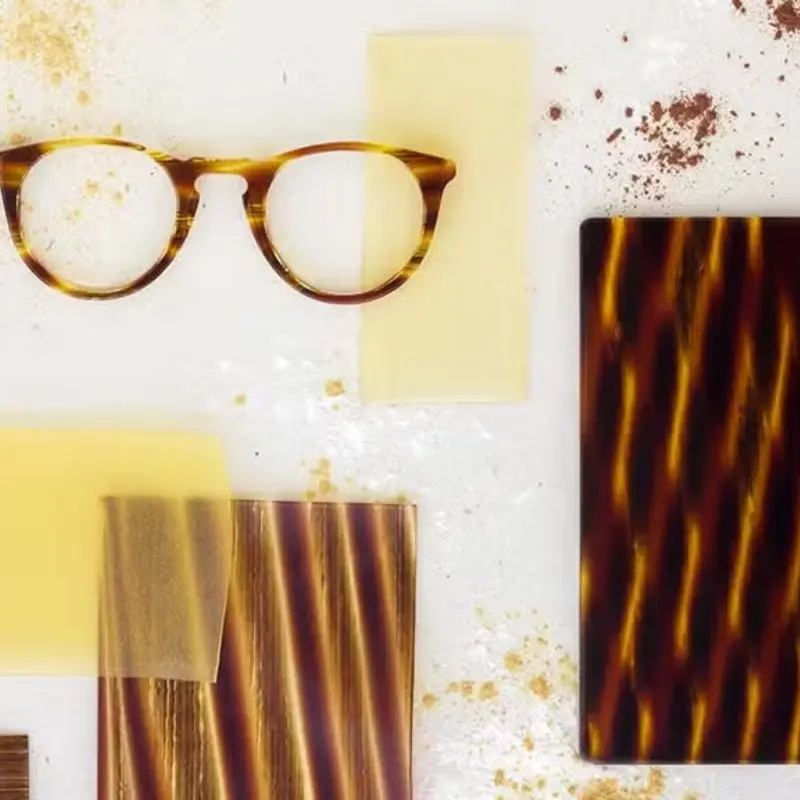
What Actually Makes Mazzucchelli Different
Mazzucchelli 1849 is an Italian manufacturer that has produced cellulose acetate since the mid-19th century, and today supplies material to a large share of the world’s premium and luxury eyewear brands. The name carries weight in the industry, but the practical differences come down to a few specific things: tighter control over raw material purity, a lower plasticizer content that affects long-term stability, and more consistent color and pattern reproduction across production batches compared to many domestic alternatives.
None of this means domestic acetate is poor quality — plenty of mid-market and early-stage brands use it successfully. The difference is more about consistency and ceiling: Mazzucchelli’s process is built to hit a higher, more repeatable standard, which is also reflected in the price.
Color Depth and Pattern Complexity
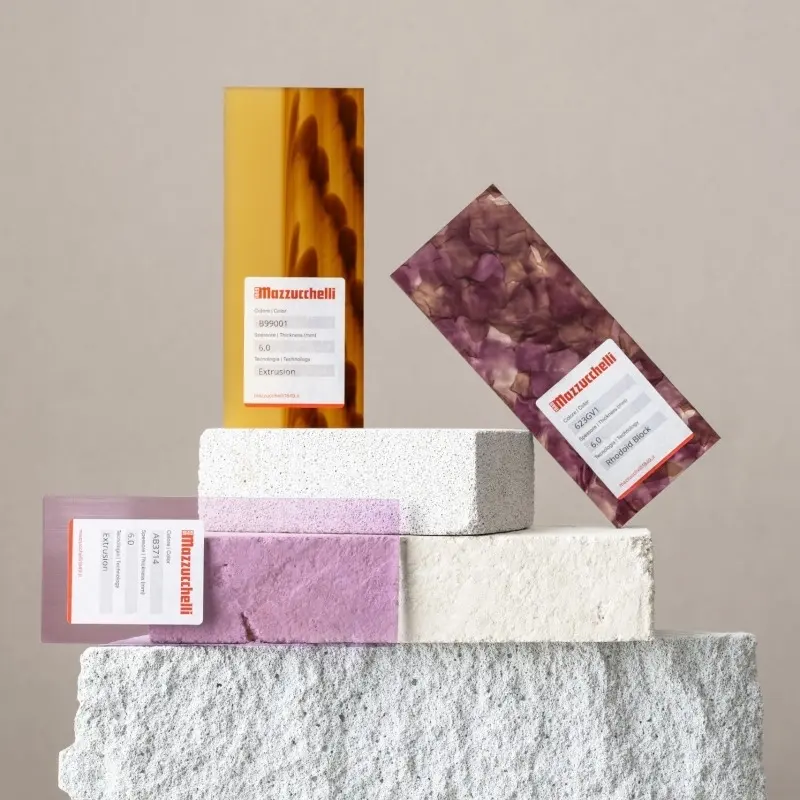
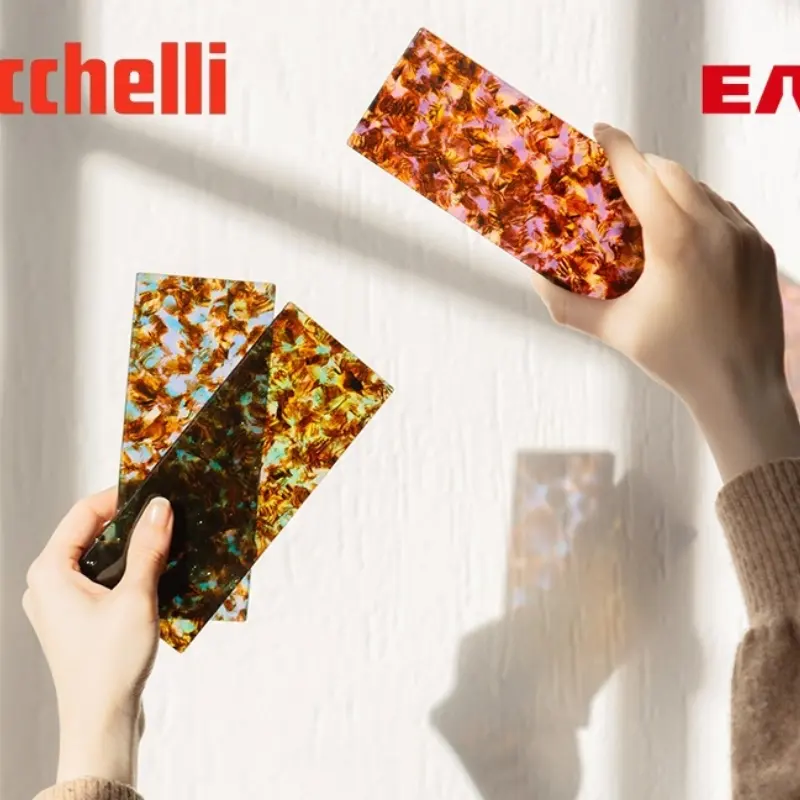
This is usually where the difference is most visible to a customer holding the frame. Mazzucchelli acetate tends to produce deeper, more layered color — tortoiseshell patterns with more visible depth, gradients that transition more smoothly, and translucent tones with more clarity. For brands where a signature color is part of the product identity, this level of depth is harder to replicate consistently with lower-grade sheet stock. Our guide to designing a brand’s signature acetate color goes further into how color development actually works in production.
Durability Over Time, Not Just Out of the Box
A frame’s initial finish tells you less than how it holds up after a year of wear. Lower plasticizer content in Mazzucchelli acetate generally means less yellowing and warping over time, and better retention of the original color and flexibility. For brands whose positioning depends on the product still looking premium two or three years after purchase, this matters more than it does for a brand built around fast seasonal turnover.
Where the Price Difference Actually Comes From
The higher cost isn’t just brand markup — it reflects raw material sourcing, tighter quality control during sheet production, and generally smaller, more consistent production runs. For a fuller breakdown of how material choice feeds into your overall per-piece cost, see our acetate sunglasses pricing strategy guide.
When It’s Worth Paying For — And When It Isn’t
Mazzucchelli acetate makes the most sense when at least one of these applies to your brand:
- Your retail price point is already positioned in the premium or luxury range, where customers expect the material to match the price
- Color and pattern complexity are central to your design identity, not a secondary detail
- Your marketing leans on durability or heritage claims that need to hold up to scrutiny over time
- You’re producing in smaller, more considered runs where per-unit cost has less impact on overall margin
It matters less if you’re an early-stage brand still validating demand, working with a lower retail price point, or producing simpler colorways where the visual difference is less noticeable. Our guide on signs your brand is ready to switch to acetate covers the broader decision of moving into acetate in the first place, which is worth working through before narrowing down to a specific acetate grade.
What to Ask Your Manufacturer
Because the name carries premium associations, “Mazzucchelli” gets misused in sourcing conversations more often than buyers realize — sometimes to describe acetate that isn’t actually from that supplier. Worth confirming directly:
- Can the manufacturer provide sourcing documentation or a material certificate, not just a verbal claim
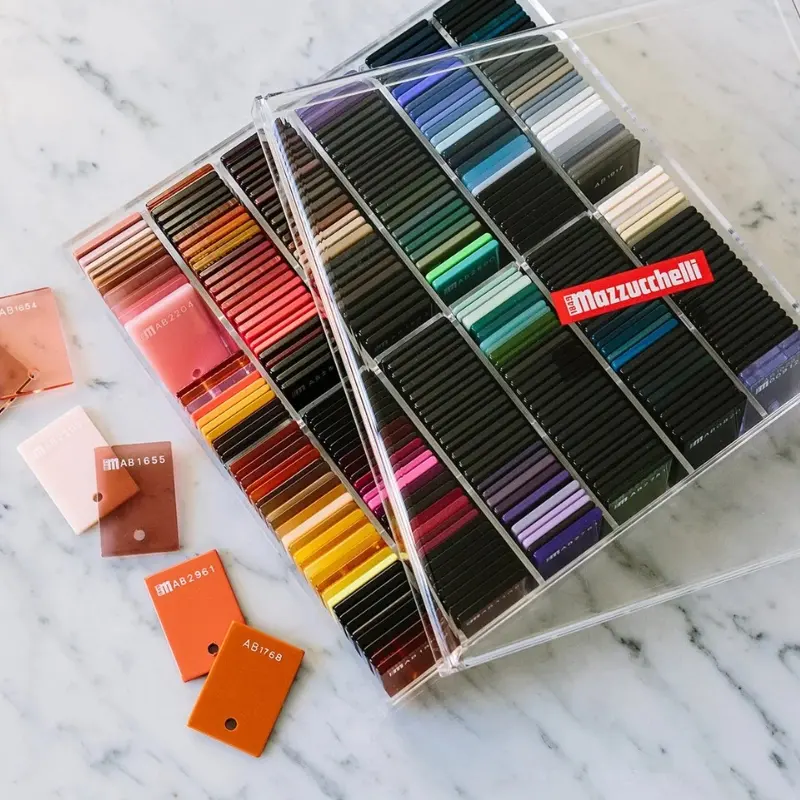
- Whether sheet thickness and color options are limited to a smaller in-stock range or genuinely open to custom development
- How batch-to-batch color consistency is managed across a larger order
A manufacturer confident in their material sourcing should have straightforward answers to all three.
FAQ
Is Mazzucchelli acetate always the better choice?
Not automatically. It’s the stronger choice when your brand positioning, retail price, and design complexity align with what the material is built for. For simpler designs or earlier-stage brands, a quality domestic acetate can be the more sensible option.
How can I verify that acetate is genuinely Mazzucchelli?
Ask for sourcing documentation or a material certificate rather than accepting a verbal claim. A manufacturer genuinely sourcing Mazzucchelli sheet should be able to provide this without difficulty.
Does Mazzucchelli acetate cost significantly more per frame?
It adds cost at the material level, though the overall impact on your per-piece price also depends on design complexity, order quantity, and finishing — not material alone.
Can Mazzucchelli and domestic acetate be mixed within the same collection?
Yes. Some brands use Mazzucchelli for hero styles or signature colorways and domestic acetate for simpler pieces within the same collection, as a way to manage overall cost without compromising the flagship pieces.
Is there a sustainable or bio-based version of Mazzucchelli-grade acetate?
Bio-acetate options exist and are worth considering if sustainability is part of your brand story. Our bio-acetate sunglasses guide covers how that material compares on cost and performance.

Material grade is one piece of a larger set of decisions that go into sourcing acetate sunglasses — thickness, color development, hinge type, and pricing all shape the final product together. Our acetate sunglasses hub walks through the rest of that picture if you’re still working out the full spec for your collection.
Let's get started!
Get in touch with a custom eyewear specialist now for a free consultation and instant price quote.
WHATSAPP ME GO!
📱 Scan with your phone to start chatting